WeedLife News Network

Hot off the press cannabis, marijuana, cbd and hemp news from around the world on the WeedLife Social Network.

Man sentenced to over a year in prison for growing more than 40 cannabis plants at home

Gary Widdowson, 34, had the cops visit on an unrelated matter. But then they found cannabis in the house.

Authorities were at Gary Widdowson’s house on an unrelated matter but what they stumbled upon landed the 34-year-old a prison sentence.

Police found more than 40 plants growing in his home, in addition to scales and dried cannabis. Widdowson, a resident of Vicars Walk, U.K., was sentenced at Nottingham Crown Court on Wednesday where he pleaded guilty to “two counts of possession with intent to supply at a previous hearing,” Worksop Guardian reports.

Although he received a 16-month prison sentence it was delayed for two years, which happens, U.K.-based legal resource, In Brief, points out if the court decides to allow an individual probation period, undertake medical treatment, or meet conditions in the community.

Medical cannabis has been legal in the U.K. since 2018, but it is illegal for recreational use.

Rate this article: 
Select ratingGive Man sentenced to over a year in prison for growing more than 40 cannabis plants at home 1/5Give Man sentenced to over a year in prison for growing more than 40 cannabis plants at home 2/5Give Man sentenced to over a year in prison for growing more than 40 cannabis plants at home 3/5Give Man sentenced to over a year in prison for growing more than 40 cannabis plants at home 4/5Give Man sentenced to over a year in prison for growing more than 40 cannabis plants at home 5/5
Authored By: 
Article category: 
Regional Marijuana News: 

e-mail icon

Michael Thompson was given a 60-year prison sentence for selling three pounds of pot. He is now presumed to have COVID-19

Supporters are concerned the 69-year-old diabetic, who is not set to be eligible for parole until he reaches his late 80s, may not survive the ordeal

Although Michael Thompson has been in jail for more than 25 years for selling weed, he may be facing a death sentence.

Thompson is Michigan’s longest-serving non-violent offender. He was convicted of selling three pounds of cannabis to a police informant in 1994 and was incarcerated in 1996 after being sentenced to 42 to 60 years in prison.

He has now been hospitalized with presumptive COVID-19 along with a group of fellow prisoners from Michigan’s Muskegon Correctional, reportsBenzinga Cannabis. Supporters are concerned that the 69-year-old diabetic, who is not set to be eligible for parole until he reaches his late 80s, may not survive the ordeal.

Thompson previously expressed concerns about the spread of the coronavirus in prisons and how it may impact him, saying in June that if he contracted the virus, “it’s over with. I don’t want to die. I’ve done almost 25 years and then to die from something, some virus. When is someone going to finally hear the cries?”

e-mail icon
Continue reading

Could legal cannabis states the U.S. be protected from federal intervention?

The U.S. House of Representatives has voted to pass an amendment that prevents the Department of Justice from spending taxpayer dollars to enforce federal anti-cannabis laws in otherwise legal cannabis sates, according to NORML.

The Blumenauer-McClintock-Norton-Lee amendment protects legal marijuana programs by restricting spending on anti-marijuana efforts in the majority of states that regulate the use of either recreational or medical cannabis.

“This is the most significant vote on marijuana policy reform that the House of Representatives has taken this year,” said National Organization for the Reform of Marijuana Laws political director Justin Strekal in a news release. “The importance of this bipartisan vote cannot be overstated as today; nearly one in four Americans reside in a jurisdiction where the adult use of cannabis is legal under state statute. It is time for Congress to acknowledge this reality and retain these protections in the final spending bill.”

Strekal also noted this move on the part of the House should be followed by the end of prohibition and the era of cannabis criminalization.

The vote comes after several moves to adjust spending when it comes to anti-cannabis laws, tracing back to 2014. Since then, members of Congress have passed spending bills that protected those involved in the legal use, production, and dispensing of medical cannabis from prosecution by the Department of Justice.

e-mail icon
Continue reading

Cannabis Tourism Could Help Cities Struggling Due to COVID-19

Cannabis tourism is not a new concept.

For many decades vacationers have flocked to cannabis hotspots like Amsterdam, Jamaica, Thailand, and other international destinations often associated with cannabis, albeit unregulated cannabis.

Options for legal cannabis tourism have increased in recent years with the spread of cannabis reform.

Canada is a particularly popular destination these days because of the implementation of cannabis legalization.

Uruguay has also legalized cannabis for adult use, however, tourists are not able to take advantage of the new law because of restrictions.

e-mail icon
Continue reading

House Votes To Protect State Cannabis Laws

The House voted to approve Part B Amendment #87 Thursday evening, which is a provision to prevent the federal government from using any funds to interfere with state medical or adult-use programs or target individuals and businesses that are in compliance with state cannabis laws. The bipartisan amendment to the Commerce, Justice, and Science appropriations bill was introduced by Reps. Earl Blumenauer (D-OR), Barbara Lee (D-CA), Tom McClintock (R-CA), and Del. Eleanor Holmes Norton (D-DC).

“The existing policy of prohibition is an abject failure,” said Rep. Blumenhauer, adding that criminalization disproportionately impacts communities of color and has driven mass protests against police violence. “This selective enforcement of nonsensical policy has posed huge problems for black Americans.”

The amendment passed in a voice vote on Thursday and was then followed by the House of Representatives roll call vote of 254-163. Six Democrats declined to vote in favor while 31 Republicans did vote in favor. The same amendment was passed by the House last year but it did not end up in the final budget bill. Since 2014, Congress has approved has continually approved such language. However, another representative began offering other amendments that would have taken federal money from states that legalized cannabis.

“Today’s House vote aligns with the overwhelming majority of Americans who oppose federal interference with the successful cannabis programs operating throughout the country,” said Aaron Smith, executive director of the National Cannabis Industry Association. “Now, it’s time for the Senate to do the right thing and ensure this sensible provision makes it into the final budget legislation so that states can continue to forge their own path on marijuana policy without federal intrusion.”

The legislation though needs to be approved by the Senate. Last year, similar language was stripped out, which the President signed. So far the Senate has not begun reviewing appropriation bills for the 2021 fiscal year.

e-mail icon
Continue reading

Nearly 7 Out of 10 New Jersey Residents Support Legal Marijuana

The majority of NJ voters across the political spectrum said they’d support legal cannabis, but probably wouldn’t use it.

New Jersey Gov. Phil Murphy suggested earlier this month that legalizing recreational marijuana would be “an incredibly smart thing to do.” According to a new poll, New Jersey residents across the political spectrum agree, with almost 7 out of every 10 registered voters saying they support a November ballot measure to legalize recreational cannabis.

The Brach Eichler Cannabis Poll, which was conducted by DKC Analytics and released Tuesday, showed 68% of registered voters would approve the upcoming initiative. Democrats supported the measure more than any other political base, followed by Independents and Republicans. However, the majority of each political faction would vote yes on the ballot initiative.

Back in April, a Monmouth poll found 61% of respondents would approve recreational marijuana in the state. Brach Eichler, LLC, a New Jersey cannabis-focused law firm that would benefit from legalization, surveyed 500 registered voters that mirrored the 2016 voting electorate for the poll.

“The polling results confirmed our belief that there is overwhelming support for the creation of a regulated, adult-use cannabis marketplace in New Jersey,” John D. Fanburg, co-chair of Cannabis Law at Brach Eichler, told The Fresh Toast in a statement. “Respondents supported it because it will create tremendous opportunity. It will create vitally needed new businesses, the state will receive significant tax revenues and illegal sales will be dramatically reduced, if not eliminated. 

Why NJ Marijuana Advocates Should Be 'Cautiously Optimistic' Ahead Of Election
Continue reading

Barriers Prevent The Cannabis Industry From Being Inclusive, Diverse

Read more at Benzinga

Racial and gender diversity in the marijuana industry "is still lacking — especially in ownership and executive positions," according to MJBizDaily Research Editor Eli McVey.

While the industry has taken steps to improve, more is required from it, McVey noted.

With the national spotlight currently focused more intently on civil justice reform, changes could be on the horizon.

'Quite Isolating'

Minority business leaders say there are significant barriers in critical institutions that keep many from becoming significant players in the space. 

e-mail icon
Continue reading

European Commission hits pause on natural CBD products — but synthetic CBD is okay

The European Commission (EC) has suspended new applications for food products containing natural CBD while it considers labelling such products as “narcotics-related.”

The commission has reached a “preliminary conclusion” that extracts from the flowerings of hemp plants should be considered a drug under the United Nations Single Convention on Narcotic Drugs of 1961, reports Hemp Today

“The Commission’s preliminary view is that CBD extracted from the flowering and fruiting tops of the hemp plant should be considered as a narcotic falling under the United Nations Single Convention,” the EC said.

In response, the European Industrial Hemp Association (EIHA) said in a statement to Hemp Today that this decision could be the “final blow to the sector.”

“Industrial hemp and its downstream products are not narcotic or psychotropic drugs, and therefore are clearly exempted from the scope of the Single Convention,” the association argues. 

e-mail icon
Continue reading

California should ban marijuana advertising to protect children and teens

It’s one thing to decriminalize cannabis, but it’s another to encourage use with marketing and advertising that reaches kids.

And that’s the problem: Almost all commercial advertising makes its way to the eyes and ears of children. If we care about public health, we should ban all cannabis ads.

San Diego banned cannabis billboards within 1,000 feet of schools, public parks, playgrounds and daycare centers. But kids in cars go everywhere, especially teenagers, which means marijuana messaging is still seeping into young minds, associating pot smoking with fun activities like rollerblading.

When I would fly to Palm Springs for work — as I did routinely before the pandemic — the first thing I saw when I get off the plane was a large, shiny, well-lit picture of cannabis buds advertising the name, address and phone number of a nearby dispensary. Only a few feet later, I saw a similar sign advertising cannabis tours.

At the baggage claim, all eyes were on a large sign for the Cannabis Consumption Lounge: “Smoke It. Eat It. Drink It. Enjoy It.” Cannabis advertising is everywhere these days, just like the pot shops themselves, including the rather baffling drive-through dispensary I saw on my last trip to the Golden State, and the cannabis delivery services that have surged in popularity amid the pandemic.

e-mail icon
Continue reading

Democrats Decline To Include Cannabis Legalization In Party Platform

Delegates of the Democratic National Committee voted down a proposal to include the federal legalization of cannabis in the party’s 2020 platform on Monday. Platform committee delegate Dennis Obduskey of Colorado had introduced an amendment to include marijuana legalization in the platform, but the proposal was rejected by the committee with a vote of 105 to 60.

Several delegates spoke in favor of the legalization platform plank before the vote, including Stacey Walker, a county supervisor from Iowa, who referenced the words of civil rights activist and former Georgia congressman Rep. John Lewis in his comments.

“I’m imploring all of you to approach this with an open mind and heart. Do something big here,” Walker said to members of the platform committee via a video conference. “Take one small but meaningful step toward changing the course of history. If my Black life matters to you, you will consider this amendment. We want to get in good trouble today, and I urge you to do the right thing and support it.”

Draft Platform Supports Marijuana Decriminalization

Instead, the draft party platform, which is slated to be voted on by the close to 4,000 members of the full DNC prior to next month’s convention, calls for the decriminalization of cannabis.

This is the approach favored by likely Democratic presidential nominee Joe Biden.

e-mail icon
Continue reading

Grey Market and Black Market in the World of Cannabis

Black markets and grey markets pervade daily life in nearly every way. The idea of below board brands, or fakes markets are certainly nothing new. What do they mean to the newly legal cannabis market? And what are the problems that have been popping up as cannabis becomes the new darling of legally sold goods?

As legal cannabis markets grow, both medicinal and recreational, governments are tasked with figuring out regulatory structures to govern the production, supply, and sale of products, because that’s how things are done. This process of making laws to govern it, whereby it can be put in a legal store, and sold as a part of the standard economy – complete with tax, and reported revenue to the government – changes the manner in which something is made and sold, as well as who is able to profit from it.

Legal cannabis markets don’t look much like the black-market setup, and they certainly seem to cost more, but they offer specification in products, and enhanced forms of otherwise scarcely-found cannabinoids, and if safety regulations ever really get firmed up, a way to control for pesticides and other bad substances.

What’s the difference between a black market and a grey market? And where do fakes fit in?

Let’s start with some basic definitions.

Black market

“A black market is one where the buying and selling of products and services take place in an illegal manner. A black economy is a highly organized and vast market where the regular taxation rules and norms of trade are not adhered to. A black market is known by several names, including black economy, underground market, shadow economy, underdog and parallel economy.”

e-mail icon
Continue reading

Agriculture commissioner wants to see more hemp grown in Alabama

Agriculture Commissioner Rick Pate stopped by Bluewater Hemp’s facility in Decatur Tuesday to check out its operation.

Pate says Alabama’s hemp growers are meeting the mark so far.

He wants to see farmers raise the bar when it comes to production so Alabamians can purchase products made in the state.

“I’m looking forward to Alabama products, Alabama-grown hemp, and Alabama-processed CBD oil being on the market because that’s the ultimate thing,” said Pate.


Hemp is high in CBD but has no THC, which is found in cannabis.

e-mail icon
Continue reading

House Speaker Admits Marijuana Could Save Texas Economy, But Won’t Pursue It

Estimates show legal marijuana could produce $1 billion in tax revenue, and long-time opponents now seem open to the idea.

Slowly but surely the idea of recreational marijuana has gained steam in the unlikeliest of states — Texas. The Houston Young Republicans and Texas NORML called upon Texas Gov. Gregg Abbott to legalize and tax the sale of cannabis in order to offset a looming $4.6 billion budget deficit.

Lawmakers have voiced similar ideas. In a recent webinar, State Rep. Dustin Burrows, a Republican, discussed recreational marijuana and gambling as alternative revenue streams to explore in Texas. GOP Speaker Dennis Bonnen presented the idea in a recent local TV interview, but was hesitant to call legalization a cure-all.

“The state budget is so large, there’s no singular solution to a budget challenge,” said Speaker Bonnen. “So legalization of marijuana should be considered next session by those who want to bring it forward, but it probably doesn’t produce a solution to the budget challenge we’ll be facing. It certainly could be a help. It could augment the shortfall. But I don’t believe it’s anywhere near a singular solution.”

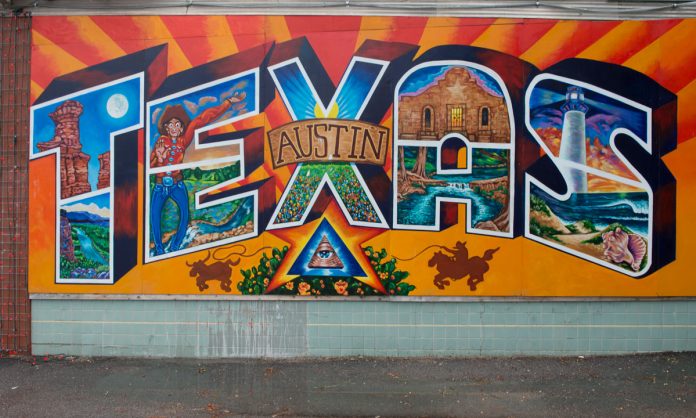
Original image from Carol M. Highsmith’s America, Library of Congress collection. Digitally enhanced by rawpixel.

texas
Continue reading

In Santa Barbara Battle Between Cannabis and Wine, Grand Jury Reprimands County Supervisors

A battle over wine and cannabis in Santa Barbara County, pitting neighbor against neighbor, is coming to a head. On June 30, a report from a grand jury tasked with monitoring local government issued a scathing report criticizing the county board for its mismanagement of the county's cannabis production.

"The jury believes the Board of Supervisors, in their hubris, failed the people of Santa Barbara County," the report stated. "Now they must amend the cannabis ordinances to regain the people's trust."

Santa Barbara County adopted some of the most lenient regulations for commercial cannabis farming in California and has seen an explosion in production in the past four years—last year, the county was home to 35 percent of the state's licensed cannabis acreage. As a result, locals, particularly vintners, have grappled with cannabis' impact on the area.

In April, a nonprofit made up of more than 200 vintners, farmers and homeowners, dubbed the Santa Barbara Coalition for Responsible Cannabis, filed suit against the county's board of supervisors, citing what the coalition considers a lack of ordinances regulating cannabis production and a faulty licensing program which has allowed farmers to stack licenses and create some of the largest cannabis grows in the state. The suit aims to cut down on the number of unpermitted cannabis farms and stop the board from issuing further permits by challenging the environmental reviews that have led to permit approvals.

"Pursuing legal action is not fun, nor is it a place we wanted to go, but it's necessary," Debra Eagle, a board member for the coalition and general manager for Alma Rosa winery, told Wine Spectator. Eagle felt like the board of supervisors was ignoring its citizens.

Kathy Joseph
Continue reading

Legal for a Day – The Mahashivaratri Festival and Nepal’s Changing Cannabis Laws

From a cannabis heaven in the 60’s and 70’s to a restricted country after caving to international pressure, Nepal has some interesting cannabis laws, and might be looking at some substantial updates toward legalization in the near future.

Nepal is a landlocked country in Asia surrounded mainly by India from three sides, and Tibet from the north. It’s a very small country land-wise, stretching approximately 500 miles East to West, and ranges from 90-150 miles going north to south. Nepal was finally established as a democratic republic after a period of upheaval and violence due to a Maoist insurgency.

Due to its location, being stuck in an isolated zone between two big countries, Nepal was essentially left to its own devices, and didn’t reach the development level of other countries. As an interesting point, the population of Nepal is very young with 60% under the age of 30, and 80% under the age of 45. This is not an indication of a very low life expectancy, as both males and females live on average until at least 70.

 Nepal’s sordid cannabis history

In the 60’s and 70’s, not only was cannabis legal in Nepal, but Nepal itself, being a part of the notorious “Hippie Trail”, was a huge bastion of hippy antics and open marijuana smoking. The Hippie Trail was a land trail that could be cheaply traveled to get to Asia from Europe via Turkey, Iran, Afghanistan, Pakistan, Nepal, and India.

It ended in Katmandu where the infamous Freak Street acted as the culmination of open smoking culture in Nepal, a hippie hideout not so different from Freetown Christiana in Denmark’s Copenhagen. This brought a lot of traffic through Nepal, and fueled its already abundant subculture of cannabis smoking. Cannabis smoking has always been a large part of Nepalese culture, in a religious capacity, medicinal, and recreational as well.

By 1972 Nepal was one of the biggest hash exporting countries, but this came to an end in 1973 when Nepal updated its laws after being pressured by the US and UN. In July of 1973 all shops were closed and all growing licenses cancelled. This had a major impact on the GDP of the country which was reliant on the cannabis industry.

e-mail icon
Continue reading

Thailand Hospitals get green light to produce cannabis meds

Health promotion hospitals in the provinces have been given the go-ahead to concoct traditional medicines using cannabis to cure illnesses common in their areas, the Department of Thai Traditional and Alternative Medicine says.

The department has authorised the hospitals, formerly known as suk sala clinics, to produce traditional medicine from among 16 recipes permitted by the government which include cannabis as their base ingredients, said Marut Jirasetthasiri, the department director-general.

The hospitals, however, must have a traditional Thai medicine expert on duty to prepare the medicine.

Dr Marut said the hospitals will be free to produce medicines which they believe will provide effective cures for common illnesses in the localities.

More people have begun to seek treatment using traditional medicine, he said.

e-mail icon
Continue reading

Does Cannabis Legalisation Lead to an Increase in Road Traffic Accidents?

In the lead up to the legalisation of recreational cannabis in Canada and the ongoing legalisation in some US states, opposing parties continued to warn of the resulting increase in road traffic accidents. However, following legalisation, a number of studies have aimed to assess whether this is actually the case.

Cannabis is the most commonly used drug in the world. It is also widely assumed that the age group that is most likely to use cannabis is the same as those that cause the most road traffic accidents. Although, cannabis, like alcohol, does impair several driving-related skills, according to a study published in The American Journal on Addictions it’s more of a dose-related question.

The impact of cannabis may vary from person to person. For example, it depends on whether the consumer is an experienced user or not; an individual’s tolerance, and how much THC – the main psychoactive compound- is present in the cannabis will affect the level of impairment each person experiences.

Driving under the influence of cannabis

While some found that cannabis users are more likely to drive slower, compensate more effectively in dangerous situations and increase following distance, driving under its influence does appear to have its risks.

One study found that “marijuana use increases reaction time and the number of incorrect responses to emergencies.”

e-mail icon
Continue reading

Want to legally grow weed in the Netherlands? You'll have to show you can produce at least 6,500 kilos per year

The Dutch government has clarified some of the finer details of its new application to legally cultivate recreational cannabis.

As a part of a new experiment in the Netherlands to legalize the production of cannabis and its sale in coffee shops in the country, only applicants with the capability to produce a minimum of 6,500 kilograms per year will be considered, reports Marijuana Business Daily. That said, growers won’t necessarily be on the hook to produce that much.

With the new application, would-be cannabis growers in the Netherlands will have a lot more red tape to deal with in order to be licensed for production, including a background check and permission from the mayor of the jurisdiction where the cultivation is planned.

Legal growers will also need to buy seeds from licensed sellers and will be supplied with mandatory track-and-trace software provided by the government.

Rate this article: 
Select ratingGive Want to legally grow weed in the Netherlands? You'll have to show you can produce at least 6,500 kilos per year 1/5Give Want to legally grow weed in the Netherlands? You'll have to show you can produce at least 6,500 kilos per year 2/5Give Want to legally grow weed in the Netherlands? You'll have to show you can produce at least 6,500 kilos per year 3/5Give Want to legally grow weed in the Netherlands? You'll have to show you can produce at least 6,500 kilos per year 4/5Give Want to legally grow weed in the Netherlands? You'll have to show you can produce at least 6,500 kilos per year 5/5
Authored By: 
Regional Marijuana News: 

e-mail icon

7 States May Be Voting on Marijuana in November

Despite it being a crazy year, Americans can't lose sight of the fact that Election Day is a little over three months away. At stake are 435 seats in the House of Representatives, roughly a third of all seats in the Senate, and, of course, the Oval Office.

But it's an equally important election at the state level. No matter what happens federally, it's unlikely that marijuana's scheduling will be changed anytime soon. This means state-level cannabis legalizations will continue to play a major role in growing the U.S. pot industry.

This coming November, residents of three states are guaranteed to be voting on a cannabis measure in their respective states. However, four additional states may join.

New Jersey: Will be on the ballot

While there's no such thing as a lock when it comes to voting on the legalization of marijuana, New Jersey's constitutional amendment that aims to legalize adult-use marijuana appears to have a very good chance at passing. According to an April survey from Monmouth University, 61% of New Jerseyans would be in favor of a statewide legalization of cannabis. 

If approved, New Jersey would likely be on its way to approaching $1 billion in annual sales by the midpoint of this decade. Curaleaf Holdings (OTC:CURL.F), which leads all U.S. multistate operators in terms of total operating dispensaries (57), would certainly welcome this legalization. Curaleaf already has a presence in the Garden State's medical marijuana industry, and it would likely be able to pivot its existing infrastructure to take advantage of adult-use weed sales within the state.

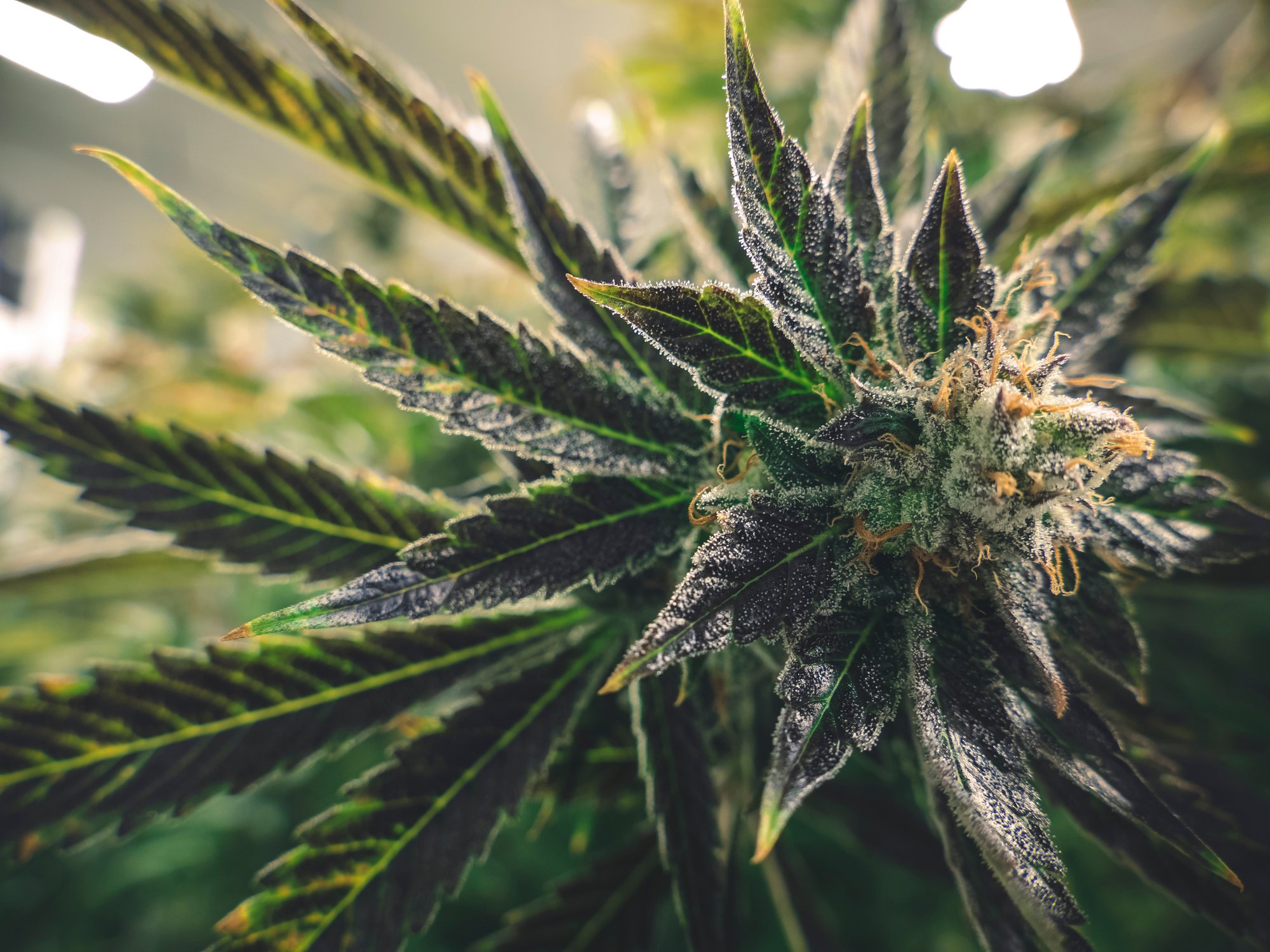
An up-close view of a flowering cannabis plant growing in a commercial cultivation farm.
Continue reading

Legalisation of cannabis in Canada deemed a success

A highly regarded British think-tank focused on reforming drug laws thinks Canada’s legalisation and regulation of cannabis has gone well.

Transform Drug Policy Foundation has been monitoring Canadian reform efforts for some time, and advised the Canadian Government and some provinces on how to develop regulations prior to legalisation. Its positive views of Canada’s initiatives is a significant contribution in assessing our journey away from criminalisation of simple possession and use of recreational drugs.

There have been a number of efforts at assessing our first year of legalisation and beyond. Not all of them have been as positive as Transform’s evaluations.

The think-tank’s accounting is sophisticated but also provides a primer of Canada’s experiences with legal cannabis, the provision of which was deemed an essential service in Ontario during the early days of the Covid-19 pandemic.

Transform’s assessment delves into the fundamentals — growing, processing and producing. The diverse ways the drug is sold to consumers in the provinces and territories is summarised succinctly and clearly.

e-mail icon
Continue reading

WeedLife.com