WeedLife News Network

Hot off the press cannabis, marijuana, cbd and hemp news from around the world on the WeedLife Social Network.

Oklahoma cannabis businesses sue over residency, location requirements

Several medical marijuana businesses in Oklahoma are asking a judge to block the state from enforcing laws they say could prevent some licensed cannabis businesses from continuing to operate.

The businesses are asking an Oklahoma County district court judge to block the Oklahoma Medical Marijuana Authority from requiring cannabis business owners to be residents of the state for at least two years and mandating that dispensaries be located more than 1,000 feet from schools and preschools.

The laws, passed by Oklahoma's Legislature in 2019, sought to clarify State Question 788, which legalized medical marijuana in the state. But some cannabis entrepreneurs say the laws are on the verge of putting them out of business.

The lawsuit alleges the legal changes and subsequent rules adopted by the OMMA left "hundreds, if not thousands" of licensed dispensaries within 1,000 feet of a school entrance. Similarly, the lawsuit alleges some licensed business owners, who moved here after the passage of SQ 788, have not been Oklahoma residents for two years, which means they could lose their business licenses.

One of the companies involved in the class-action lawsuit filed this week, KC's Cannabis, LLC, says it is located more than 2,000 feet away from a nearby school, but within 1,000 feet of the entrance to the dugout of a softball field, which falls within the OMMA's definition of a school entrance.

e-mail icon
Continue reading

AG Barr’s Bias Allegedly Spurred Investigations Of Cannabis Industry

A Department of Justice whistleblower has said that U.S. Attorney General William Barr directed the agency’s Antitrust Division to investigate proposed mergers of cannabis companies because of his “personal dislike of the industry.” In written testimony released on Tuesday before a planned congressional appearance, Justice Department attorney John Elias said the investigations were a waste of federal resources and were continued over the objections of career staff.

Elias, who testified before the House Judiciary Committee on Wednesday, wrote that the Justice Department’s Antitrust Division had been instructed to look into a total of 10 cannabis industry mergers. In one case, the merger of MedMen and PharmaCann, employees were instructed by Barr in March 2019 to continue an investigation, despite the findings of a preliminary review that the cannabis industry appeared to be fragmented and that “the transaction was unlikely to raise any significant competitive concerns.”

“Rejecting the analysis of career staff, Attorney General Barr ordered the Antitrust Division to issue Second Request subpoenas,” Elias said, referring to the Justice Department’s most exhaustive type of merger probe. “The rationale for doing so centered not on an antitrust analysis, but because he did not like the nature of their underlying business.”

Including the MedMen merger with PharmaCann, “the Antitrust Division launched ten full-scale reviews of merger activity taking place in the marijuana, or cannabis, industry,” Elias wrote. “These mergers involve companies with low market shares in a fragmented industry; they do not meet established criteria for antitrust investigations.”

DOJ Leaders Aware Of Barr’s Bias

Elias also contends that several members of the division’s political leadership were aware of Barr’s disdain for the legal cannabis industry. During a staff meeting last September, Assistant Attorney General Makan Delrahim, the head of the Antitrust Division, “acknowledged that the investigations were motivated by the fact that the cannabis industry is unpopular “on the fifth floor,” a reference to Attorney General Barr’s offices in the DOJ headquarters building,” Elias wrote. “Personal dislike of the industry is not a proper basis upon which to ground an antitrust investigation.”

e-mail icon
Continue reading

How Marijuana Reform Intersects With Policing And Racial Justice

Marijuana history ties directly into larger conversations around police brutality and systemic racism than most Americans realize.

When Brookings Institution senior fellow John Hudak wrote Marijuana: A Short History in 2015, cannabis legalization was still regarded with a curious novelty by many Americans. Since then, cannabis has emerged in the national conversation through politics, culture, medicine, wellness, and more. And in light of recent discussions around policing and systemic racism in the United States, Hudak believed it was important to build upon that history and discuss how the roots of prohibition impact us today.

Hudak wrote a new edition to his book, which will be available June 30. To promote the book’s launch, Brookings hosted a webinar with Hudak, Buddings Solutions CEO/founder Shanita Penny, and Politico reporter Natalie Fertig to unpack how cannabis sits at the intersection of race, politics, and culture in America.

When many Americans think about marijuana history, Hudak explained, they focus on the 60s and 70s, when Richard Nixon introduced the Controlled Substances Act, which officially criminalized cannabis. But the foundation of cannabis laws as we recognize them today really started at the turn of the 20th century.

“Cannabis law and drug policy in general really had explicitly racist roots in the United States. Cannabis laws initially came about out of fear of Mexican immigration to the United states,” said Hudak. “The term ‘marijuana’ was rooted in that attempt white Americans and immigrants coming across the border of Mexico. That spiraled into a broader, racially divisive set of policies that, by the 1920s, begin to vilify black Americans, in addition to Latinos and immigrants.”

Everything You Need To Know About Cannabis And Hemorrhoids
Continue reading

Congress Asked To Not Interfere With FDA On Cannabidiol Regulation

Four major U.S consumer groups are urging Congress to reject proposals to fast-track approval of cannabidiol (CBD) use in dietary supplements and food products.

The Food and Drug Administration (FDA) is currently evaluating the safety of CBD – and taking their time doing it. Last year the Administration acknowledged the potential for cannabidiol, but said it needed to “CBD”: Collect Better Data. As recently as March, the agency said it still had many gaps in knowledge.

The time the FDA is taking is causing all sorts of issues for the nation’s hemp sector and creating confusion in consumers. The Administration has come under increasing pressure from some corners of Congress to provide official guidance on cannabidiol extracted from hemp.

However, the Consumer Federation of America, the Center for Science in the Public Interest, Consumer Reports, and the Public Health Institute want the FDA to have all the time it needs.

Furthermore, a letter co-signed by the four groups urges Congress to give FDA the resources and authority it needs to ensure all dietary supplements and food additives are safe, and to defer to FDA’s expertise in conducting safety reviews.

e-mail icon
Continue reading

Why 7-Eleven Is Waging War Against Oklahoma Marijuana Dispensaries

“What we’re hearing from 7-Eleven is they consider this a criminal activity and money laundering,” said one dispensary owner.

By all accounts, the Oklahoma cannabis industry is a runaway success. Medical marijuana sales routinely break expectations and smash records, even amid the pandemic. Oklahoma permits a free-market system for medical cannabis, or as close to one as possible. That means no licensing caps, no municipality zoning restrictions, and doctors can recommend cannabis for any ailment they see fit.

This has allowed Oklahoma to avoid the typical headwinds thwarting growth potential in other markets. But for some dispensary owners, a new obstacle has emerged from an unlikely opponent — 7-Eleven.

Back in January, 7-Eleven Inc. bought out property leased to multiple cannabis dispensaries in Oklahoma. Dispensary owners were told not to worry. “On day one, nothing changes,” an email sent to owners read. “There is no need for lease assignments.”

Now, amid a global pandemic, multiple dispensary owners have been informed those leases won’t be renewed. Owners like Starla Norwood, a registered nurse who operates The Nurses Station with her husband, didn’t receive a written notice or explanation for why they’d been kicked out. Instead, the property managers delivered the news over the phone. The message was direct and clear: Marijuana businesses had 14-days notice to vacate by the end of June.

7-Eleven Now Has CBD Dispensing Robots
Continue reading

Is Croatia Trying to Legalize Recreational Cannabis?

Like many EU countries, Croatia has been slowly changing its laws to allow for greater legal (or at least decriminalized) cannabis use. However, earlier this year, some in Croatia’s government got a bit impatient, attempting to jump steps in order to legalize recreational cannabis.

Two of the legal acts that govern drug law in Croatia are the Criminal Code and The Law on Combating Drugs Abuse. The manufacturing, trade, and possession of drugs are regulated by The Law on Combating Drugs Abuse which passed in 2001, and which has undergone updates since that time. It outlines preventative measures for curbing drug use and dealing with drug users, and specifically forbids growing, possessing or supplying drugs. The Criminal Code is used for the prosecution of more serious crimes.

In mid-December, 2012, the Croatian parliament voted in a bill to decriminalize personal use amounts of illicit substances, making possession of these amounts no longer a criminal offence (but rather a misdemeanor). Croatia does not establish what a personal use amount is, and leaves the designation to the courts in each particular case.

To be clear, whereas some personal use laws in other countries come with very few repercussions so long as the amount is within the legal requirement, Croatia’s decriminalization laws still leave an offender to pay a fine of possibly more than €2,000, ordered into a rehabilitation program, or required to do community service. Before the change in law, simple possession charges could result in up to three years in jail. The Criminal Code encourages courts to use alternatives to prison whenever possible, especially when the prison sentence would otherwise be six months or less.

The law, which went into effect on January 1st, 2013, did nothing to decriminalize personal cultivation of any drug for any reason. Cultivation, processing, and production of drugs, even without intent to sell, can result in 6 months – 5 years in prison. With intent to sell it can be anywhere from 1-12 years. It can go up to 15 years if the crimes involve children, and up to 20 years with the involvement of organized crime.

Medical cannabis in Croatia

In October, 2015, Croatia legalized the use of cannabis for medicinal purposes. Under the law, doctors can prescribe medications in different forms containing THC with regulations putting a cap at .75 grams of THC per month for a patient. One of the driving forces behind the change in legislation came about because of a case involving a multiple sclerosis sufferer who was caught growing and using cannabis personally to treat his symptoms. The man in question was caught with 44 pounds of cannabis with which he was using to make oil.

e-mail icon
Continue reading

The Three “R’s” of Why Federal Cannabis Legalization Could Happen Now

Having been in the alcohol and tobacco permitting industries for decades, we’re often asked when cannabis will be federally legalized. Until now, it’s been hard to say, but things could finally be coming to a head. 

Cannabis is now legal in 33 states. In the last few years, federal legalization has become a political issue and the conversation around taxation and decriminalization has gotten more specific. With a number of bills working in Congress, and one which has passed committee, it appears that federal law may change soon to tax and regulate cannabis. 

Why Now?

After so much time, why could we finally be close to federal legalization? It’s a culmination of three “R’s”: regulation, revenue, and reform.  

Regulation

We’ve needed to bring cannabis out of the back alleys for years, standardizing production, labeling, permitting, and distribution. We believe that the cannabis industry needs to be legalized, regulated, and taxed for the safety of the general public and as an economic driver of the communities that cannabis businesses serve. The experiences of states which have legalized the product provide examples of how this may happen. 

Revenue

The impacts of COVID-19 have made state budgets a hot item. States need money and, if the federal government is going to bail them out, cannabis legalization would provide an excellent funding source. New Frontier Data estimates that the U.S. legal cannabis industry could be worth $29.7 billion by 2025. The industry saw a 32% growth in 2019 just over the previous year. The need for revenue will be a defining factor in legalization, driving the government’s decisions over the next few years.

e-mail icon
Continue reading

Colorado Marijuana Users Think Stoned Driving Policies Are Out Of Touch

According to a new study, Colorado users question the dangers of driving while high and desire more research about legal limit and self-assessment guidelines.

Cannabis consumers labeled Colorado policies about driving while under the influence of marijuana “out of touch,” although not in a way you might expect. A two-year study from the Colorado Department of Transportation (CDOT) found Colorado marijuana users considered driving while high was, more often than not, not that dangerous.

They were also skeptical about many laws and regulations involving cannabis use and getting behind the wheel. Many heavy users relied on a “gut check” to determine whether they could drive safely or not after using.

“The more often people consumed cannabis, the less dangerous they considered driving under the influence of cannabis to be,” the study’s authors wrote. “Respondents who use cannabis typically believed individual differences in consumption or tolerance were mitigating factors in someone’s ability to safely drive under the influence.

“Most users are critical of laws, policies, and enforcement surrounding driving under the influence of cannabis,” researchers continued. “Cannabis supporters saw government policies as out-of-touch.”

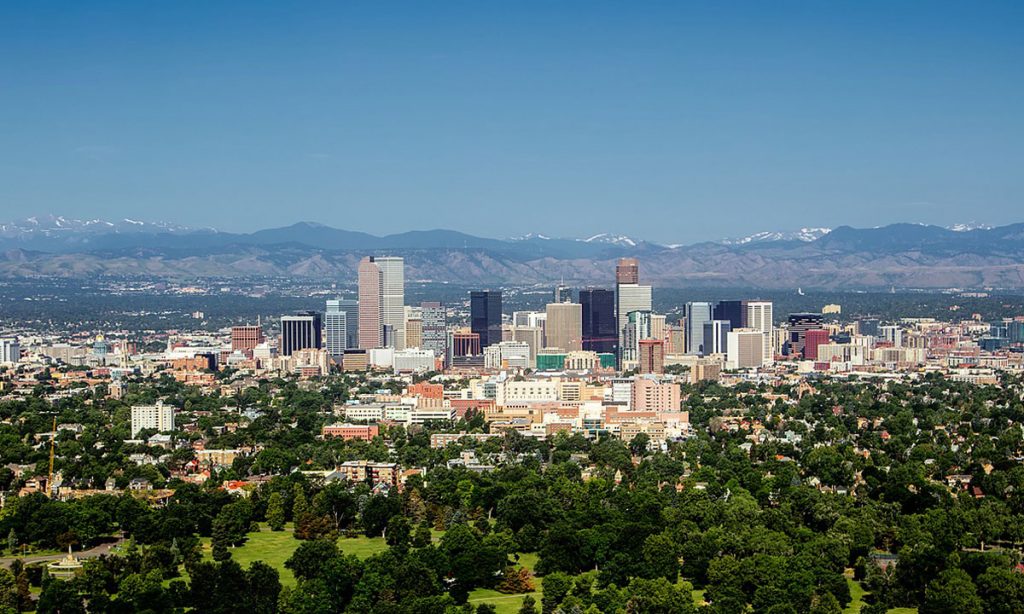
Here's How Marijuana Is Helping Keep Denver Safe
Continue reading

Montana Activists Submit Cannabis Legalization Petitions

A group of Montana cannabis activists said on Friday that it had collected enough signatures for two proposed ballot measures that would legalize the recreational use of marijuana in the state to qualify for the November election. The group, New Approach Montana, submitted petitions for the two initiative proposals to government officials, who will begin the verification process.

The group submitted more than 80,000 signatures for Constitutional Initiative 118, an amendment that would set the legal age for purchasing cannabis in Montana at 21. Another 52,000 signatures accompanied a petition for Initiative 190, a separate statutory ballot measure that would permit recreational marijuana commerce in the state while setting a 20% tax on retail sales.

For the constitutional amendment initiative to qualify for the ballot, supporters must submit at least 50,936 valid signatures from registered voters and must meet a minimum threshold of signatures in at least 40 of the 100 Montana state House of Representatives legislative districts. For the statutory initiative to be certified for the November election, 25,468 verified signatures including a minimum from at least 34 districts must be turned in to government officials.

Broad Support For Legalization

Pepper Petersen, a spokesman for New Approach Montana, said that the campaign had taken precautions to help slow the spread of the COVID-19 coronavirus while collecting signatures. Those gathering signatures wore masks and supporters were given wrapped, single-use pens to sign the petitions. Despite the extra measures and the limited time to canvass following a mandated stay-at-home order, the campaign was able to gather signatures from every one of the state’s House districts.

“We think it represents what’s going to happen in November,” Petersen said. “There’s going to be an overwhelming support for this in every corner of the state. There’s not a legislative district that’s not represented in the signatures. We feel like the support out there is deep and wide, and it’s really exciting.”

e-mail icon
Continue reading

Marijuana Legalization in South Dakota Lies with Voters Now

Marijuana legalization in South Dakota could see daylight in 2020. The state passed measures to legalize both recreational and medical marijuana. Luckily, both of the measures collected the required signatures before the COVID-19 pandemic hit. The only issue was if the pandemic didn’t retreat by November, it would be hard for people to vote on the measures. Now that lockdown restrictions have been easing, voting should be possible. So, the fate of legalization in South Dakota lies in voters’ hands.

South Dakota voters will decide on marijuana legalization

The state’s marijuana legalization group “South Dakotans for Better Marijuana Laws” initiated two proposals. The good news amid the pandemic is that both of the measures gathered enough signatures. As a result, they qualified for the ballot. The voters will decide on both proposals in the upcoming November elections.

The first proposal will legalize and regulate marijuana for adults 21 and older.The second proposal will establish a medical marijuana law for qualifying patients.

The support for marijuana legalization is huge in the state. Many members of the campaign group think that cannabis being illegal at the federal level prevents productive people from getting jobs. People have to deal with drug conviction charges related to marijuana even though it’s legal in most states. As reported by KELOLAND News, the group held a zoom conference recently. The group presented a case stating how “legalizing and regulating marijuana would free up prisons and jails” and additionally bring in “$30 million of tax revenue by 2024.”

However, some local law enforcement questioned approving the measure. The group said that there would be restrictions as well. Marijuana legalization will be in voters’ hands. They will decide whether or not to legalize recreational and medical marijuana in the state this year.

Legalization would boost cannabis companies

The soaring demand for cannabis amid the pandemic shows that it’s important in the US. More states have been focusing on legalization efforts despite the pandemic. They think that legalization could help states recover financial losses amid COVID-19. Notably, the states include Texas and New Mexico. The U.S. Virgin Islands’ governor also stressed that marijuana legalization could lead to economic recovery. To learn more, read U.S. Virgin Islands’ Governor Supports Marijuana Legalization.

e-mail icon
Continue reading

Why U.S. Marijuana Legalization Is Likely on the Way in 2021

Three hundred to one. Those were the odds against the U.S. legalizing marijuana at the federal level that I calculated 10 months ago. I didn't just pull those numbers out of thin air. They were based on a reasoned analysis of all the dynamics in play last summer.

But a lot has changed since August 2019. The chances of a change in U.S. marijuana laws are much greater than they were just a few months ago. In fact, I'd go as far as to say that U.S. marijuana legalization is now likely on the way as soon as 2021. 

.

Why federal changes haven't already happened

Before we get to why my view has flipped 180 degrees, let's look at why federal anti-marijuana laws haven't already changed. After all, public support for marijuana legalization is at all-time highs (no pun intended). Thirty-three states have legalized medical cannabis. Eleven states have legalized recreational pot. More states will probably be added to both lists after the November elections.

The lack of federal marijuana legalization hasn't been due to a lack of trying. In November, the U.S. House of Representatives Judiciary Committee even passed a bill that would, among other things, remove marijuana from the list of federally controlled substances and allow states to establish their own marijuana policies. 

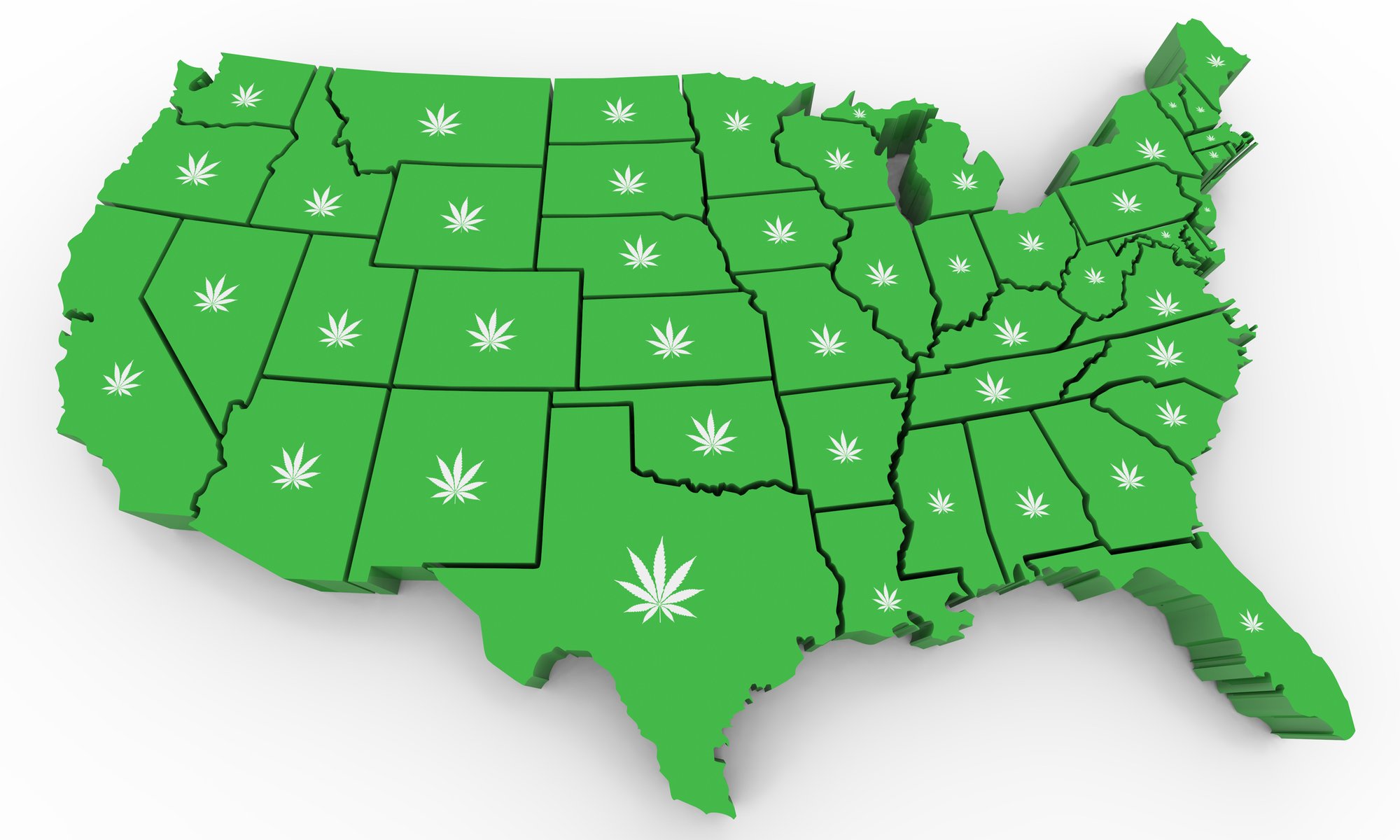
Green map of continental U.S. with cannabis leaf images on each state
Continue reading

Israel: Cannabis legalization bill clears first hurdle

A bill to legalize cannabis use was approved by the Ministerial Committee for Legislation on Sunday, passing its first hurdle on the way to becoming law.

The legislation will decriminalize the possession of up to 50 grams of marijuana while fully legalizing the possession and consumption of up to 15 grams by individuals above the age of 21.

If the bill becomes law, selling and purchasing marijuana for personal use will be legal for those above 21 and authorized shops will be allowed to sell cannabis product, through growing marijuana at home will still be illegal. The legislation also outlined medical cannabis reform.

“For the first in the State of Israel’s history, my legislative move is officially beginning to regulate the cannabis market in Israel,” Likud MK Sharren Haskel, who co-sponsored the legislation with Blue and White MK Ram Shefa, wrote in a Facebook post. “I’m proud to bring good news to over one million cannabis users and tens of thousands of sick people.”

Housing Minister Yaakov Litzman of the ultra-Orthodox United Judaism Party and Jerusalem Affairs Minister Rafi Peretz of the national-religious Jewish Home both voted against the bill.


Continue reading

Illinois Delays Cannabis Dispensary Licenses Intended For Minority Entrepreneurs

Budding weed entrepreneurs will have to wait at least another month to learn if they’ve won one of 75 coveted dispensary licenses from the state.

The licenses were supposed to be awarded May 1, but Gov. JB Pritzker signed an executive order at the end of April indefinitely suspending the decision, citing difficulties related to the coronavirus pandemic and glitches in processing the applications.

Originally, all 75 licenses were to be awarded at the same time, but now some applicants could be awarded a license next month while others will have to wait until at least early August.

Former state Sen. Toi Hutchinson, who oversees the state cannabis program, told the Cook County Cannabis Commission the delay is necessary to make sure licenses are issued correctly and to avoid lawsuits that may arise from applicants that lose out. Hutchinson acknowledged the delay hurts those waiting on the decision.

“My biggest worry is that any delay … makes it very hard for the people, who are the entire intent of this, to weather,” Hutchinson said.

e-mail icon
Continue reading

Virgin Islands: After 8-Hours of Debate, Senate Still Undecided on Cannabis Bill

Senators spent Friday scrutinizing a 60-page piece of legislation proposed by Gov. Albert Bryan that would revise the Virgin Islands Cannabis Use Act, but after eight hours of debate the lawmakers were divided as to whether the measure was ready.

Meeting as the Committee of the Whole, the Senate discussed the bill that would expand the medical marijuana program approved by the Senate and signed into law by Bryan a year and a half ago. The new bill proposes amendments to the existing act to provide better regulation, and generate tax revenue that could alleviate the impending insolvency of the Government Employee Retirement System.

Sen. Kurt Vialet said when the original act was passed by the previous Legislature and signed into law, it was under the assumption that those who needed medical cannabis would be supplied access, but the cannabis board that had 12 months to come up with policies to regulate the industry failed to do so, asking for an extension in December. This has caused senators to feel pressure to not let the process drag on.

But some committee members have been skeptical of the enhanced bill since the governor first unveiled it in December. Friday’s hearing demonstrated at least some senators remain on the fence and certain testifiers who were proponents of the bill also showed hesitation.

Barbara LaRonde, president of the V.I. National Organization for the Reformation of Marijuana Laws testified, that the legislation should be examined for social inequities and specifically address the community hardest hit by the war on drugs.

Sens. Janelle Serauw, Donna Frett-Gregory and Kurt Vialet during Friday's meeting. (Photo by Barry Leerdam, Legislature of the U.S. Virgin Islands)
Continue reading

Medical marijuana growers face additional hurdle before planting in Missouri

The medical marijuana industry in Missouri continues to prepare to serve thousands of patients who say they need the product to relieve a variety of health issues.

But some business owners tell 41 Action News they were caught off guard by an additional hurdle imposed by the Missouri Department of Health and Senior Services, which oversees the industry, before growers can put seeds in the ground.

After each of the 338 medical marijuana license holders is verified by the state, they have to go through an additional verification process.

"Once those 338 were were chosen by merit, then the department of health did a verification process where they go through the application with a license holders then they prove that everything they put on the application was accurate, correct and conforms to the department’s rules," MoCannTrade spokesman Jack Cardetti said.

But there's a final step, called a commencement inspection, before cultivators, manufacturers and dispensaries can start up "where they actually come on site, look at your facility, make sure it has all the security that you said it was going to have, make sure it has all the promises that were made in the application were followed through on," Cardetti said.

Only two of 60 cultivators have made it through that process so far near St. Louis.

e-mail icon
Continue reading

4 States Where Legalizing Marijuana Will Have to Wait Until 2021 or 2022

Despite all that's gone on in 2020, it's important not to lose sight of the fact that we're now less than five months away from Election Day. We'll see voters choose who'll be president of the United States for the next four years, and could even witness the current political makeup of Congress shift.

But one of the more interesting stories for 2020 is going to be which states "go green."

Currently, two-thirds of all states have legalized medical marijuana, with 11 of those states allowing for the consumption and/or sale of adult-use marijuana. With Election Day approaching, a dozen states have at least one ballot initiative devoted to cannabis, three states of which are guaranteed to have residents voting on those measures in November.

While there are a handful of states that look like near-certainties to legalize marijuana in November, there are just as many surprising disappointments. The following four states, which on the surface would look to have a good shot at legalizing adult-use cannabis in 2020, will have to wait until next year, or perhaps even 2022, to get their chance to go green.


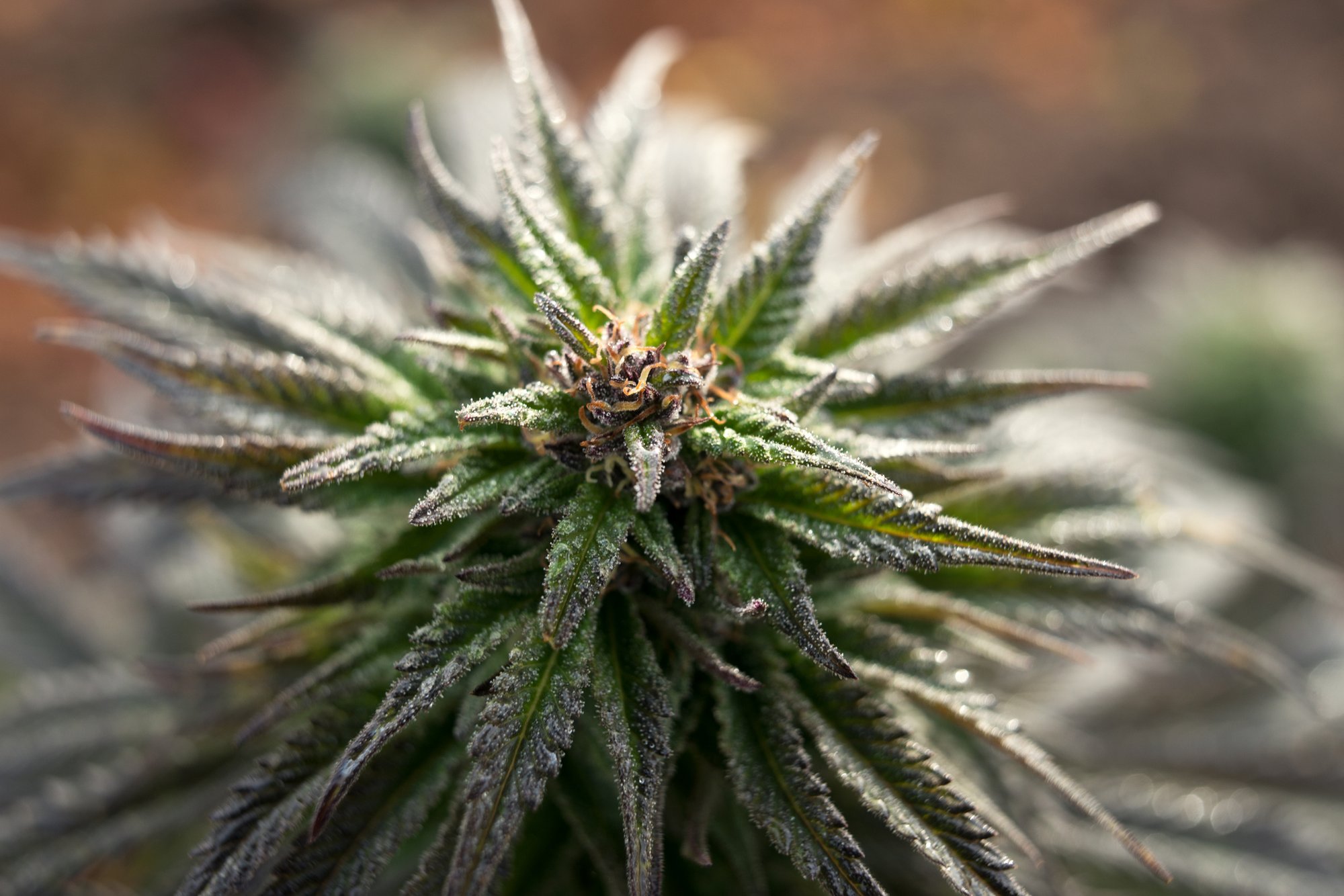
An up-close view of a flowering cannabis plant.
Continue reading

Nevada Gov. To Pardon Tens Of Thousands Of Marijuana Convictions

Should the resolution pass, the Nevada pardons represents growing marijuana-centric criminal justice reform occurring nationwide.

A new resolution introduced by Gov. Steve Sisolak would pardon tens of thousands of low-level marijuana offenders in Nevada, a state that voted to fully legalize cannabis in 2016. Sisolak will present the resolution to the Nevada Board of Pardons Commissioners next week. If passed, it will provide an unconditional pardon for anyone convicted of possessing less than one ounce of marijuana.

“The people of Nevada have decided that possession of small amounts of marijuana is not a crime,” Sisolak said. “If approved, this resolution will clear the slate for thousands of people who bear the stigma of a conviction for actions that have now been decriminalized.”

The Governor’s office clarified that such pardons would not apply in cases of possession with intent to sell. A bill, signed last year by Sisolak, already exists that allows low-level marijuana offenders to petition the courts to expunge their records. This new resolution would remove that bureaucratic step and pardon offenders automatically.

Sisolak first floated the resolution back in March at a Board of Pardons Commissioners meeting. Though a pardon does not overturn a conviction, it does restore various rights to offenders, including the right to vote and hold certain jobs and public office.

Nevada's Legal Weed Retail Sales
Continue reading

In Arizona, Cannabis Legalization Is The One Thing Republicans And Democrats Agree On

In the desert, Republicans and Democrats have found something to agree upon: A majority in both parties plan to vote to make marijuana legal in the upcoming Arizona election if they get the chance.

A new survey by public affairs consultants HighGround of Arizona voters found that 65 percent of them plan to vote “yes” on the Safe and Smart Arizona Act if it makes the November ballot. The act would make weed possession legal for those over 21 and set up a state-regulated adult-use cannabis market

Only 25 percent of those surveyed said they oppose the measure. About nine percent have not made up their mind.

The survey asked if the voters, knowing what they know not about the act, would vote “yes” or “no.” The responses were:

Definitely Yes - 47 percentProbably Yes - 18.5 percentProbably No - 6.3 percentDefinitely No - 19 percentDon’t Know, Refused - 9.3 percent

The support mirrors that found at the national level. A Gallup survey from fall 2019 found that about 66 percent of U.S. citizens support making weed legal, the same number who said the same thing in 2018. The survey also found support from older people and those from both parties.

e-mail icon
Continue reading

Malta’s COVID-19 response secures cannabis industry growth

Malta Enterprise has played a pivotal role in ensuring support for research and industry in the face of the COVID-19 epidemic. It says Malta’s COVID-19 response is promising for the cannabis industry.

For most of 2020, coronavirus has shaped our lives and the world in which we live. The outbreak and official responses to it have affected all industries and businesses all over the world. The good news is that Malta has been very effective in mitigating and navigating this scenario – so much so that Hans Kluge, General Regional Director of the World Health Organization, singled the country out as the model that other countries should look up to and emulate. This is good news for the cannabis industry in Malta.

Malta cannabis industry: weathering the COVID-19 crisis

Even from an economic point of view, Malta has been praised for the way in which we have handled the situation and supported the local industry in this time of need. In its report titled ‘The great lockdown’, the International Monetary Fund predicts that, of the EU Member States, Malta will be the jurisdiction to suffer the least. The GDP contraction for Malta is expected to be the lowest amongst the EU28, standing at -2.8% in comparison to the average EU contraction of -7.5%. In the post-virus economic landscape, Malta is predicted to grow its GDP by 7% in 2021.

The local manufacturing industry has weathered the first part of this crisis very well. Our sturdy manufacturing ecosystem, which operates in different niches, exports to different markets and trades in different international currencies, has managed to overcome the initial impact of COVID-19. In no uncertain terms, this has been supported by the fact that the country never went into total lockdown, resulting in no days lost from production. In fact, some manufacturers effectively increased production and are now further expanding their operations.

This is very reassuring news to the booming and evolving medical cannabis sector, which is currently setting up its operations on this Mediterranean island. In fact, Malta’s cannabis sector has continued its activities as planned and predicted, with five projects having set up their facilities and applied for the requisite licence from the Malta Medicines Authority. Later on this year we should be seeing the first exports of medical cannabis originating in Malta.

e-mail icon
Continue reading

The Hopes of Illinois’ Social Equity Applicants

In this day and time, it is almost impossible to turn on the TV and not find a show or news conference or even live footage of an ongoing protest over “Black Lives Matter” or “Economic Equality”. The same situation exists with social media platforms, radio broadcast, etc., all sharing the common theme of social equity. While we all seek a solution, the state of Illinois is doing their part by awarding the coveted “Adult Use Cannabis” business licenses for Craft Growing, Infusion, Transportation, and Dispensaries to social equity applicants by using a scoring system that favors the social equity applicant. We believe in this vision at TGC Group and our dream is to “pay it forward”. 

We see the world, especially for minorities living in poverty, quite differently because of where we come from. “Black Lives Matter” is a movement to save the lives of all people and have human life viewed equally no matter the race of an individual. Economic equality is a totally different fight. Our communities that are impoverished need cash infusions. There needs to be financial infrastructure that recirculates the dollars from the poor communities, and that comes from having business owners in the affected community put their profits back into their community. There needs to be a system of lending that is not based on credit scores and criminal background checks because most people at the bottom will never qualify. 

An example would be my husband, Christopher Lacy, who went to prison for three-and-a-half years for growing cannabis back in 2009. He is not a violent man; he never even had a fight in prison. He spent much of his time in prison teaching inmates how to read, write, and most importantly, he tried to teach them economics. He is educated about cannabis because he has been intimately involved with this plant and has been growing it for about 20 years. Yet when he tried to apply for jobs in Illinois to grow cannabis, his invisible barrier started with the resume. Just think about it: my husband knows more about cannabis than most people in the industry today and could manage a facility with ease. No one can see his worth because of his background and work experience. So many others in our poor communities face the same situation. We know for a fact that there is hidden talent in the impoverished communities and prison system; we intend to find it and empower these individuals to rebuild what was destroyed by the War On Drugs. I speak for all the ghettos when I say this: Give us access to the capital and we will get the rest done on our own. Conventional banks have their hands tied with this approach because they are regulated, but private funds have more flexibility. The excess capital needed to rebuild will not come from jobs, it only comes from ownership.

Luckily, J.B. Pritzker and Toi Hutchinson are aware of this and hence created the social equity fund to help the social equity applicants fund their projects if and when they are awarded a license. We must find a way to give to the bottom so that the dollars can trickle up. Trickle Down economics is kind of like that movie “Platform” on Netflix: there are never enough resources to get to the bottom because the people sending the resources down have no idea how to get them to the bottom floors of society. Trickle Up economics can start at the very bottom rungs of society and still will reach to this highest level of the economic system because it’s built in such a way that it will inevitably get there. 

Capital Is Needed To Rebuild

These new licenses, literally pathways to financial freedom if operated correctly and efficiently, are revenue machines capable of changing our community. This change does not come from providing jobs, although jobs do help and will be available, but by providing capital to rebuild. These funds can provide scholarships, business loans, even small infrastructure projects that can be accomplished via the tax revenue generated by the local governments. We have already made a written commitment to give a portion of net margins to the village. Capital in the right hands can make dreams come true. In theory, poverty can be solved. Poverty is not a prerequisite to the American way of life. That is why we were so proud to get zoning approval by our village. They see what we see. We can change neighborhoods like Beacon Hill. The dollars must recirculate in the community. Wherever you see high poverty rates you see high crime rates. This is not a coincidence. If you can lower the poverty rate you can lower the crime rates. This raises the quality of life for everyone. We see the state is on board, the county is on board, the Village of Park Forest is on board, and the citizens of the community are on board. Now all we need is the license and capital to get the resurrection started.  

e-mail icon
Continue reading

WeedLife.com