WeedLife News Network

Hot off the press cannabis, marijuana, cbd and hemp news from around the world on the WeedLife Social Network.

WHO cannabis rescheduling and its relevance for the Caribbean

Following its first-ever critical review of cannabis, in January 2019 the World Health Organization (WHO) issued a collection of formal recommendations to reschedule cannabis and cannabis-related substances. 53 member states of the Commission on Narcotic Drugs (CND), two of which are Caribbean states, are set to vote on these recommendations in December 2020.

Among the WHO’s recommendations, two in particular appear to be the most urgent and relevant for Caribbean countries: namely recommendation 5.1 (concerning the acknowledgment of cannabis’ medicinal usefulness) and recommendation 5.4 (concerning the need to remove the term ‘extracts and tinctures of cannabis’ from the 1961 Convention). Supporting these two recommendations presents an opportunity for Caribbean governments and civil society to decolonise drug control approaches in the region, as well as to strengthen the international legal basis for emerging medicinal cannabis programmes in several Caribbean countries. Also, it provides the historical opportunity to gain global recognition for two deeply rooted and unique traditions: the use of cannabis as sacrament in religious Rastafarian practise, and its use as traditional medicine, particularly but not exclusively by the Maroon community. 

In this regard, the recommended principle ‘asks’ for Caribbean advocates and policy makers are to:
Support the most urgent recommendations 5.1 and 5.4.Actively engage with CND members, in particular Jamaica, the only English-speaking Caribbean member of CND, emphasising the urgent nature of recommendations 5.1 and 5.4.Actively engage in relevant meetings and processes at the CND level, as well as emphasising the need for further follow-ups to the critical review.Actively engage and encourage support from other Caribbean governments and other key stakeholders such as CARICOM and OECS, as well relevant civil society organisations, experts, and affected communities.
Rate this article: 
Select ratingGive WHO cannabis rescheduling and its relevance for the Caribbean 1/5Give WHO cannabis rescheduling and its relevance for the Caribbean 2/5Give WHO cannabis rescheduling and its relevance for the Caribbean 3/5Give WHO cannabis rescheduling and its relevance for the Caribbean 4/5Give WHO cannabis rescheduling and its relevance for the Caribbean 5/5
Authored By: 
Article category: 
Regional Marijuana News: 

e-mail icon

Use Algorithms To Expunge Cannabis Convictions

Cannabis prohibition is one of the worst public policies in modern times. Prohibition is often used to trample on citizens’ rights around the world, including and especially citizens of color.

Efforts to dismantle global institutional racism must absolutely include ending cannabis prohibition.

Right now there are only two countries that have legalized cannabis for adult use – Uruguay and Canada. Hopefully more countries will follow suit sooner rather than later.

Countless people have had their lives ruined because of cannabis prohibition, and many continue to have their lives ruined well after they have paid their fine and/or served their sentence.

The ‘Cannabis Scarlet Letter’

Cannabis convictions punish offenders well after they have served their debt to society via showing up on background checks.

e-mail icon
Continue reading

Oklahoma: Cannabis sales through June nearly eclipses all of 2019

Oklahoma cannabis users are on pace to spend twice as much this year compared to 2019.

As of June, Oklahomans spent more than $385 million this year on medical marijuana. That's nearly the entire amount spent during 12 months last year, according to an analysis of data from the Oklahoma Tax Commission.

Much of that boost came during the early days of the coronavirus pandemic, when collections of the 7% tax on medical marijuana rose dramatically. Sales have leveled off, however, and dipped slightly in June to an estimated $74.8 million.

Oklahoma's cannabis market attracted the attention of outsiders hoping to cash in on the state's love of legal marijuana and regulations that are less strict than other states. Peter Barsoom, founder of Colorado-based 1906, recently inked a deal with local businesses to unveil his line of edibles manufactured in pill form.

Barsoom didn't seek out Oklahoma. Stash House, a distribution company, and 24k Labs reached out to 1906 early this year during a trip to Denver, he said. Barsoom called Oklahoma one of the most exciting markets in the country, partly because of its regulatory structure.

e-mail icon
Continue reading

AHA Wants Marijuana Removed From Schedule I

The American Heart Association says marijuana should be removed from the USA’s Schedule I controlled substance category – but not to encourage wider use.

Not all cannabis is equal in the eyes of the law in the USA. Hemp and marijuana are both cannabis, but are treated very differently.

The 2018 Farm Bill removed hemp’s Drug Enforcement Administration Schedule I controlled substance designation. Hemp is defined as any part or derivative of the Cannabis sativa L. plant containing less than 0.3 percent tetrahydrocannabinol (THC) by weight. Anything above that is considered marijuana at a federal level, and is still a Schedule I controlled substance (listed as “marihuana”).

Schedule I indicates a substance has no accepted medical use and a high potential for abuse – so it needs changing just based on the medical use aspect. The American Heart Association suggests it also needs to change to enable further research.

“Our understanding of the safety and efficacy of cannabis has been limited by decades of worldwide illegality and continues to be limited in the United States by the ongoing classification of cannabis as a Schedule 1 controlled substance,” said the AHA in a scientific statement published in the journal Circulation.

e-mail icon
Continue reading

Only 265 of estimated 500K possession charges cleared in 1st year of government program

One year after the Canadian government created a program to quickly and affordably clear cannabis possession charges from people’s criminal records, just 265 records have been cleared. 

Applicants can have small cannabis possession charges suspended from their criminal record so a background check for a job or housing comes up clean. 

The Liberal Party estimated 10,000 people would be eligible for the program while advocacy group Cannabis Amnesty calculate 500,000 Canadians are eligible.

But as of Aug. 7, 2020, barely a fraction of the anticipated applicants have completed the process.

According to numbers from the Parole Board of Canada, 467 people have applied to the program: 265 were approved; 196 were denied due to ineligibility or incomplete applications; four are being processed; and two were discontinued. 

e-mail icon
Continue reading

COVID-19 has caused legal weed to ‘cannibalize’ the illicit market

By the end of 2020, the legal cannabis industry is expected to surpass US$15 billion. But the money that weed generates on the illicit market far exceeds that amount.

Tracking exact figures is tricky because anonymous dealers and criminal networks aren’t exactly sharing sales data with the media. But estimates approximate the illicit market is more than four times the size of its legal market.

More specifically, New Frontier Data values the U.S. illicit

South Dakota submits industrial hemp plan to USDA for final approval

South Dakota has submitted its industrial hemp plan to the U.S. Department of Agriculture for approval. 

The plan lays out how the state will regulate industrial hemp, and South Dakota farmers will be able to begin growing industrial hemp once the USDA gives final approval. 

The South Dakota Department of Agriculture will continue to develop its program while it waits for that approval, and processors and growers will be able to find more information about applying for a hemp license in the near future, according to Derek Schiefelbein, industrial hemp program manager at the SDDA. 

"I am looking forward to working with industrial hemp producers and processors in South Dakota," Sheifelbein said.

The newly formed South Dakota Industrial Hemp Association applauded the SDDA's plan submission. Producers won't be able to grow hemp until the 2021 season, but the submission is an "important step," the association said in a statement.

e-mail icon
Continue reading

Legal Cannabis Market Just Can’t Compare to the Black Market

There’s no rule that says legal markets have to be bigger or smaller than black markets. In life, legal markets and black markets form counterparts that can change and vary in size and growth. In the case of cannabis, the black market wins out easily, and for very good reason.

Legal markets are your above-board markets. Products or services that are registered, that are taxed, that are counted in official inventories, and reported on to local and federal governments. If you want to buy a shirt and you go to Walmart, congratulations, you’ve helped support the legal clothing market. You’ve also helped support sweat shops and slave labor, but that’s beside the point.

The market itself, however unsavory, is legal. I point out the unsavoriness for a reason though. In all the talk about the negative aspects of black markets, it should always be remembered that legal markets can be just as dirty, dangerous, and detrimental to those involved.

Black markets (and I’ll include gray markets here) encompass the large blurry underbody. It’s like the big hulking iceberg underneath the tiny Titanic-tearing tip. It’s every sale that no government knows about. Every untaxed product and service. Every unregistered item that will never be counted in official inventories or reported to government bodies.

So if you’re buying knock off sunglasses from a guy on a street corner, or getting an 1/8 of really great skunk from your friendly neighborhood pot dealer, or giving in to the super cute kids on the street selling lemonade from a stand, you, my friend, have participated in a black market purchase. To be fair to those cute little kids, there aren’t many government bodies that are going to bust up their lemonade selling operation, but if the same kids continue that same operation into adulthood, they could be arrested for tax evasion.

The cannabis markets

The first things to know about the cannabis market is that it’s old, it’s huge, and it’s pretty stable. For as long as humanity has understood what the cannabis plant is, it’s been using it in different formulations ranging from medical applications to relaxing and feeling good.

e-mail icon
Continue reading

Delay of U.S. hemp rules could ease sector’s financial challenges

A U.S. senator has asked the Department of Agriculture to delay issuing final hemp rules under the 2018 Farm Bill until 2022, to delay costs associated with the new U.S. Domestic Hemp Production Program.

New York Sen. Charles Schumer called for the delay in a letter to the USDA last week. If implementation of the new rules is postponed, hemp growers and producers could continue to operate under the 2014 Farm Bill‘s pilot program. That would let them avoid what USDA estimates as $17,000 (€14,500) in compliance costs associated with the new rules.

Effect on other states

While Schumer is advocating for CBD interests in his home state, a federal delay could also give some financial relief to stakeholders in other states that currently operate under the 2014 Farm Bill.

“These costs do not just impact businesses across the United States but also state budgets that must alter their pilot programs to meet the demands of the Interim Final Rules,” Schumer wrote. “With bandwidth completely consumed by COVID concerns, the state regulatory agencies cannot focus on implementation of the Interim Final Rules. At this point, only 19 states have approved plans in place and enforcement efforts will deal a significant economic blow to the industry.”

Two industry organizations, the National Industrial Hemp Council and the National Association of State Departments of Agriculture also have written to Congress asking for a delay in implementing the new hemp rules.

e-mail icon
Continue reading

Cannabis Doing It's Best To Make a Terrible Year Just A Little Better

One clear outcome of the coronavirus pandemic is explosive growth in cannabis sales in every major market around the country. Even in places like Illinois, which just started legal adult-use sales about two months before the coronavirus hit the United States, sales continue to make records.

If 2020 is one of the worst years in recent history, people apparently are turning to cannabis for a degree of comfort and solace - even NBA players

The proof is in the sales figures. Florida and Arizona have established new records in medical marijuana sales. Colorado hit $192 million in recreational and medical marijuana sales in May, a record for the state that was the first to allow adult-use sales. Oregon sales reached $100 million for the first time since 2015.

Even the New York Times has taken note, writing about the increase in edibles sales as the coronavirus has spread across the country. The Times chalked it up to unease across the nation, writing: “Anxious times (say, a global pandemic) call for palliatives, like meditation, exercise or, in some cases, weed.”

But it may be more than anxiety fueling the cannabis boom.

While tied to the pandemic, experts expected an increase in 2020 cannabis sales before social distancing and mask-wearing became commonplace. But certainly, the pandemic drove sales higher, faster.

e-mail icon
Continue reading

The Laws And Regulations On Hemp CBD In All 50 States

Some states have aligned themselves with the FDA’s position. Others have taken a more permissive approach. Many states have provided little to no guidance on the subject of Hemp CBD.

The 2018 Farm Bill removed hemp from the Controlled Substances Act did not affect or modify the Federal Food, Drug, and Cosmetic Act (“FDCA”) or the Food and Drug Administration’s (“FDA”) ability to promulgate regulations and guidelines that relate to hemp under. The FDA regulates a wide variety of medical and consumer products sold in the United States including food, drugs, dietary supplements, medical devices, cosmetics, and tobacco products.

The FDA has approved of the use of CBD in the prescription drug Epidiolex. As a result, the FDA has indicated in press releases, enforcement letters, and its website that Hemp CBD cannot be used in foods, beverages, or dietary supplements. This is because under the FDCA, any article that is investigated as a new drug cannot be used in food, beverages, or dietary supplements, unless the article was widely marketed in those products prior to the drug investigation.

In addition, the FDA has taken a hard line against Hemp CBD in unapproved drugs. The FDA determines whether something is a drug based on its intended use, and determines a product’s intended use, in turn, based on how it is marketed. If a manufacturer or distributor makes any type of health claim (“CBD cures cancer” or “CBD may treat inflammation”) or human structure claim (“CBD may increase levels of calcium in bones”) about a product that the FDA has not investigated and approved as a drug, the FDA will consider it a drug. Foods, ingredients in foods, drugs, and dietary supplements are all subject to premarket FDA approval.

The FDA also regulates tobacco and nicotine tightly but does not have clear regulatory authority of smokable hemp products, such as dried flower, e-liquid and vape pens. That’s because generally, these products don’t contain any tobacco or nicotine. To clarify, the FDA likely could have regulatory authority over these products, but it hasn’t established a clear jurisdictional hook.

hemp is officially legal in the united states
Continue reading

Cannabis Legalization Officially Added To Arizona Ballot

Arizona voters will have a chance this year to make their state the latest to end pot prohibition.

A petition spearheaded by a pro-legalization group had its signatures officially certified by Arizona Secretary of State Katie Hobbs on Monday, clearing the way for the proposal to qualify for the state’s ballot this November.

Hobbs, a Democrat, said on Twitter that the “the petition exceeded the minimum requirement with approximately 255,080 valid signatures,” and that the measure will appear on the ballot as Prop. 207.

The petition was circulated by Smart and Safe Arizona, a group that has centered its pitch for legalization around economic opportunity for the state, saying that a marijuana industry would create jobs and opportunities, with revenue providing “additional resources for police training, enforcement and task forces,” as well as more funding for the state’s community colleges. The group said it had submitted more than 420,000 signatures. Smart and Safe Arizona asserts that the new law would generate $3 billion in new revenue in the first decade alone. 

If passed, Prop. 207 would legalize “the sale, possession and consumption of one ounce of marijuana” for adults aged 21 and older. The measure would also include certain safeguards, such as the banning of “smoking marijuana in public places like restaurants and open spaces like sidewalks and parks,” as well as heightened penalties for “for driving under the influence of marijuana and gives police departments funding for enforcement, training, equipment and task forces.” It would also ban “the sale of gummy bears, gummy worms and other products that resemble kids’ candy,” and would limit “the amount of THC (the chemical responsible for the “high” in marijuana) to 10 milligrams per serving of edible product.”

e-mail icon
Continue reading

California Cities Bring Forth Lawsuit Over Home Delivery Rule

Some California communities are upset about the statewide rule that allows home delivery, and are taking the state to court to see if they can ban home delivery in their areas. 

So far, however, the judge has sided temporarily with the state when it comes to whether or not these cities have a leg to stand on in their case. Although the cities have banned recreational sales, they don’t have any specific ordinances in place that would ban delivery, which would need to be the case for them to move forward. 

“The League of California Cities and police chiefs had complained that unrestricted home deliveries would create a chaotic market of largely hidden pot transactions, while undercutting local control guaranteed in the 2016 law that broadly legalized marijuana sales in the state,” stated an article by the Star Tribune. “The dispute between the state and 25 of its local governments raises a foundational question in the legal marijuana economy: Who is in charge, the state bureaucracy that oversees the marketplace, or local governments where pot is grown and sold?”

So far, a group of municipalities have filed a lawsuit as of April 2019 hoping to get home delivery banned from their areas. This includes Beverly Hills, Riverside and Santa Cruz County, and the  cities of Agoura Hills, Angels Camp, Arcadia, Atwater, Ceres, Clovis, Covina, Dixon, Downey, McFarland, Newman, Oakdale, Palmdale, Patterson, Riverbank, San Pablo, Sonora, Tehachapi, Temecula, Tracy, Turlock, and Vacaville.

On the other hand, many have pushed for home delivery in California specifically for the reason that so many areas have banned cannabis sales in localities. Home delivery helps get patients with limited mobility access to medicine they may otherwise not have, and is a huge step towards growing the industry. 

e-mail icon
Continue reading

Australia: TGA Approves Record Number Of Medical Cannabis Applications

Australia’s Therapeutic Goods Administration (TGA) had a busy July in relation to approving applications for medicinal cannabis products.

Australia’s Special Access Scheme (SAS) enables suitably authorised health practitioners to access therapeutic products not included in the Australian Register of Therapeutic Goods (ARTG). The only cannabis product currently included in the ARTG is Sativex (nabiximols), which contains THC (tetrahydrocannabinol) and CBD (cannabidiol).

There are several different pathways to gaining approval for cannabis medications through the SAS – categories A, B and C. Medical cannabis applications are generally via the Category B pathway.

Up to 31 July 2020, the TGA had approved more than 56,000 SAS Category B applications for unapproved medicinal cannabis products. That number is a cumulative figure over a very long period of time – since 1992, so nearly 30 years.

Approval numbers have certainly picked up in the last year or so. Updated figures from the TGA indicate 5,564 approvals were issued last month, so nearly 10% of all approvals ever made under SAS Category B occurred in July this year. July’s figures were well up on June’s (4,630) and more than double July last year (2,207).

e-mail icon
Continue reading

U.K. athletes to face shorter bans for recreational drug use

The U.K. Anti-Doping organization is changing its rules, reports Canex.

Athletes who fail drug tests for cannabis and cocaine use will face shorter bans as the organization looks to place a greater focus on performance-enhancing drugs. The reform is part of a wider movement focused on athlete welfare, and the acceptance of widening cannabis use.

Additionally, it brings the organization in line with the World Anti-Doping Agency, which announced similar changes this week.

Under the new WADA rules, testing positive for recreational drugs out of competition will result in a one to three-month ban, instead of two years, reports CBC.

“We have developed the new rules to ensure that we are able to meet the latest challenges threatening clean sport and that athletes and the public can have confidence in clean competition,” said UKAD Chief Executive Nicole Sapstead.

e-mail icon
Continue reading

Canada's Marijuana Industry Has a New Problem

For years, cannabis stocks were the greatest thing since sliced bread on Wall Street. The expectation of ongoing state-level legalization in the U.S., coupled with Canada becoming the first industrialized country in the modern era to give marijuana the green light, was forecast to send pot stock valuations into the heavens -- and for a period of time this is precisely what happened.

However, marijuana stock investors have received a dose of reality since the end of March 2019. Supply issues have been persistent throughout Canada, whereas exorbitant tax rates on legal weed remain problematic in the United States. Though the long-term outlook for the legal pot industry is still very compelling, the near-term appears challenging.

This is especially true for the Canadian marijuana industry.

Canadian pot stocks appeared to have a clear path to outperform in Q2

Canada was expected to be a cannabis leader, but it completely blew its chance to be the industry's blueprint due to regulatory-based miscues and overzealous capacity expansion.

Then again, Canada looked to be turning the corner during the coronavirus disease 2019 (COVID-19) pandemic. According to Statistics Canada, revenue from licensed cannabis stores has been hitting record highs. Here are the latest monthly cannabis store sales figures (all figures in Canadian dollars (CA$)):

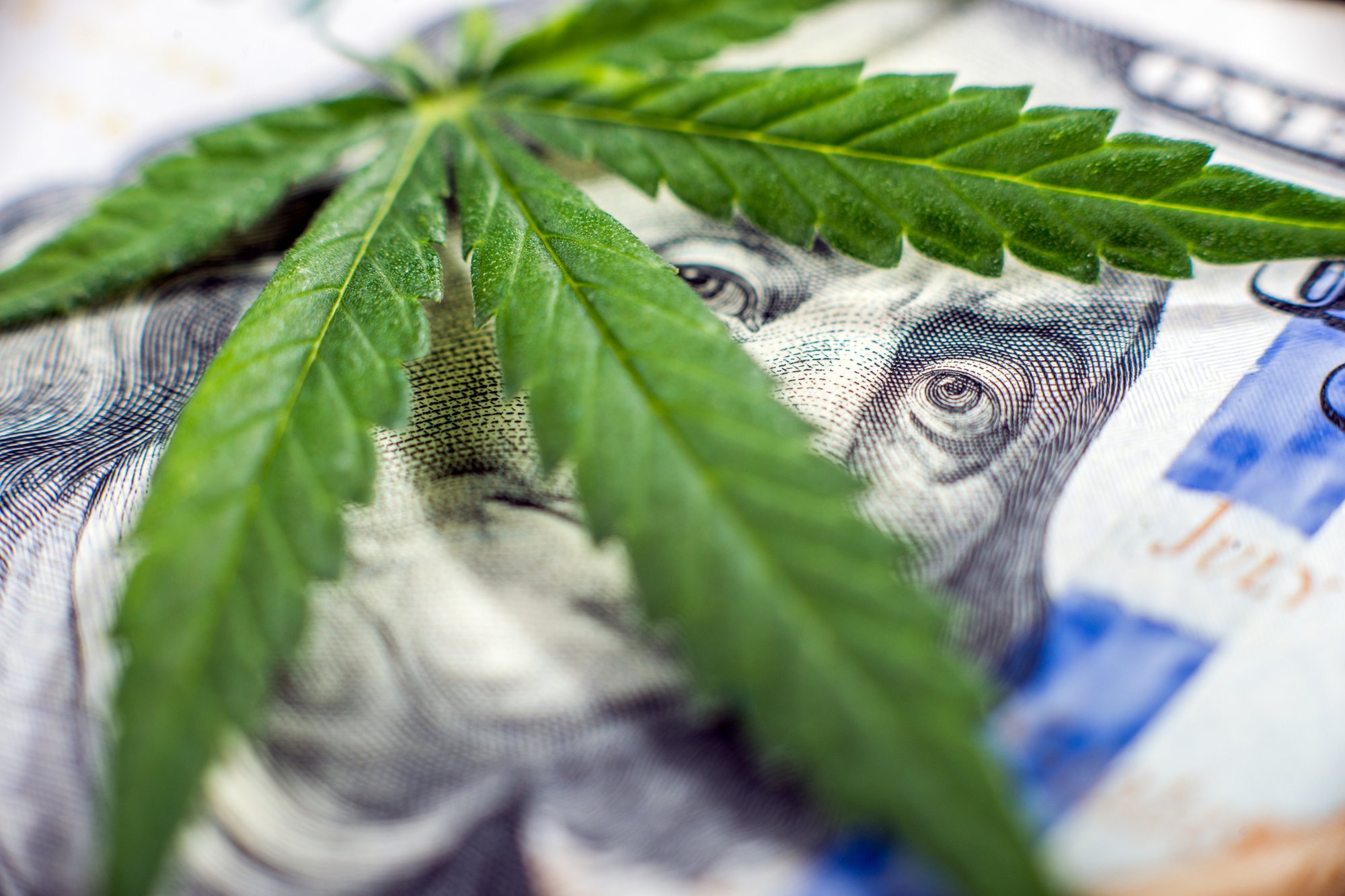
A cannabis leaf lying atop a one hundred dollar bill, with Ben Franklin's eyes peering between the leaves.
Continue reading

Thailand Bets on Private Medical Marijuana to Lift Economy

Thailand’s ailing economy, particularly its tourism and agriculture sectors, is poised to get a boost from new rules that ease the private cultivation and sale of medical marijuana.

The Cabinet amended the Narcotics Act on Aug. 4, pending Parliament’s approval, to allow private medical operators -- a category including some traditional medicine practitioners and farmers -- to grow and trade the crop including for both export and import. The move expands a cornerstone policy of Deputy Prime Minister and Health Minister Anutin Charnvirakul, who bet that the controlled legalization of marijuana would boost the wellness, travel and agriculture sectors.


Anutin Charnvirakul

Photographer: Nicolas Axelrod/Bloomberg

The latest plan will lift limits imposed when the country in 2018 became the first in Southeast Asia to legalize medicinal use of the herb. It also follows the opening in January of a medical-marijuana clinic in the Health Ministry facilities that offer free medicine to its patients. This does not include the 147 authorized clinics in the country that are currently able to prescribe it.

Thai Shopping Malls Prepare to Reopen With Robots, Drones & Masks
Continue reading

Enforcement Alone Won’t End California’s Illicit Cannabis Market

So long as it is extremely difficult and expensive to start and run a licensed cannabis business, there will be people who opt for the illicit market.

It seems like every week, there’s a new announcement of state or local enforcement actions or raids of allegedly unlicensed cannabis operators in California. Some time ago, this would have been welcome news to many licensed cannabis businesses in the Golden State that pay large sums of money to get licensed while illicit market operators can offer cheaper, tax-free products to consumers at a huge competitive (though not legal) advantage. Nevertheless, it’s becoming clearer that nothing the state is doing is really changing the illicit market, and this offers little solace to the participants in the regulated market.

To date, legislative efforts to ratchet up penalties haven’t really disincentivized unlicensed activity. For example, AB-97, a bill that passed in mid-2019 that authorized penalties of up to $30,000 per day for unlicensed activities, didn’t end California’s illicit market. In fact, a few months after that law passed, I wrote a post citing a then-recent audit that showed that there were nearly 3,000 unlicensed cannabis businesses in the state.

As I write this post, California continues to struggle with its illicit market. The state is considering adopting another bill (AB-2122) that would authorize similar, $30,000/day penalties against landlords and other third parties that aid and abet unlicensed operators, and the state indicated it would like to expand its police enforcement team. This is on top of the seemingly weekly news of raids and other enforcement activities.

Will these enforcement efforts really end or even significantly hamper California’s illicit market? In my opinion, the answer is a clear “no”–at least without a lot more help. As I wrote in 2019:

How The Marijuana Industry Is Battling The Black Market
Continue reading

Arizona Court Rules Marijuana Initiative Can Be on November Ballots

Late Friday, Maricopa County Superior Court Judge James Smith ruled that the Smart and Safe Act ballot initiative to legalize recreational marijuana for adults 21 and older in Arizona did not mislead voters about key provisions in its 100-word summary, as a frivolous lawsuit by a local anti-marijuana group claimed.

Overcoming the lawsuit and getting the initiative’s signatures certified by the Arizona Secretary of State are the last hurdles for the initiative to get onto the ballots this November, Arizona Capitol Times reported. In early July, the initiative submitted 420,000 signatures to the Secretary of State, which was about 180,000 more than the state required.

“At 100 words, the summary also cannot include everything,” Smith wrote. “That is why the full initiative must accompany the petition.” He continued, “This initiative is plain: It wants to legalize recreational marijuana. That is the principal provision. It is unlikely electors signing these petitions would be surprised by cascading effects of legalizing a formerly illegal substance.”

The lawsuit also claimed that marijuana legalization would lead to minors being exposed to marijuana-related advertising.

In his response, Smith said, “Voters will not be surprised that sellers (dispensaries) may advertise a now-legal product if the initiative passes.” He said it’d be no different than other adult products that are already advertised, from medical marijuana products to “condom commercials to ubiquitous beer advertisements.”

e-mail icon
Continue reading

Cannabis Legalization Is Not A Priority for Congress, Biden, or Trump. Here's Why.

The industry doesn't have the political clout or voter passion behind them to push weed over the finish line, but you can help.

Despite evidence that two-thirds of Americans support legalizing cannabis, federal moves towards legalization have been small and halting. Even simple measures, such as regulating banking in states where cannabis is legal, have a tough time getting support in Washington. Think about that.  How many issues in today’s polarized society have a two-thirds consensus? You’d think politicians could unite to present a rare bipartisan win and get on with it. You’d also think that presidential candidates scrambling for votes in a close election would want to tap into that 66 percent.

But unfortunately, you'd think wrong. What is going on?

Powerful opponents, little passion 

It’s true that some of the most influential people in politics oppose cannabis legalization. Mike Crapo, the chair of the Senate Banking Committee, comes to mind. Joe Biden has some personal opposition to legalization, as he was complicit in the War On Drugs back in the day. Recently, Biden successfully avoided supporting full legalization of marijuana in his unity message with former rival Bernie Sanders and in the Democratic Party platform. President Trump has been hot and cold on the subject, honoring an agreement with Colorado Senator Cory Gardner to hold back federal raids on state-legal cannabis operations but also appointing two consecutive anti-legalization Attorneys General. The second one, Bill Barr, has abused the antitrust laws to frustrate the industry.

But despite this opposition, individual actors, no matter how powerful, could not stop a large bi-partisan move towards legalization. The reason legalization is not moving forward is that its support is wide but not deep. A solid majority of Americans want legal cannabis, but it’s not a particularly important issue. 

e-mail icon
Continue reading

WeedLife.com