WeedLife News Network

Hot off the press cannabis, marijuana, cbd and hemp news from around the world on the WeedLife Social Network.

Marijuana Legalization May NotMarijuana Legalization May Not Be A Blue Issue Be A Blue Issue

In November of 2019, a Pew Research study revealed that 9 out of 10 Americans favor legalization of either medical or recreational/adult-use marijuana. As a political issue, the study found that a majority of Republicans – 55% - and a majority of Democrats – 78% - were in favor of legalization. American voters no longer believe marijuana should remain a criminalized, Schedule I substance. This is not shocking. The people have spoken, the money is flowing, and the globe keeps on spinning. 

Will marijuana policy emerge as a red or blue issue?

As his 2020 presidential campaign rolled out, former Vice President Joe Biden took the position that marijuana should be decriminalized, but not legalized. He justified his position by citing the debunked “gateway drug theory,” which even the National Institute on Drug Abuse (NIDA) has acknowledged lacks scientific merit.   

The task force further indicates that the federal government will not prosecute state-related marijuana crimes, and would view marijuana violations as something to be addressed with drug treatment rather than incarceration.


The task force also recommended not launching federal prosecution for legal matters at the state level - an obvious reference to Attorney General William Barr, accused of inappropriately using Justice Department funds to target the legal cannabis industry. Whether or not Barr abused his power remains to be seen. 

e-mail icon
Continue reading

Legal marijuana may be slowing reductions in teen marijuana use, study says

The legalization of marijuana for Washington state adults may be thwarting a steady downward trend in teen marijuana use, according to new research from the University of Washington.

The longitudinal study of more than 230 teens and young adults finds that teens may be more likely to use marijuana following legalization—with the proliferation of stores and increasing adult use of the drug—than they otherwise would have been.

"When we think about marijuana legalization, a worry is that underage use may go up," said Jennifer Bailey, the study's lead author and principal investigator with the Social Development Research Group in the UW School of Social Work. "Early use and heavy use during adolescence can have a lot of negative health consequences, then and later in life, so we don't want teen use to be going up."

Bailey notes that before marijuana legalization, rates of teen marijuana use and other drug use had both been decreasing over the last couple of decades.

The study was published July 9 in the American Journal of Preventive Medicine.

e-mail icon
Continue reading

FDA releases guidelines for cannabis-related research, but CBD will have to wait

The U.S. Food and Drug Administration released preliminary guidance on Tuesday on cannabis-related clinical research, outlining how companies seeking approval of drugs that contain cannabis or its derivatives must follow the traditional drug review and approval process involving clinical trials.

The agency is still working on rules for products that contain the cannabis ingredient CBD, which is widely held to have wellness properties but lacks research to support that view. Many companies are keen to market food, drinks and dietary supplements containing CBD, a non-psychoactive ingredient in the hemp plant, that they say can help with ailments such as anxiety.

Ever since the passage of the 2018 Farm Bill, CBD has existed in a sort of regulatory limbo. While the bill legalized hemp, it did not legalize CBD, but rather moved enforcement of the substance away from the Drug Enforcement Administration and over to the FDA. Because the FDA has approved a drug that contains the ingredient — GW Pharmaceuticals PLC’s GWPH, -0.93% Epidiolex, a treatment for severe forms of childhood epilepsy — it has told companies that they cannot not add it to food or drink or make health claims for its use in topicals.

The regulator is working to create a framework to allow companies that were hoping to launch CBD-based products bring those to market, but has cautioned that given its status as a drug, it might require clinical trials. In November, it warned that CBD could cause liver injury and other damage to the human body. The agency has cracked down on some companies, mostly for making unsubstantiated health claims.

“We recognize that there is substantial public interest in marketing and accessing CBD for a variety of products,” an FDA spokesperson said in emailed comments. “We are working toward a goal of providing additional guidance, and have made substantial progress. There are many questions to explore regarding the science, safety, effectiveness and quality of products containing CBD, and we need to do our due diligence.”

e-mail icon
Continue reading

Opinion: Cannabis Tax Revenues Are Going to Police Budgets, Not Communities

As cries to “defund the police” reverberate across the country, cities are looking at ways to shift funds from policing into communities. In California, tax revenues from marijuana should be a clear point of entry. When voters legalized cannabis in 2016, they expected the taxes would be invested in communities that were adversely impacted by the war on drugs. Instead, a new report finds that these revenues are actually funding the police.

The report, California Cannabis Tax Revenues: A Windfall for Law Enforcement or An Opportunity for Healing, which was authored by Youth Forward and Getting It Right from the Start, looks at 28 cities across California that collect cannabis-related tax revenue. It turns out that from the time Proposition 64 was passed to fiscal year 2019-20, 23 of the 28 cities analyzed saw double-digit increases in the amount of general-fund money going into their police budgets. Eight of the 28 cities saw their police budgets grow by at least 25 percent. Overall, the average shift in police budgets for these 28 cities was an increase of 19 percent over that three-year period.

One reason for this is that the revenue collected from cannabis in nearly all these cities (the one exception being Shasta Lake) goes into the general fund, where the largest chunk of spending goes toward police departments. Another reason is that a number of cities are directing these tax revenues toward special units focused on cannabis enforcement, setting the stage for a war on drugs 2.0.

Law enforcement is now beginning to “crack down” on unlicensed vendors, most of whom are people of color. For example, San Diego uses cannabis tax revenues for “enforcement of marijuana laws” and “proactively cracking down on illegal operators.” And Los Angeles allocates millions of their revenues toward the police overtime fund to “investigate and enforce laws relative to illegal cannabis businesses” among other law enforcement functions.

The tragic irony of this is that cannabis tax revenues are now continuing the historic pattern of arrests for nonviolent drug offenses that have disproportionately harmed communities of color for decades. As recently as 2013, Black people were arrested more than twice as often as white people for cannabis offenses, and by 2018 people of color comprised 75 percent of cannabis arrests. Though marijuana use is roughly equal among Blacks and whites, Blacks are nearly 4 times as likely to be arrested for marijuana possession.

e-mail icon
Continue reading

Another medical cannabis company joins in legal action against the state

A second medical cannabis company has filed a petition asking a state district judge to invalidate rules recently enacted by the New Mexico Department of Health. 

Pecos Valley Production, a medical cannabis company with dispensaries in the southern part of the state, filed a petition Monday in state district court calling for an annulment of regulatory rules that lawyers for the company called “arbitrary and capricious.”

The petition from Pecos Valley argues similar points as one filed last week, on behalf of cannabis producer and manufacturer Ultra Health. Both petitions are filed under the same case.

Lawyers for Ultra Health, one of which is Brian Egolf, who also serves as the state’s Speaker of the House, argued that the Medical Cannabis Program and the DOH failed to show reasoning for new rules. Ultra Health’s lawyers also accused the state of copying regulations from other states that have a medical cannabis program like Oregon and Colorado. 

The petition from Pecos Valley Production also accused the state of adopting rules from other states instead of properly consulting with medical cannabis producers in New Mexico.

e-mail icon
Continue reading

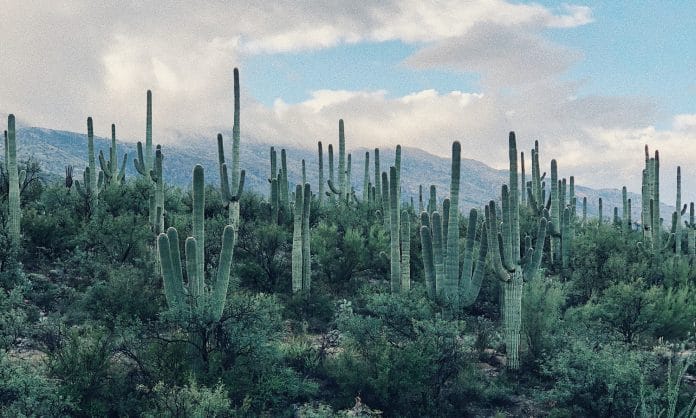
Arizona Emerges As Fierce Battleground For Marijuana Legalization

The prospect of legal marijuana in Arizona has drawn passion from advocates, opponents, and investors alike.

Just as quickly as support arose for legal recreational marijuana in Arizona, so too did opposition. The advocacy group Smart & Safe Arizona submitted more than 420,000 signatures earlier this month to put cannabis legalization on the ballot. The measure is currently in review, but only 237,645 valid signature are required to qualify.

An Arizona Public Opinion Pulse (AZPOP) poll released this week found that 62% of voters favor legal marijuana. The poll, which surveys about 600 likely Arizona voters each month, reports that support is divided evenly among urban, suburban, and rural voters. Only 32% of respondents oppose legalizing cannabis.

This represent a significant increase from polling data released in December 2019. An AZPOP poll at the time found 52% supported the initiative and 42% were against it.

“Four years ago, marijuana legalization nearly came to fruition,” said Mike Noble, Chief of Research at OH Predictive Insights. “And less than four months before Election Day, Arizona is on the cusp of allowing the adults to use recreational pot.”

Arizona Emerges As Fierce Battleground For Marijuana Legalization
Continue reading

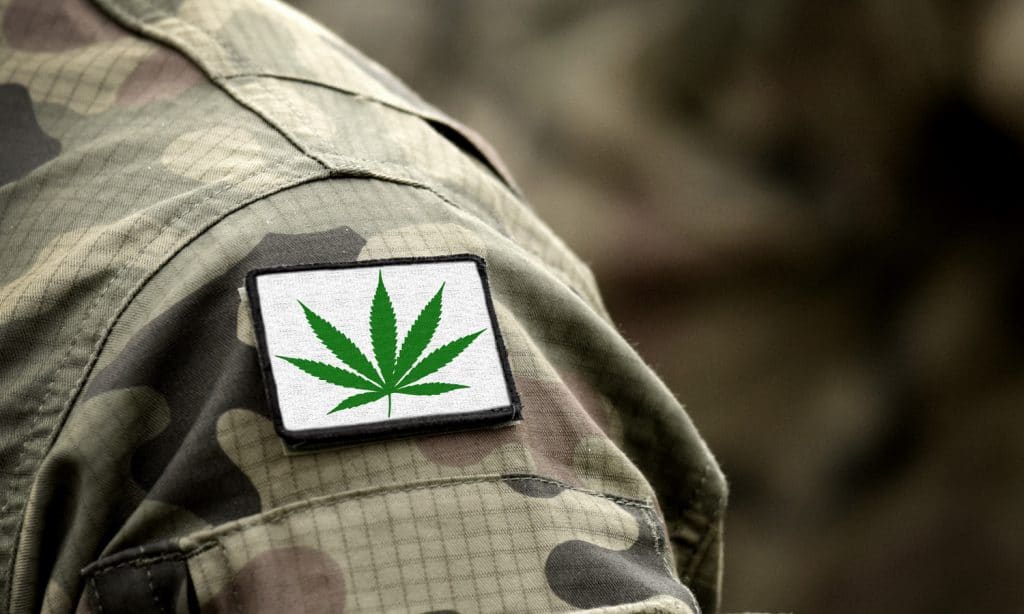
Congress Approves CBD Use For Military Members

The amendment, sponsored by Tulsi Gabbard, would supersede the Defense Department’s rule banning CBD for service members.

A longstanding zero-tolerance marijuana policy could be slowly eroding in the military. Earlier this month, a House committee approved a provision that would let troops who previously used cannabis to re-enlist. This week, Congress passed an amendment to allow service members the use of hemp and CBD products.

The amendment, sponsored by Rep. Tulsi Gabbard, was added to the National Defense Authorization Act (NDAA) and included several non-cannabis amendments. The House of Representatives approved the NDAA in a 336 to 71 vote Monday.

“The Secretary of Defense may not prohibit, on the basis of a product containing hemp or any ingredient derived from hemp, the possession, use, or consumption of such product by a member of the Armed Forces,” the amendment reads.

A memo that was recently made public revealed the Pentagon had quietly moved to make CBD use a punishable offense for military troops. The Department of Defense banned hemp and CBD products in all forms in February to ”protect the integrity of the drug testing program,” wrote Matthew Donovan, Acting Undersecretary for the Department of Defense. Previously, the Navy and Marine Corps. were permitted use of topical products, including shampoos and lotions.

Veterans Can Use Medical Marijuana, They Just Have To Pay For It
Continue reading

California Records Fewest Felony Pot Arrests Since 1954

Law enforcement data released by the California Department of Justice reveals that in 2019 the state recorded the lowest number of felony marijuana arrests since 1954, while showing that the racial disparity at play in such arrests continues to grow. 

In the department’s latest “Crime in California” report, law enforcement officials reported that 1,181 arrests for marijuana felonies were made in 2019, down 27% from 1,617 in 2018, the first year of legal recreational marijuana sales in the state. The data is not broken down by offense but includes such activities as unlicensed cannabis sales or cultivation and marijuana sales to minors.

While the total number of marijuana arrests declined last year, “the harassment went up,” said Donnie Anderson, the co-founder of the cannabis trade group California Minority Alliance.

In an analysis of the data, the California chapter of the National Organization for the Reform of Marijuana Laws (Cal NORML) said that the 2019 number of felony marijuana arrests is the lowest total since 1954. A total of 3,769 misdemeanor marijuana arrests were also made last year, down slightly from the 3,835 arrests recorded in 2018.

The report also revealed that the racial disparity prevalent in the enforcement of the nation’s drug laws continues in California despite legalization. According to demographic information included with the arrest data, Hispanic people made up 42% of the felony marijuana arrests in the state last year, while Black people accounted for 22%. White people made up 21% of those arrested, while other groups accounted for 15% of arrests.

e-mail icon
Continue reading

Will Biden Be "Slow-Mo Joe" When It Comes to Pot Legalization? Not Really

If you think the U.S. will soon legalize marijuana at the federal level, you're not alone. Canopy Growth CEO and former Constellation Brands CFO David Klein expects that it will happen in 2022. I've speculated that marijuana could be legalized nationwide as early as next year.

But could presumptive Democratic presidential nominee Joe Biden be putting the brakes on the pot legalization train? Some might think so after reviewing recommendations from a task force that the former vice president formed along with Sen. Bernie Sanders. However, there's more to the story.

Slow-mo Joe?

The Biden-Sanders "unity task force" created a 110-page document chock-full of policy recommendations across a wide array of issues. Among the issues that the task force considered was marijuana legalization. Anyone hoping that the team would recommend full legalization of pot in the U.S. probably came away a little disappointed after reading the task force's document.

The task force called for the decriminalization of marijuana using executive action. This includes automatically expunging all previous marijuana convictions for the use and possession of marijuana. In addition, marijuana would be removed from the list of offenses for which individuals can be deported from the U.S.

There were no recommendations to completely legalize marijuana at the federal level. Will Biden will be "slow-mo Joe" when it comes to legalization if he adopts his task force's recommendations? Not really.

e-mail icon
Continue reading

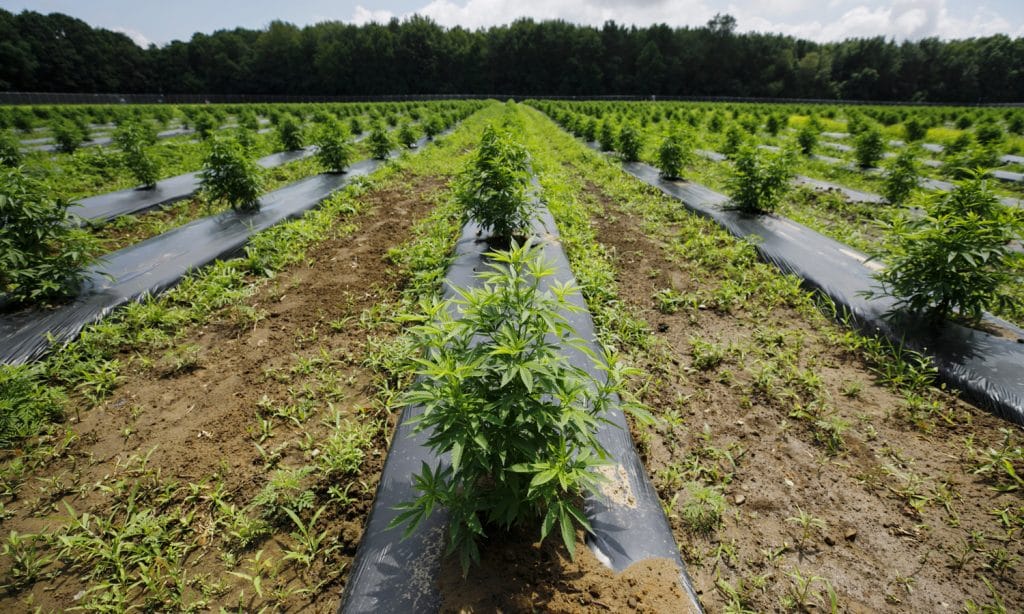
Another Three Hemp Plans Get USDA Green Light

Earlier this week, the US Department of Agriculture approved hemp production plans under the nation’s Domestic Hemp Production Program for Minnesota, Tennessee and Puerto Rico.

The addition of the three brought the total number of state, territory and tribal plans approved so far to 53. These plans provide details on practices and procedures that enable local hemp producers to operate according to the relevant state plan and in compliance with federal laws.

Where a state doesn’t have a plan but will allow hemp production, a national plan will provide regulation and licencing. So far, one state is noted as having a USDA Hemp Producer License – New Hampshire. As we recently mentioned, Hawai’i will also head down this path.

Minnesota Agriculture Commissioner Thom Petersen welcomed the approval of his state’s plan, saying it was a major step forward – but noted ongoing concerns relating to regulations including hemp testing requirements. While the plan is now approved, Minnesota will continue to operate under its 2014 pilot program, which is permissible for this year. Minnesota is by no means alone in this – the USDA status list indicates 23 states have expressed their intention to operate under 2014 pilot programs.

Last year more than 7,300 acres and 400,000 indoor square feet of hemp crops were planted in Minnesota. This year, 511 people currently have grower and/or processor licenses, and  8,605 acres and 4.66 million indoor square feet of growing space is registered with the Minnesota Department of Agriculture.

e-mail icon
Continue reading

California Targets Underground Pot Shops With Tax Warrants

As COVID-19 puts a crunch on the state’s coffers, the California Department of Tax and Fee Administration is targeting California’s multi-billion dollar underground cannabis economy to get a piece of the pie.

CDTFA announced last week it has taken  sweeping actions against 12 illegal cannabis retailers across SoCal, from Los Angeles to San Bernardino County, in recent weeks. The CDTFA served tax warrants to the dozen in collaboration with the California Highway Patrol, who also assisted with the investigations.

In the process of the tax raids, the state also seized nearly a million dollars in pot products on top of $100,000 in cash. CDTFA said that money will go toward the tax liabilities involved with the various retailers.

“The CDTFA’s collaboration with the CHP is an important deterrent to tax evasion,” stated CDTFA Director Nicolas Maduros said in a statement announcing the actions. “Tax evasion unfairly shifts the burden onto all other taxpayers and makes it tough for those businesses that are playing by the rules to survive.”

CDTFA went on to note that under the California Revenue and Taxation Code, if you are willfully evading or attempting to evade the cultivation tax, the cannabis excise tax or the sales tax you’re committing a crime. But it’s worth noting these actions target retailers that were completely illegal, as opposed to anyone who may be fudging the numbers in a legal operation to mail a few packages East.

e-mail icon
Continue reading

R.I. opens application window for 6 new medical-marijuana dispensarie

Many of the 55 or so state-licensed cultivators who now grow medical marijuana for the three existing dispensaries have their eye on winning one of the licenses.

The state Department of Business Regulation will begin accepting applications Friday from businesses hoping to win a license to operate one of six additional medical marijuana dispensaries.

But it likely won’t be until the end of next year at the earliest before any of the applicants who eventually win one of the lucrative licenses — chosen through a lottery — is selling marijuana, DBR officials say.

TO OUR READERS: This content is being provided for free as a public service during the coronavirus outbreak. Sign up for our daily or breaking newsletters to stay informed. Please support local journalism by subscribing to The Providence Journal.

The DBR released regulations in March for how those new dispensaries must operate, with the expectation of opening the application period soon thereafter.

e-mail icon
Continue reading

Indiana Smokable Hemp Ban Is Upheld (For Now)

The Seventh Circuit’s ruling is important because courts and legislatures may follow its interpretation of the 2018 Farm Bill with respect to smokable hemp.

The Agriculture Improvement Act of 2018 (“2018 Farm Bill”) legalized hemp by removing hemp and its derivatives from the definition of marijuana under the Controlled Substances Act (CSA). The 2018 Farm Bill also provided a detailed framework for the production of hemp and directed the U.S. Department of Agriculture (USDA) to promulgate regulations and permitted states to maintain primary regulatory authority over hemp cultivated with their border by submitting a plan to the USDA.

In 2019, Indiana passed Senate Enrolled Act 516 (“Act 516”) to bring Indiana’s definition of hemp in line with the 2018 Farm Bill and to establish a regulatory framework for hemp production. Act 516 criminalized the possession of “smokable hemp,” which it defines as any industrial hemp product “in a form that allows THC to be introduced into the human body by inhalation of smoke.” Ind. Code § 35-48-1- 26.6. The law provides that “[a] person who knowingly or intentionally manufactures, finances the manufacture of, delivers, finances the delivery of, or possesses smokable hemp … commits dealing in smokable hemp, a Class A misdemeanor.” Ind. Code § 35-48-4-10.1.

In short, Act 516 made it a crime to manufacture, deliver, or possess smokable hemp.

Days before Act 516 was to go into effect, a group of hemp sellers and wholesalers (collectively referred to here as “CY Wholesale”) filed a federal lawsuit challenging Indiana’s prohibition on smokable hemp (we first covered that here). In its filing, CY Wholesale sought a temporary injunction to stop Indiana from enforcing the smokable hemp ban.

Hemp Farmers Really Need A Break In 2020
Continue reading

Activists take to the streets to call for marijuana legalization in N.J.

Breonna Taylor was a 36-year-old Black emergency medical worker who was killed in March while police in Louisville, Kentucky carried out a no-knock warrant as part of a narcotics investigation.

“Breonna Taylor died as a result of the war on drugs,” said Josh Alb as he shouted to demonstrators on the steps of Newark City Hall on Friday. “The police went into her house for a no-knock warrant for drugs that were never there. This is one of the biggest pieces missing from the conversation surrounding her.”

The war on drugs was a narcotics prohibition campaign that was created under former President Richard Nixon in the 1970s. Alb said the policy is still being used today to harm Black people like Taylor.

Alb, a William Paterson University student who lives in Newark and works in the cannabis industry, led about 30 demonstrators down Broad Street on Friday while shouting her name. They called for the legalization of marijuana to begin to end the war on drugs.

Legalization could happen soon - at least in New Jersey. Voters will decide if it should become legal on Nov. 3.

March Against the War on Drugs
Continue reading

Will The U.S. Hemp Industry Ever Be Its Own Industry?


Industrial hemp has been around for millennia. As an agricultural commodity, its value  around the globe is well known. Its potential as a renewable, alternative resource is nearly limitless with far-reaching applications including bioplastics, textiles, biofuels, food, batteries, medicine, and beyond. Industrial hemp offers optimism to farmers and a beacon of hope to a world that desperately needs to transition away from a reliance on petrochemicals toward a plant-based economy.

In 1938, long before this modern wave of legality, study, and acceptance of hemp began spreading across the planet, Popular Mechanics wrote about its economic potential, deeming it the “billion-dollar crop.” The article was 80 years ahead of the curve. 

However, the hemp plant — defined as a cannabis plant with less than 0.3 percent delta-9 tetrahydrocannabinol ( THC) by dry weight — was prohibited in the 1930s, despite being a major cash crop in the US and the world. It was banned because of its association with its “illicit cousin,” marijuana.

The entire cannabis plant was effectively outlawed for cultivation and production in the United States under the Marijuana Tax Act of 1937 (with limited war time exceptions in the 1940s - “Hemp for Victory” campaign). This was further reinforced when scheduled as a controlled substance under the 1970s enactment of the Controlled Substances Act. It remained there for decades. 

In 1974,  Jack Frazier published Marijuana Farmers, followed in 1985 by Jack Herer’s famous The Emperor Wears No Clothes. Both Jacks had a similar vision for the creation of a “hemp industry” - a blend of hemp’s historical uses, its potential to address social issues, and notions of sustainability and environmentalism. Forty-five years later, these themes are more prominent than ever.

e-mail icon
Continue reading

5 Cannabis Catalysts for the Remainder of 2020

As any marijuana stock investor can tell you, the past 15 months haven't been pretty for pot stocks. Since April 2019, the vast majority of cannabis stocks have lost 50% or more of their value as growing pains have taken shape. In Canada, supply issues have led to everything from shortages to bottlenecks. Meanwhile, high tax rates on legal product in the U.S. have ensured that black market demand remains robust.

But in spite of these problems, the marijuana industry is slowly but surely finding its footing and maturing before our eyes. This isn't going to be an overnight process, but we're witnessing the initial stages of this shakeout and maturation taking place.

As we motor on through this unprecedented year, here are the five biggest cannabis catalysts you should have your eyes on for the remainder of 2020.

1. The 2020 elections

One of the more intriguing questions to be answered this year is, what's going to happen on the marijuana front come November when Americans head to the polls? No matter who wins the presidency, there's a pretty good chance that legalizing cannabis is out of the question. However, state-level legalizations could provide ample opportunity for the U.S. pot industry.

Right now, we know that three states are, for certain, voting on a cannabis measure come November -- New Jersey, Mississippi, and South Dakota. South Dakota is of particular interest since it's the first state to vote on a separate medical marijuana and adult-use weed measure in the same election.

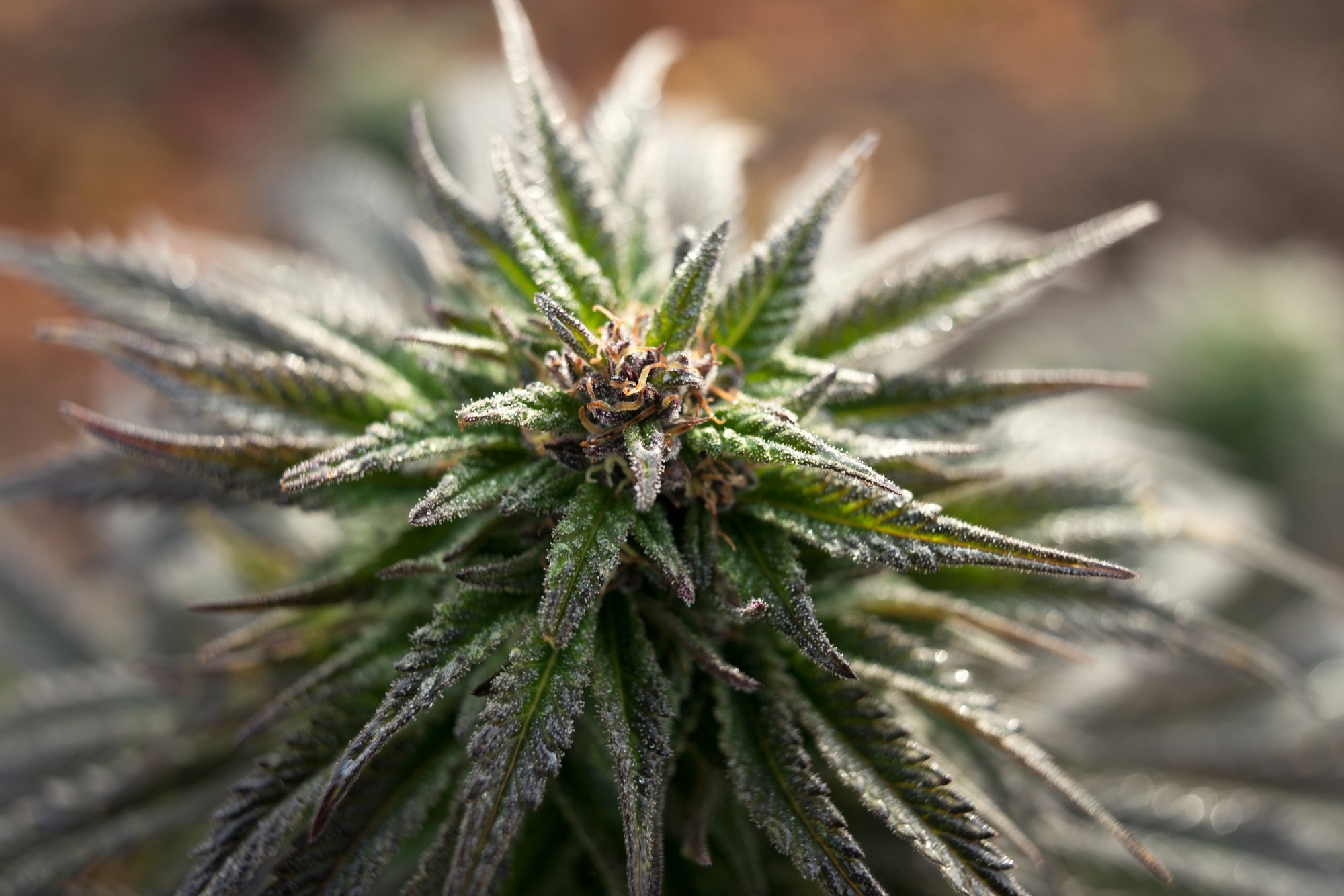
An up-close view of a flowering cannabis plant.
Continue reading

Low Pricing Is Key in the Lure to Legal Markets

Low-priced cannabis products will be key to converting consumers from the illicit market to the legal market, but once that’s done they’ll be willing to spend more on pricier items like vape pens and edibles, according to Aurora Cannabis Inc.’s new chief commercial officer.

Cannabis is “unlike tobacco or alcohol because of the presence of this massive black market,” said Miguel Martin, who joined Aurora with its acquisition of U.S. CBD company Reliva LLC in May. “There are some underpinnings to make the pie bigger in a way that you traditionally wouldn’t with discount brands.”

Some Canadian pot companies were caught off guard last winter by avid consumer demand for low-priced flower and had to rush to develop new offerings. In February, Aurora said its market share in flower declined in the prior quarter “as the market shifted significantly towards value brands,” and announced the launch of Daily Special, a cheaper product designed to “compete strongly with the gray market and help grow the overall size of the legal segment.”

In May, Aurora said Daily Special was the top-selling flower brand in Ontario for the previous two months and attributed the company’s 24% quarterly growth in recreational pot revenue to the brand’s popularity.

However, the cannabis market changes rapidly and “what’s popular today may not be popular tomorrow,” said Martin, who was previously president of Logic Technology Development LLC, a manufacturer of electronic cigarettes, and a senior executive at tobacco giant Altria Group Inc. “I do think like with any other category, things will start to settle and then you’ll have the ability to move people up the value chain or the pricing chain.”

e-mail icon
Continue reading

Marijuana Legalization Proceeds in Montana amid COVID-19

Marijuana legalization is heating up again as the US elections get closer. The COVID-19 pandemic paused legalization campaign efforts in some states. However, many states have resumed their signature-gathering efforts amid easing lockdowns. Montana resumed its signature-gathering efforts in mid-May and followed all of the necessary measures amid the lockdown. Let’s take a look at the state’s efforts and where it stands.

Montana works towards marijuana legalization

After facing a string of coronavirus-led challenges, the New Approach Montana campaign is all geared up. The group is behind the legalization efforts in the state. The group resumed its campaign in May and successfully collected the required signatures. A Marijuana Moment article discussed that the group submitted more than 130,000 signatures last month to qualify for the November ballot. Montana’s legalization efforts include recreational and medical cannabis. The group submitted two proposals:

The first proposal is to establish a regulated cannabis market for recreational use. The group needed 25,000 valid signatures from registered voters to qualify. They submitted 52,000 raw signatures for the proposal.The second proposal is a constitutional amendment insisting that only individuals 21 and older can participate in the marijuana market. The group needed to collect 51,000 valid signatures from registered voters. They submitted 80,000 raw signatures.

Looking at the number of signatures submitted, it appears that the group collected the required signatures. Voters will decide the fate of marijuana legalization in the state.

The campaign has worked hard to collect the signatures. Overall, the group followed strict health protocols and worked profusely to collect more than the required signatures before the deadline. The support for legalization in Montana is also evident from the signatures collected. As reported by Cannabis Business Times, Pepper Petersen, a spokesperson for New Approach Montana, said, “We can generate tens of millions of dollars of new tax revenue, create thousands of new jobs, and provide a new source of commercial activity for Montana’s existing small businesses.”

Good days ahead for cannabis companies

Besides Montana, Arizona, South Dakota, and Nebraska have also successfully submitted their signatures for the November ballot. Meanwhile, Idaho is working with a federal court and hopes to resume its signature collection. Some states like Florida, North Dakota, and New York didn’t collect the required signatures before the deadline. As a result, they had to suspend their campaigns.

e-mail icon
Continue reading

Argentina to Allow Cannabis Sales and Home Grows

As of this Wednesday, Argentina will now allow home cultivation of cannabis and the sale of cannabis oils and topicals in pharmacies, which has not been included under the legal cannabis laws so far. Cannabis patients will also now have access to their medicine free of charge. 

This new regulation was drafted by the Argentinian Health Minister and other key stakeholders, and represents a huge step forward for cannabis in Argentina.  

On Wednesday, the Health Minister met with key actors to close details on a draft regulation that will allow for home cultivation of cannabis and the production of oils and topicals by local pharmacies that can then be sold to qualified patients.

Facundo Garreton, director of YVY Life Sciences, a medical cannabis company from the neighbouring country of Uruguay, said that this is huge for the country, which until now has been overlooked as a cannabis hotspot. 

“Knowing that cannabis can alleviate many people’s suffering and not do anything about it, that’s the true crime,” said Facundo Garreton, director of YVY Life Sciences cannabis company in Uruguay and former House rep for Argentina’s province of Tucumán. “Good regulation will help to know the needs of every person, what to buy, where to buy it, while at the same time controlling the product’s quality. We hope this is the start of a path towards full regulation of the entire supply chain.” 

e-mail icon
Continue reading

Jamaica becomes first country in the Caribbean to launch cannabis standards

The Bureau of Standards Jamaica (BSJ) has developed and established seven standards for adaptation, which will provide guidelines and safeguards to protect consumers as well as assist companies with positioning their cannabis operations for the export market.

The BSJ, an agency of the Ministry of Industry, Commerce, Agriculture and Fisheries, developed the standards as part of efforts to strengthen and support the cannabis industry in Jamaica.

Addressing the virtual launch of the cannabis standards yesterday, Minister of State in the Ministry Floyd Green said the standards are an indication of the Government's commitment to ensuring that the relevant policies and legislative frameworks are in place to facilitate the safeguarding of both stakeholders and consumers.

Green also commended the work that the bureau has put in to have the standards promulgated.

“I am very pleased that the bureau in the development of these standards really took an all-inclusive and all-encompassing approach.  I have to commend a really strong technical committee, made up of academia, members from the bureau, growers, licensees and a wide cross section of players in the cannabis industry that were brought together and who were seized with the urgency of now.  They really worked around the clock to ensure that we have these strong standards,” he said.

e-mail icon
Continue reading

WeedLife.com