WeedLife News Network

Hot off the press cannabis, marijuana, cbd and hemp news from around the world on the WeedLife Social Network.

NJ Gov. Suggests Legal Marijuana As Post-Pandemic Economic Fix

Phil Murphy emphasized the social justice benefits, as well as the financial ones, to legalizing adult-use marijuana in New Jersey.

Add New Jersey Gov. Phil Murphy to the growing list of state lawmakers positioning marijuana legalization as a quick fix to struggling economies. Murphy also emphasized the social justice benefit legalizing would induce, calling the act “an incredibly smart thing to do.”

“We’re not inventing marijuana,” he said during a radio interview Tuesday with the Jim Kerr Rock & Roll Morning Show. “It exists.”

The looming financial crisis caused by the coronavirus pandemic means the state will need to find ways to innovate moving forward. A co-host on the program suggested cannabis and Murphy agreed, saying he’s “been on that from day one.” He added marijuana’s importance in criminal justice reform — a Black person is 3.5 times more likely to get arrested for cannabis possession in New Jersey than a white person, despite similar rates of use.

“It’s got a huge social justice piece for me,” Murphy said. “The overwhelming percentage of persons nailed in our criminal justice system are persons of color. It’s a no-brainer in that respect. It’s a job creator, it’s a tax revenue raiser, it checks a lot of boxes. I hope we’ll get there sooner than later.”
NJ Is Primed For Marijuana Legalization, What's Taking So Long?
Continue reading

Virginia Weed Laws: Decriminalization Breakdown

Virginia’s cannabis decriminalization policy went into effect on July 1 making it the 27th state to decriminalize simple marijuana possession.

The new law reflects recent shifts in public opinion, with 83% of Virginian voters supporting the decriminalization of cannabis, and 61% supporting the legalization of cannabis for adult personal use.

Under the old law, the first violations of marijuana possession imposed a fine of up to $500 and a jail sentence of up to 30 days. Subsequent offenses were a class 1 misdemeanors and permanently visible on a criminal record. The new law removes these provisions.

The timing of Virginia’s decriminalization policy is significant.

Cannabis legalization efforts are often tied to racial justice movements. In a special legislative session scheduled for August, lawmakers will consider further criminal justice reform. Cannabis legalization may be a part of those considerations.

e-mail icon
Continue reading

Disabled Veteran Sentenced to Prison Time in Alabama for Legally-Obtained Cannabis

At a time when America is trying to right its wrongs when it comes to the treatment of people of color and the war on drugs over the past few centuries, a Black, disabled veteran is still being held in prison on minor cannabis charges.

Sean Worsley, an Iraq veteran who suffers from a traumatic brain injury and PTSD, uses medical cannabis for his pain and anxiety. He legally purchased the medicine in his home state of Arizona before his arrest. 

Worsley and his wife, Eboni, were arrested in Pickens County, Alabama, where cannabis is still not legal, back in August 2016. This took place when the couple stopped at a gas station and were approached by police officers for listening to music “too loudly”. The police then proceeded to search the vehicle where they found Worsley’s medical cannabis. 

“I explained to him that Alabama did not have medical marijuana. I then placed the suspect in handcuffs,” the arresting officers stated in an official report. 

In addition to the cannabis, the officers found some unopened alcohol and prescribed pills—all legal. However, the pills were not in their original bottle, which the officers claimed was a felony. The Worsleys spent six days in jail and then faced even more criminal proceedings. 

e-mail icon
Continue reading

Are There Any Downsides To Marijuana Legalization?

If there’s one area where society has had some difficulty adapting to a space where cannabis products are legal and readily available it’s that many people still don’t have a grip on how to properly use edibles.

Marijuana has been legal now in some parts of the United States for around two decades. It all began with the legalization of a reasonably liberal medical marijuana program in California back in 1996 and progressed into a scene where adult residents in 11 states now have the freedom to purchase cannabis in the same way they might beer.

It’s a concept that is preventing thousands of people from going to jail every year as a result of personal marijuana possession. It also boosts local and state economies, creates thousands of new jobs and helps put the food on the tables for around 211,000 families nationwide. But are there any downsides to marijuana legalization that should be considered?

Marijuana legalization itself seems to be working out in most of the states where this new way of life has taken hold. There are often concerns that legalizing the leaf will create a situation that will increase youth consumption, addiction rates and, in some exceptional cases, launch society into a downward spiral of apocalyptic decline. But the reality is, none of this seems to be happening.

Some anti-legalization folks say it is still too early to tell what kinds of blights to society are coming on the heels of legalization, but in places where weed has been legal for several years, all seems relatively good in the neighborhood. Even former Colorado Governor John Hickenlooper, a man who once opposed the legalization of marijuana, admits that your children are probably safe from legal weed. “We haven’t seen a big spike in consumption,” he said during an interview in 2018 with Rolling Stone. “The only increase in consumption is among senior citizens.

No One Understands How High Edibles Will Make Them
Continue reading

Kiwi Kush? New Zealand Might Be The Next Country To Legalize Weed

Kiwis want their kush according to a new national poll. Commissioned by supporters of the 'Yes' vote, the survey showed that 48 percent of New Zealanders support recreational use while 43 percent are against it. Medicinal marijuana is legal in the country. 

Voters will officially go to the polls on September 19 to make their decision as part of a referendum during a national election. 

For many watchdogs in the country, it's not an issue of if New Zealand will fully legalize, it's when. 

"Despite almost 55 years of prohibition, it is New Zealand's most widely used illicit drug,' New Zealand Drug Foundation chief executive Ross Bell told The Daily Mail, adding that cannabis was "a reality in New Zealand."

The government is gearing up

Behind the scenes, the New Zealand government has worked on a plan for legalization should the referendum pass. The model includes regulating and taxing the drug. Citizens 20 and up would be able to consume the drug at home or at cannabis cafes.

e-mail icon
Continue reading

The World Health Organization Says Reschedule Cannabis: Will The UN Agree?


The World Health Organization (WHO) wasn’t a household name. That was, until it became the subject of public health and political controversy surrounding the COVID-19 pandemic. Aside from mitigating global pandemics, the WHO plays a significant role in the consideration of cannabis as a controlled substance on a global basis through the United Nations (UN). In January 2019, the WHO expressly recommended that cannabis be rescheduled and also provided clarity to its treatment of cannabinoids, like CBD. While the UN has delayed taking action on the recommendation, it begs the question of whether or not we’re on the verge of global cannabis policy reform.

The Single Convention on Narcotic Drugs of 1961 is an international treaty prohibiting production and supply of specific drugs and of drugs with similar effects — except under governmental license for specific purposes, such as medical treatment and research.

Under the Single Convention, Cannabis (not “marihuana” or “marijuana”) is categorized alongside cocaine and heroin as a dangerous substance with no medicinal benefit and a high potential for abuse. The UN Convention doesn’t distinguish between marijuana or hemp or make other legal distinctions that exist in the United States, but defines the substance as “cannabis” and generally comments on the legality of its various uses. This excludes most “industrial” uses of cannabis, or what we think of as non-psychoactive hemp in the United States, from UN control. These industrial uses can include applications for textiles, bioplastics, pulp for paper, and biofuels, just to name a few.

The Single Convention is not self-executing, meaning that signatory countries must pass domestic legislation to fulfill their treaty obligations. As a result, the U.S. passed the Controlled Substances Act (“CSA”) in 1971. Departing from the Single Convention, “cannabis” is not included anywhere in the CSA. Rather, “marihuana” and other items are listed on separate “schedules” within the CSA. 

e-mail icon
Continue reading

Marijuana Legalization Still Has a Chance in Idaho

Marijuana legalization in Idaho had to bear the brunt of the coronavirus pandemic. The lockdown forced the state to suspend its medical marijuana campaign. The group responsible for the campaign, the ICC (or the Idaho Cannabis Coalition), failed to collect the required signatures before the May 1 deadline. However, a recent federal court ruling for a separate initiative in the state might have sparked some hopes.

Marijuana legalization hopes rise again in Idaho

The ICC had collected 40,000 signatures when it dropped its campaign. The total required by the deadline was 55,057, which wouldn’t have been a hard task if the pandemic hadn’t happened. Recently, as reported by Marijuana Moment, a federal court in the state permitted Reclaim Idaho to collect signatures to support a school funding initiative in the state. Through this ruling, from July 9, they can now collect signatures in person and electronically for 48 days.

It has also given hopes to the ICC, which feels it can work around the ruling for its medical marijuana initiative as well. “We are in the process of working with the local medical marijuana campaign to assess whether Judge Winmill’s order provides a route for the medical marijuana initiative to still qualify for the November ballot,” Tamar Todd told Marijuana Moment. Todd is the legal director for the New Approach political action committee, which supports marijuana legalization efforts.

Marijuana Moment also reported that the group is confident of gaining the difference in signatures if allowed an extension. Both recreational and medical cannabis are illegal in Idaho. If passed, this ruling will allow Idaho to put medical cannabis on the ballot for voters’ approval. The measure specifies that medical cannabis patients with qualifying conditions can receive recommendations from physicians. Individuals will also be eligible to possess up to four ounces of marijuana and grow up to six plants.

Legalization picking up steam again

The marijuana industry has been in distress for a while now. The launch of Cannabis 2.0 products and state legalization were the only hope for the sector’s recovery. However, the pandemic hit, and the launch of products was delayed. At the same time, the sudden lockdown and quarantines challenged legalization campaigns. Many states had to suspend their efforts for 2020 legalization. Some of the unlucky ones were North Dakota, Florida, and New York. Meanwhile, ArizonaNebraska, and Montana have successfully submitted the required signatures for their campaigns.

e-mail icon
Continue reading

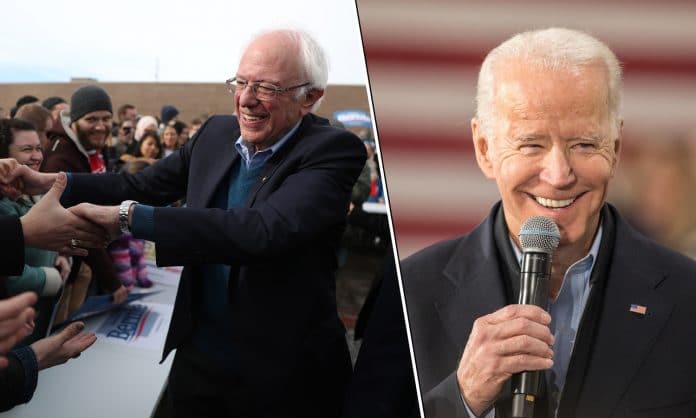
Biden-Sanders Task Force Does Not Recommend Legalizing Marijuana

While the unity task force pushed Biden farther left on cannabis policy, the former Vice President still doesn’t support ending prohibition.

Joe Biden will not change his mind on cannabis anytime soon. A task force formed between Biden and Bernie Sanders, which had prior heated discussions on cannabis, agreed on multiple criminal justice priorities, but marijuana legalization was not among them.

Instead, the official policy recommendations (released Wednesday) for Biden as he embarks on winning the general election as the presumptive Democrat presidential nominee represents a reiteration of his previous cannabis views. He believes in cannabis decriminalization, not legalization. The recommendations, however, supply more details about specific marijuana polices Biden could pursue if elected President.

“Democrats will decriminalize marijuana use and reschedule it through executive action on the federal level,” the document reads. “We will support legalization of medical marijuana, and believe states should be able to make their own decisions about recreational use.”

The task force also recommended it would not launch federal prosecution for matters legal at the state level. The statement is an obvious reference to current Attorney General William Barr, who was accused of inappropriately using Justice Department funds to target the legal cannabis industry.

Will Bernie Sanders Push Joe Biden To Dramatic Marijuana Reform?
Continue reading

Massachusetts Fines Three Cannabis Companies

Law 360 reported that the Massachusetts’ Cannabis Control Commission handed down hefty fines to three cannabis companies doing business in the state. 4Front Ventures Corp. (FFNTF) and Garden remedies were fined for using pesticides on plants, while Acreage Holdings Inc. (OTC:ACRGF) was fined for failing to disclose its relationship with two license holders.

4Front Ventures

4Front Ventures fined $350,000 settlement over pesticides used at its Georgetown, Massachusetts, facility. According to Law360, the settlement included a statement that 4Front Ventures admitted hydrogen peroxide, baking soda, and other pesticides were used at the facility, which is not approved for use on marijuana. The commission reportedly said that the company received test results that showed the plants contained a banned pesticide in June or July 2019 but didn’t alert the commission until August. Company CEO Leo Gontmakher said the company has made changes to ensure the violations do not happen again. “Patients were protected and no one was harmed,” Gontmakher said.

Garden Remedies

A $200,000 settlement was reached with cannabis company Garden Remedies over its Fitchburg, Massachusetts, facility. Like 4Front, Garden Remedies also noted in its settlement that it acknowledged using unapproved pesticides and altering its financial records to hide the purchase.

Company CEO Karen Munkacy said in a statement that the company has fired the employees involved in the falsified documents and ended its relationship with the vendor that provided the pesticides in question.

“While the product we used is permitted to be used in cannabis cultivation in many other states and is not an externally applied pesticide that puts anyone in danger, it is not permitted in Massachusetts and the situation was mishandled,” Munkacy said. “The company and I will continue to strive to ensure that ethical and regulatory violations never again occur.”

e-mail icon
Continue reading

Marijuana Violations Will No Longer Be Cited In Kansas City, MO

In Kansas City, you no longer need to sweat it if you’re holding a little bud. 

That’s because the City Council on Thursday passed a new measure removing marijuana from the city’s code of ordinances. The measure passed the council by a vote of 9-4, according to local television station KMBC. With its passage, marijuana is essentially decriminalized in Kansas City. 

The proposal was offered up last month by Kansas City Mayor Quinton Lucas, a Democrat, along with four other council members. 

“One of the ways we improve police-community relations is by eliminating laws that for too long have led to negative interactions, arrests, convictions, and disproportionate rates of incarceration of Black men and Black women,” Lucas said at the time. “Reducing petty offenses—such as municipal marijuana offenses—reduce these negative interactions each day.”

In a tweet on Thursday heralding the vote, Lucas noted that the measure comes on the heels of two significant votes on marijuana policy in Kansas City and Missouri. In 2017, voters in Kansas City approved a measure—by a margin of 72-25—to decriminalize marijuana for 35 grams or less, opting instead to impose a mere $35 fine. A year later, voters in Missouri overwhelmingly approved a measure legalizing medical marijuana. Thursday’s vote, Lucas seemed to be saying, followed in that tradition.

e-mail icon
Continue reading

Hawai‘i Legislature Passes Bill to Legalize Industrial Hemp

Senator Mike Gabbard, Chair of the Agriculture and Environment Committee, applauded the final passage of a bill in the House of Representatives today to legalize the growing, processing, and sale of industrial hemp in Hawai‘i.

It passed the Senate on Wednesday unanimously, with Senators Les Ihara, Clarence K. Nishihara, and Laura H. Thielen expressing reservations.

The bill now goes to Governor David Ige to sign into law.

“This commercial hemp program will help grow a new industry in our state, which is especially needed now due to the impacts of COVID-19,” said Senator Gabbard. “This bill will provide an opportunity for economic development and the diversification of our economy. Hemp is an incredible plant that produces over 25,000 products and we’re very close to making the Hawaiian Hemp brand a reality, not only in the U.S. but globally as well.”

The bill (HB1819 HD2 SD3), was championed by Senators Gabbard, Donovan Dela Cruz, Rosalyn H. Baker, Karl Rhoads, and Senate President Ronald D. Kouchi, and Representatives Mark M. Nakashima, Sylvia J. Luke, Nadine K. Nakamura, Kyle T. Yamashita, Richard P. Creagan, Chris Lee, and House Speaker Scott K. Saiki.

e-mail icon
Continue reading

OKlahoma: State temporarily halts enforcement of some marijuana business rules

Pending litigation, the Oklahoma attorney general’s office temporarily has agreed the state will not enforce some medical marijuana laws that could force some dispensaries to close their doors.

On Monday, Oklahoma’s assistant solicitor general agreed the Oklahoma State Department of Health and the Oklahoma Medical Marijuana Authority will not enforce certain residency and location requirements that pertain to medical marijuana businesses and how long their owners have resided in Oklahoma.

The temporary stipulation comes as some medical marijuana businesses are suing the state over the legality of laws requiring cannabis business owners to be residents of the state for at least two years and mandating that dispensaries be located more than 1,000 feet from schools and preschools.

The laws took effect on Aug. 29, 2019.


As the legality of these provisions is debated in court, the Medical Marijuana Authority will not consider the two-year residency requirement when evaluating business license renewal applications, as long as a business owner originally applied for a license before the new law took effect.

e-mail icon
Continue reading

3 Cannabis Legislation Predictions Ahead of the 2020 Election

The glacial pace at which the federal government has implemented cannabis policy–particularly in light of the rapid evolution of cannabis laws at the state level–is at the same time predictable and frustrating to those seeking a measure of certainty. And it begs the question: Will Congress act soon to bring a measure of common sense to this country’s cannabis policy? What about the states?

Mark Twain wrote that “[p]rophesy is a good line of business, but it is full of risks.” With those risks in mind–and a plate of crow in the warming drawer–I offer the following three predictions about cannabis policy, and its implications, for the remainder of 2020.


Prediction No. 1: None of the current “big fix” proposals will pass Congress before the election.

Congress is unlikely to pass major cannabis legislation before the presidential election. At least three such bills are currently pending in Congress: (1) the Secure and Fair Enforcement (SAFE) Banking Act; (2) the Strengthening the Tenth Amendment Through Entrusting States (STATES) Act; and the Marijuana Opportunity, Reinvestment, and Expungement (MORE) Act.

The SAFE Banking Act appeared to have momentum last year when it passed the House of Representatives with bipartisan support and began making progress in the Senate. The proposal would allow financial institutions to transact with cannabis-related businesses in states that have legalized the plant. Nowhere is the federal prohibition on cannabis more impactful than in the banking laws prohibiting financial institutions from banking the proceeds of unlawful activity, including proceeds from state-legal cannabis operations. For better or worse, these laws prohibit the full development and maturation of the industry. Despite the bill’s early momentum, it appears to have stalled in the Senate.

e-mail icon
Continue reading

Medical Marijuana Likely Heading to Nebraska Ballot this November

According to a news report from the Associated Press, Nebraska voters will likely get to vote this November on initiatives to legalize medical marijuana and casino gambling after advocates for both announced Thursday that they have enough signatures to put them on the November ballot.

According to the AP, organizers of the Nebraskans for Medical Marijuana campaign said they’ve gathered 182,000 signatures. To qualify for the ballot, the campaign needed to turn in more than 121,000 valid signatures, representing more than 10% of the voters in the state. Campaign officials also needed to collect signatures from at least 5% of voters in at least 38 Nebraska counties.


“Today represents a huge step forward for thousands of Nebraskans who deserve compassion,” said state Sen. Anna Wishart, of Lincoln, who co-chaired the campaign committee. “We are confident that we’ve met the requirements for ballot qualification, and after seeing the outpouring of support for our petition, we’re even more confident that Nebraska’s voters will approve this initiative in November.”

Meanwhile, the pro-gambling group Keep the Money in Nebraska announced that it will submit 475,000 signatures for its three petitions to allow casino gambling at horse-racing tracks. One petition seeks to amend the state constitution to allow gambling, one would change state law to authorize and regulate the casinos, and the third would direct the tax revenue into a property tax credit fund and toward local governments. The constitutional amendment proposal garnered more than 205,000 signatures, while the two other gambling-related measures each received more than 135,000.


Continue reading

Head of cannabis retailer says Canada needs thousands more stores to compete with black market weed

The chief executive officer of independent cannabis retailer Fire and Flower Holdings said this week Canada needs 4,000 pot shops in order to compete with the country’s still-thriving black market

In an interview with BNN Bloomberg, Trevor Fencott said the Canadian illicit market for weed is still more efficient than the legal one, which has suffered numerous setbacks since legalization took effect nearly two years ago. The slow rollout of pot shops has been the most commonly-cited culprit behind the less-than-stellar performance of legal marijuana companies. 

“The most efficient market out there is the illicit market. It’s not regulated, but it is efficient. Prohibition or enforcement alone don’t work. You need to compete with the illicit market head-on economically,” Fencott explained. 

In order to achieve this, Fencott suggests Canada should follow Colorado’s model – where one dispensary is opened for every 10,000 residents. This means Canada would need to open as many as 4,000 dispensaries, while less than 1,000 have been opened to date. 

“The way we see this going is that cannabis is ultimately going to be a convenience commodity. You have to give people multiple access points to the product that they want to buy, especially if you want to compete with the illicit market,” he said. 

e-mail icon
Continue reading

This state could vote to decriminalize all drugs this November

More radical change to drug policy could be coming to Oregon after the November federal election.

The Drug Addiction Treatment and Recovery Act, which would decriminalize drugs in the state, qualified for the ballot after it amassed a total of 116,622 valid signatures of support, per the Oregon Secretary of State.

The Act would downgrade possession of most drugs from a crime to a violation. For example, a person found guilty of being in possession of a Schedule I, II, or III drug, a Class A misdemeanor, can face one year in jail and a US$6,250 fine. Under the act, the same offence would be reclassified as a Class E violation, resulting in a fine of $100 or a completed health assessment.

Possession of a Schedule IV drug, formerly punishable by 30 days in jail and a $1,250 fine, would also convert to a Class E violation, leading to a $100 fine or health assessment.

“Oregonians have always been early adopters of drug policies that shift the emphasis towards health and away from punishment,” managing director of criminal justice law and policy at Drug Policy Action  Theshia Naidoo told Talking Drugs in March.  “The idea behind this groundbreaking effort is simple: people suffering from addiction need help, not criminal punishments. Instead of arresting and jailing people for using drugs, the measure would fund a range of services to help people get their lives back on track.”

e-mail icon
Continue reading

Joe Biden’s New Cannabis Policy Proposals Met With Criticism, Disappointment

In a bid to win over still-skeptical progressives, Joe Biden on Wednesday unveiled a set of policy proposals that moved him more closely aligned with his one-time rival, Bernie Sanders. But on the matter of marijuana, the former vice president and presumptive Democratic nominee remains miles away from legalization.

The proposals were detailed in a lengthy document born out of a Biden-Sanders task force that tackled a number of policy issues—from criminal justice to climate change. According to the New York Times, Biden is “expected to adopt many of the recommendations.” The Times noted that some of the recommendations, such as economics and the environment, “include broader and costlier plans than [Biden] has championed so far in his campaign.” 

But the Biden and Sanders camps remain at loggerheads over a number of areas, including cannabis policy. Sanders has long championed legalizing marijuana on the federal level, where it remains on the list of banned substances. In unveiling his own comprehensive plan on drug policy last fall, Sanders vowed to “legalize marijuana and end the horrifically destructive war on drugs,” which he said “has disproportionately targeted people of color and ruined the lives of millions of Americans.” Biden has steadfastly resisted legalization, a position he reiterated in a clumsy interview last month on “The Breakfast Club.” 

Decriminalization Over Legalization

The policy paper released Wednesday by the Biden campaign falls well short of legalization, too, asserting instead that “Democrats will decriminalize marijuana use and reschedule it through executive action on the federal level,” while also saying they support the “legalization of medical marijuana.” On the matter of recreational legalization, however, the paper says only that “states should be able to make their own decisions,” which is more or less how marijuana policy has operated in the U.S. since 2012, when Colorado and Washington voters passed measures ending the prohibition in their states.

Marijuana is listed as a schedule I drug under the federal Controlled Substances Act, a category that also includes heroin. As defined by the law, schedule I drugs have “ a high potential for abuse,” and “no currently accepted medical use in treatment in the U.S.” 

e-mail icon
Continue reading

Pennsylvania Lt. Governor Urges Cannabis Legalization To Address Budget Deficit

Pennsylvania Lt. Gov. John Fetterman is urging state lawmakers to legalize the adult use of cannabis as a way to reduce the impact of a looming budget deficit. The state faces a budget shortfall of $3.2 billion, largely as a result of the continuing COVID-19 pandemic and its impact on the economy.

Fetterman took to Twitter last week, calling for the legalization of marijuana as a path to new tax revenue for the state and reform of the state’s penal system as a way to realize budget cost savings.

“I don’t know who needs to hear this jk I know who—but earnestly reforming our state prison system + legalization of marijuana could generate half of this COVID-19 deficit,” Fetterman tweeted on July 2. “It would, however, could have other unintended consequences like justice and personal freedom.”

“If only there was a widely-consumed unregulated cash crop, wholly confined to the black market, that could generate billions of dollars + 1000’s of jobs + help PA farmers,” he wrote in another tweet the same day.

Lt. Governor Says A Majority Of Pennsylvanians Support Legalization

The Democratic lieutenant governor continued his call for the legalization of recreational cannabis on Tuesday with Pittsburgh local media.

e-mail icon
Continue reading

Cannabis medicine, education, and policy in Switzerland

Professor Rudolf Brenneisen of the Swiss Society of Cannabis in Medicine tells us about medical cannabis in Switzerland.

The Swiss Society of Cannabis in Medicine (SSCM), the Swiss ambassador organisation of the International Association for Cannabinoid Medicines, aims to see cannabis recognised and regulated as a legitimate form of medicine in Switzerland. MCN speaks with Professor Rudolf Brenneisen, Editor-in-Chief of the SSCM’s peer-reviewed trade journal Medical Cannabis and Cannabinoids, about medical cannabis and cannabinoids in Switzerland.

What are the key benefits of cannabis in medical treatment?

Cannabis can have a plethora of effects – although this does not mean it is a panacea. It can have therapeutic benefits across a broad spectrum of indications, including chronic and neuropathic pain; nausea, vomiting and appetite loss; neurological conditions; chronic inflammation; and more. Cannabis and cannabinoids – primarily THC and CBD – have a broad therapeutic window: this means that they only carry a very marginal risk of physical or organ toxicity, and the risk of potential psychological side effects is low to medium and dependent on the dose. The typical psychotropic side effects of THC may be ameliorated by combining it with a dose of CBD.

Are there challenges or side effects specific to cannabis as a medicinal product?

One really challenging aspect of cannabis is evaluating all the different application forms in order to determine which is optimal for medicinal use. The selection of the medication type must ideally be based on patient and indication, though as some producers claim to offer between 1,000 and 2,000 individual types and chemovarieties, it is still essentially impossible to deliver cannabis-based treatment which is uniquely ‘individualised’ for the patient.

Cannabis and its extracts can be available in the form of isolated single substances, such as THC or CBD; standardised extracts like Sativex®; and full spectrum preparations, such as cannabis flowers. The predominant application forms are:

e-mail icon
Continue reading

Is Cannabis Legal in Mexico? 3 Things You Need to Know

Ever since the Spanish colonists began farming hemp in Mexico over 400 years ago, cannabis has been a delicate topic in the country – first used as a painkiller, then banned in 1920, and today, almost legal… but also, not at all. The marijuana (or marihuana) rules are hazy, and the consequences of breaking them are no joke. We broke down the top three things you need to know before using cannabis South of the Border.

These laws only apply to the use of cannabis inside the country. Bringing cannabis of any amount or any kind – recreational or medical – across the border into Mexico is considered international drug trafficking, and can lead to arrest.

1) Medicinal marijuana use is not legal (yet)

In a nearly unanimous vote in 2017, medical marijuana (or, more specifically, “pharmaceutical derivatives of cannabis“) were made legal in Mexico. But, there’s a catch: the Mexican Ministry of Health still needs work out some specifics. This means that it is still illegal for patients to obtain medical marijuana or for doctors to prescribe it, and it won’t be legal until the Ministry of Health produces guidelines for it. Even then, though, the law stipulates that the cannabis derivatives (oils, capsules, etc.) will be required to contain less than one percent THC.

2) Possessing small amounts of recreational marijuana won’t send you to jail

e-mail icon
Continue reading

WeedLife.com