WeedLife News Network

Hot off the press cannabis, marijuana, cbd and hemp news from around the world on the WeedLife Social Network.

Could Marijuana Legalization Unite A Divided Country?

If Joe Biden wants to keep his promise to be a President for all Americans, pushing for marijuana decriminalization or better yet, legalization is a good place to start.

Election Day 2020 is in the books and it appears that marijuana is the biggest winner of the 2020 election. Every marijuana-related initiative won. Joe Biden also won after running on the idea of healing a divided nation.

Marijuana legalization may be one of the few issues that Biden can use to garner support from both Republicans and Democrats, it was a perfect score. Here are the key results:

Arizona. Voters approved Arizona Proposition 207 to legalize the possession and use of marijuana for individuals over the age of 21, enact a tax on marijuana sales, and require the Arizona Department of Health and Human Services regulate the industry.Montana. Voters approved Montana Initiative 190 to legalize the possession and use of marijuana for adults over 21, impose a 20% tax on marijuana sales, require the Montana Department of Revenue to regulate the industry, and allow for resentencing or expungement of marijuana-related crimes.Mississippi. In Mississippi, voters considered two initiatives to legalize medical marijuana and approved the most permissive option in Initiative 65 which allows the use of medical marijuana for the treatment of 20 specified qualifying conditions.New Jersey. Voters approved New Jersey Public Question 1 which amends the New Jersey Constitution to legalize the possession and use of marijuana for individuals over the age of 21 and legalizes the cultivation, processing, and retail of marijuana.South Dakota. Voters approved both Amendment A to legalize marijuana and Measure 26 which legalizes medical marijuana.

Photo by Fokusiert/Getty Images

According to a post-election Gallup poll, 68% of Americans support marijuana legalization. Here is how that support breaks down along party lines.
Congress May Be Forced To Consider Nationwide Marijuana Legalization Now That 68% Of Population Supports It
Continue reading

8 big decisions facing Virginia lawmakers as they debate marijuana legalization

The marijuana legalization debate moved into the mainstream of Virginia politics this week when Gov. Ralph Northam announced he’ll propose legislation in January allowing recreational use of the drug.

As lawmakers begin to seriously consider what a legal marijuana market might look like in Virginia, here’s a preview of some of the looming policy decisions identified by Virginia’s Joint Legislative Audit & Review Commission, which recently released a 200-page report on the issue.

1. Should past weed convictions be expunged?

Uneven enforcement of marijuana laws has been a primary driver in the push for legalization here. The report’s authors found Black Virginians were 3.5 times more likely to be arrested for simple possession than Whites despite using the drug at the same rates.

Many states that have already legalized the drug have also allowed expungement of past convictions that are no longer crimes, namely simple possession by an of-age adult, and Virginia’s study concluded that expunging past convictions would go far to address racial inequality associated with marijuana enforcement by lifting barriers to employment and housing.

e-mail icon
Continue reading

Can the Hemp Business Survive?

Soaps, deodorant, beard oil, pain relievers, lotion, hand sanitizer and an anti-anxiety tincture for pets.

The array of products Grant McCabe creates using oil extracted from hemp he grows on a Marlboro farm to sell in his Beacon shop, The Leaf, could soon have an imprimatur: New York-certified.

Last month, the state Department of Health unveiled proposed regulations governing how the plant is processed to extract cannabidiol oil (CBD) and other cannabinoid substances from its leaves and flowers. The proposals would set standards for products sold by retailers, including food and drinks.

But the regulations also would ban the sale of the smokable flower, or bud, of the plant, which retailers say is where they make most of their profits.

Although it’s part of the cannabis family, hemp is low in THC, the psychoactive ingredient in marijuana that produces its high. Demand has soared for products containing its substances, especially CBD, which marketers claim can alleviate a range of health problems, such as anxiety, post-traumatic stress disorder and pain.

hemp
Continue reading

Germany Rejected Its Recreational Cannabis Bill


The people of New Zealand just voted down a measure to legalize cannabis through a referendum. New Jersey just legalized it recreationally also through its own referendum. Germany didn’t put the question to its people, but last month the government of Germany rejected its recreational cannabis bill.

A little about Germany and cannabis

As per the title, recreational marijuana is not legal in Germany. In fact, possessing it at all can garner a person up to five years in prison according to the German Federal Narcotics Act, though conversely, it’s not technically illegal to use it, since there is no stated law against it. If caught with small amounts, offenders are usually put in a program over anything more serious, at least for first-time offenders. The term ‘small amount’ is not very well defined, though, and can mean anywhere from about 6-15 grams depending on where in Germany the possession takes place. Plus, the amount is judged by quantity and potency over actual weight, meaning the THC content helps define the amount in the end.

Sale and supply crimes are predictably illegal, and offenders can receive up to about five years in prison. This sentence goes up from 1-15 years depending on the circumstances of the case. Cultivation on a personal level is also illegal and garners the same punishment as sale and supply crimes.

In terms of CBD, while Germany already had been permitting it, the recent decision of the CJEU (Court of Justice of the European Union) in the case of France vs the EU, makes it that much more clear. EU standard has now been found to trump local member state laws when it comes to the import and export of CBD between member states. As per EU standards, Germany does not allow more than .2% THC in CBD oil preparations.

Germany rejected recreational cannabis
Continue reading

Mexico decriminalizes the consumption of Cannabis

MEXICO, teleSUR – The Mexican Senate passed on Thursday a law that legalizes the consumption of cannabis for adults. This controversial and largely debated decision aims at regulating the practice in the country.

The Federal Law for the Regularization of Cannabis decriminalizes consumption for people 18 years of age and up to 28 grams. If that amount is surpassed by up to 200 grams, there would be an administrative sanction and a fine of 11.000 Mexican pesos.

The Senate voted 82 in favor of the law, 18 against and seven abstentions. Lawmakers against the law raised fears that marihuana consumption could become a widespread practice, and the smell could reach children.

'#Today in the Senate, it was approved to create the Federal Law for the Regulation of Cannabis and reform the General Law of Health and the Federal Penal Code, for the regulation of #CannabisLegal.' 

Further,  lawmakers in favor noticed that from a social perspective, the law supports peasants, indigenous peoples, and communities which were prohibited from harvesting cannabis and were forced to look for it in the illegal market instead.

e-mail icon
Continue reading

Wyoming holding out as other states legalize marijuana

In the eight years since Colorado legalized marijuana, it's been an open question whether Wyoming would someday follow the lead of its southerly neighbor.

So far, that hasn't happened.

Lawmakers did legalize hemp and CBD products in 2019. Both lack marijuana's psychoactive properties, but remain taboo among some state lawmakers. And Wyoming's criminal penalties for marijuana possession remain among the nation's harshest.

Meanwhile, even the most modest reforms brought before Wyoming lawmakers have faltered. A 2019 bill legalizing medical marijuana failed to get a hearing on the floor of the Wyoming House of Representatives, while proposals to reduce Wyoming's criminal penalties for marijuana have gained little traction among the state's conservative lawmakers, many of whom still see the substance as a gateway to abusing more serious drugs.

"Currently, Wyoming statutes (around cannabis) are unrealistic," said Rep. Charles Pelkey, D-Laramie, an attorney and marijuana reform advocate whose law firm has developed a reputation for defending both minor and serious marijuana cases around Wyoming. "We've tried to address that in the Judiciary Committee. And we spent three years working on cannabis law reform and made no progress. I remember telling National Public Radio once that I have not spent this much time listening to people talk pointlessly about weed since I was in high school."

e-mail icon
Continue reading

State panel calls for not prosecuting possession of small amounts of marijuana


RALEIGH, N.C. — A panel appointed by Gov. Roy Cooper called Wednesday for decriminalizing possession of small amounts of marijuana, saying arrests for such crimes disproportionately affect Black residents.

The North Carolina Task Force for Racial Equity in Criminal Justice, which is chaired by Attorney General Josh Stein and Supreme Court Justice Anita Earls, also called for studying the prospect of further legalizing the cultivation, sale and possession of marijuana in the state.

"You cannot talk about improving racial equity in our criminal justice system without talking about marijuana," Stein said in a statement. "White and Black North Carolinians use marijuana at similar rates, yet Black people are disproportionately arrested and sentenced."

Americans across party lines, regions embrace marijuana Possession of up to a half-ounce of marijuana is a Class 3 misdemeanor in North Carolina, subject to a fine of up to $200. In 2019, there were 31,287 charges and 8,520 convictions for the offense, and 61 percent of those convicted were nonwhite, according to the task force.

e-mail icon
Continue reading

Utah Lawmakers Considering Medical Cannabis Program Expansion

Utah’s medical marijuana law may soon undergo another expansion if a bill that is being introduced in the legislature gets approved.

Salt Lake City-based television station FOX13 reports that a bill offered up by a pair of Republican lawmakers seeks to allow more Utah physicians to recommend medical cannabis to qualifying patients.

The legislation, the outlet reported, “will allow physicians to recommend cannabis for up to 15 patients without having to go through hours of specialized training through the state.”

The bill, which is being co-sponsored by GOP state Rep. Ray Ward and state Senate Majority Leader Evan Vickers, also a Republican, is another effort to ease restrictions on a medical marijuana law that critics argue is still far too exclusionary to patients who could use the treatment.

FOX13 noted that “qualifying patients still struggle across Utah to find doctors willing to recommend medical cannabis.”

e-mail icon
Continue reading

Fly with Cannabis – Which Countries Let You Do It

Different ways to be legal

Not only does every country have its own laws regarding the use, possession, sale, cultivation, and import/export of cannabis, but often these categories too can be broken down further into medical legalizations, recreational legalizations, and even religious legalizations, each with its own set of laws concerning use, possession, sale, cultivation, and import/export.

Right now, in terms of full recreational legalizations, there are only a few places that apply. Uruguay; Canada; the US states that have independently legalized; Mexico, although until legislation comes out in December, it’s technically only a judicial legalization, with no regulated system for sale of products; and Canberra, Australia’s capital city. Then there’re places like Washington DC, and Georgia (the country, not the state), which have wonkier recreational legalizations. In DC, a person can possess and use, but can’t buy or sell, although cultivation is legal. In Georgia, it’s the same, but without the cultivation part, making for a strange system where using a product is actually legal, but there is no legal way to obtain it.

When it comes to medical legalizations, these have become ubiquitous in the world. From South American countries like Argentina and Uruguay; to the majority of European countries; to Australia & New Zealand; to African countries like Zambia, Zimbabwe, and Lesotho, though these countries don’t always guarantee the use of cannabis for their own people, and are more geared toward the business end, and exportation to other markets. Nearly every US state has medical legalization; even some Asian countries like Thailand; and Middle Eastern countries like Lebanon, which just became the first of the region (apart from Israel) to allow this.

And then there are the more elusive religious legalizations, which have been coming into play more recently. The most well-known religion to use cannabis sacramentally is Rastafarianism, although others do exist. Due to the Rastafarian religion, countries like Jamaica and Barbados have specific laws that allow the use of cannabis for religious purposes. And though there isn’t an actual written law attached to it, Nepal allows cannabis to be smoked without harassment by law enforcement, for one day a year to celebrate the Mahashivrati festival.

Where can you fly with cannabis

To be clear, there are no legalized locations – recreational, medical, or religious – that have laws allowing the transport of cannabis across country borders. What this means is, whatever the legalization policy, and whatever might be allowed within a country’s borders, this has no bearing on anything, anywhere else. No country will allow you to legally cross its border with cannabis. To make it even more clear, even if a person is attempting to fly with cannabis from one recreational legalized location to another – let’s say Toronto to California, this too is not possible.

travel with cannabis
Continue reading

Michigan Man, Michael Thompson, Seeks Parole After Decades In Prison For Nonviolent Pot Offense

A Michigan man who has spent a quarter of a century behind bars for a nonviolent marijuana offense could see a change in his fate this week as a parole board considers his release. Michael Thompson, a native of Flint, Michigan, was convicted in 1994 of selling three pounds of marijuana to an undercover police informant.

Michael Thompson, now 69, was given a sentence of 42 to 62 years for the conviction, a term compounded by previous drug convictions and a weapons enhancement for firearms discovered when his home was raided. But the nonviolent nature of his offense coupled with the legalization of marijuana in Michigan has led to a drive to see Thompson, who isn’t technically eligible for parole until he is 87 years old, released from prison early. In January, Thompson’s attorney filed a request for commutation of his client’s sentence.

Michigan AG ‘Shocked And Horrified’ By Sentence

It’s an effort supported by state Attorney General Dana Nessel, who wrote a letter to Michigan Gov. Gretchen Whitmer in August asking that Michael Thompson’s sentence be commuted so he can be released on time served.

“Sometimes you hear something about a particular person who’s incarcerated and then once you look further, you’re like, maybe this person deserves to do a little time,” Nessel said. “But I was shocked and horrified when I looked at his sentence.”

“I have practiced law for 27 years now and I’ve never seen anything like it,” she added.

Michigan Man Seeks Parole After Decades In Prison For Nonviolent Pot Offense
Continue reading

Lu-wow! Hawaii Just Launched a New Medical Marijuana Program for Visitors

Visitors heading to Hawaii may now participate in the islands’ medical cannabis program. The Hawaii State Department of Health has announced that Out-of-State medical cannabis patients may now apply online for a 329-V card. The new card provides visiting patients with legal access to Hawaiiʻs medical cannabis dispensaries for up to 60 days. The Hawaii Educational Association for Therapeutic Healthcare (HEALTH), the state’s trade association for licensed dispensaries, supported the announcement and has been working to prepare for the increase in demand for medical cannabis in Hawaii.

“As Hawaii’s medical cannabis dispensary program continues to grow, we are happy the program will be extended to visitors from out of state so that visitors with debilitating diseases, chronic pain, PTSD and other conditions can continue to receive the therapeutic effects of cannabis while in Hawaiiʻi,” said Pedro Haro, Executive Director of HEALTH. “This is a major milestone for integrative healthcare options in the islands and for our visitor industry as a whole.”

Hawaii’s first state-licensed medical cannabis dispensaries opened during the summer of 2017 to serve residents. During the 2018 legislative session, government officials worked with the industry and patient advocates to pass House Bill 2729, which established the 329-V card program to provide Out-of-State Patients (OSPs) with legal access to medical cannabis dispensaries while visiting the islands.

“We are particularly pleased with the advances that the Department of Health has made towards modernizing the process for which both locals and visitors are able to obtain their medical cannabis cards,” said Haro. “They have worked seamlessly to provide a completely digital platform for patients, which makes it all the more efficient to apply and receive a card”.

The 329-V card will allow visitors to shop at any of Hawaii’s medical cannabis dispensaries and legally possess cannabis or cannabis products for up to 60 days at a time. Out-of-State patients must complete a 10-minute online application with the Department of Health. Applications may be submitted up to 60 days in advance of arrival in Hawaiiʻi and patients may select a start date. To be eligible, visiting patients must have a valid medical registration card from a U.S. state or territory, a valid government-issued photo ID from the same state, and they must attest they use cannabis for one or more of the qualifying conditions recognized by Hawaii. The fee is $49.50 for a 329-V card, which is valid for 60 days and may be renewed one additional time.

e-mail icon
Continue reading

What Federal Cannabis Decriminalization Would Mean

Left-leaning policy wonks call it the biggest political layup of our time. It enjoys rare bipartisan support in a time of rancorous political division. It would lower rates of incarceration among people of color and chip away at the prison industrial complex.

So why has cannabis not yet been legalized, or at least decriminalized, on the federal level?

Congress is poised to tackle the issue in December when it votes on the Marijuana Opportunity Reinvestment and Expungement Act of 2019, aka the MORE Act. If passed, the decriminalization bill would impose sweeping changes to the ways weed functions in society, and offer a sign of retreat in the U.S. government’s decades-long war on drugs.

Even as Americans grow more divided politically, cannabis continues to gain ground with every…

The Marijuana Opportunity Reinvestment and Expungement Act of 2019 is a bill sponsored by former Senator and Vice President-elect Kamala Harris that would decriminalize weed by removing it from the government’s list of controlled substances

e-mail icon
Continue reading

Louisiana part of Cannabis Regulators Association

In an effort to better share institutional knowledge and regulatory practices, Louisiana is one of 19 states that is now part of the newly formed non-partisan organization called the Cannabis Regulators Association (CANNRA).

The Louisiana Department of Agriculture and Forestry (LDAF) which regulates medical marijuana in Louisiana will be represented by Medical Marijuana Program Director Tabitha Irvin, Esq. CANNRA is being established to assist federal, state, and local jurisdictions that have approved or are considering the legalization of medical and/or recreational cannabis, according to a spokesperson for LDAF.

“CANNRA is restricted to cannabis regulators to develop best practices and policies and also to support consistent regulatory actions,” said Agriculture and Forestry Commissioner Mike Strain, D.V.M.

Irvin added, “It is an honor to be a founding member of an organization that will develop standards in the industry and provides regulatory guidance to state and federal elected officials. We are also proud to collaborate and welcome the expertise of other states as we regulate products so they are safe for consumers."

For years, cannabis regulators across the country have relied on each other to share regulatory experiences, institutional expertise, and to provide assistance navigating the numerous evolving policy and regulatory issues associated with legalizing and regulating cannabis. Often the first step for state and local jurisdictions weighing legalization is to engage with regulators from established markets and programs. However, there has never been an organization to facilitate these interactions or help stakeholders find objective data and evidence-based approaches to policymaking and implementation.

e-mail icon
Continue reading

Virginia Governor Announces Plans To Legalize Recreational Marijuana

Less than two weeks after five states voted to legalize cannabis in this month’s election, Virginia Gov. Ralph Northam announced on Monday that he would introduce legislation to legalize adult-use marijuana in the state. The move comes as his administration prepares to release a report on the impact that cannabis legalization is likely to have on the state.

“It’s time to legalize marijuana in Virginia,” Northam said in a press release. “Our Commonwealth has an opportunity to be the first state in the South to take this step, and we will lead with a focus on equity, public health, and public safety. I look forward to working with the General Assembly to get this right.”

The governor’s office said in the statement that Northam would work closely with lawmakers to introduce a legalization bill in next year’s legislative session, although he warned that “it’s not going to happen overnight” and predicted the process would take approximately 18 to 24 months.

Earlier this year, Northam signed legislation that effectively decriminalized marijuana in Virginia. But he said on Monday that more reform is necessary to address the harms caused by the nation’s failed but continuing War on Drugs.

“Marijuana laws have been based originally in discrimination and undoing these harms means things like social equity licenses, access to capital, community reinvestment, and sealing or expunging people’s prior records,” he said.

e-mail icon
Continue reading

COVID-19, Not Marijuana Legalization, Is Releasing Cannabis Offenders From Prison

Sometime before Christmas, Richard DeLisi, 71, will finally be released from the Florida prison where he has lived since 1988.

DeLisi is serving a 90-year prison term for selling marijuana. He tried to sell quite a bit of it—1,500 pounds, as a Miami New Times profile recounts—but he was never charged with a violent crime. Nor was he alleged to have hurt anyone.

Marijuana legalization is very popular these days, and DeLisi has already served more than twice the average sentence for murder. So it seems reasonable and good that he’d be let out, to enjoy what time he has left in relative freedom.

For this, he has COVID-19 to thank—and not marijuana legalization.

Legalization is proving extremely effective at creating a new class of entrepreneurs and creating wealth for investors, but not very good at fulfilling some of its most basic promises.

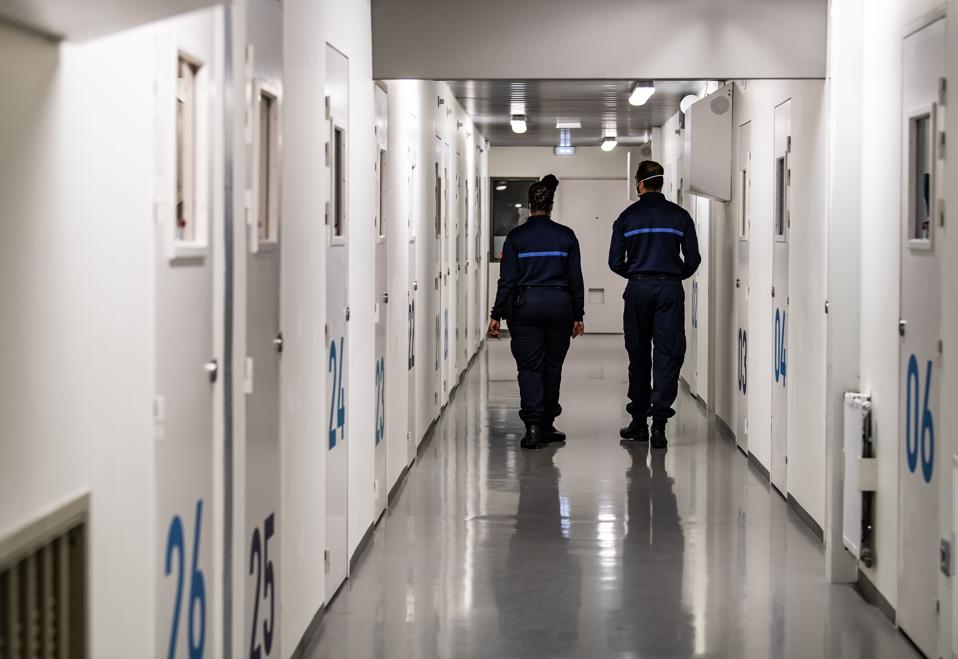
FRANCE-JUSTICE-PRISON
Continue reading

Could the success of ballot measures to legalize marijuana add pressure for federal legalization?

Now that 15 states have legalized the use of recreational cannabis — and only six states still count it as fully illegal — industry experts say the federal government is facing more pressure to ease its tough standards on the use and sale of the drug.

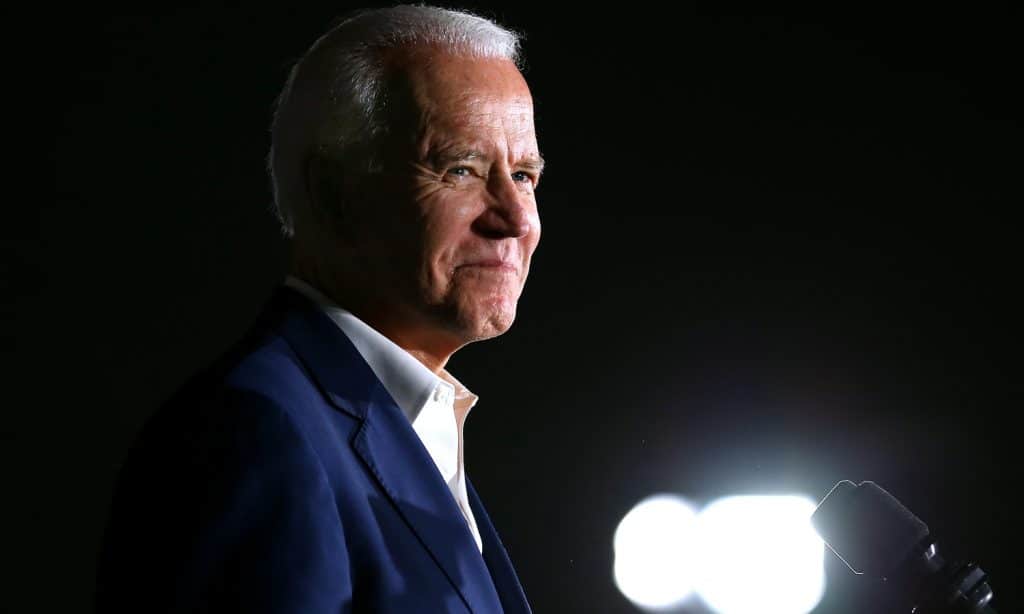
President-elect Joe Biden has promised to tackle criminal justice reform — including marijuana laws, and Vice President-elect Kamala Harris was an early supporter of the MORE Act, which would lay the groundwork for federal decriminalization by expunging marijuana convictions and prohibiting the denial of benefits on the basis of a “cannabis-event.”

Businesses in the $17 billion cannabis industry would benefit from full legalization with easier investment and banking opportunities, much of which is regulated federally. And state and federal governments may profit from a simpler tax scheme on the drug.

“If you don’t allow that legal operation, somewhere in the community, the sales will continue,” Chris Lindsey, a legislative analyst of Marijuana Policy Project, told Marketplace.

Lindsey compares current federal cannabis policy to alcohol prohibition in the 1920s. Prohibition made it federally illegal to produce, import, transport, and sell alcoholic beverages but consumers were safe from prosecution. This led to criminal organizations controlling a black market and — most importantly — gaining all the profits.

e-mail icon
Continue reading

Election revives recreational pot initiatives in New Mexico

State legislators are rekindling efforts to open New Mexico to recreational marijuana production and sales, with an emphasis on economic opportunity amidst the turmoil of the coronavirus pandemic.

State Rep. Javier Martinez told a panel of lawmakers Tuesday that he will introduce legislation in 2021 to regulate and tax recreational marijuana, hewing closely to a proposal that won House approval earlier this year but died in the Senate without a floor vote.

Elections this year ousted several conservative-leaning Democratic state senators who opposed past legalization efforts. Democratic Gov. Michelle Lujan Grisham last week reiterated her support for recreational marijuana as an opportunity to expand and diversify the state economy.

“I think the prospect for a recreational bill to pass this year are looking much better,” said Democratic state Sen. Jacob Candelaria of Albuquerque, a sponsor of past recreational marijuana and drug decriminalization initiatives. “What matters most is just the numbers (of potential supporters) in the New Mexico Senate. I think we just have better numbers.”

Candelaria, a medical marijuana patient and attorney who represents current cannabis business license holders, urged the Lujan Grisham administration to lift what he called artificial limits on medical marijuana production to avoid shortages and costly delays in new tax revenue if recreational marijuana is approved by the House and Senate, where Democrats hold majorities.

e-mail icon
Continue reading

What You Need To Know About Investing In Marijuana With A Biden-Harris Win

Industry insiders believe Democrat-held Congress would likely take up the SAFE Banking and MORE Acts, generating long-term market effects.

Despite ongoing attempts by the Trump Administration to delay the transition, President-elect Joe Biden and Vice President-elect Kamala Harris are expected to take power on January 20, 2021, creating an impact on the cannabis stock market that could be substantial. 

A Biden/Harris presidency could prove beneficial for a surging cannabis reform movement and its market after a clean sweep across five states on Election Day. Still, financial and legal experts point out that cannabis reform relies on more than the White House. As such, a delay in both reform and market impact could occur. 

Power, Potential Reform Remains In The Balance

The Biden White House should provide the marijuana market a bump of some form. However, its scope hinges on Biden, decriminalization proponent, and the U.S. Senate’s power, which remains in limbo until January when two runoffs in Georgia are held. 

The results will determine if the Democrats control both chambers of Congress or Biden’s opposition from cannabis opponent Mitch McConnell

Joe Biden Keeps Stating Conflicting Opinions About Marijuana
Continue reading

Former Marines Embark On A Marijuana Mission For Veterans

When three former Marines started laying the groundwork for a veteran advocacy group, the connections between opioid use and suicide became readily apparent, prompting them to look for a way to make a bigger impact.

Bryan Buckley, Matt Curran and Andy Miears started Helmand Valley Growers Company in 2019 as a for-profit cannabis business that would donate 100 percent of its proceeds to Battle Brothers Foundation, a nonprofit founded by Buckley dedicated to researching medical cannabis treatments for veterans with ailments such as post-traumatic stress disorder.

“It’s essentially a call to arms for the cannabis community,” says Buckley, the CEO of HVGC and the president of Battle Brothers.

Miears, now the chief cultivator of HVGC, was the first in the group to champion cannabis, due to the positive effects it was having on his life. Cannabis helped Miears “transition from a warrior to a gardener,” Buckley says.

“Our mission is to provide an alternative to doctors and the health-care system, and that (alternative) is cannabis,” says Curran, the company’s chief operating officer, who acknowledges that cannabis can’t fix every problem, but is “a very effective tool that has marginal side effects when you look at it next to a prescription drug.”

e-mail icon
Continue reading

Most states now have legal medical marijuana, but N.C. lags behind

Marijuana won big this election, gaining legal ground in five states, but it remains illegal in North Carolina. That’s not expected to change with the state’s incoming legislature.

Why it matters: Coronavirus has left deep scars on our economy, and proponents of legal marijuana say it could be the jump-start North Carolina needs. Especially for the state’s many tobacco farmers, some of whom have already leaned into the rising hemp industry. In 420-friendly states like Colorado and Washington, marijuana sales has generated hundreds of millions in tax revenue and employed tens of thousands.

Opponents, however, cite a lack of research on the drug’s effects and potential risk factors.

Public opinion: 72.5 percent of N.C. residents support legal marijuana for medical purposes. Unlike other states, legalization can’t be put to a public vote; it’s up to the state legislature. Still, constituents play an important role in any path forward through their vote and their voice.

Where legalization stands: Federally, marijuana is illegal, but a majority of states have now legalized it for medical or recreational use, or both.

hemp product
Continue reading

WeedLife.com