WeedLife News Network

Hot off the press cannabis, marijuana, cbd and hemp news from around the world on the WeedLife Social Network.

USDA Issues Final Rule On Hemp

The U.S. Department of Agriculture (USDA) today announced the final rule regulating the production of hemp in the United States. The final rule incorporates modifications to regulations established under the interim final rule (IFR) published in October 2019. The modifications are based on public comments following the publication of the IFR and lessons learned during the 2020 growing season. The final rule is available for viewing in the Federal Register and will be effective on March 22, 2021.

“With the publication of this final rule, USDA brings to a close a full and transparent rule-making process that started with a hemp listening session in March 2019,” said USDA Marketing and Regulatory Programs Under Secretary Greg Ibach. “USDA staff have taken the information you have provided through three comment periods and from your experiences over a growing season to develop regulations that meet Congressional intent while providing a fair, consistent, science-based process for states, tribes, and individual producers. USDA staff will continue to conduct education and outreach to help industry achieve compliance with the requirements.”

Shawn Hauser, partner and chair of the Hemp and Cannabinoids Department at Vicente Sederberg LLP said, “The transition from prohibition to a legal and regulated system takes time, and USDA’s final rule is a historic step forward for hemp in the U.S.  Many are justifiably disappointed by the DEA’s continued (and in some ways expanded) role in the agricultural hemp program, but there were also a number of positive improvements. The expanded harvest window, alternative disposal/remediation authorizations, and increase of the standard of negligence to 1% will be critical to building a successful hemp industry, and they indicate the USDA gave meaningful consideration to stakeholder’s comments. We are undoubtedly making progress, and we will continue to work with regulators and through Congress to perfect the regulatory structure for hemp.”

Key provisions of the final rule include licensing requirements; recordkeeping requirements for maintaining information about the land where hemp is produced; procedures for testing the THC concentration levels for hemp; procedures for disposing of non-compliant plants; compliance provisions; and procedures for handling violations.

Rate this article: 
Select ratingGive USDA Issues Final Rule On Hemp 1/5Give USDA Issues Final Rule On Hemp 2/5Give USDA Issues Final Rule On Hemp 3/5Give USDA Issues Final Rule On Hemp 4/5Give USDA Issues Final Rule On Hemp 5/5
Authored By: 
Article category: 
Regional Marijuana News: 

e-mail icon

Was there Progress in Costa Rica with Regards to Hemp and Cannabis during 2020?

The year 2,020 has already ended and Costa Ricans continue to wait for strong answers, due to the pending approval of the bill to legalize the production of Cannabis and Hemp in the country.

These have been difficult days with the COVID-19 Pandemic around the world, where all sectors, mainly the agroproductive, have been affected. The adaptation process has been fundamental, in the case of Costa Rica, the institutions linked to this area have strengthened ties with strategic allies to prevent agricultural production from stopping.

Research has been carried out in favor of the innovation of cutting-edge technologies for agricultural production, this is where the Minister of Agriculture and Livestock (MAG), Renato Alvarado, emphasizes the valuations of different materials of industrial cannabis, with regards to the perspective for the legalization of the crop in the country.

Take into account that the Environment Commission of the Legislative Assembly of Costa Rica (CR), in the course of the year 2020, approved the substitute text of the legislative project “Law of Cannabis for medicinal and therapeutic use and of Hemp for food and industrial purposes”.

All the changes were oriented towards the simplification of procedures, the requirements, and formalities for home cultivation for some patients, the granting of incentives to the activity, the definition of requirements for obtaining licenses, as well as a special tax for said activity. Therefore, bill number 21,388 establishes that -the domestic cultivation of Cannabis plants- is regulated.

e-mail icon
Continue reading

Governor of Virginia Unveils Proposal To Legalize Recreational Cannabis

Adults in Virginia will be able to legally purchase marijuana for recreational use in two years, under a proposal unveiled Wednesday by the governor of the commonwealth.

Under the proposal offered up by Virginia Gov. Ralph Northam, according to local television station WRIC, adults aged 21 years and older would be able to purchase pot as of January 1, 2023. 

Citing a spokesperson for the governor, the station reported that sales of recreational pot would not begin until that day, but implementation “would have a quick timeline of roughly 20 to 22 months after the bill is passed.”

Moreover, WRIC reported that the governor’s proposal “would put limits on possession, no more than an ounce of “marijuana plant material,” and on the concentration of businesses.”

Northam is expected to elaborate further on the proposal during his State of the State address on Wednesday in that capital city of Richmond.

e-mail icon
Continue reading

What are the rules to grow marijuana legally in Massachusetts?

A significant marijuana growing operation was found in Belchertown this week where police officers found hundreds of marijuana plants that violated the legal limit for growing marijuana at home. 

The Belchertown Fire Department received a call of a possible house fire and when they arrived at the home on West Street they noticed a significant growing operation allegedly run by two men from out of state. 

In Massachusetts, marijuana can be legally smoked and possessed but when it comes to growing the plant, there’s a legal limit. A limit that was well surpassed when Belchertown police and fire discovered a growing operation of more than 800 marijuana plants inside a Belchertown home on Monday night. 

It is allowed to have six plants per person with a max of 12 in a household, so if there are two people living in a house they can have 12 plants but if you go above that it’s illegal.

Police arrested two men who were involved in the operation, both men are from Brooklyn, New York. In addition to the plants, police seized $2,500 in cash and a significant amount of growing equipment that covered the whole house. 

e-mail icon
Continue reading

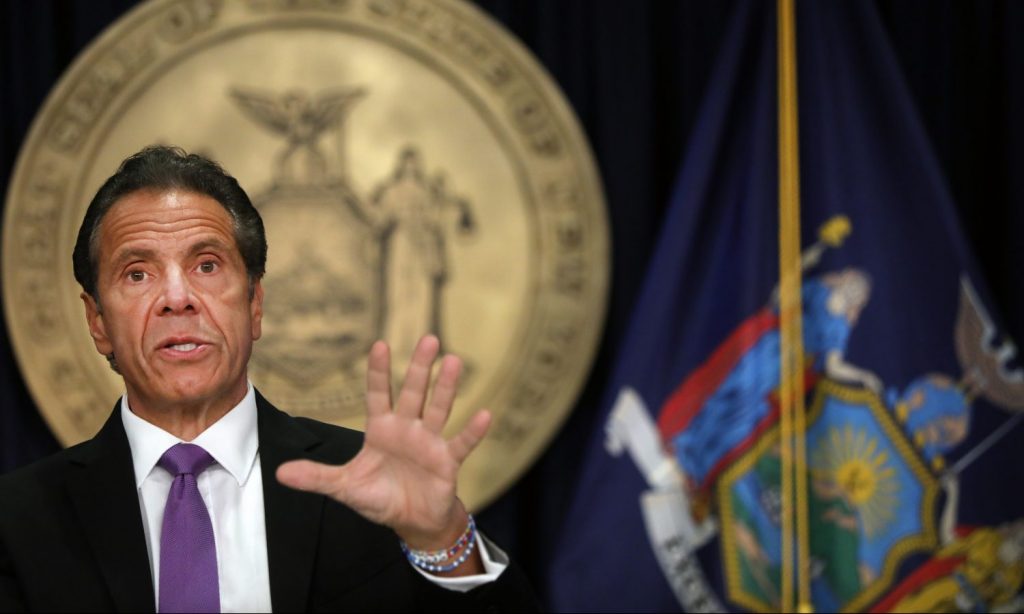
New York Gov. Cuomo Wants To Legalize Weed, But It Won’t Be Easy — Here’s Why

Lawmakers can’t agree on tax revenue, how it should be allotted, or how to set up an industry that creates a level playing field for all.

New York Governor Andrew Cuomo has promised again that marijuana legalization is coming. However, because of how the legislative grind works in the real world, he might have to storm the state capitol to get it done.

There’s still a wealth of challenges ahead before New York agrees on how legal marijuana should look. And while it might be a bit of a stretch to suggest that Cuomo will have to launch a reign of terror to shake some sense into lawmakers who continue to sabotage progress, there’s no doubt that he will need to get creative to see it through.

Governor Cuomo used his annual state of the state address earlier this week to double down on his dedication to creating a taxed and regulated cannabis market. He’s confident that 2021 will be the year that it goes all the way. “We will legalize adult-use recreational cannabis, joining 15 other states who’ve already done so,” he said. “This will raise revenue and will end the over-criminalization of this product that has left so many communities of color over-policed and over-incarcerated.” 

It was just three years ago that Cuomo believed marijuana was a “gateway drug.” He was also very dismissive about any efforts to legitimize the plant. But after a study commissioned by his own administration found that ending prohibition could generate hundreds of millions of dollars and promote a new level of social justice, he bought in.

Cuomo Confidently States New York Will Legalize Adult Use Marijuana
Continue reading

California Cannabis Executive Petitions Trump To Release Nonviolent Cannabis Offender

A California cannabis industry executive is calling on President Donald Trump to use his executive power in the waning days of his presidency by issuing a pardon to a nonviolent cannabis offender. Kyle Kazan, the CEO of vertically-integrated cannabis company Glass House Group, issued the plea for clemency for Parker Coleman, Jr. in an open letter to the president.

“While there are many thousands of people whose lives are wasting away in federal prison hoping for a miracle, I would like to bring one such person to your attention who is deserving of another courageous act, Parker Coleman,” Kazan wrote to Trump. “Mr. President, you have the power to end injustice through the stroke of your pen.”

Coleman has been in custody since 2010, when he was arrested by federal authorities in North Carolina and charged with marijuana trafficking and money laundering. Upon conviction, he was sentenced to 30 years in federal prison in 2013. An additional 30 years was added to the sentence because two firearms were discovered in the vehicle he was in during the arrest of Coleman, who had prior felony convictions. He is currently serving his sentence at a federal prison in Beaumont, Texas.

Pot CEO Appeals To The President

In a virtual interview with High Times, Kazan said that clemency for Coleman is appropriate in light of the nation’s evolving attitudes toward cannabis.

“As the American public strongly supports legalizing, decriminalizing, and expunging marijuana convictions (one of the very few things that the U.S. populace is in significant agreement with), it boggles the mind that Mr. Coleman is serving a 60-year sentence,” he wrote.

e-mail icon
Continue reading

France to ask public opinion on recreational cannabis

The French parliament will launch an online questionnaire today to better understand public opinion towards recreational cannabis use.

The questionnaire, which will have five or six questions, will be available on the Assemblée nationale website for around one month.

MP for Essonne and leader of the project, Robin Reda, told AFP that a report detailing the results would be available towards the end of March or beginning of April. 

He said: “The goal is to inform debate as much as possible. The success of the survey will depend on the largest number of people possible participating.” 

Government inquiries into medical marijuana

The parliamentary group behind the project will also give conclusions on its studies into the use of medical marijuana (including products such as cannabidiol and CBD) in mid-February. 

e-mail icon
Continue reading

NY can lead the nation with equitable marijuana legalization | Opinion

With newly installed Democratic supermajorities in both houses of the state legislature and a governor who has signaled his unequivocal support this week, many believe it is a foregone conclusion that New York will finally join other states in responsibly regulating marijuana use this year. That’s welcome news, and it’s long overdue. But it’s also abundantly clear that getting it done is not the same as getting it right.

As lobbyists, activists and lawmakers haggle over competing proposals to establish legal marijuana access for adults, there are several non-negotiable tenets that must be included in any legislative deal. Chief among them is the abiding principle that New York's marijuana legalization package must be laser-focused on putting impacted communities first.

First and foremost, adult use marijuana regulation must address the harms wrought by the decades-long war on drugs. Treating this as an issue of both economic and criminal justice reform, New York must use any legalization proposal as a vehicle to right the wrongs of the past and build the foundations for a more equitable future. This means not only ending housing and employment discrimination for communities devastated after years of criminalization and racist enforcement, but also the critical step of allowing re-sentencing for individuals with marijuana convictions. It’s also time for the state to remove a positive marijuana test as the sole factor determining a parole or probation violation, as New York City has already done.

New York's marijuana regulation law must ensure the newly created industry is both equitable and diverse. One benefit of not being the first state to end marijuana prohibition is that we have a much clearer sense of which programs have worked well and which ones have fallen short in other states. Adopting and building upon the best practices of other jurisdictions, New York can lead the way by establishing a licensing structure that prioritizes small businesses, co-operatives, and family-scale farms, not giant corporations focused primarily on profits. In addition, a social equity program that is funded from day one is essential in order to generate economic opportunity by offering priority licenses to communities disproportionately hurt by the drug war.


Photo credit: Getty Images.
Continue reading

North Dakotans may vote on legalizing marijuana in 2022

Proponents of legalizing recreational marijuana in North Dakota are embarking on another petition effort after missing the signature cut-off for their measure to appear on last year's ballot.

Supporters of the measure, which would amend the state Constitution to legalize personal possession of cannabis, submitted their petition to Secretary of State Al Jaeger on Monday, Jan. 11, seeking approval to appear on the 2022 general election ballot.

If Jaeger approves the measure, backers can begin collecting the 26,904 signatures needed to appear on the ballot.

The new measure is the same as the one that circulated ahead of last year's election, according to the measure's chairwoman Jody Vetter, and focuses strictly on the personal growth and possession — not the sale — of cannabis for residents 21 and older.

Last year, Vetter's measure came up some 2,000 signatures shy of qualifying for the ballot. But Vetter said their last push was hampered by the COVID-19 pandemic, which interrupted the petitioning process for months, and noted that she believes they are better prepared and have more time ahead of the next election.

e-mail icon
Continue reading

Nebraska State Senator Introduces Recreational Marijuana Legalization Amendment

A state senator introduced a proposed amendment to the Nebraska Constitution on Thursday that would legalize marijuana for adults 21 and older. If advanced by the Nebraska Legislature, the proposed amendment from state Sen. Justin Wayne of Omaha would appear on the ballot in 2022.

Under Legislative Resolution 2CA, voters would decide on a proposed amendment to the state constitution in next year’s general election in November. The amendment would legalize marijuana for all adults age 21 and older and require state lawmakers to enact legislation governing the “cultivation, manufacture, distribution, consumption, and sale of cannabis in any form” by October 1, 2023.

2020 Ballot Initiative Nixed By State Supreme Court

The proposed amendment comes following an unsuccessful bid by activists to legalize medical marijuana last year with the Nebraska Medical Cannabis Constitutional Amendment (NMCCA). Supporters of the ballot measure submitted more than 182,000 signatures in July, and the following month Nebraska Secretary of State Bob Evnen announced that the measure had garnered enough signatures to qualify for a vote and certified the initiative for the November 2020 general election ballot.

However, that decision was challenged by Lancaster County Sheriff Terry Wagner, who filed a lawsuit to block the initiative from appearing on the ballot on the grounds that it contained misleading language and violated a rule limiting initiatives to one subject. The challenge was upheld by a vote of 5 to 2 by the Nebraska Supreme Court, which ruled that provisions that provided for retail sales, home cultivation, and other issues were not sufficiently connected to legalizing the medicinal use of cannabis.


“If voters are to intelligently adopt a State policy with regard to medicinal cannabis use, they must first be allowed to decide that issue alone, unencumbered by other subjects,” the court wrote in its conclusion. “As proposed, the NMCCA contains more than one subject—by our count, it contains at least eight subjects.”

e-mail icon
Continue reading

Texas' medical marijuana program is one of the most restrictive in the country

Five years after Texas legalized medical marijuana for people with debilitating illnesses, advocates and industry experts say the state's strict rules, red tape and burdensome barriers to entry have left the program largely inaccessible to those it was intended to help.

But with a new legislative session gaveling in next month, some Texas lawmakers see an opportunity to fix the state's medical cannabis program - known as the Compassionate Use Program - by further expanding eligibility and loosening some restrictions so Texas' laws more closely resemble those of other states that allow the treatment.

There are 3,519 Texans registered with the state to use medical marijuana, though advocates say 2 million people are eligible based on current law.

Texas' program pales in overall participation and scope compared with other states: It has fewer enrolled patients and businesses than most other states with medical marijuana programs. At least some form of medical marijuana is legal in 47 states nationwide, but Texas' restrictions put it in the bottom 11 in terms of accessibility, according to the National Conference of State Legislatures.

"We're pretty dang close to the bottom. We're pretty far behind," said state Sen. José Menéndez, D-San Antonio, referring to how access to Texas' medical marijuana program fares compared with other states. Menéndez will push legislation in the next session to further expand the program.

e-mail icon
Continue reading

Missouri Republican Lawmaker Aims To Legalize Cannabis In The State

On the eve of Missouri’s next legislative session, one Republican lawmaker in the state is angling to legalize pot.

State House Rep. Shamed Dogan says he intends to put up a bill in the upcoming session that would add the “Show Me State” to the ranks of those that have ended the prohibition on marijuana.

“We spend more time and more law enforcement resources going after marijuana smokers than all the other drugs combined,” Dogan said, as quoted by local television station Fox 4. “Ten percent of the arrest in the state of Missouri right now are from marijuana possession.”

According to the state, Dogan’s bill will represent the first time “a Missouri Republican representative is pushing to legalize recreational marijuana.”

“I think alcohol prohibition taught us that trying to prohibit something this way, the way we’ve gone about marijuana prohibition, it backfires,” Dogan said, adding: “I mean, you can buy any amount of alcohol you want, right? You can buy any amount of tobacco that you want, so I think it should be regulated the same ways.”

e-mail icon
Continue reading

Cannabis board continues to work on rules for recreational pot

The Cannabis Control Board met for about an hour Wednesday afternoon to discuss changes to the proposed rules and regulations for the recreational cannabis industry.

Board Vice Chairwoman Dafne Shimizu, director of the Department of Revenue and Taxation, presented amendments to the rules for retail cannabis stores and for enforcement and penalties.

Most of the changes are small, related to clarifying the requirements for transferring cannabis between licensed businesses and the process for reporting a customer who presents a fake identification card.

Board members briefly discussed whether there should be daily limits on cannabis purchases, but decided against placing a limit, noting the recreational cannabis law only limits how much cannabis an adult can possess in public, not how much cannabis they can possess overall. The limit when out it public is one ounce of dried cannabis flower.

Board members said they will not vote on the proposed changes until after Rev and Tax has presented additional amendments at a future board meeting.

e-mail icon
Continue reading

The DEA May (Finally) Allow Private Companies to Grow Cannabis for Research

After years of mostly silence on the issue, the U.S. Drug Enforcement Administration (DEA) has released the “final rules” on how to apply for a federal license to grow cannabis for research. The decision came after the U.S. Congress passed a bill urging an expansion of marijuana research.

Unlike almost anything these days, the bill received strong bipartisan support.

The DEA had issued preliminary final rules in March. It took comments from interested parties and made a few minor adjustments to the rules, according to the final rules published in the federal registry. The new rules go into effect on January 19.

The change will open the door to better marijuana research in the U.S.

It’s been a slow, grinding process to get to the new rule changes. Along the way, a researcher filed a lawsuit against the DEA for holding up the process. 

But the rule change will finally allow companies to get a license to grow cannabis for research purposes. Up until this point, only the University of Mississippi has been allowed to grow research marijuana for the past 50 years. Researchers have said that cannabis more closely resembles the genetic profile of hemp than it does the cannabis anyone can buy at a dispensary. 

e-mail icon
Continue reading

Virginia and Cannabis, Setting the Record Straight

When it comes to Virginia and cannabis, Virginia didn’t see any big changes with the last US election. This is because the state had already decriminalized cannabis earlier this spring, and expanded on its own medical legalization policy this past summer. However, there’s one other thing when it comes to Virginia and cannabis, something that’s often misunderstood. Virginia was actually the first state to legalize medicinal marijuana, back in 1979.

Missing the holidays already? We’ve got an answer – keep shopping! Just because its about the be New Year’s, doesn’t mean you have to stop giving gifts. We’ve still got all the best Delta-8 THC deals for everyone in your family. So, don’t be bummed out over the end of the holidays…just keep giving gifts

Was Virginia really first?

Indeed it was! And it went through with practically no buzz at all. In 1979, Virginia did an overhaul of its drug laws which included the inclusion of the use of cannabis medicines for people specifically suffering from glaucoma and cancer. The medical legalization allowed patients with these illnesses to receive the medications, but wasn’t expanded on past that point for many, many years. In fact, it wasn’t until 2017 that the bill was finally expanded to include more conditions and generally looser policies. It was updated yet again in the summer of 2020.

So, what happened to the bill? Not much. The issue with legalizations is that they don’t come compact with finished frameworks for regulation. They merely state the decision to change the legality of a specific thing. Once the status is changed, especially when a former black-market product becomes a regular market product, there has to be some kind of setup for how it’ll work. Will it be taxed, at what rate, and by what entity? How can it be used exactly, and where? Are there age restrictions? What’s the cost, and is there a cost ceiling? Where can the product come from, and what are the regulations for producing it?

These things and more must be figured out, and if they aren’t, the legalization is open to much debate in court, apart from the fact that it stymies the ability to have an operational industry. For years the law sat, practically unknown to the Board of Medicine, attorney general, or court system in general.

cannabis decriminalization
Continue reading

Why The US Has Made A Complete Mess Of Partial Marijuana Legalization (So Far)

Too many people who claim to believe in free markets don’t trust the American people with personal freedom.    

Disclaimer: The views expressed in this article solely belong to the author and do not necessarily represent those of The Fresh Toast. 

One of the most frustrating problems in the efforts to end marijuana prohibition has long been the distrust of freedom and the pretense that we are somehow “boldly going where no politicians have ever gone before.”  

Specifically, marijuana has been sold over-the-counter to anyone over 18 for decades in the Netherlands (not just in Amsterdam.) It also allows for on-premise consumption. And with almost no regulations, except NO HARD DRUGS. And essentially no problems (except on the still banned supply).

However, when Nevada legalized recreational sales, even Las Vegas (!!!) did not initially license on-premise consumption because they were unsure how it might work and what the consequences might be. 

could marijuana legalization unite a divided country
Continue reading

Illinois Judge Rules Against Craft Cannabis Growers Seeking Immediate Licenses

An Illinois judge has ruled against more than three dozen applicants for craft cannabis cultivator licenses who filed suit against the administration of Gov. J.B. Pritzker for a delay in awarding the licenses. The craft grower licenses were supposed to be awarded by July 1 of this year to comply with state law, but state officials have not yet done so, citing delays necessitated by the ongoing coronavirus pandemic. The delay has affected the issuance of 40 craft grower licenses, as well as licenses for cannabis infusers, transporters, and 75 additional recreational cannabis retailers, which were supposed to be issued by May 1.

Cook County Judge Allen Walker issued the ruling on December 24 in the suit brought by the Illinois Craft Cannabis Association, which sought a decision directing the Pritzker administration to issue the licenses immediately. In the ruling, Walker wrote that the first emergency order issued by Pritzker to delay awarding the licenses was insufficient. But the judge also ruled that a subsequent order issued by the governor that clarified the delay was ordered because the agency tasked with issuing the licenses, the Illinois Department of Agriculture, was focusing its efforts during the pandemic on protecting the food supply, including livestock and meat production facilities. 

“While (the later order) does not explicitly say: ‘IDOA’s issuing cannabis licenses by the (deadline) would have the effect of diverting needed resources from the pandemic effort thus making it more difficult for the governor to cope with the COVID-19 crisis,” Walker wrote in the order, “that is the point implicitly being made.” 

Trade Group Files Suit

The craft growers trade association filed suit against the Pritzker administration for the delay, citing mounting costs for applicants to rent and maintain facilities for their proposed cannabis operations. The suit claims that Pritzker’s order is unlawful because it failed to identify a sufficient legal basis for the delay and did not set a new deadline for the issuance of the licenses.

In addition to seeking immediate issuance of 40 craft grower licenses, 40 cannabis infuser licenses, and an unlimited number of transporter licenses as specified by state law, the suit seeks allowances for applicants who have lost business sites, employees, or other factors of their licensing plans because of the pandemic.

e-mail icon
Continue reading

Here's Why January 5th Could Be a Huge Day for Cannabis

In November, pot stocks soared on both a Joe Biden presidential win and the legalization of recreational marijuana in four more states (Arizona, Montana, New Jersey, and South Dakota). There's been plenty of optimism that there could be significant changes ahead for the cannabis industry, including the decriminalization of marijuana and moving it off its current Schedule I classification with the Drug Enforcement Administration (DEA). 

But time and time again, cannabis investors have gotten their hopes up after marijuana legislation passed in the House of Representatives only for it to end up going nowhere. Even a change in leadership at the White House may not be enough to move the needle. Arguably, one of the biggest obstacles for the cannabis industry is the U.S. Senate -- but power there could soon shift as well.

IMAGE SOURCE: GETTY IMAGES.

Runoff elections will dictate which party controls the Senate

In Georgia, two Senate runoff elections are scheduled for today, Jan. 5. All eyes are peeled on the race, given that Republicans currently hold 50 seats while Democrats occupy 48 (if you include the two independents who caucus with them, Bernie Sanders and Angus King). With two seats at stake, a Democratic sweep would give the party an equal share. And if there is a tie in the Senate, the deadlock is broken by the vice president -- a seat that Democrat Kamala Harris will soon hold.

Why does it matter if Democrats gain control?

Democratic control of the Senate is important to the pot industry, because Republicans have historically taken a harder stance on cannabis than Democrats. While multiple marijuana bills have passed the Democrat-controlled House in the past few years, there's been no progress in the Senate. In September 2019, the House passed the Secure and Fair Enforcement (SAFE) Banking Act. The bill was an effort to help the industry easily access banking services and avoid having to hold excessive amounts of cash, which many argue is a security issue. And even that failed to go anywhere in the Senate. 

The exterior of the U.S. Capitol building
Continue reading

This Is How Marijuana Could Go Federally Legal In 2021

America will need to be super stoned to survive the gorilla cage that it may get stuffed inside next year. It’s not that we’re trying to be pessimistic, but there is little doubt that the population can withstand another year of lockdowns and stimulus living.

If there is one thing we’ve learned over the past several long, excruciating months, it’s that humanity doesn’t do well with handling apocalyptic turns. Not unless it can, on occasion, they jump through an escape hatch in the brain that lets them forget that they’re just weeks away from moving into a cardboard box. It’s the reason that cannabis dispensaries continue to make money hand over fist while the rest of the country tries to figure out how in the hell to live on $1.64 per day. Some argue that weed is how we fix a three-legged economy and keep on kicking through the downtrodden like a well-endowed mule. But it’s going to have to go legal at the federal level first.

It might sound like a bit of a pipe dream to think that the federal government is just all of a sudden going to legalize marijuana in the United States and end its more than eight-decade-long reign of terror against the stoner class. But there’s a decent chance legal weed could finally get some much-needed consideration next year.

Strangely, that all depends on the outcome of Georgia’s runoff election scheduled for next week. So get those bets in while you still can.

This is one race that you won’t want to miss.

e-mail icon
Continue reading

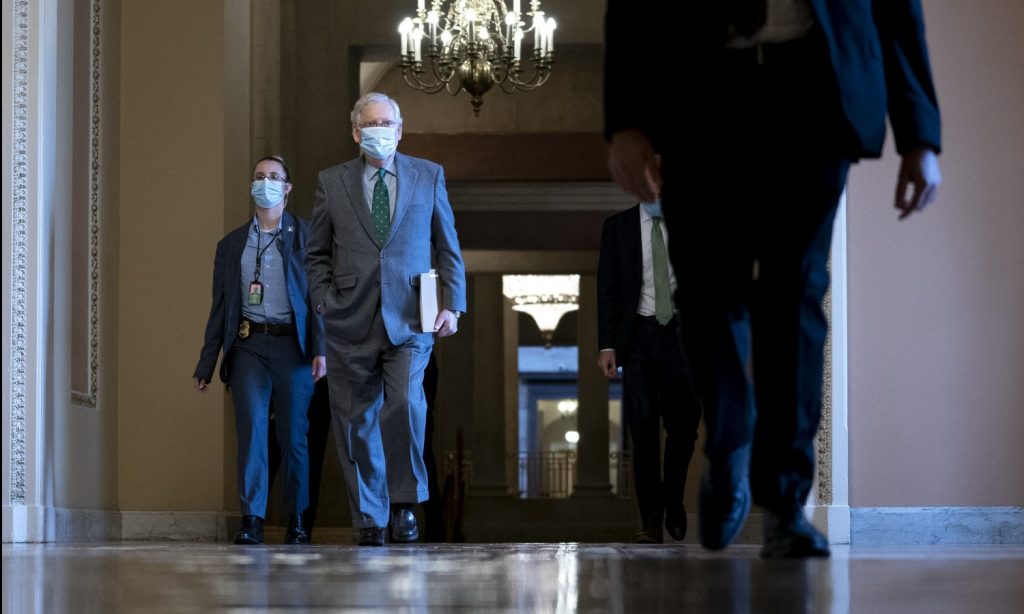
Will Senator Mitch McConnell Be A Problem For Marijuana In 2021?

We imagine that the same reasons he has for refusing the American people money they need to stay alive is part of his motivation for wanting to stop legal marijuana from taking hold.

Senate Majority Leader Mitch McConnell is perhaps the most despised person in the United States. The top Senate Republican recently sidelined an effort to provide the American people with checks for $2000 instead of the $600 stimulus approved under the latest coronavirus relief bill.

The entire nation has been screaming at McConnell for days from their computers, televisions and smartphones because the lawmaker fails to see the necessity of providing folks with enough cash to actually aid them in catching their fiscal breath. Meanwhile, the cannabis advocacy troop is presumably happy that the rest of the country is finally seeing what they’ve known for years: McConnell is anti-progress.  

When the U.S. House of Representatives passed the MORE Act (Marijuana Opportunity and Expungement Act), they knew the bill didn’t have a fighting chance at being taken seriously with this Congress. As Senate Majority Leader, McConnell determines which legislation sees the light of day and which doesn’t. Marijuana-related legislation is always something he has ignored to the bitter end.

Although McConnell was instrumental in reviving industrial hemp cultivation in 2018, the self-proclaimed grim reaper of Capitol Hill wants nothing to do with making its stoner cousin an American staple. Some think he is apprehensive because he wants to give hemp farmers a chance to thrive first, while others believe that he’s just too old school for pot’s progressive ways. Regardless of which is true, McConnell is one of the main reasons that cannabis prohibition is alive and well. So how much longer is this lawmaker going to be a problem for pot? 

Senate Republicans Balk At Democratic House Move To Legalize Marijuana
Continue reading

WeedLife.com