WeedLife News Network

Hot off the press cannabis, marijuana, cbd and hemp news from around the world on the WeedLife Social Network.

Should the Plant That Can Grow Anywhere Be Grown Everywhere?

Cannabis is a wildly resilient and adaptable plant. It’s been grown and harvested for more than 4,000 years, migrating along ancient trade routes from southeast Asia through Africa and the Middle East, crossing oceans to reach the Americas and points in between. Today, we are just beginning to apply scientific methods to better understand the nature of the cannabis plant itself. The complex interplay of environment, farming techniques, and genetics allow us to coax and nurture various attributes out of each variety gently. 

But moving forward starts with looking back and understanding what grows well, where it grows well, and why. Doing so represents not just the future of cannabis farming but also the future and viability of our planet to sustain us.

The homegrown science of cannabis

Agricultural scientists are hamstrung by cannabis’ storied history. The plant was underappreciated by European power-brokers who considered it a poor man's tobacco only used by marginalized racial groups. This racist perspective led to the criminalization of cannabis in the United States and around the world.  As a result, generations of cannabis farmers, operating outside the norms of agricultural science, organically established the foundations of cannabis science, developing cultivation techniques and naturally selecting and enhancing certain plant traits and qualities. 

Left to their own devices, these early pioneers also created legacies that we are now working hard to unravel. For example, there is no standardized naming taxonomy for cannabis beyond the basic genus and species classifications: cannabis indica, cannabis sativa, cannabis ruderalis. The reality is there are few true cannabis species in modern cultivation. Most of the cultivated cannabis strains are complex poly-hybrids developed by farmers selecting for specific properties, mostly optimizing their strains' THC properties.

For the past 50 years, growers have tinkered with the cannabis plant, creating more powerful and potent flowers. In the 1970s, one could expect THC content of 4 to 6 percent of the dry flower's total weight. By the 1980s and 90s, THC content had almost tripled to 15 percent. Today’s specialized strains now boast a THC content of nearly 25 percent. 

e-mail icon
Continue reading

USDA announces expansion, other improvements to hemp crop insurance

The Department of Agriculture Monday announced the expansion of the pilot Multi-Peril Crop Insurance plan for hemp. The expansion and other improvements to the plan, will begin in the 2021 crop year.

USDA Risk Management Agency Administrator Martin Barbre says, “Hemp offers exciting economic opportunities for our nation’s farmers, and we are listening and responding to their risk management needs.”

The program expansion allows for additional states and specific counties to be included in the program. The changes also allow broker contracts for hemp grain and adjust program reporting and billing dates. Sales closing, cancellation, production reporting and termination dates were adjusted to match dates of similar crops.

Meanwhile, USDA adjusted Acreage Reporting Dates based on regional final planting dates. The premium billing dates for all states changed to August 15.

For more information on USDA risk management programs for hemp producers, they are encouraged to visit farmers.gov/hemp.

Rate this article: 
Select ratingGive USDA announces expansion, other improvements to hemp crop insurance 1/5Give USDA announces expansion, other improvements to hemp crop insurance 2/5Give USDA announces expansion, other improvements to hemp crop insurance 3/5Give USDA announces expansion, other improvements to hemp crop insurance 4/5Give USDA announces expansion, other improvements to hemp crop insurance 5/5
Authored By: 
Regional Marijuana News: 

e-mail icon

What history teaches us about shaping South Africa’s new cannabis laws

South African cannabis policy is currently at a crossroads. In 2018, the Constitutional Court effectively decriminalized private cannabis use. Since then, the government has continued to grapple with how to regulate this plant and its products, locally called ‘dagga’.

A cannabis bill to clarify legal reforms was recently presented in parliament. Yet, medical and civil rights groups who advocate rights-based approaches remain wary of the ongoing potential for discrimination. They argue it will benefit the affluent and impact negatively on vulnerable communities, who may not have space at home to cultivate the crop and will be criminally penalized for smoking cannabis outside the home.


With a cannabis industry estimated at over $300-billion worldwide, much is at stake. Already, South African boutique producers are navigating legal loopholes to deliver cannabis products to young, urban middle-class consumers. Some government officials see dagga as a ticket to economic growth. This is through agriculture and medicinal products that can be marketed for pain alleviation, sleep and skin care

But, would further liberalization invite “corporate capture” as some development practitioners fear? If so, what will happen to people in rural communities who, for decades, have eked out risky livelihoods by illegally cultivating dagga? History provides crucial insights into the questions of social justice at stake in current policy debates.

Our recent study using police statistics from the mid 1900s uncovers trends in cannabis arrests and seizures, by geographical area. It shows the South Africa apartheid state to have been a pioneer in supply-side drug control strategies, targeting rural cannabis farmers in the most impoverished parts of the country.

e-mail icon
Continue reading

Measure to Legalize Marijuana in Mexico Falls Short in Big Ways

Marijuana Measures Fall Short of Providing Free Development of Personality 

The crux of Rivera and his team’s demands are simple: to ensure the right to freely develop one’s personality, on equal terms as tobacco and alcohol. To do that, you need to end prohibition and discrimination in the system. . In my interview with him, Rivera describes how the lack of free homegrown cultivation suggests these new laws are meant to support a big business instead of all of Mexico’s citizens who are asking for non profit cultivation that is free from unjustified limitations of differentiated treatment before the law.

Furthermore, Rivera adds that since possession isn’t “free” and requires one to have purchased their cannabis instead of being able to carry cannabis grown at home, that these measures are actually discriminatory. Finally, the measure completely lacks any and all efforts to provide reparations for those marginalized communities deeply affected by the drug war to begin with. In Rivera’s words, the government is simply “changing the address of prohibition”–and this simply isn’t enough.

Primero Derechos, Despues Mercado: “First Our Rights, Then the Market”

On the back of Pepe’s t-shirt was the phrase Primero Derechos, Despues Mercado, which stands for “first our rights, then the market”. Rivera’s team is adamant that cannabis reform needs to prioritize human rights and ensure basic freedoms before seeking to capitalize–especially when the capital does nothing to help those affected most by oppressive prohibitionist policies. The fact that 28-200 grams of cannabis are only allowed in one’s possession if they are purchased at the market, and not grown at home, highlights these serious shortfalls in the proposed cannabis policy.

Rivera Calls for Consistency in Cannabis Regulation, Not Control 

Another important demand of Rivera is rescheduling THC, the primary psychoactive component of cannabis, as a schedule IV compound as per article 245 of the General Health Law Mexico’s controlled substances act. Everybody has a 245. It’s also in the International Drug Conventions. Rescheduling is the basis for sensible, rational and proportionate laws and public policy around the world. That is the way to really end the drug war, by ending the State lie where they try to keep treating cannabis as a threat to society.

mexico marijuana legalize cannabis equality policy reform
Continue reading

Marijuana Legalization – Medical Or Recreational – Still Faces Long Odds In South Carolina

November was a huge month at the ballot box for marijuana legalization as voters in multiple states approved new medical and recreational measures. In Mississippi and South Dakota, voters overwhelmingly approved new medical marijuana laws – with Mississippi voters expressly rebuking their political leaders and endorsing an expansive decriminalization bill.

“Republican” officials in the Magnolia State had advocated on behalf of a far more restrictive medical marijuana bill – demeaning proponents of the broader proposal as “stoners.”

“Most non-stoners say we should be careful and deliberate,” Mississippi governor Tate Reeves tweeted just days before the election, urging his state’s voters to reject what he called “the most liberal weed rules” in the nation.

Mississippians didn’t listen – with 73.7 percent of them embracing the more expansive decriminalization option.

Voters in South Dakota also approved the legal possession of marijuana by adults – as did voters in Arizona, Montana and New Jersey.


Continue reading

Mexico Will Legalize The World’s Largest Legal Cannabis Market

The United States will soon be sandwiched between two nations with federally legalized marijuana. Just days before the Thanksgiving holiday, Mexico moved forward with legislation legalizing the cannabis plant for a variety of uses.

This comes on the heels of Canada's historic legalization several years ago, which has created a viable international marketplace, channeling funds through the Canadian markets and effectively mobilizing the global cannabis industry.

When Canada legalized, the U.S. missed an opportunity to ensure that NASDAQ and the New York Stock Exchange would have a role in controlling the financial markets and dollars funneling into cannabis. This was expected since Jeff Sessions was in control of the Department of Justice (DOJ). We didn't necessarily have a pro-cannabis Administration under Trump and certainly not under the leadership of Senator Majority Leader Mitch McConnell, no friend to marijuana. Despite this, what are the implications for America doing business with partners directly to the north and south? 

At first, you might think none of this matters as the U.S. has legalized adult-use marijuana programs state-by-state. While this dispensary models still violates federal law, it has garnered bipartisan support from American politicians to prevent the DOJ from interfering with legal, state marijuana businesses. But the issue is much larger.

We’re talking about a global cannabis economy, with Mexico as the largest country in the world, by population, to legalize marijuana. Mexico will boast the biggest consumer market for cannabis products — with a population of more than 125 million people - representing an enormous leap forward for the developing international cannabis marketplace. 

e-mail icon
Continue reading

Will Marijuana Finally Be Federally Legal? House Votes Next Week

Will Cannabis Reform Happen Before The New Year?

As the world of cannabis becomes more regulated having better cannabis reform in place is a must. During the election, Vice president-elect Karmala Harris made a promise to legalize cannabis on a federal level. Now that promise may come true in the near future. With that being said in the upcoming week a bill to federally legalize marijuana will be up for a vote. This bill is known as Marijuana Opportunity, Reinvestment, and Expungement or the (MORE) Act. Which was set to be voted on before the end of the year. The MORE Act would not only expunge past criminal records for those with cannabis charges it would remove marijuana completely from the list of federally controlled substances.

In addition to this, the MORE Act would also provide a tax on sales that would be reinvested into areas that were impacted most by the war on drugs. Which would be a big help to redevelop some of those communities. Federal legalization would be a long-overdue victory for those who have been on the frontlines of cannabis reform in America. During this time the MORE Act will go before the House Rules Committee for any changes the bill may need before making its way to the floor for a vote. House Majority Leader Steny Hoyer stated that this bill was supposed to be voted on back in September. However, due to certain political issues, this matter was postponed.

How Effective Will The MORE Act Be?

“I’ve been working on this issue longer than any politician in America and can confidently say that the MORE Act is the most comprehensive federal cannabis reform legislation in U.S. history,” Rep. Earl Blumenauer (D-OR) said in a press release. “Our vote to pass it next week will come after people in five very different states reaffirmed the strong bipartisan support to reform the failed cannabis prohibition. National support for federal cannabis legalization is at an all-time high and almost 99 percent of Americans will soon live in states with some form of legal cannabis.”

e-mail icon
Continue reading

North Dakota could soon be surrounded by legalized marijuana

With Montana and South Dakota approving recreational marijuana ballot measures earlier this month and Minnesota's governor and most Democrats in favor, North Dakota could in a year or so be surrounded by marijuana retail stores.

To the north is Canada, which legalized marijuana nationally.

"I think it shows that it's not a left-wing or right-wing issue, it's a commonsense issue," said David Owen, who led the unsuccessful attempt in 2018 to legalize recreational marijuana in North Dakota as chairman of Legalize ND.

"People support legalization when they become fully informed," he said.

Owen said there could possibly be moves in the North Dakota Legislature's next session that starts in January to at least fully decriminalize possession of a small amount of marijuana.

e-mail icon
Continue reading

Thailand to Allow Cannabis and Hemp in Food and Cosmetics

The health permanent secretary said the government plans to allow use of most parts of cannabis and hemp plants in food and cosmetics on Wednesday.

Kiattiphum Wongrajit said the Narcotics Control Committee resolved on Tuesday to exclude the leaves, branches, stems, trunks, bark, fibre and roots of cannabis and hemp from the government’s narcotics list.

This would not include shoots, including flowers, which have high drug content.

The Food and Drug Administration (FDA) would draft a new public health regulation to this  effect. The public health minister would then approve it and the new regulation would take effect when the Royal Gazette publishes it, he said.

Dr Kiattiphum said use of hemp seeds and seed extract, as well as cannabidiol (CBD) and tetrahydrocannabinol (THC), at a maximum 0.2% content, will also be included .

e-mail icon
Continue reading

Texas' medical marijuana laws are strict. This is what advocates want to see changed

After one failed treatment after another, Sharlene Hernandez was at a dead end.

Her 10-year-old autistic son wasn't speaking, barley eating and would play with and spread his feces around the house. Nothing was helping her child.

One day, a friend in a similar situation recommended THC via a doctor's prescription. Willing to try anything, Hernandez went for it.

ON EXPRESSNEWS.COM: Taylor: Pot legalization makes way too much sense to ignore

“We were just at a loss and I don’t know what it was about the THC, but it has helped so much,” said a tearful Hernandez.In eight months, her son has started speaking cognitively on his own, eating again and rarely plays in his diaper.

e-mail icon
Continue reading

Marijuana Retailers Ready To Sue Over Delivery Rules

Commissioners seem ready to close out a bumpy policy-setting process next week with a vote to adopt new regulations that would reshape the legal marijuana industry to include a home delivery aspect, but that decision could give way to a legal challenge in short order.

Through an attorney, some existing marijuana retailers recently threatened to sue the Cannabis Control Commission if it votes to adopt its latest set of industry rules on Monday, as is expected. Though the new regulations affect the entire marijuana industry, the provisions that would allow a new class of licensees to deliver marijuana to customers at home have drawn the most controversy.

"Put simply, the Commission's adoption and implementation of the Proposed Regulation would be in direct contravention of its own governing and enabling statute which clearly and unambiguously states that only Marijuana Retailers, as defined in the statute, are permitted to deliver cannabis products to consumers," Howard Cooper, an attorney with Todd & Weld LLP, wrote in the letter earlier this month.

Cooper added, "Given the clarity of the law here, please understand that our clients will have no choice but to challenge the Commission's Proposed Regulations in court if adopted. We write in hope of avoiding a legal dispute."

Get up to speed on the local coronavirus outbreak and other news Boston is talking about. Add our daily newsletter to your morning routine. Sign up now.

e-mail icon
Continue reading

Arizona Cannabis: New Opportunities Under Proposition 207

As the old adage goes, if at first you don’t succeed, Try, try again. After suffering a close defeat in 2016, Arizona’s new recreational cannabis law passed with 60% of the vote on November 3, 2020. So, if you’re an entrepreneur or weed enthusiast, what happens next and what should you do to prepare for the coming opportunities in Arizona? In this post, we give a quick overview of what was passed in Arizona and some of important parts of the new law to consider, as well as a short checklist of issues to consider.

Although typically referred to as Proposition 207, the new law’s name is the Smart and Safe Arizona Act (“Act”). The new law legalizes the possession of certain amounts of marijuana for those 21 years of age and older. And, in some instances, those with prior (or pending) marijuana convictions can move to have their records expunged. Not a bad add-on!

Don’t forget that Arizona passed another initiative in 2010 that allows the use of marijuana for medical purposes, and that’s still good law too. So, now consumers and patients will both have access to marijuana products in Arizona, although certain differences will remain between those who have a medical “card” and those who are simply purchasing marijuana for their own pleasure. One example is the amount of cannabis an individual may legally have – those with medical cards will be able to own more cannabis than those who are using for recreational purposes only. Also, licensees may now be owned by for-profit, publicly held companies, as opposed to nonprofit entities only.

As part of the Act, Arizona will now allow producers and manufactures of marijuana products to have their products tested by independent, Arizona-based labs (and because labeling must be accurate, testing is imperative). This is a new and exciting opportunity for those interested in the sciences, marijuana and guarantying safe and effective products in the Arizona marketplace. Although start-up costs could be significant with procuring the necessary testing equipment, the potential profits may be worth the investment. There are a few incubators in the Phoenix area, which could be potential locations for start-up companies (depending upon space availability, zoning laws, etc.).

Those wishing to pursue a new license may have to wait a little bit. While there is an “early applicant” period (which runs from January 19, 2021 to March 9, 2021), it’s limited to entities currently licensed as medical dispensaries, with a few other exceptions. Once the early applicant period ends, the State will issue additional licenses on a random basis. There are caps in place for the number of new licenses that will be issued by Arizona, which are based on the number of pharmacies in any Arizona county.

e-mail icon
Continue reading

What A Biden Administration Means For The Cannabis Industry

We have a presumptive new Administration entering the White House in January, despite the fact that the current Administration continues to mount legal challenges concerning the sufficiency and legitimacy of the 2020 election. However, none of these legal strategies appear to be meritorious and most importantly none have proven to bear any fruit.

There appears to be a dearth of evidence to support these unfounded claims of fraudulent interference and systemic cheating during the 2020 election period. That said, we are destined for a Biden Administration come January 20, 2021. What does this mean for the cannabis industry?


Whenever an Administration transitions, there are enormous ramifications on a wide variety of issues. Certainly cannabis is one of those issues. What does a Biden Administration mean for the existing medical and recreational marijuana programs around the country? What does it mean for industrial hemp

Let's start with hemp.

The hemp industry and the farmers who grow the plant have enjoyed strong bipartisan support amongst policymakers in Washington D.C. for the past several years. Hemp is one of those policy issues that unites leaders across party and ideological lines. I would suggest very strongly that this is true for both the hemp and marijuana industry. These issues attract those from both sides of the aisle for a variety of reasons.

e-mail icon
Continue reading

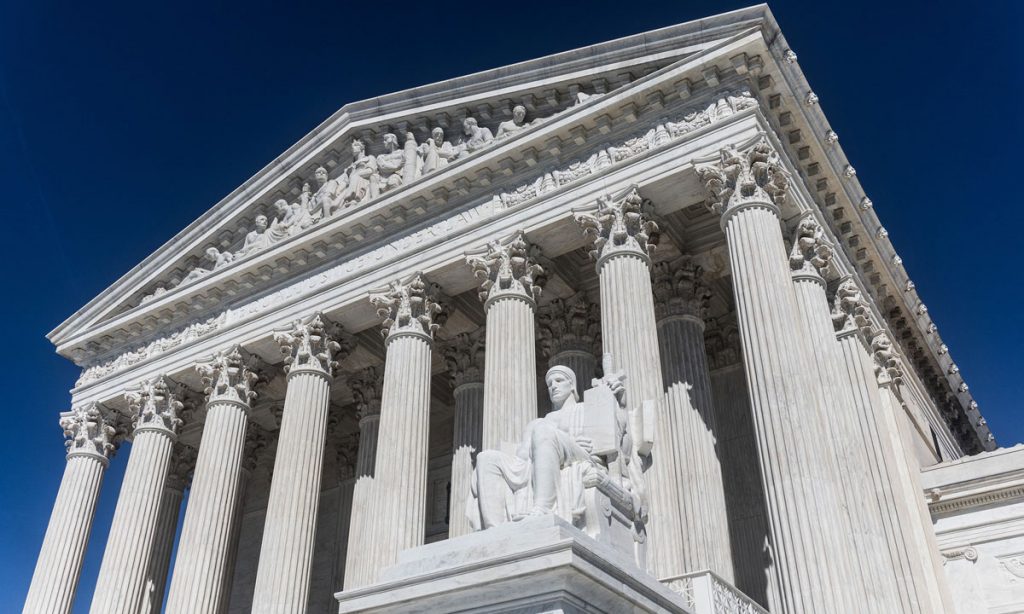
A Right-Leaning Supreme Court Won’t Impede Cannabis Reform, Legal Experts Say

While the Amy Coney Barrett appointment leans the court considerably conservative, it is unlikely to impact the ongoing Green Wave.

Justice Amy Coney Barrett’s Oct. 27 confirmation to the Supreme Court may feel like ages ago after a historic election season complicated by President Trump’s attempts to reverse the results.

Under a month into the role, Justice Barrett stands poised to weigh in on a myriad of pressing issues, including voting rights, the census and the fourth amendment.

Cannabis reform likely won’t be one of those matters, legal experts say.

A Conservative Court Unlikely To Impact Reform Efforts Much

While the Barrett appointment leans the court considerably conservative, it is unlikely to impact the ongoing Green Wave.

US Supreme Court Gambling Decision Works In Favor Of Marijuana Reform
Continue reading

West VA’s Office Of Medical Cannabis Hopes To Have Sales Start In Spring

The state Office of Medical Cannabis is continuing to move forward with approving applications for medical marijuana businesses with hopes of having dispensaries open in the spring.

Officials earlier this month approved applications for medical cannabis processors, which will use the plants to create pills, creams and other products for medical use, as well as prepare the plants to be used in a dry leaf form.

“It will be a fairly labor-intensive process,” Office Director Jason Frame said. “They’re using chemical processes and physical processes to extract certain parts of these plants for medicinal use.

While the 10 approved processors have offices in West Virginia, some companies have experience in other areas.

“It makes it more likely to be successful in this line of work,” Frame noted. “Many of them do have experience in this profession in other states.”

e-mail icon
Continue reading

EU’s Highest Court Rules On CBD

The Court of Justice of the European Union has ruled member states must not prohibit the marketing of lawfully produced cannabidiol (CBD).

The case in question was in relation to a situation where parties produced hemp-derived CBD in the Czech Republic that was then imported into France for use in other products. Criminal proceedings were launched against the parties on the basis of a claim that French legislation only allows for the fibre and seeds of hemp to be put to commercial use.

The parties were sentenced to suspended terms of imprisonment of 18 and 15 months, along with EUR 10,000 fines – and appeals were subsequently lodged with the Court of Justice. One of the issues under the spotlight was the court questioned the conformity of French legislation with EU law where CBD is extracted from the whole plant and not just the fibre and seeds (which contain very little cannabidiol).

On this point, it seems the French legislation only applies to listed agricultural products – and unlike “raw” hemp, whole hemp plant derived CBD isn’t among them.

Also coming into play in the appeal was the restriction of trade between member states, which isn’t permitted unless there is a public health risk.

e-mail icon
Continue reading

Lebanon Legalized Medical Cannabis, 1st in Arab World

It’s always interesting when a new location breaks stride and changes laws. We saw it with Thailand in Asia, with Uruguay in South America, and with Lesotho in Africa. With ranging reasons as to why to open these industries, the Arab world has now put forth its own example. As of the spring, Lebanon legalized medical cannabis.

It would be untrue to say that Lebanon is the first Middle Eastern country to legalize cannabis in some form. It’s neighbor to the south, Israel, has been a central location for the study and cultivation of cannabis for decades, pushing through its own medical legalization originally back in the 1990’s. But Israel stands apart from its Arab neighbors when it comes to many beliefs and ideologies, so Lebanon’s entrance into the legal cannabis game is still very much a first for that part of the world.

A bit about Lebanon and cannabis policy

Cannabis is illegal in Lebanon to possess or use. There are no personal use laws so even small quantities are considered a criminal offense. Regulation of the system and punishment is done through the Narcotic Drugs and Psychoactive Substances Law 673, which states that any narcotic use without a medical prescription is subject to a prison sentence of three months to three years, along with a fine. Individuals are permitted a certain amount of leniency if not involved in the drug trade, and showing of generally good character.

Sale and supply crimes are illegal. Offenders found guilty of these crimes face heavier sentences than for possession and use, and do not qualify for any sort of leniency. Personal cultivation is also illegal, with no individual-use amount applicable. Cannabis seeds are not legal in Lebanon and cannot be bought, sold, or possessed.

When it comes to CBD, Lebanon makes no differentiation between the cannabis plant, and the individual parts, like cannabinoids CBD or THC. This makes CBD just as illegal as a standard marijuana plant, regardless of the lower THC content. For this reason, it is illegal to sell or use the oil in Lebanon, although the country’s recent medical legalization could certainly change how CBD is used there.

Lebanon legalized medical cannabis
Continue reading

NC is becoming an outlier by banning weed. Will that soon change?

If conservative states like South Dakota and Mississippi are relaxing their marijuana policies, will politically purple North Carolina be far behind?

Legalization initiatives triumphed in elections across the country this month, and those hoping North Carolina will follow suit have tempered expectations. While they see promise in a notable endorsement from the state, they know marijuana laws don’t change easily in the Tar Heel State.

Last week, the N.C. Task Force for Racial Equity in Criminal Justice recommended decriminalizing possession for up to 1.5 ounces of marijuana.

The task force, created by Gov. Roy Cooper and led by the state’s top law enforcer, Attorney General Josh Stein, cited data showing North Carolinians of color are disproportionately arrested for marijuana possession.

Holding small amounts of weed would still be a civil offense, but charges would no longer appear on criminal records. The task force also suggested studying the effects of legalizing the drug altogether.

e-mail icon
Continue reading

USDA Green Lights Hemp Trade With $200,000 in Funding

The USDA recently approved funding for the National Industrial Hemp Council ($200,000) through the Market Access Program (MAP) of its Foreign Agricultural Service. Namely, the funding is aimed at supporting the hemp export market for the US.

The National Industry Hemp Council (NIHC) is an advocacy group promoting the hemp industry’s development through marketing and networking resources. One of its many goals is to place the US as a key exporter and a major player on the global hemp scene. 

The organization’s Senior VP for Trade and Marketing, Kevin Latner, commented that they were grateful for USDA’s vote of confidence and naming the NIHC the industry leader of the industrial hemp sector.

Latner also added that this recent announcement made it clear that NIHC was a trusted partner of the USDA for hemp food, feed, and fiber, as well as CBD brands looking to expand overseas.

The grant is expected to reinforce hemp marketing activity overseas, which may include paying for marketing efforts, funding trade missions, and other promotional activities. 

e-mail icon
Continue reading

Northern California cannabis industry banking on legalization bills stalled in Congress

In an industry driven by greenbacks, cannabis business stakeholders and supporters are banking on two pending federal bills and one new state law that would allow them access to traditional financial accounts without having to look over their shoulders.

Because even with 33 states now making cannabis legal, the federal government does not, leaving many banks heavily regulated by the U.S. government, on the sidelines. This is despite companies at least in the Golden State paying taxes to both the state and the federal governments, while also staying open as an essential business during the COVID-19 crisis. Many in the industry call the double standard a hypocrisy.

Banks and credit unions are seeking protections from repercussions from the federal government because they’re bound by the Controlled Substances Act that makes it illegal to handle cannabis deposits.

Some banks and credit unions are willing to do so.

Community First Credit Union in Santa Rosa chose to go out on a limb last year and dedicate the extra time and staff to manage a few dozen accounts for cannabis businesses. No accounts involve lending.

e-mail icon
Continue reading

WeedLife.com