WeedLife News Network

Hot off the press cannabis, marijuana, cbd and hemp news from around the world on the WeedLife Social Network.

Columbia has at least another 6-week wait before medical marijuana is sold

Medical marijuana dispensaries are starting to open in Missouri. It may take a little longer in Columbia. 

N'Bliss dispensaries in the St. Louis area saw long lines when they opened over the weekend. A Kansas City area dispensary was to open Monday. 

Six different companies plan to open dispensaries throughout Columbia. As of Wednesday afternoon, they were not yet approved to operate.

Calls and emails were sent to all six, with GRD Columbia LLC, Shangri-La, COMO Health LLC and QPS Missouri Holdings LLC responding. 

GRD will be located at 204 E. Broadway near Walgreens, operating as Green Releaf Dispensary. The facility still is under construction, CEO Jay Patel said. 

e-mail icon
Continue reading

Pair of measures would legalize marijuana in Montana

Marijuana is back on the ballot for the third time in the last five election cycles. But this year, Montanans will decide for the first time whether to follow states like Colorado and Washington in legalizing use for all adults.

The issue comes in the form of complementary ballot initiatives I-190 and CI-118. I-190 creates the rules for a recreational marijuana system in Montana, including a 20% tax. It also allows each county the option to prohibit dispensaries in their county.

CI-118 would amend the Montana Constitution to allow the state to set the minimum buying age to 21. If both pass, Montana would join 10 other states and the District of Columbia in legalizing recreational marijuana.

New Approach Montana, a group founded in January 2019 by Montana political veterans Ted Dick and Pepper Petersen, is running the pro-legalization effort. After seeing a decline of tax revenue from previous economic drivers like energy production and mining, the two men asked Montana’s Office of Budget and Program Planning to study the economic benefits of legalized marijuana. The office estimated that retail taxes on recreational marijuana could generate upward of $38.5 million a year by 2025.

“This is a substantial amount of funding,” Petersen said, adding that the next steps were clear. “We wrote our own law — we have a uniquely Montana approach.”

e-mail icon
Continue reading

Massachusetts cannabis regulators put cap on number of marijuana delivery licenses

After wading through a raft of comments from municipal leaders, established industry players and advocates, marijuana regulators on Tuesday ironed out the final wrinkles of their plan to establish a structure for home delivery of marijuana and create new business opportunities -- and rejected a proposal to delay delivery until 2023.

Home delivery of marijuana has long been allowed under the state’s medical marijuana program, and advocates pushed for a delivery-only license in the recreational market, arguing that it will help level the playing field between large corporations and small businesses because the barriers to entry for delivery are typically far less burdensome than those for retail licenses.

The Cannabis Control Commission has been thinking about a delivery framework for almost three years and will launch delivery with a period of exclusivity for participants in the CCC’s Social Equity Program and certified economic empowerment applicants.

“Consumers want delivery, we wanted delivery for a long time, and equity and economic empowerment businesses are ready to be a significant part of this market,” Commissioner Shaleen Title said. She added, “We as a commission have taken it very seriously since day one ... to live up to this mandate to include disproportionately harmed people in the industry and today was another significant step towards that. I’m really looking forward to it becoming reality sometime next year.”

The CCC met Tuesday morning to consider feedback and hold a final discussion about its draft delivery policy, which would create two delivery license types: a “wholesale delivery license” that could buy products wholesale from growers and manufacturers and sell them to their own customers, and a “limited delivery license” that would allow an operator to charge a fee to make deliveries from CCC-licensed retailers and dispensaries.

e-mail icon
Continue reading

USDA Approves South Dakota’s Industrial Hemp Plan

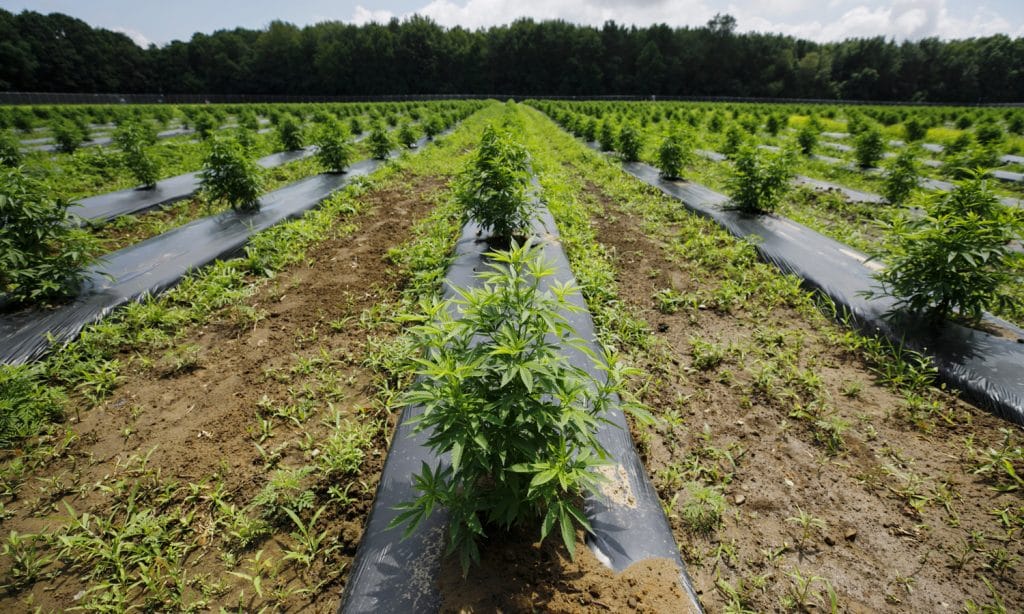
The U.S. Department of Agriculture has approved the Industrial Hemp Plan submitted by the South Dakota Department of Agriculture. The department is currently working to promulgate emergency administrative rules to establish a program in accordance with state law and the USDA approved plan. South Dakota Farmers Union Lobbyist Mitch Richter is pleased it’s moving forward as his group has been pushing for this plan for some time.

He says while there won’t be a huge number of acres of industrial hemp planted, there will be some farmers who will want to try growing the crop.

Richter says another positive for farmers being allwed to grow industrial hemp is the spin off economic development it will create.

Richter says it’s critical farmers wanting to grow industry hemp check with the State Agriculture Department and follow all their rules before proceeding. They also need to make sure they use only certified seed.

Rate this article: 
Select ratingGive USDA Approves South Dakota’s Industrial Hemp Plan 1/5Give USDA Approves South Dakota’s Industrial Hemp Plan 2/5Give USDA Approves South Dakota’s Industrial Hemp Plan 3/5Give USDA Approves South Dakota’s Industrial Hemp Plan 4/5Give USDA Approves South Dakota’s Industrial Hemp Plan 5/5
Authored By: 
Article category: 
Regional Marijuana News: 

e-mail icon

Hemp Litigation: DEA Sued Again

The hemp industry contends the Interim Final Rule is unlawful because it exceeds the DEA’s authority and violates the Agricultural Improvement Act, among other things.

The Canna Law Blog has been writing about the Drug Enforcement Agency’s (DEA) interim final rule (IFR) on hemp since its August publication in the Federal Register:Most recently, Nathalie Bougenies wrote about a petition for review against the DEA filed by the Hemp Industries Association and RE Botanicals in the United States Court of Appeals for the District of Columbia (the “D.C. Circuit”). Why the fuss? As Nathalie explained, the IFR:

suggests that in-process hemp shall be treated as a schedule I controlled substance during any point at which its THC concentration exceeds 0.3 percent on a dry weight basis. ‘Any point’ includes even fleetingly during the processing phase and includes situations where the THC percentage is brought back into legal compliance for the finished product.

So will the DEA start raiding hemp processors? Who knows, but the implications are not good and led to the hemp industry making a concerted effort against the IFR. One such effort is the petition for review, which contends the IFR is unlawful because it exceeds the DEA’s authority, violates the Agricultural Improvement Act of 2018, and contends that the DEA violated the regulations governing the promulgation of rules set forth in the Administrative Procedures Act (“APA”).

This week, the hemp industry opened a new front against the DEA and the IFR. On October 12, Petitioners in the D.C. Circuit filed a separate lawsuit against the DEA in the United States District Court for the District of Columbia. This is the “trial court” for Washington D.C. as opposed to the appellate court, the D.C. Circuit, in which the petition for review was filed. (Email me if you’d like a copy of the Complaint).

Hemp Farmers Really Need A Break In 2020
Continue reading

Border patrol intercepts weed worth US$8 million at Peace Bridge

The tally of cannabis seizures at the Peace Bridge running between Canada and the U.S. increased yet again last week when U.S. border officers in Buffalo discovered a commercial shipment with more than a ton of weed.

An internal inspection of a commercial shipment of 20 pallets revealed 2,145 vacuum-sealed packages of cannabis weighing 2,410 pounds (1,093 kg), according to U.S. Customs and Border Protection (CBP). The haul was estimated to have a street value of north of US $8 million.

The seizure is being investigated by Homeland Security Investigations (HIS).

Staff efforts and an enforcement-focused approach “have produced record-setting results for narcotics seizures within the Buffalo Field Office,” which covers 16 ports of entry throughout New York State, port director Jennifer De La O says of the Oct. 15 seizure.

Over the last couple of months, multi-million-dollar cannabis seizures in Buffalo have included 3,836 pounds (1,740 kg) of weed, 250 kg of dried cannabis flower and 505 kg of weed manifested as office furniture.


Continue reading

New Mexico to Allow Out-of-State Medical Marijuana Patients

A state district judge cleared the way for hundreds of patients to be re-authorized to participate in New Mexico’s medical marijuana program.

The ruling stemmed from a challenge of a mandate issued in September and a subsequent emergency rule adopted by the state health department just weeks later that placed additional requirements on some patients with medical marijuana cards from other states.

Ultra Health, the state’s largest cannabis company, asked the court to step in. It argued that the agency overstepped the intention of the state Legislature and created more hurdles for patients seeking to gain reciprocal admission into the New Mexico program.

Judge Matthew Wilson said the agency’s justification for adopting the emergency rule in early October was inadequate and therefore unenforceable.

“It’s important to patients who were already part of the program and got it taken away and patients who are in need of access. This was their only hope,” said a patient advocate.

e-mail icon
Continue reading

How The Cannabis Industry Can Help Expunged Individuals Enter The Legal Market

Read entire article at Benzinga

The United States continues to have the largest prison population globally. Some 2.1 million Americans were incarcerated as of November 2018.

On the federal level, marijuana sentencing has dropped sharply in recent years. Just 92 individuals were sentenced for possession in 2017.

Yet according to Federal Bureau of Investigation data, officers on the state level made roughly 663,000 marijuana-based arrests in 2018, totaling 40% of those arrested for drugs that year.

Possession accounted for 92% of those arrested in 2018.

e-mail icon
Continue reading

UK Financial Conduct Authority Issues Guidance on Listings of Cannabis-Related Businesses

On 18 September 2020, the Financial Conduct Authority (FCA), the securities regulatory authority in the United Kingdom, released long-awaited guidance for cannabis companies considering a listing in the United Kingdom on a regulated market, such as the Main Market of the London Stock Exchange. Whilst preliminary in nature and subject to further consultation, the guidance is welcome news for UK investors and suggests increasing openness by UK regulators to the medicinal cannabis sector.

Since the reclassification in 2018 of cannabis under the Misuse of Drugs (Amendments) (Cannabis and Licence Fees) (England, Wales and Scotland) Regulations 2018, cannabis can be prescribed by specialised medical professionals based in the United Kingdom in certain circumstances. However, the recreational use of cannabis remains illegal in the United Kingdom.

Notwithstanding that cannabis for medicinal purposes was decriminalised in 2018, companies engaged in medicinal cannabis activities (or which have exposure to proceeds therefrom) which have sought a listing in the UK have encountered many inquiries from the FCA in relation to the UK Proceeds of Crime Act 2002 (PoCA) (discussed in more detail below).

The FCA Approach

In the recent guidance, the FCA sets out the circumstances in which it would admit a cannabis-related company for listing on the Main Market of the London Stock Exchange in the United Kingdom. The guidance does not apply to companies seeking to list on Alternative Investment Market (AIM) but it is expected that a similar approach will be adopted by AIM.

e-mail icon
Continue reading

Irish Farmers Association ask Government to legalise medical cannabis

FARMERS IN Ireland are set to ask the government to legalise medical cannabis so they may become 'major players' in the cultivation of the plant.

The Irish Farmers Association are set to ask the government to consider legalising access to cannabis for medicinal reason, which would allow the plant to be grown by farmers in the Irish countryside.

The trade is growing quickly worldwide,and some countries, such as Canada and the United States, have legalised it for recreational use for those over the age of 18.

The Irish Farmers Association have asked for a meeting with the Department of Health regarding the potential legalisation of medical cannabis (Getty)

The IFA have asked the Department of Health for a meeting on the matter of medical cannabis, with a letter to the department implying Ireland could become a 'major player' in the production of the plant on an industrial scale.

In the letter, seen by The Sunday Times, IFA representative Fintan Conway said there was huge potential in the market for "industrial hemp, CBD oil and medicinal cannabis" thanks to Ireland's temperate climate and soil type.

e-mail icon
Continue reading

California’s New Banking Bill Does Little To Help The Cannabis Industry

Last week, California Governor Gavin Newsom (D) signed a handful of cannabis-related bills into law. Among the biggest changes are updates to the state’s banking laws, and while overall positive, the potential of AB 1525 is severely limited.

As anyone in the industry already knows, cannabis professionals have long struggled to gain access to banking and other financial services for their businesses. AB (Assembly Bill) 1525, signed last Tuesday by Gov. Newsom, removes any penalties previously imposed on banks for working with legal cannabis companies.

In his signing statement on the banking bill, Newsom directed state cannabis regulators to establish rules meant to protect the privacy of marijuana businesses that seek financial services, urging that data be kept confidential and is used only “for the provision of financial services to support licensees.”

“This bill has the potential to increase the provisions of financial services to the legal cannabis industry,” Newsom wrote in a signing statement, “and for that reason, I support it.”

Very Little Help

Newsom isn’t not wrong, this bill definitely has that potential, but it remains only that until cannabis becomes legal at the federal level. Regardless of state laws, banks, which are federal entities, have been hesitant to work with cannabis clients because the plant’s Schedule 1 status.

For reference, a Schedule 1 narcotic is categorized that way because there is a “high risk of abuse and no recognized medical value.” Despite the decades of research in other countries or the fact that medical cannabis is accepted in 33 states already. It’s also worth mentioning Cocaine, which has some anesthetic properties but is known for its high propensity for abuse, is categorized as Schedule II. Alcohol and tobacco aren’t scheduled at all. Yes, it’s the ultimate hypocrisy.

e-mail icon
Continue reading

N.J. farmers planted hemp for the first time this year. Here’s how one fared with the cash crop

Chris Leanzo didn’t have any experience in farming when he put 155 hemp plants into the ground this June.

One of the first 59 farmers to receive a license to grow hemp in New Jersey, Leanzo mentally prepared to only harvest 20 plants this fall from his Frelinghuysen, Warren County farm. But even after facing spider mites and inch worms as well as a dry and cold September, the farm may net some 50 pounds of hemp from its 130 successful plants.

That far surpasses his cautious estimates, and could have him making a profit on their first season.

But as the state eyes marijuana legalization via a ballot question this November, the promise and struggles of hemp farming have become secondary to New Jersey’s race to become the first state in the region to offer legal marijuana. That industry is expected to bring hundreds of millions in tax revenue as well as new jobs.

“As small farmers, we all share this unified struggle of fear of losing the market before we had a fair share of even getting it,” Leanzo said.

e-mail icon
Continue reading

Canadian government gets 'C' average in the legalization report card

A new report from the Cannabis Council of Canada, which represents some of the country’s largest licensed producers, including Canopy Growth, Tilray, and Cronos Group, has graded the government’s performance over the first two years of legalization with a ‘C’ average.

Led by president and CEO George Smitherman, the former Minister of Health, the council seeks to be a national voice for producers, focusing on the development, growth, and integrity of the legal industry. The report card was informed by a national survey of 2,000 Canadians.

As part of that focus, the council has released a legalization report card, offering grades on 10 issues, including cannabis amnesty, medical patient access, and the efforts to combat the illicit market.

Support for cannabis legalization: B+

Public support for legalization has remained robust and consistent, the report says, with the percentage of Canadians who oppose the legal industry dropping modestly year-over-year to 24 per cent.

Keeping cannabis away from children and youth: B+

Citing Statistics Canada, the report states that cannabis use among 15- to 17-year-olds fell by nearly 10 per cent in the first year of legalization. Reducing youth access to cannabis was one of the core planks of the Cannabis Act.


Continue reading

10 Interesting Facts About the History of Hemp

If you’re looking to grow your knowledge about hemp, take a look at some of these facts and spread them far and wide

1. Hemp cultivation dates back more than 10,000 years

Many civilizations throughout time have grown hemp and utilized the plant for a number of items from food to fiber. The ancient use of hemp has been traced to many countries including China, Egypt, Russia, Greece and Italy.

2. It used to be illegal to not grow hemp

There was once a time in American history when farmers could actually be fined or jailed for not growing hemp. Because it was such a valuable crop in Virginia, the Assembly of Jamestown Colony passed legislation in 1619 making it mandatory for every farmer to grow Indian hempseed.

3. Hemp was hailed as a billion dollar crop before the government banned it

In an article written in 1938, “Popular Mechanics” declared hemp a new cash crop. It was touted as the standard fiber of the world that was easy to grow and poised to replace imported materials and manufactured products.

4. Hemp can restore unhealthy soil

Thanks to its botanical properties, hemp can actually leave soil better off than when it started by rejuvenating the dirt with nutrients and nitrogen. This helps clean up toxins, heavy metals and other pollutants from the ground through a process called phytoremediation.

e-mail icon
Continue reading

Cannabis age limit won't reduce harm in young people, campaigners say

Anti-cannabis campaigners say the minimum age of 20 to use and purchase weed wouldn't stop young people from feeling the harm of legalisation.

Marijuana can halt motivation for young people, leading to them dropping out of school and stunting their development, and it can cause mental health issues like psychosis.

But those issues are already happening in New Zealand, and international examples show Canada's youth usage rates dropped after legalisation.

Diana Ranger has seen the worst of cannabis use in young people.

Her nephew was forced to take the drug by a gang when he was 10, and she said he suffered from psychosis as a result.

e-mail icon
Continue reading

Clock is ticking as Mexico approaches deadline to legalize cannabis

Time is running out to make cannabis legalization a reality in Mexico.

Two years ago, the country’s Supreme Court ruled that the ban on adult-use, recreational cannabis was unconstitutional. Mexican lawmakers were given a one-year deadline, until October 2019, to amend the country’s regulations.

They not only missed that deadline, they then missed the rescheduled deadline of April 2020 due to the COVID-19 pandemic.

Now, with a Dec. 15 deadline looming, lawmakers have just 61 days to pass a cannabis bill and there are still more questions than answers about what Mexico’s approach to legalization will look like.

In August, Mexican president Andrés Manuel López Obrador assured that legalization was in the works, stating that “there is going to be legal reform” when lawmakers reconvened in the fall.

e-mail icon
Continue reading

What production of medical cannabis means for the Rwandan economy

Some know it as cannabis, while others know it as marijuana or weed, especially because it has been trendy in pop-culture music and because it has been immortalized in western films.

Whatever you call it, cannabis is the world’s most popular drug and is the highest value therapeutic crop known at the moment, despite being illegal in many parts of the world.

It wasn’t until Monday, October 12, that a cabinet meeting approved guidelines that allow the growing of cannabis in Rwanda, which drew mixed opinions from people.

Cannabis is a multi-billion dollar industry and it’s believed to be the world’s most valuable cash crop from the absolute value perspective.

One study, which analysed data from the UN Food and Agriculture Organisation as well as UN World Drug reports, estimated cannabis to be valued at $47.7 million per square kilometer.

e-mail icon
Continue reading

Cannabis Legalization Measures On The Ballot In 5 States

The 33 states with some form of legal cannabis could gain additional company this election season as voters in five states consider ballot measures to legalize marijuana. Three states will see initiatives to legalize recreational marijuana, another will decide on the medicinal use of cannabis, while the fifth will consider separate measures for both.

Arizona, Montana, New Jersey To Decide On Adult-Use Pot

Voters in three states will vote on measures to legalize recreational marijuana. In Arizona, Proposition 207, the Smart and Safe Act, will be on the ballot. If passed, the initiative would allow adults 21 and older to possess, consume, or transfer up to one ounce of cannabis. Home cultivation of up to six plants per adult or 12 plants per household with more than one adult would be permitted. Prop. 207 would also create a regulatory system for the commercial production and sale of cannabis products, including social equity provisions to help ensure a cannabis industry that is representative of the community. The initiative also allows for the expungement of past convictions for marijuana offenses. The measure would generate an estimated $300 million in taxes yearly, which would be used to help fund community colleges, public health, transportation, and public safety.

In New Jersey, a two-year attempt by lawmakers to legalize the recreational use of cannabis by adults failed to gain enough support to pass in the legislature. Instead, voters will see Question 1, which if passed would amend the state’s constitution to legalize the recreational use of marijuana by those 21 and older. The measure authorizes the state’s existing medical marijuana overseer, the Cannabis Regulatory Commission, to regulate the new adult-use market. Detailed regulations would be created by the agency and the state legislature after passage of the ballot measure. 

Montana voters will see two cannabis measures on their ballot for the November election. The first, Initiative 190, would legalize the possession and sale of small amounts of marijuana for adult use, establish a regulatory system to license cannabis businesses, and levy a 20% tax on recreational purchases. New Approach Montana, the group behind both ballot measures, estimates that taxes on retail sales of cannabis in the state would generate $236 million in new revenue for the public coffers by 2026. The second measure, Constitutional Initiative 118, would amend the state’s constitution so that the legislature could set the legal age to purchase cannabis at 21. Currently, the constitution guarantees all rights of an adult, except for the purchase of alcohol, to all persons 18 years and up.

Medical Marijuana On Mississippi’s Ballot

Voters in Mississippi will have the chance to legalize the medicinal use of cannabis with Initiative 65, which qualified for the ballot via a citizen’s petition supported by Medical Marijuana 2020. If passed, the measure would allow physicians to recommend cannabis as a treatment for patients with one or more of 22 qualifying medical conditions such as cancer, multiple sclerosis, and post-traumatic stress disorder. The initiative also establishes a 7% tax on medical marijuana products and creates a regulatory system for administering the program. 

e-mail icon
Continue reading

Colorado Submits Further Comment On Hemp Rule

Colorado’s Governor and Commissioner of Agriculture have again weighed in on the USDA’s Interim Final Rule related to establishing the nation’s Domestic Hemp Production Program.

The Interim Final Rule has been a controversial document. There was an initial sixty day public comment period between October 31, 2019 and December 30, 2019 and a subsequent extension period between December 31, 2019 and January 29, 2020. Then another extension for public comment kicked off in September. That closed last week, on October 8.

Colorado lodged a submission in the initial comment period and have added another during the most recent extension. Among what it wants to see:

Expansion of the sampling window from 15 days before anticipated harvest to 30 days.Boosting the threshold for negligent production from 0.5 percent THC to 1.0 percent.A program for disposal and remediation of non-compliant plants in order to preserve value for producers.Adoptions of a “whole plant” approach to the sampling methodology.Less burdensome requirements for the methodology used to sample hemp.

Added to the above are another 7 specific comments. The full submission can be viewed here

“Colorado’s comments also underscore the concern that USDA’s Interim Final Rule may create an uneven impact on small, beginning and socially disadvantaged hemp growers and producers,” states a release published by Gov. Jared Polis’s office.

e-mail icon
Continue reading

What Isiah Thomas Learned On The Court Helped Him Find Success In Cannabis

Whether you’re starting a new business or building out an existing venture, communication is everything, former NBA superstar Isiah Thomas explained.

After a successful career in basketball, both as a player and a coach, NBA legend Isiah Thomas became a serial investor and entrepreneur.

Among his notable ventures was the acquisition of sparkling wine brand Cheurlin Champagne, and his recent appointment as CEO of cannabis company One World Pharma Inc., a Colombia-based producer of cannabis and hemp ingredients.

During a recent conversation focused on cannabis, hemp and One World Pharma, Thomas explained how his coaching experience and leadership experiences transferred over to business.

All About Teamwork

Thomas, who won the 1989 and 1990 NBA championships with the Detroit Pistons, has garnered worldwide recognition for his string of successful business ventures. He also transferred the skills he learned and nurtured on the court to his various roles as a business executive.

e-mail icon
Continue reading

WeedLife.com