WeedLife News Network

Hot off the press cannabis, marijuana, cbd and hemp news from around the world on the WeedLife Social Network.

Medical marijuana in South Carolina: Republican lawmaker says bill could pass in 2021

Right now, 36 states have legalized medical cannabis in some form. Advocates hope the Palmetto State is next.

Senator Tom Davis (R-Beaufort) prefiled S.150 the South Carolina Compassionate Care Act this week. Sen. Davis said he has been pushing for legalization of medical cannabis since 2014 and believes next year it has a chance to pass.

“I have a majority of state Senators who will vote for this and I have a majority of House members who will vote for this bill,” Davis said.

He called his bill the most conservative medical cannabis bill in the country. “We limit the qualifying conditions to medical conditions for which there is empirical evidence that medical cannabis can be a medicinal benefit.”

That list includes: cancer, multiple sclerosis, a neurological disease or disorder (including epilepsy), sickle cell anemia, glaucoma, PTSD, autism, Crohn’s disease, ulcerative colitis, cachexia, a condition causing a person to be home-bound that includes severe or persistent nausea, terminal illness with less than one-year life expectancy, a chronic medical condition causing severe and persistent muscle spasms, or a chronic medical condition for which an opioid is or could be prescribed based on standards of care.

e-mail icon
Continue reading

Cannabis as a seed of prosperity for Costa Rica?

Is it the seed of prosperity for Costa Rica? Despite the reluctance of the country’s president, the legalization of cannabis and its large-scale production has made its way through the national parliament thanks to the determination of an independent deputy who is an agronomist. Covered by the National Institute of Innovation in Agricultural Technology, Zoila María Volio wants to take advantage of the great economic potential of medicinal cannabis.

“The project was born as an initiative to make it work and to be able to generate a different crop for many agricultural cooperatives,” explains the deputy. The bill that Zoila María Volio promoted has the support of the majority of the chamber and only needs to be voted on in a plenary session. However, it clashes with the reluctance of the country’s president, Carlos Alvarado, who sees the production of hemp for export well but does not see so well the legalization of medical marijuana.

Different opinions
A diametrically opposite position maintains the businessman Rodrigo Martín. Suffering from cancer, two years ago he was diagnosed, and doctors told him that he would only live six months:

“I have one year, I think one year and three months, of not taking a single test, not a single exam. I decided to live. I live every day happy, I have quality of life, I enjoy my life, I have friends, a normal life, totally normal. And I owe it all, without a doubt, to God and cannabis”, he says.

Increasing demand
The current global demand for medical cannabis is worth almost six billion dollars annually, although this amount is expected to multiply in the coming years to meet the growing needs of the pharmaceutical industry in countries such as Germany. Manna for a Costa Rican agricultural sector that, like the entire region, has been the victim this year of the COVID-19 Pandemic, the economic crisis, and the hurricanes.

Rate this article: 
Select ratingGive Cannabis as a seed of prosperity for Costa Rica? 1/5Give Cannabis as a seed of prosperity for Costa Rica? 2/5Give Cannabis as a seed of prosperity for Costa Rica? 3/5Give Cannabis as a seed of prosperity for Costa Rica? 4/5Give Cannabis as a seed of prosperity for Costa Rica? 5/5
Authored By: 
Article category: 
Regional Marijuana News: 

e-mail icon

What the UN Vote Means for Cannabis Worldwide

This week the U.N. Commission on Narcotic Drugs voted to remove cannabis and cannabis resin from a category of the world’s most dangerous drugs. This decision could potentially jumpstart the global medical marijuana industry. Many cannabis companies have eyed global expansion, but the markets have proven to be challenging as laws have remained strict.

The Vienna-based U.N. agency said in a statement that it had voted 27-25, with one abstention, to follow the World Health Organization’s recommendation to remove cannabis and cannabis resin from Schedule IV of the 1961 Convention on Narcotic Drugs, where it was listed with heroin and several other opioids. The drugs that are on Schedule IV are a subset of those on Schedule I of the convention, which already requires the highest levels of international control. The agency voted to leave cannabis and cannabis resin on the list of Schedule I drugs, which also includes cocaine, Fentanyl, morphine, Methadone, opium and oxycodone, the opiate painkiller sold as OxyContin.

Wednesday’s vote does not clear U.N. member nations to legalize marijuana under the international drug control system. Canada and Uruguay have legalized the sale and use of cannabis for recreational purposes, but many countries around the world have decriminalized marijuana possession. The schedules weigh a drug’s medical utility versus the possible harm that it might cause.

European court of justice makes the call

Last week, the European Court of Justice (ECJ) determined that CBD, although technically a narcotic under the 1961 UN convention, should not be considered a narcotic given its lack of a psychoactive effect. The judgment came as part of a case between the French government and Kanavape that sought to limit the company’s ability to market CBD products produced (legally) in another state. Under this ruling, the ECJ (the highest court in the EU) has now allowed for cross-marketing of CBD products produced by leaves and flowers (in addition to seeds and stalks) among EU member nations and opens up the ability for companies to begin registering their products as Novel Foods (eventually allowing for marketing as a CBD food substance).

“The Court notes, next, that, to define the terms ‘drug’ or ‘narcotic drug’, EU law3 makes reference inter alia to two United Nations conventions: the Convention on Psychotropic Substances4 and the Single Convention on Narcotic Drugs.5 CBD, however, is not mentioned in the former and, while it is true that a literal interpretation of the latter might lead to its being classified as a drug, in so far as it is a cannabis extract, such an interpretation would be contrary to the general spirit of that convention and to its objective of protecting ‘the health and welfare of mankind’. The Court notes that, according to the current state of scientific knowledge, which it is necessary to take into account, unlike tetrahydrocannabinol (commonly called THC), another hemp cannabinoid, the CBD at issue does not appear to have any psychotropic effect or any harmful effect on human health.”

Rate this article: 
Select ratingGive What the UN Vote Means for Cannabis Worldwide 1/5Give What the UN Vote Means for Cannabis Worldwide 2/5Give What the UN Vote Means for Cannabis Worldwide 3/5Give What the UN Vote Means for Cannabis Worldwide 4/5Give What the UN Vote Means for Cannabis Worldwide 5/5
Authored By: 
Article category: 

e-mail icon

New Poll Finds Majority of Americans In Favor of Expungement For Cannabis Crimes

As marijuana legalization continues to sweep the county—and with Congress potentially moving to finally decriminalize pot on the federal level—a new poll shows that a huge majority of Americans support expunging the criminal records of those who have previously been busted.

The findings, which come via the pollster YouGov.com, found that 70 percent of respondents said yes when asked if they support or oppose “expunging marijuana-related convictions for non-violent offenders.” A mere 17 percent said they oppose the idea. 

Digging into the crosstabs, the poll found a partisan split—though not as wide as it likely was in previous eras. 81 percent of Democrats said they either strongly or somewhat support the idea, while a majority of Republicans—57 percent—said the same. 

The mounting evidence of bipartisan support for relaxed pot policies is reflected not only in surveys like this, but in results at the ballot box and actions on Capitol Hill. 

Last month saw voters in four states move to legalize recreational pot use for adults; two of those, South Dakota and Montana, were carried easily by President Donald Trump. Arizona and New Jersey were the other two states where voters approved legalization measures, while South Dakota voters additionally passed a similar measure legalizing medical marijuana. 

e-mail icon
Continue reading

New Mexico panel recommends raising medical pot plant count

An advisory board recommended Wednesday that New Mexico clear the way for licensed medical marijuana producers to grow more plants amid persistent concerns about the high costs of cannabis and the lack of variety for patients across the state.

The board during an online meeting voted to recommend that the state health secretary consider increasing the current plant count.

The vote came in response to a petition that sought to either eliminate the limit altogether or significantly increase the number of plants that can be grown by each producer.

Board Chairwoman Stephanie Richmond, a physician assistant with the University of New Mexico Health System, said an increase is warranted because the advisory board recently recommended that patients be allowed to purchase more cannabis within a certain period of time.


Richmond also said the list of qualifying medical conditions allowing people to buy medical marijuana could be expanded to include anxiety, attention deficient disorders and some substance abuse disorders.

e-mail icon
Continue reading

America’s longest-serving, non-violent cannabis offender has been released from prison

On Tuesday, Richard DeLisi, America’s longest-serving, non-violent cannabis offender, walked freely into the waiting arms of his family after nearly 32 years behind bars.

In 1989, at the age of 40, DeLisi was charged with trafficking in cannabis, conspiracy to traffic in cannabis and violation of the Racketeering Influenced and Corrupt Organization Act (RICO). He was sentenced to a 90-year term.


His release comes after Last Prisoner Project (LPP) and pro bono attorneys Chiara Juster, Elizabeth Buchanan and Michael Minardi supplemented DeLisi’s previously filed clemency application earlier this year.


“It actually feels like 10 times better than wonderful,” DeLisi, 71, told The Ledger, following his release. “It was so unjust what they did to me. I just hope that I can help other people that are in the same situation.”

“We participated in decarcerating someone who couldn’t deserve it more,” Juster, a former Florida prosecutor and lead attorney on the case, said in November. “The fact that dear Richard is the longest-serving, non-violent cannabis offender currently incarcerated in our country is truly a sick indictment of our nation,” she said.

e-mail icon
Continue reading

The 5 States Most Likely to Legalize Marijuana Next Year

2020 was a historic year for marijuana legalization as four states — Arizona, Montana, New Jersey and South Dakota — legalized recreational marijuana for adults, and Mississippi legalized medical marijuana.

2021 could be another big year for the cannabis industry; MjBizDaily is predicting that these five states will probably legalize recreational marijuana for adults:
– Connecticut
– Maryland
– New Mexico
– New York
– Pennsylvania

“New York, Connecticut, Maryland, New Mexico are ripe for 2021” marijuana legalization via their legislatures, said Steve Hawkins from the MPP. “We’re at 15 (states that have legalized adult use) now, and it’s not outside the realm of possibility that we can be at 25 states” in the near future.”

In recent years, Maine, Massachusetts, and Vermont legalized recreational cannabis industries. These are adding fuel to the Northeast fire. The governors in New York and Pennsylvania have openly supported legalizing marijuana for adults for some time.

Rate this article: 
Select ratingGive The 5 States Most Likely to Legalize Marijuana Next Year 1/5Give The 5 States Most Likely to Legalize Marijuana Next Year 2/5Give The 5 States Most Likely to Legalize Marijuana Next Year 3/5Give The 5 States Most Likely to Legalize Marijuana Next Year 4/5Give The 5 States Most Likely to Legalize Marijuana Next Year 5/5
Authored By: 
Article category: 

e-mail icon

Massive grow-op with 1,000 cannabis plants raided

U.K. operation estimated to have a street value of $1.7 million.

Dismantling a sophisticated cannabis grow-op boasting 1,000 plants having an estimated street value of £1 million (about $1.7 million) made for quite a mess — and a big show — for neighbours in Clacton, U.K. last week.

Essex Police busted the illegal growing operation in a disused three-storey building after receiving reports of suspicious activity, according to a Facebook post from police. Work to dismantle the equipment and remove the approximately 1,000 plants started shortly after the raid and reportedly took much of the weekend to complete.

“Cannabis factories are linked to criminals who exploit vulnerable people for their own financial gain. These might be people who are exploited or forced to work for them to manage these cultivations, or to sell the drugs,” the statement notes.

“Organized crime groups involved in drug trafficking are typically also involved in a range of criminal activity, and the profits from illegal drugs are used to fund other forms of criminal operations, including buying illegal firearms and financing terrorism,” according to the National Crime Agency.


Continue reading

New Jersey Governor And Lawmakers Reach Deal On Cannabis Legalization

New Jersey officials are moving cannabis legalization forward.

New Jersey lawmakers and Democratic Gov. Phil Murphy announced last week that they had agreed on a plan to legalize recreational cannabis in the state. The deal comes following last month’s approval of a ballot measure that asked New Jersey voters to weigh in on the concept of legalizing marijuana but lacked details on establishing a regulated cannabis industry.

“There is a deal,” said Sen. Nicholas Scutari, the sponsor of the marijuana legalization bill, on Friday. “It’s been a long road and I’ll be happy when it’s done.”

State Leaders Hail Agreement
In a joint statement, Murphy, and fellow Democrats Scutari, Senate President Stephen Sweeney, Assembly Speaker Craig Coughlin, and Assembly Majority Conference Chair Annette Quijano said on Friday that the plan includes strong social equity provisions.

“We’re proud to announce today that we’ve reached an agreement on legislation providing the framework for legalization, which is a critical step in reducing racial disparities and social inequities that have long plagued our criminal justice system,” they said. “This legislation will accomplish our shared goals of delivering restorative justice and ensuring that the communities most impacted by the War on Drugs see the economic benefits of the adult-use cannabis market. While there is still much work ahead, we are one step closer to building a new, promising industry for our state.”

e-mail icon
Continue reading

When it comes to cannabis legalization, safety needs to be part of the equation

In September, the House postponed a vote on the MORE Act (H.R.3884), which would de-schedule cannabis. Now that this legislation has passed the House and moves onto the Senate, safety leaders must again warn lawmakers to exercise caution. While the MORE Act includes some provisions that would not cause workplace safety concern, such as the removal of punitive actions for drug violations, any de-scheduling of cannabis must be done with care. Steps toward legalization need to include an evaluation of the impact that legalized cannabis use will have on transportation and workplace safety. We have an obligation to protect workers and all who use our roadways, and cannabis use can create serious risks in both environments.

Data should always drive policy decisions. Cannabis is an impairing substance whose use has been on the rise, and a substance without clear and scientifically defined levels of impairment. Unfortunately, no cannabis test currently exists that correlates well with impairment level such as breath alcohol or blood alcohol. At this time we know little about cannabis impairment, the side effects or long-term health implications, as well as the implications for workplace safety. These questions can only be answered through rigorous research.

We know that cannabis has the ability to impair, and on-the-job impairment can have serious consequences, particularly for workers in safety-sensitive positions and all those around them. It is difficult to ascertain if a worker may be impaired, when they last used cannabis and whether they pose a risk to co-workers, customers or the general public. This is akin to the potential for “driving under the influence” for those operating commercial aircraft, trucks, trains, buses, cranes and forklifts. One troubling trend during the pandemic has been an increase in impaired driving, including from cannabis. Potential mishaps can also result from impairment of a worker on the floor of a chemical plant, at a construction site, warehouse or other operation with inherent risk.

Even among states that have legalized marijuana for adult recreational use, there is a worrisome lack of consensus on what occupations are considered to be “safety-sensitive” positions and when employers may conduct drug testing or institute a zero-tolerance drug policy for those positions. To meet their legal and ethical responsibilities, employers should be allowed and encouraged to maintain a substance-free workplace, regardless of the legal status of cannabis.

We urge that any steps taken towards legalization likewise explore the impact on transportation and workplace safety and ensure there is an evidence-based standard for detecting cannabis-impairment in driving and other safety sensitive operations. When it comes to impairment, we owe it to our employees and our communities to address the public safety side of cannabis first and foremost.

Rate this article: 
Select ratingGive When it comes to cannabis legalization, safety needs to be part of the equation 1/5Give When it comes to cannabis legalization, safety needs to be part of the equation 2/5Give When it comes to cannabis legalization, safety needs to be part of the equation 3/5Give When it comes to cannabis legalization, safety needs to be part of the equation 4/5Give When it comes to cannabis legalization, safety needs to be part of the equation 5/5
Authored By: 
Article category: 
Regional Marijuana News: 

e-mail icon

Can Cannabis Interstate Commerce Be A Shortcut To Federal Legalization?

After an initial burst of celebration over last week’s House approval of the MORE Act, landmark legislation that would decriminalize marijuana at the federal level, the hard realization that getting the bill past the finish line and signed into law is an unlikely proposition is beginning to set in. Even some cannabis activists aren’t sure the bill is the right path to legalization, and getting the measure a fair hearing in the Senate while Mitch McConnell is at the reins isn’t at all likely.

 GETTY IMAGES

With that reality in mind, a new group aimed at establishing a legal framework for cannabis interstate commerce was formed in September. Dubbed the Alliance for Sensible Markets, the group of activists and industry representatives has two primary goals. First, the group is working to bring two or more states with legal marijuana together to join in an interstate compact outlining the parameters for legal cannabis commerce between them. Secondly, a path to federal approval of the plan would have to be determined and executed. Paired with a federal policy that would permit state-legal cannabis businesses to operate without interference, interstate cannabis commerce could be a more politically viable path to many of the goals of full legalization.

The Flaws Of A Fragmented Market

Adam Smith, the founder and president of the alliance, said in a telephone interview that the current system of regulated cannabis trade, with each state that has legalized pot operating its own siloed market of production, manufacturing, distribution, and sales, is unsustainable. And in the real world, it’s also a system that is unworkable.

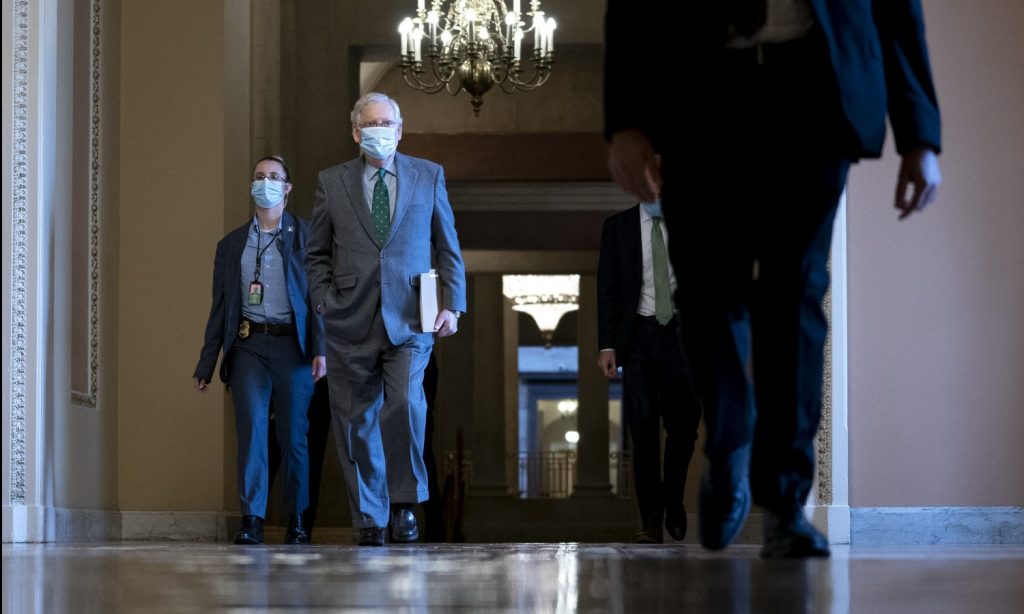
Sen. McConnell adjusts his eyeglasses with an American flag in the background.
Continue reading

What’s impeding New Jersey’s cannabis amendment?

The New Year’s Day deadline until New Jersey’s constitutional amendment authorizing recreational marijuana takes effect is fast approaching, along with the final scheduled legislative voting session of the year.

But New Jersey’s Democratic-led Legislature finds itself at an impasse over measures decriminalizing marijuana and, until late Friday, also setting up the new recreational marketplace.

Shopping for marijuana for the first time? Here's what budtenders want you to


Democratic Gov. Phil Murphy and legislators said they reached an agreement on setting up the marketplace, but didn’t disclose details on Friday.

Lawmakers and lobbyists express cautious confidence that the measures will move forward, but the logjam comes even though the top two legislative leaders and Democratic Gov. Phil Murphy largely agree on how to move forward more than a year after the trio announced their support for legalization.

e-mail icon
Continue reading

House Votes In Favor of MORE Act

The U.S. House of Representatives voted in favor on this first-of-its-kind federal cannabis decriminalization bill. It was a partisan vote despite marijuana being a bipartisan issue. Democrats voted 213 YES and 6 NO, while Republicans voted 5 YES 156 NO.

Just after an election that saw four states legalize marijuana and two states legalize medical marijuana, it’s become clear that most Americans have a progressive view on marijuana. In fact, Pew Research reports that 67% of Americans support marijuana legalization.

As Steven Hawkins, executive director at the Marijuana Policy Project purports, “The prohibition and criminalization of marijuana has led to decades of injustice and devastating consequences, and it’s clear that a strong majority of Americans do not support the status quo.”

And the issue is bipartisan, with two of the legalizing states being Montana and South Dakota. But it’ll take a progressive Senate to pass such a progressive policy. And that’s where the MORE Act may run into trouble.

What is the MORE Act?

The MORE Act is the Marijuana Opportunity, Reinvestment and Expungement Act, a historic bill that was approved by the House Judiciary Committee for a floor vote by the U.S. House of Representatives on Wednesday, Dec 2, 2020.

e-mail icon
Continue reading

Why Southern States Are Still Pushing Back On Marijuana Legalization

The South may be quietly adjusting to the new legalization landscape. But for now, the good ol’ white guys prevail, and Christians have righteous morality straight from the Bible on their side.

As of the November elections, there are now 15 states and the District of Columbia who have legalized adult use. There are some 36 states that enacted or voted to enact medical marijuana laws.

In the years leading up to this November, voters decided affirmatively on 28 separate ballot measures legalizing cannabis (18 measures legalizing medical marijuana, 10 measures legalizing adult use), according to National Organization for the Reform of Marijuana Laws (NORML).

This amazing progress in the U.S. began with a soundly defeated voter initiative on November 7, 1972 in California, finally leading to legalization of medical marijuana in California in 1996.

The 2020 legalization progress in the U.S. comes as Mexico joins Canada to completely legalize medical and adult-use marijuana.

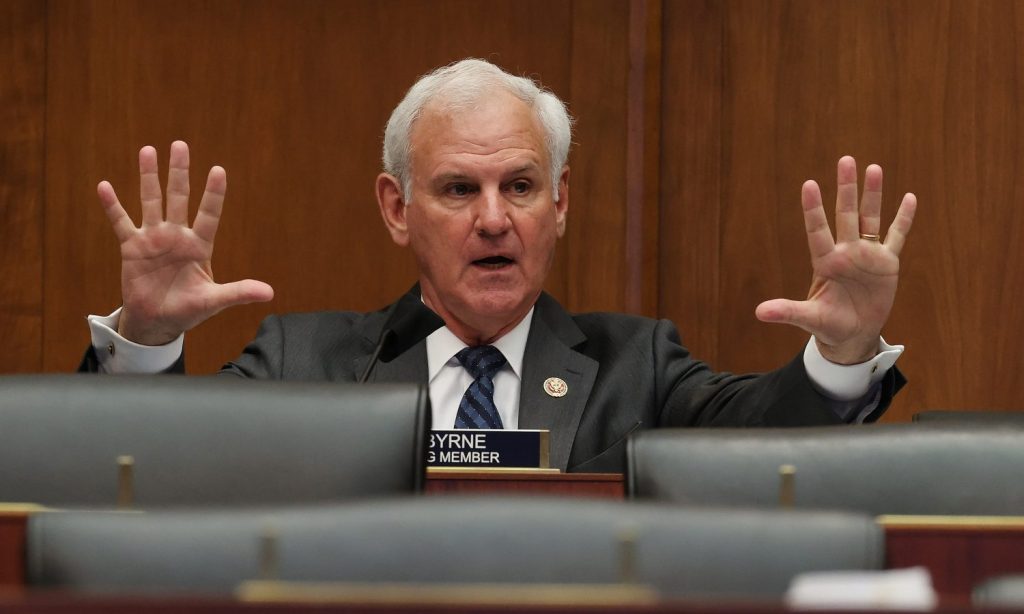
Rep. Bradley Byrne
Continue reading

What's Impeding New Jersey's Cannabis Amendment?

The New Year's Day deadline until New Jersey's constitutional amendment authorizing recreational marijuana takes effect is fast approaching, along with the final scheduled legislative voting session of the year.

But New Jersey's Democratic-led Legislature finds itself at an impasse over measures decriminalizing marijuana and, until late Friday, also setting up the new recreational marketplace.

Democratic Gov. Phil Murphy and legislators said they reached an agreement on setting up the marketplace, but didn't disclose details on Friday.


Lawmakers and lobbyists express cautious confidence that the measures will move forward, but the logjam comes even though the top two legislative leaders and Democratic Gov. Phil Murphy largely agree on how to move forward more than a year after the trio announced their support for legalization.

Legislators have penciled in Dec. 17 for the final voting sessions of the year. On Jan. 1, the amendment that passed with support from two-thirds of the voters takes effect.

e-mail icon
Continue reading

New initiative to legalize medical and recreational marijuana in Nebraska

There’s a renewed push to legalize medical and recreational marijuana in Nebraska, lawmakers say they plan to obtain 250,000 total signatures to get both medical initiatives on the ballot in 2022.

Nebraska voters are already weighing the pros and cons to both proposals.

“There's a negative propaganda about it and I think... people should look deeper into it,” said Nick Hancke. “There’s a positive aspect to it than what’s been said about it.”

“I think everything has its limitations,” said Princess Brown. “So as long as it’s not something that is going to be abused, which we all know people do that, I do think it would be beneficial.”

Nebraska State Senator Adam Morfeld said many voters are on board with medical and recreational marijuana, so that is why he’s pushing to legal both.

e-mail icon
Continue reading

The MORE Act Will Not Legalize Cannabis Nationwide — Not Like You’re Thinking

As a matter of federal law, yes, cannabis will be descheduled entirely if the MORE Act becomes law. And not only that, but all federal marijuana convictions will be expunged

We have spilled a good bit of ink on this blog writing about the MORE Act (Marijuana Opportunity and Expungement Act) which is finally headed to a floor vote in the House, probably tomorrow, December 3. The MORE Act ends federal marijuana prohibition and the criminalization of cannabis by descheduling marijuana from the Controlled Substances Act (CSA).

That would be great, of course. Assuming the House version (HR 3884) passes, it will be crucial for the Senate version (S 2227), sponsored by Vice-President-Elect Kamala Harris, to also see daylight in the upper chamber. My guess is it won’t, unless both Democratic candidates prevail in the Georgia runoffs this January, resulting in Mitch McConnell’s replacement as Senate Majority Leader.

But that’s a question for another day. For now, I want to highlight what would happen if the MORE Act does become law someday soon, because I’m seeing some bad information out there. The biggest point of confusion seems to be the idea that if the MORE Act passes, cannabis will become legal nationwide. It won’t. As a matter of federal law, yes, cannabis will be descheduled entirely. And not only that, but all federal marijuana convictions will be expunged — even the folks who were captured with many tons of cannabis in helicopters and submarines. But state laws will not be preempted in the least.

Does this mean someone could still be arrested for walking around with an ounce of cannabis in e.g. Boise, Idaho, the day after the MORE Act becomes federal law? Yes it does! And that’s a shame, because most cannabis arrests today are for simple possession, and most are made under state laws and by state police.

Senate Republicans Balk At Democratic House Move To Legalize Marijuana
Continue reading

The Chance for Marijuana Legalization Rests In Georgia

Just when we thought election season was over, supporters of marijuana legalization are gearing up for one last major fight of the season. That is because the last hope for full cannabis legalization at the federal level fully depends on the outcome of two special elections for U.S. Senate in Georgia on January 3, 2021. 

Simply put, if the Democratic candidates win both of these seats, flipping control of the U.S. Senate to the Democrats, legalization supporters will have their best opportunity to end the decades long disastrous policy of cannabis prohibition. A Republican victory in either one of these elections means there is little to no chance of federal legalization until at least 2023, and likely much longer. After all, the party in control of the White House typically loses seats in Congress in midterm elections, making the prospects of unified Democratic government after the 2022 elections narrow at best. 

 GETTY IMAGES

It is worth saying that it shouldn’t have to be this way. Marijuana legalization is not a heavily partisan issue. It enjoys widespread support nationwide, with the most recent Gallup poll finding 68% of Americans support legalizing marijuana for adults, including 48% of Republicans and 49% of self-identified conservatives. In this past election, legalization was passed by voters in every state where it was on the ballot, all by convincing margins. This included win tallies of 54% in deep red South Dakota57% in conservative Montana, and a whopping 60% in now purple Arizona

Reverend Warnock And Jon Ossoff Campaign For Georgia Runoff Senate Elections
Continue reading

House gets ready for historic vote on federal marijuana prohibition

This week the U.S. House of Representatives is expected to vote on a bill that would remove marijuana from the Controlled Substances Act and require federal courts to expunge many prior marijuana offenses. It will be the first time the full House will vote on ending the federal prohibition of cannabis.

Morgan Fox with the National Cannabis Industry Association says House passage would “send a really strong message to not only the rest of Congress, but to a lot of other states that the time to end prohibition has come.”

The Marijuana Opportunity Reinvestment and Expungement Act (MORE Act), introduced by Rep. Jerry Nadler (D., N.Y.), would eliminate conflict between state and federal law and allow states to set their own marijuana policies.

“We don't need to have one size fits all. We just need to get rid of prohibition and then let the states do what the states are doing. It's essentially what the states have done already. They haven’t waited for the federal government, which is why we have a lot of these discrepancies and challenges,” said Rep. Earl Blumenauer (D., Ore.), who has long pushed for marijuana legalization.

Jars of marijuana are seen on display at Montana Advanced Caregivers, a medical marijuana dispensary, Nov. 11, 2020, in Billings, Mont. Recreational marijuana initiatives passed in four states this year, from liberal New Jersey to conservative Montana and South Dakota. Advocates' next goal is to get marijuana removed from a federal list of illegal drugs with no accepted medical use and high potential for abuse. (AP Photo/Matthew Brown)

Jars of marijuana are seen on display at Montana Advanced Caregivers, a medical marijuana dispensary, Nov. 11, 2020, in Billings, Mont. Recreational marijuana initiatives passed in four states this year, from liberal New Jersey to conservative Montana and South Dakota. Advocates' next goal is to get marijuana removed from a federal list of illegal drugs with no accepted medical use and high potential for abuse. (AP Photo/Matthew Brown)
Continue reading

Cannabis removed from United Nations list of most harmful substances

The United Nations Commission on Narcotic Drugs voted on Wednesday to remove cannabis from the organization’s list of Schedule IV Drugs, reserved for the most harmful substances.

For nearly 60 years, cannabis and cannabis resin have been scheduled alongside heroin and other drugs deemed to have limited medical value.

The reclassification could lead to broader acceptance of medical cannabis and open the door for further scientific research.

The vote follows six recommendations made by the World Health Organization (WHO) in January 2019, which called for cannabis to be rescheduled, among other directives.

The first recommendation and the most significant, item 5.1., stated, “Delete cannabis and cannabis resin from Schedule IV of the 1961 Convention.”

e-mail icon
Continue reading

WeedLife.com