WeedLife News Network

Hot off the press cannabis, marijuana, cbd and hemp news from around the world on the WeedLife Social Network.

USDA Says It Lacks Jurisdiction to Issue Hemp Transport Shipping Document Guidance

Although it supports the interstate transportation of legal hemp, a final hemp rule announced by the U.S. Department of Agriculture does not include requirements for shipping documents that could help motor carriers avoid being stopped, inspected or subject to detention by law enforcement when crossing state boundaries.

“At this time, USDA recommends that transporters carry a copy of the producer’s license or authorization, as well as any other information the governing state or Indian tribe recommends or requires that will validate that the transporter is transporting legally grown hemp,” USDA’s Agricultural Marketing Service said in a Jan. 19 Federal Register post. “USDA is not adding transportation paperwork requirements to this rule because it does not have jurisdiction over common carriers or other types of transporters.”

In lieu of any formal guidance, USDA encouraged producers of hemp and carriers providing hemp transportation services to provide copies of the U.S. Drug Enforcement Agency laboratory testing report to show the hemp is legal, a hemp grower license, invoice or bill of lading, and contact information of the load’s buyer and seller.

The interim rule, published in the Federal Register in October 2019, established a domestic hemp production program authorized by the Agriculture Improvement Act of 2018, signed into law in December 2018.

The law and final rule make clear that motor carriers can legally transport hemp, a member of the cannabis plant family, but only if it is absent high levels of THC, or tetrahydrocannabinol, the compound that gives pot its high. Cannabis with a THC level exceeding 0.3% is considered marijuana, which remains classified as a Schedule I controlled substance regulated by DEA.

John Hahn
Continue reading

Maryland: Efforts to increase the amount of marijuana one can carry

Legislators are debating whether or not to pass a bill that will increase the amount of marijuana that can be possessed, from 10 grams to 1 ounce.
This states that a person in possession of less than 1 ounce of marijuana, will not face criminal charges, but a civil offense.

The debate about marijuana has been on-going for years, and with some delegates coming into office who state officials say, are more progressive and this bill could have a chance to pass.

However Maryland delegate, Wayne Hartman, representing District 38 says, one of the biggest concerns that comes with allowing someone to have a larger amount of marijuana is  impaired driving, and less productivity among people who use marijuana.

“It’s just a matter of public for me overall, public safety safety I think it’s a huge public safety factor and just societal issue and productivity and all those types of things,” says Del. Hartman. “All those issues, every little bit keeps adding up and at what point is enough enough, and I think we need to stand our ground on it.”

For now nothing is official but this bill go into effect as early as October 1st. If you are found in possession of more than the legal amount of marijuana, it is considered a civil offense and you can face a fine of up to $1,000.

Rate this article: 
Select ratingGive Maryland: Efforts to increase the amount of marijuana one can carry 1/5Give Maryland: Efforts to increase the amount of marijuana one can carry 2/5Give Maryland: Efforts to increase the amount of marijuana one can carry 3/5Give Maryland: Efforts to increase the amount of marijuana one can carry 4/5Give Maryland: Efforts to increase the amount of marijuana one can carry 5/5
Authored By: 
Regional Marijuana News: 

e-mail icon

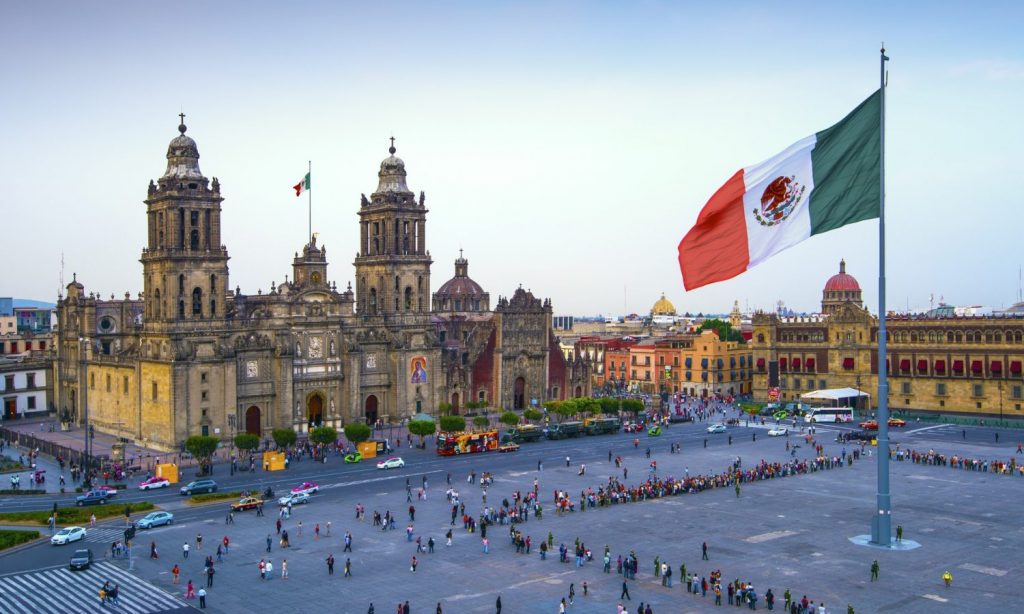
Medical Cannabis Is Fully Legal In Mexico: Now What?

There is now a much clearer roadmap towards conducting legal cannabis-related activities in Mexico.

In our last post, we alerted you on the publication of the new Regulations on Sanitary Control for the Production, Research and Medical Use of Cannabis and Its Pharmacological Derivatives (the “Medical Regulations”). In this post, we provide an overview of what the Medical Regulations will address and what it potentially means to your business.

As expected, the Medical Regulations deal with the control, promotion and sanitary supervision of raw materials, pharmacological derivatives and medicines. Regulated activities include:

Primary production for manufacturing supply;Raw material generation for research and seed production;Health and pharmacological research;Manufacturing of pharmacological derivatives and medicines and medical activities related to diagnoses, therapeutic, rehabilitation and palliative care;Importation, exportation and marketing.

Activities connected with all of the above will be authorized through licenses or permits, and the Regulations provide the requirements to obtain them. Among the activities that will be authorized officially for the first time are:

Quality control laboratoriesGrowing for research and industrial purposesCannabis research protocolsProcessing, transport, import (both for industries and for self-consumption)ExportIssuance of cannabis-related prescriptionsSet-up of establishments permitted to sell medical cannabis products

The regulations clarify that COFEPRIS (Federal Commission for the Protection against Sanitary Risks) will not be the only agency to deal with. Although COFEPRIS will remain the chief agency involved in cannabis-related applications, other agencies are also charged with interpreting and applying these Medical Regulations, along with issuing permits and licenses. All of this means added time and costs that companies have to factor into their business plans for Mexico.

Mexico's Cannabis Legalization Bill Will Boost Business, But There Are Concerns
Continue reading

California says some highway marijuana billboards must go

In a downer for California’s legal marijuana industry, regulators say some highway billboards advertising such products must come down.

The state Bureau of Cannabis Control on Thursday ordered billboard companies to stop selling space for cannabis marketing and take down existing ads on roads that cross state borders. Previously, such ads were only banned within a 15-mile radius of the California border.

The new decision covers about three dozen state and interstate routes, including the heavily traveled US 101 in Los Angeles.

The advertisements can remain on highways that lie entirely within California borders.

The decision heeds a ruling by a judge in San Luis Obispo County that found interstate highway cannabis ads are illegal under Proposition 64. The voter-approved 2016 ballot measure legalized marijuana for adult recreational use and included restrictions on advertisements.

e-mail icon
Continue reading

New Zealand police ground annual aerial cannabis hunt

New Zealand police are putting an end to the annual practice of searching for cannabis grows using helicopters and planes, reportsStuff

The operation has reportedly been taking place for more than 20 years and costs upwards of $700,000 annually.

“With the increased harm in many communities arising from other drugs, particularly methamphetamine, a one-size-fits-all annual aerial national cannabis operation no longer represents the most appropriate deployment of police resources,” a police spokesperson told Stuff.

Police Minister Poto Williams was reportedly unaware of the change until she was reached by Stuffearlier this week.

“While this is an operational matter, I have asked for a full briefing as to the rationale behind this decision,” Williams said. 

e-mail icon
Continue reading

Oakland's Social Equity Programs Continue to Leave Every Other City in the Dust

The City of Oakland, California, continues to pave the way towards social and economic equity in the cannabis business. The city has launched a new million-dollar workforce development grant program. The program is designed to recruit, train, and employ citizens who have disproportionately and unjustly suffered from the War on Drugs. This includes people who have lived in overpoliced neighborhoods in Oakland for at least two years and have endured a cannabis conviction in Oakland. 

Oakland continues to smoke every other city in America in terms of social equity programs. Last fall, Oakland launched the first government-funded shared kitchen production workspace for social equity Cannabis entrepreneurs. The new Cannabis Equity Property Purchase Program earmarks $2 million of funding for cannabis business equity applicants to purchase a property leveraged by multiple equity applicants.

This support is critical, especially in the Bay Area, where real estate prices are notoriously high. Removing this huge financial barrier to entry helps entrepreneurs from disadvantaged backgrounds enter the industry and build community equity and generational wealth.

Gregory Minor, Oakland's Assistant to the City Administrator, says the programs "were the products of listening to cannabis operators and equity advocates, and they are based on the 2017 race and equity analysis of the cannabis industry in Oakland that established an equitable approach to regulating cannabis in Oakland."

Righting the wrongs of history

Funding for these programs comes from a statewide California program that earmarked $20 million to support cannabis equity programs. Black and Brown people, who were the most targeted by the War on Drugs, made up 64 percent of the 1,000 plus felony-level marijuana arrests in California in 2019. The quest for equitable inclusion in the legal cannabis economy is still very much an uphill battle for most of America's cannabis industry. In New Jersey, lawmakers are currently hitting a familiar stumbling block, figuring out pragmatic ways to include and empower social equity entrepreneurs and employees. Disagreements about how to implement social equity programs are responsible for delaying the opening of what will become one of the nation's largest adult-use cannabis markets.

e-mail icon
Continue reading

Texas May Be the Next State to Legalize Marijuana

Many people might not think of Texas as a state where marijuana legalization is possible. But the state's changing demographics have led to at least the potential for changes in cannabis laws.

There's also plenty of money involved. As data from other states attest, the legalization of marijuana paves the way for entrepreneurial opportunities, job creation, and increased tax revenue to go to projects that improve communities and support those most impacted by the War on Drugs.

Lawmakers have filed about two dozen marijuana-related bills have in the Lone Star State, according to cannabis advocacy organization NORML. They include proposals to expand the state's medical marijuana program, increase the amount of THC the state allows in cannabis products, and legalize adult-use cannabis.

Few expect adult-use legalization to become law in Texas, but there is strong backing for legislation in the other two areas.

Some Texans want to give more people access to medical marijuana.

Texas has one of the most restrictive medical marijuana programs in the country. The state currently ranks in the bottom tier of states to allow access to cannabis for medical treatment. 

e-mail icon
Continue reading

House bill impact on hemp regulation in ND

Some changes could be coming to how North Dakota regulates hemp.

The law requires the state to sample and test hemp products.

Under House Bill 1045, the state will now be able to charge a fee for that testing.

The bill will also allow North Dakota labs to be considered for the procurement process instead of those samples being shipped to the lowest bidder in the country.

Agriculture Commissioner Doug Goehring said the changes are more in line with what the federal law states.

e-mail icon
Continue reading

States Most Likely To Legalize Cannabis In 2021

Contenders span the country, from the Northeast to the Southwest as well as some of America’s more conservative states. 

American cannabis reform momentum could propel several states to pass legislation this year. Last year saw five states pass ballot initiatives, emboldening the belief that more reform efforts are on the horizon this year.

Violet Cavendish, communications manager at the Marijuana Policy Project, said that 2020 was another banner year for the reform movement. She added, “The clean sweep of state-level legalization victories in November reflects that this is a policy that Americans are in favor of, regardless of political affiliation.”

Several states are already lining up to be part of the cannabis reform class of 2021. The possible contenders span the country, from the Northeast to the Southwest as well as some of America’s more conservative states. 

Adult Use Is In Play For Virtually The Entire Northeast And New England

Practically the entire eastern portion of the U.S. is in play this year. Despite its current legislative struggles, numerous sources consider New Jersey’s passed ballot initiative to signal the remaining Northeast holdouts to enact legislation. Even as it is held up by state lawmakers once again, neighboring states seem to see the writing on the wall. 


Continue reading

The cannabis industry could give the UK economy the boost it needs after Brexit and Covid

The pandemic has hit economies hard and halted even the most prosperous companies in their tracks. Yet, in the often paradoxical world of business, some industries have emerged from the crisis in a favourable position and cannabis is one of them.  

2020 has ultimately been a breakthrough year of progress for the cannabis industry, as countries around the world have advanced legislation on the drug and invested heavily in the research and development of cannabis-based products. In particular, America’s presidential election turned out in favour of cannabis, with Joe Biden stating he will seek to reform cannabis legislation in the US. This intention has seen a rapid rise of cannabis businesses on the stock market, with a rush of investment into the sector on the back of the Democrat’s win. 


The pandemic has also led to a surge in demand for cannabis products, particularly CBD, which has enjoyed growing popularity among consumers seeking to ease the stress caused by the Covid-19 crisis.    

Major pharmaceuticals have taken notice of the increasingly lucrative emerging industry and are eagerly financing their move into the space. More ambitious investors are even looking towards newer parts of the sector, such as the emerging synthetic market – whereby CBD is produced artificially in a lab, much like the majority of vitamins in today’s market.  


New CBD production techniques such as synthesis and yeast fermentation can produce purer CBD without violating UK law through the presence of other illegal cannabinoids, and also avoid the risk of contamination with pesticides and soil-based compounds.  

e-mail icon
Continue reading

States Enter the Billion Dollar Cannabis Club For 2020

As states report cannabis sales numbers for 2020, record highs continue across the country. It’s become a billion-dollar business for several states, blowing out levels that states had estimated when originally planning legalization.

Billion Dollar Club

Colorado

The Colorado Department of Revenue reported that cannabis sales in the state passed $2 billion in sales from January – November 2020. Plus, December hasn’t even been added to the total sales figures. Despite the pandemic, the state has continued to break records. Steve Lopez, CEO, The Green Solution (Colorado) said, “With over $2 billion in sales from January through November 2020, we’re continuing to see Colorado break sales records through the pandemic. We debuted over 50 self-serve kiosks at our 21 retail locations across the state last year, and credit high sales to the innovation and creativity in our industry, as well as the measures we’ve implemented to prioritize staff and customer safety.”

Massachusetts

Adult-use cannabis retailers in Massachusetts have now tallied more than $1 billion in gross sales, according to information reported in the state’s mandatory seed-to-sale tracking system, the Cannabis Control Commission. At the close of business on October 30,  the aggregate data reported in Metrc by 80 retailers reached $1,000,521,905. What makes this even more impressive is that the state program is basically only two years old.

e-mail icon
Continue reading

Lawmakers debate potential framework of legalizing marijuana in Virginia

A bill that would legalize the recreational use of marijuana in Virginia and set the framework the potential billion-dollar industry got its first hearing before state lawmakers Tuesday morning.

Governor Ralph Northam (D) has publicly backed the effort, which as currently written would allow sales to those 21 and older starting in January 2023.

Although many lawmakers and activists expect the legislation to pass this year, what the regulatory framework looks like will be hotly debated in the weeks to come.

Though SB 1406 is far from a finished product, the measure sponsored by state Senators Louise Lucas, Adam Ebbin, and Joe Morrissey, all Democrats, includes several broad reaching provisions currently:

Consumption for personal use would be allowed for those 21 and olderA set number of licenses would be issued for cultivating and retail salesThe state would tax sales at a rate of 21-percent, plus local taxes, and the existing sales tax, which could reach 30-percent totalThe majority of the revenue from sales would go to early childhood education, a newly formed “Cannabis Equity Reinvestment fund” to invest in communities of historically targeted by drug enforcement, and substance abuse prevention programsCities and counties would have a say into whether or not to allow recreational useCriminal records for those with convictions of certain marijuana related offenses would be expunged

You can read the full bill as it is currently constructed here.

e-mail icon
Continue reading

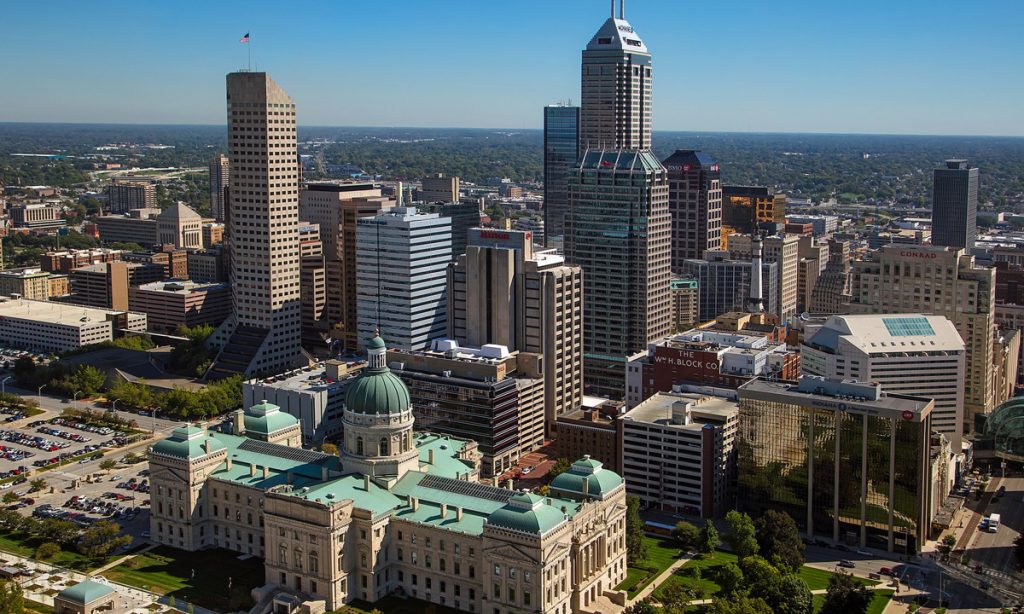
Indiana Senator Attempts To Decriminalize Marijuana

“Our neighboring states have made efforts to address unjust marijuana laws, and it’s time for us to do the same,” said Senator Karen Tallian.

It has been said that Indiana will be one of the last states to legalize marijuana. The state is run by a bunch of holy-rolling Republicans who believe weed is the root of all evil. And they just can’t seem to wrap their heads around marijuana being good for the people and the state’s economy. 

Therefore, as long as the ultra-conservative beast continues to bed down in the Capitol, weed isn’t going to make any headway. However, some state lawmakers plan to hold the anti-pot goons accountable in the next session. They aren’t asking for full-blown legalization — like neighboring Illinois and Michigan — just the elimination of criminal penalties for those caught in possession. 

Indiana Senator Karen Tallian recently introduced legislation aimed at decriminalizing marijuana statewide. The bill, which is similar to others she’s supported over the years, would allow those caught in possession of up to two ounces to be dealt with through a ticket rather than the criminal justice system.

As it stands, Hoosiers caught in possession of any amount of cannabis can be convicted of a misdemeanor, punishable with up to 180 days in jail and fines reaching $1,000. If they have as much weed as Tallian believes should be decriminalized, they can be slapped with a level 6 felony and do as many as two and a half years in jail and pay up to a $10,000 fine. 


Continue reading

Report calls for new marijuana taxes to help promote minority ownership

An advisory group is recommending new taxes on marijuana sales to raise millions of dollars that would be used to improve diversity and help disadvantaged groups succeed in the industry.

Data collected by the Michigan Marijuana Regulatory Agency in December show that only 3.8% of those with an ownership interest in licensed recreational marijuana businesses in Michigan are Black and only 1.5% are Hispanic or Latino, according to an agency report

The voter-approved Michigan Regulation and Taxation of Marijuana Act of 2018 directed the agency to create a plan to "promote and encourage participation in the marijuana industry by people from communities that have been disproportionately impacted by marijuana prohibition and enforcement and to positively impact those communities."

The agency's Racial Equity Advisory Workgroup released its recommendations Tuesday aimed at improving access to capital for Black and brown businesses, along with technical, educational and other forms of assistance. Implementing some recommendations would require action by the Legislature.


The agency "is committed to making Michigan the model agency in the country, including being a leader on diversity, equity and inclusion in the marijuana industry," the report said.

e-mail icon
Continue reading

NY marijuana tax could light up black market: Cannabis industry official

New York Gov. Andrew Cuomo, facing a huge budget deficit, rolled out a plan to legalize marijuana for adult recreational use in 2021.

The plan includes using tax revenue to help fill the state's nearly $4 billion budget gap for the next fiscal year. However, the CEO of the National Cannabis Industry Association told FOX Business that it could go up in smoke if taxes are too high.

“We definitely want to make sure that taxes are not so prohibitive that it pushes the market back underground,” Aaron Smith told Kristina Partsinevelos. “I hope that we can come to a place where it’s taxed in a manner that it’s somewhat similar to alcohol.”

Cuomo, during his State of the State last week, said the industry will eventually lead to 60,000 new jobs, $3.5 billion in economic activity, and $300 million in tax revenue.

Rate this article: 
Select ratingGive NY marijuana tax could light up black market: Cannabis industry official 1/5Give NY marijuana tax could light up black market: Cannabis industry official 2/5Give NY marijuana tax could light up black market: Cannabis industry official 3/5Give NY marijuana tax could light up black market: Cannabis industry official 4/5Give NY marijuana tax could light up black market: Cannabis industry official 5/5
Authored By: 
Regional Marijuana News: 

e-mail icon

Amsterdam: Give cannabis producers more packaging and labeling flexibility

While efforts to legalize recreational cannabis nationally have stalled in the United States, New Zealand, Mexico and Israel, Canada's legal market continues to evolve.

Health Canada has recently been receiving suggestions for revising its cannabis product regulations. Now it must decide what changes to make.

One priority should be giving producers more packaging and labeling flexibility. This could help businesses build their reputations and help consumers find suitable products. It would also better support federal cannabis policy, as existing rules inadvertently encourage higher potency while sidelining other aspects of quality.

Restrictive rules

Current packaging regulations restrict each cannabis container to a single non-fluorescent color. It cannot have any photos or images beyond one small brand logo.

e-mail icon
Continue reading

Is France moving towards legalising cannabis for recreational purposes?

As the French people are being asked whether they favour legalising cannabis for recreational purposes, half of the mayors in Paris region are in favour, a new survey shows.
 
When French newspaper Le Parisien rang up 36 elected officials across the greater Paris Île-de-France region to ask their opinion on whether or not cannabis should be legalised for recreational purposes, only 22 percent said no. 
 
Twenty-eight percent did not want to give their opinion, sometimes expressing concern they lacked information about the topic.
 
But the by far biggest group - 50 percent in total - said yes.
 
"This is in line with opinion surveys," Alessandro Stella, director of research at the CNRS research centre, told Le Parisien
 
The informal survey comes as an online questionnaire aims to ask the wider French public for their views on the topic.
 
Cannabis is illegal in France. Until recently, the drug - which is widely consumed in France - fell under a 1970-law of illicit drug use, making it punishable with up to a year prison and an up to €3,750 fine.
 
Last year the government softened the penalties, making it possible for those caught consuming it to opt for an on-the-spot fine of €200.
 
 
The government also gave the final green light for a programme of medical cannabis trials to go ahead, which advocates hope will pave the way for a legalisation.
 
'Stalincrack'
 
France has long struggled to crack down on illegal drug trade, a problem that poses daunting difficulties to elected officials.
 
"The repression is counterproductive, as with the prohibition of alcohol in the United States of the 1920s," said Ali Rabeh, the leftwing mayor of Trappes, a city southwest of Paris, who expressed his support for legalisation.
 
Of France’s total 3,952 identified drug dealing spots, 1,029 - more than a quarter - are found in Ile-de-France and Oise, according to the French interior ministry.
 
The problem is especially visible in Paris' poorer, northern neighbourhoods - one of which is so infested with drug dealers and users that its areas are nicknamed 'Stalincrack' (instead of Stalingrad) and 'Crack hill'.
 

Trafic de #drogue : la France compte 3 952 points de deal >> https://t.co/OAWi6S0PpD pic.twitter.com/oHiAW2PhJt

— Le Parisien Infog (@LeParisienInfog) December 20, 2020


The mayors chosen by Le Parisien were of nine départements around Paris and Oise that have been identified as particularly vulnerable to drug trafficking. Some of those in favour expressed hope that legalising cannabis would remove the economy away from the hands of drug lords and over to the state.
 
"Twenty million French people say they have already experimented with cannabis, 200,000 people make a living from the underground economy of cannabis,” said Robin Reda, an MP for Essonne, one of Ile-de-France’s southern départements.
 
Reda leads a parliamentary group of 33 MPs that is currently is examining the potential of legalising the drug for recreational purposes.
 
On January 13th they put the question to the public through an online questionnaire (available HERE), which will be available until January 28th.
 
Legalising cannabis has long been a cause of the political left in France, but Reda - who belongs to the conservative rightwing Les Républicains (LR) - told Le Parisien that he refused to cede the debate over to his opponents.
 
However Interior Minister Gérald Darmanin, who belonged to the same party as Reda before joining Emmanuel Macron’s  La République en marche (LREM) in 2017, has remained staunchly opposed to the idea.

"As interior minister and politician I cannot tell parents who are fighting for their children to give up their drug addiction that we are going to legalise this shit," he said back in September, adding: "And yes, I am saying shit."

Other mayors expressed the same opinion.

e-mail icon
Continue reading

Argentina Allows Cannabis Self-Cultivation

With 2017 legislation, Argentina joined the growing number of South American countries to relax cannabis laws. At the end of 2020, that legislation was expanded, and now finally, Argentina allows cannabis self-cultivation for medical use.

You like cannabis, but want to try something a little ‘different’? Give Delta-8 THC a shot. Not only is it a great alternative to regular THC, but many report less negative side-effects, and an overall calmer experience. You be the judge! We’ve got the best Delta-8 THC deals out there, so if you want to switch up your experience, or just see what all the fuss is about, take a look at these great products.

Cannabis in Argentina

Cannabis is not legal for recreational use in Argentina, but small amounts of it were decriminalized back in 2009. In the Arriola decision, which was the result of a court case arising from the arrest of five men, the court determined that small amounts of drugs meant for personal use, that won’t affect or cause harm to anyone else, and which pose no threat of danger, are decriminalized. There is no official amount set for personal use, meaning law enforcement and judges must use their own discretion per case.

Much like Mexico and South Africa, which each have constitutional rulings related to cannabis and the right of an individual to live life as they see fit without intrusion from the government, Argentina’s court ruled that “Each adult is free to make lifestyle decisions without the intervention of the state.” The decision was also meant to encourage law enforcement money to be spent on bigger cases, while leaving small-time users to enter treatment programs instead.

Cannabis trafficking is illegal in Argentina and can incur a penalty of 4-15 years in prison. It’s illegal for residents to grow marijuana for commercial purposes.

cannabis medicine
Continue reading

At Last, Mexico Publishes Medical Cannabis Regulations

Last week, our neighbor to the South took a significant step forward in cannabis reform, when Mexico’s health ministry published rules regulating the use of medicinal cannabis. This will hopefully be the first of many major cannabis reform measures in Mexico this year. 

The Mexican government issued regulations on their three-year-old medical marijuana program. This is different from the adult-use legislation currently being discussed in the Mexican Chamber of Deputies - the lower house. The April 2021 deadline for legislation legalizing recreational cannabis use still holds. 

In 2017, former Mexican President Enrique Peña Nieto issued a mandate to move forward with medical marijuana legalization. That legislation created a void as there were no regulations to go along with it. In 2019, the Mexican Supreme Court mandated that the Regulatory Agencies create medical marijuana rules

While these regulations are three years overdue, they’re fairly straightforward. The primary focus is on cannabis cultivation both for research and for the manufacture of pharmaceutical or pharmacological products. The legislation allows for public and private research, and it provides quality control measures, including good manufacturing practices. 

I spoke with Aurelius Data’s Julie Armstrong who’s excited about the fact that this process requires institutionalized medical data going forward. Mexicans seeking permits for the cultivation of cannabis for medical purposes will need to register with the National Service for Agrifood Health and Quality (SENASA). This will ultimately create a national registry of cultivators.

e-mail icon
Continue reading

U.K. families urging government to resolve medical cannabis supply issues following Brexit

Another family has come forward detailing how Brexit threatens its ability to acquire life-saving medical cannabis.

Emily and Spencer Carkeet spend £750 (almost $1,300) every month to import high-CBD Bedrolite cannabis oil from the Netherlands to treat their daughter, Clover, who has epilepsy, reports Somerset Live.

The medication has drastically reduced the number of seizures two-year-old Clover experiences, but with U.K. prescriptions no longer valid in the Netherlands following Brexit, the family is just weeks away from its supply running out.

“The government claims to be trying to sort it out, but at the moment, we have about 10 weeks of oil left,” Emily Carkeet told Somerset Live. “We are waiting for a shipment to come in that would last us another three months, but we don’t know if it will arrive.”

According to a report from The Times, there are more than 40 families in the U.K. in the same position.

e-mail icon
Continue reading

WeedLife.com