WeedLife News Network

Hot off the press cannabis, marijuana, cbd and hemp news from around the world on the WeedLife Social Network.

Hemp License Renewal Reminder for Tennessee Growers

Industrial hemp growers in Tennessee are required to renew their licenses with the Tennessee Department of Agriculture (TDA) by June 30, 2021.

“Hemp continues to be an important crop in Tennessee,” Commissioner Charlie Hatcher, D.V.M. said. “The marketplace is evolving and growers are finding new ways to use and market their crop. We want to see the industry flourish, and TDA has abundant resources to make sure growers have what they need.”

New applications are accepted year-round and expire June 30. New applicants and renewing applicants must submit an application, license fees, and required documentation. If a renewal application and payment are not received by the deadline, the grower’s license will expire June 30, 2021 at 4:30 p.m. CDT.

TDA plant certification staff are a resource for new and existing hemp growers who want assistance navigating and understanding regulations and requirements. Consultants in the Business Development Division support the hemp industry by helping create or expand businesses and promoting businesses through Pick Tennessee Products.

Pick Tennessee Products is TDA’s program that connects farmers directly to consumers. Hemp producers near you can be found at www.picktnproducts.org or on the Pick TN mobile app. Tennessee hemp growers, processors, and manufacturers can apply to be included in the directory at www.picktnproducts.org/apply-pick-tennessee-products-application.html.

e-mail icon
Continue reading

Does The New MORE Act Have A Better Chance Of Passing?

The progressive language of the new bill takes an important step towards addressing the harms of the Drug War. But passing it is still a long shot. Here’s why.

Second verse, same as the first, a whole lot louder and a lot MORE woke.

The House of Representatives passed the first version of the MORE Act, which would deschedule cannabis from the Controlled Substances Act, at the end of 2020. The bill promptly died in the Republican-controlled Senate. This blog tracked the evolution of the bill’s original version:

demystifyingthe bill,dispelling some myths and misunderstandings about federal legalization, andpredictingthe bill’s demise.

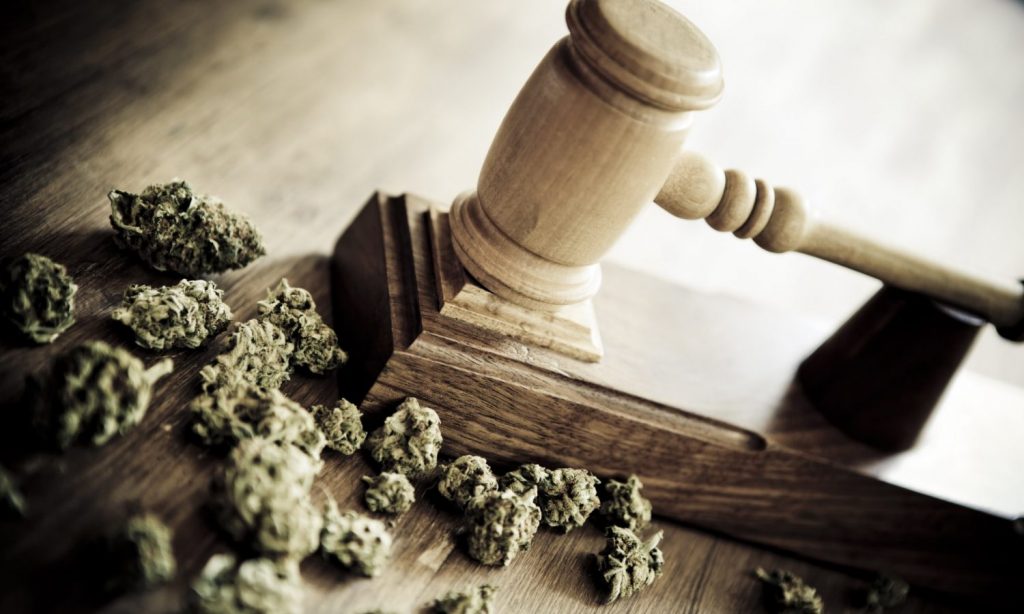
Photo by MmeEmil/Getty Images

The House reintroducedthe second version of the bill on May 28th, 2021. This version is the same as the first with the addition of some progressive upgrades. Most notably, drafters of the bill removed language that barred applicants with felony cannabis convictions from federal permitting. This languageproved controversial at the time of the passage of the 2020 MORE Act. Denying federal permitting to those directly impacted by prohibition seemed counterintuitive to the stated intention of the bill, “to provide for reinvestment in certain persons adversely impacted by the War on Drugs.” Removing this language shows that Congress aims for an even more progressive vision of legalization this time around.

Why Advocates Say MORE Act Falls Short In Restorative Justice
Continue reading

Louisiana bill decriminalizing marijuana signed into law Tuesday

A bill to decriminalize the possession of small amounts of marijuana for personal use in Louisiana will become law after Gov. John Bel Edwards signed the legislation from Democratic Rep. Cedric Glover Tuesday.

"This is not a decision I took lightly," Edwards said. "The state of Louisiana should no longer incarcerate people for minor legal infractions, especially those that are legal in many states, that can ruin lives and destroy families, as well as cost taxpayers."

Although Edwards said the bill won't technically "decriminalize" possession of small amounts of pot, the penalty would be less than most speeding tickets.


The bill would make possession of 14 grams or less — about half an ounce — a misdemeanor in all cases and limit the fine to $100 with no jail time.

It takes effect Aug. 1.

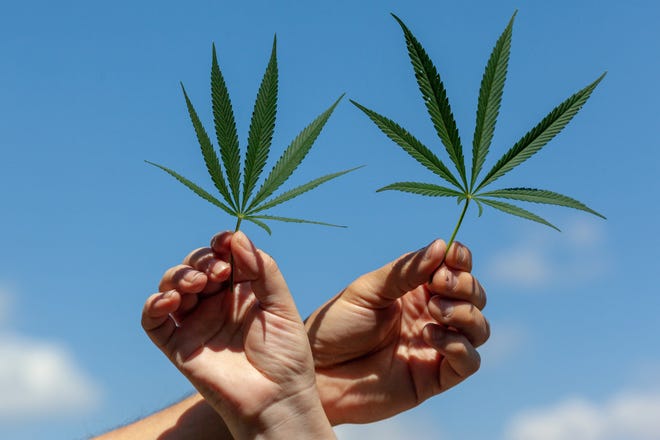
Two hands holding marijuana leaves.
Continue reading

The legal dilemma of hemp production in Pakistan

In September 2020, Federal Government approved and granted permission for the cultivation of Industrial Hemp for medicinal, scientific, and industrial purposes to the Ministry of Science & Technology. The said permission shall be regulated in terms of Rule 2(ix), 8, 9, and 10 of the Control of Narcotics Substances Rules 2001.

Against this backdrop, an “Expression of Interest” (EOI) in the shape of a Joint Venture (JV) for Hemp Production for Medicinal, Scientific, and Industrial Purposes was made by the Ministry of Science and Technology (MOST).

In furtherance of which the President of the Islamic Republic of Pakistan, while exercising his powers under Article 89 of the Constitution of the Islamic Republic of Pakistan 1973, was pleased to issue an Ordinance No XIII of 2020 titled “The Special Technology Zones Authority Ordinance 2020”.

The detailed policy was also drafted for PCSIR by me which shall play an integral part in regulating and licensing hemp for medicinal use in Pakistan.

Officials in Pakistan’s government, Chaudhry Fawad Hussain in particular, encouraged hemp legalization and production in efforts to relieve fiscal deficits and Pakistan’s struggling economy alongside its medicinal benefits.

e-mail icon
Continue reading

Majority of Americans support drug decriminalization

Significantly more than half, 60 per cent, of people polled in the U.S. believe the War on Drugs should end, and support the decriminalization of illegal substances.

The American Civil Liberties Union (ACLU) and the Drug Policy Allegiance (DPA) released the poll ahead of the 50-year anniversary of President Richard Nixon declaring that drugs were “public enemy number 1.” The U.S. police had an impact on the lives of thousands of people, resulting in many incarcerations, disproportionately affecting Black, Latino and Indigenous people.


According to the poll, 65 per cent of the people surveyed agreed that the U.S. should stop the War on Drugs, with 66 per cent of those polled reporting they believe in decriminalizing drugs altogether.

Poll results show how much views have evolved since the 1970s. Nearly two-thirds of respondents believe there should be new healthcare enforcement instead of new law enforcement. The majority of those taking part in the survey also noted they think drugs should be a problem solved by healthcare providers and not officers.

In all, 83 per cent of respondents said they believed the War on Drugs has failed.

FILE: Presumptive Democratic presidential nominee former Vice President Joe Biden delivers a speech at the William Hicks Anderson Community Center, on July 28, 2020 in Wilmington, Delaware. /
Continue reading

Is Delta-8 THC Legal?

If you’ve recently stopped by the CBD store down the street or visited one of the many websites selling CBD online, you may have seen something odd – right alongside the CBD oils and tinctures, CBD gummies, and vape juice.

Delta-8-THC.

That leads to a lot of questions.

First of all, what’s THC doing in a CBD store? Isn’t that only supposed to be sold in a marijuana dispensary?Second, what is Delta-8-THC? Is it just a cleverly named CBD brand? Is it synthetic weed? What’s with the “Delta-8?”And most importantly: is this really legal?

You have questions. We have answers.

Delta-8-THC: The Brief FAQ

Let’s start with the simple answers.

CBD Plant for sourcing Delta-8-THC
Continue reading

Exploring the emerging UK CBD industry

In this article, Rick Brar, CEO of Brains Bioceutical, explores the emerging UK CBD industry.

The last two years have seen the UK CBD market grow exponentially. Sales of CBD are not just being driven by trendy millennials looking for the next big thing, they are also cutting across a range of demographics and therapeutic applications from chronic painanxiety, sport recovery, and general wellness.

Following such a sustained period of growth, the rise of CBD is clearly not a passing fad. In fact, it remains one of the few industries that has managed to be resilient during the pandemic and continues to see strong demand.

With astronomical growth figures continuing to be reported, the potential of the CBD industry has prompted many to explore its viability as a business. With the increased focus on wellness and health that has stemmed from the pandemic and the growing awareness and evidence of CBD benefits, new businesses who want to make a difference are now entering the CBD market.

Setting up a CBD business is not as simple as just registering a website and selling products. Think long and hard about your motives for getting involved in the CBD and cannabis business and ask yourself a set of questions before you begin to craft a business plan: is this something you are passionate about? Will you buy your CBD wholesale, or are you looking to harvest and produce your own product? What kind of product interests you?

Getting from idea to product launch and beyond into profitability, is a challenge for any startup – however, for those wanting to create a thriving UK CBD business, there are several additional challenges due to the nature and origin of CBD itself. Destigmatising CBD, demonstrating compliance, and obtaining the necessary licenses and authorisations while maintaining a strong brand presence in what many people still see as a confused market requires agility, innovation, and perseverance.

e-mail icon
Continue reading

A Law That's Supposed to Protect Minors from Vapes Is Hurting the Cannabis Business

In 2021, new federal legislation affects all sellers with vape-related products that ship directly to the consumer. Initially, lawmakers created the law to keep nicotine products from minors. But they wrote the legislation so broadly that other industries with vape products, including cannabis and CBD, have been negatively impacted.

What is the PACT Act? 

An acronym for "Prevent All Cigarette Trafficking," the PACT Act has roots as far back as 1949. Originally called the Jenkins Act, the federal law states that any person who sells and ships cigarettes across state borders must report the sale to the buyer's state tobacco tax administrator.

Fast forward to 2009 when lawmakers amended the act to match new technology, broadening the language to include online sales. Digital sellers were now required to register with the Bureau of Alcohol, Tobacco, and Firearms (ATF) and the state they operated in and sold to. The 2009 amendment also prohibited the mail delivery of cigarettes and smokeless tobacco within the US. 

The main intention for these amendments was two-fold: 

It prevented minors from buying. The ultimate goal was to limit the pathways that tobacco and related products can get to minors. There was a greater emphasis on online retail because it was harder to track the age of consumers.  By linking taxes and registration with state authorities, the regulators had more control. State and federal officials could more easily audit companies and therefore track the age of consumers more closely. 

New legislation in 2021

In December 2020, as part of a larger stimulus bill, the PACT Act was again amended. The new legislation went into effect on April 26, 2021, and the industry can already feel its effects. 

e-mail icon
Continue reading

We Thought We’d Be Celebrating The Legalization Of Recreational Weed In Mexico — We Were Wrong

In the run-up to last Sunday’s elections, the Senate backed away from its commitment on cannabis reform, apparently preferring to shift any political blowback to the Supreme Court.

Two months ago we postedto celebrate the passage by Mexico’s Lower Chamber of the Cannabis Law bill sent to it by the Mexican Senate last November. In that post, I wrote, “The Law will now return to the Mexican Senate, where it is expected to be approved pretty much as written, at which point, it will go to the Executive Power for publication.”

Oops.

Just over a month ago the Senate ended its session not only without having approved the Law, but also having ignored the Supreme Court’s directive (dating from 2018) to do so. As a reminder, Mexico’s Supreme Court ruled in 2018 that the federal government’s prohibition on recreational marijuana use was unconstitutional and ordered Congress to pass a reform legalizing recreational use within 90 days. Since then, the Court has set multiple deadlines for Congressional action, with April 30, 2021 set to be the final one.


Photo by John Coletti/Getty Images

Mexico's Cannabis Legalization Bill Will Boost Business, But There Are Concerns
Continue reading

Hemp: What’s Happening In Wisconsin?

After a big year in 2020, interest in growing and processing hemp in Wisconsin has dropped off considerably.

In Wisconsin, hemp growers and processors must register annually.

In 2019, Wisconsin’s Department of Agriculture, Trade and Consumer Protection (DATCP) received 1,491 grower and 738 processor applications. 4,513 acres were planted and 4,037 acres harvested during the 2019 season.

In 2020, 1,537 grower and 761 processor applications were received. 5,444 acres were planted and as for the 2020 season’s harvest, that figure isn’t available yet.

The situation for this hemp season isn’t looking anywhere near as strong, with just 774 grower and 464 processor applications lodged this year to date according to Department data at the time of writing. The planting season for hemp in Wisconsin is mid-May to mid-June.

Speaking with Wisconsin Public Radio, DATCP Secretary Randy Romanski said the situation wasn’t unique to Wisconsin, with other states seeing a slide in interest.

e-mail icon
Continue reading

Brazil Moves Toward Cannabis Legalization

It is unclear if the upper house will approve the law or not. What is clear, however, is that the Bolsonaro administration adamantly opposes any kind of use of cannabis.

On Tuesday, June 8, the Brazilian Chamber of Deputies’ Special Commission very narrowly approved a bill authorizing cannabis cultivation for medicinal, veterinary, scientific, and industrial use.

Government supporters tried their best to prevent the legislation from heading to the upper house for final approval, but Deputy Luciano Ducci’s crucial vote ensured the bill survived.

While the new law would legalize cannabis cultivation, in practice it would impose a series of limitations, allowing only cultivation by companies, patient associations, and NGOs. Individual cultivation would still be illegal should the text be approved in its current form.

Breaking News! Brazil Moves Toward Cannabis Legalization
Continue reading

Idaho activists working to get two marijuana-related initiatives on 2022 ballots

Activists in Idaho are working to get a pair of initiatives on the 2022 ballot that each would loosen the state's restrictions on marijuana.

Organizers openly admit getting each measure even on the ballot will be an enormous challenge, but have submitted both in the hopes that at least one can clear the myriad hurdles in front of it.

The first is called the Idaho Medical Marijuana Act, or IMMA. 

It would allow people with certain conditions to be prescribed weed by a doctor and then allow them to possess up to four ounces of it legally.

To support that, a system of medical marijuana dispensaries would be created. That would entail a licensing system for growers, processors and retailers, which exists in many other states.

e-mail icon
Continue reading

Delta-8 THC Regulation Continues to be a Hot Topic in Washington State

Washington state regulators are indicating a willingness to regulate Delta-8 THC products for sale in licensed cannabis dispensaries, although chemical experts say that the issue will require study before rules can be drafted. The Washington Liquor and Cannabis Board announced that it intended to regulate the sale of Delta-8 THC products sold in the state’s licensed marijuana dispensaries.

Last year, the U.S. Drug Enforcement Administration (DEA) ruled that Delta-8 THC, a cannabinoid that occurs naturally and can also be processed from CBD, is a controlled substance not protected by the 2018 Farm Bill, which legalized hemp agriculture and products derived from the crop. Since that time, at least a dozen states including New York have banned Delta-8 production and sales.

April’s policy statement from the Washington cannabis board said that the DEA’s interpretation of federal hemp regulations is unenforceable and that the agency would create regulations for Delta-8 sold in licensed cannabis dispensaries. At a meeting of chemists from the University of Washington, Washington State University and private labs organized by the board last week, researchers said that study into Delta-8 has been limited so far.

“Frankly, the field hasn’t done too much with Delta-8, because it does almost the same thing as Delta-9,” said Nephi Stella, a professor of pharmacology and psychiatry at the University of Washington and co-director of the school’s Center for Cannabis Research.

The cannabis board’s policy statement holds that it is not legal to sell Delta-8 produced from CBD or other cannabinoids in licensed dispensaries. But some groups, including the Washington Cannabusiness Association, believe that the Liquor and Cannabis Board could regulate the extraction of naturally occurring Delta-8 THC.

e-mail icon
Continue reading

State by State Cannabis Legislation – What’s Legal Now and Where?

Throughout the country, cannabis regulations are changing every day. Some areas are experiencing more dramatic legislative upgrades than others, but every little step forward still counts. At the moment, there are 5 states that come to mind because, one, they are making big moves, or two, they are conservative states that most people were expecting would hold on to prohibition for much longer.

This week we’re focusing on the East Coast and Deep South, with updates from Connecticut, Tennessee, Louisiana, Mississippi, and Alabama


Connecticut

Connecticut Governor Ned Lamont (D), along with other state lawmakers, just reached a compromise on an adult-use cannabis bill that will likely be implemented in late spring of 2022. The bill would finally lay the groundwork for retail sales to launch in the state. According to estimates from MJBizDaily, the Connecticut recreational market could exceed $250 million in sales in just the first year, and reach a total of roughly $725 million by the fourth year.

Senate Bill 1118 has only just been drafted, however, and it still needs to a pass votes in both the House of Representatives and Senate. Opponents may still try to interfere, which could result in Gov. Lamont calling a special session on the issue this summer. It’s hard to say whether that will also delay the launch of recreational sales or not.

One of the major points in this agreement is offering priority licensing status to social equity applicants. According to the bill text, to qualify as a social equity applicant, the individual will need to have spent the last five out of ten years living in a “disproportionately impacted area, as defined by a jobless rate above 10% or a historically high drug conviction rate. Municipalities would be limited to one marijuana retailer and one micro-cultivator per 25,000 residents until July 1, 2024.”

Tennessee

Tennessee is a relatively conservative state, but the influx of new residents from blue states along the east and west coasts might be having an impact already. Last month, Republican Governor Bill Lee passed a limited medical cannabis bill that would lead to many changes in the way businesses operate within the state.

e-mail icon
Continue reading

Senate narrowly votes to legalize marijuana in Connecticut

With an unexpectedly close 19-17 vote, the Senate passed legislation early Tuesday that would legalize recreational marijuana in Connecticut, sending the bill to a closely divided House of Representatives on the penultimate day of the legislature’s 2021 session.

It was unclear if the House had the votes, time or inclination to attempt final passage before the constitutional deadline of midnight Wednesday, a task that grew more difficult Monday with concerns over attempted favoritism on licensing growers.

“We’ll make the time,” said House Majority Leader Jason Rojas, D-East Hartford, who led the working group that produced the bill and watched the denouement of an oddly tense and protracted vote in the Senate.


Only the vote cast by a retired police officer, Sen. Kevin Witkos, R-Canton, saved the Senate from needing Lt. Gov. Susan Bysiewicz to break a tie. Six Democrats voted with the other 11 Republicans in opposition.


Continue reading

New York Towns and Cities Considering Opting Out of Legal Cannabis Dispensaries

Cities and towns across New York are considering whether to allow retail cannabis dispensaries and consumption lounges legalized under state law to operate within their jurisdictions, with some officials urging them to act as a deadline approaches.

In March, the New York state legislature and Democratic Gov. Andrew Cuomo approved legislation to legalize marijuana for adults and establish a regulated and taxed economy for the commercial production and sale of cannabis. Under that legislation, municipal governments have the right to opt out of the establishment of licensed cannabis dispensaries and consumption lounges within their borders. Towns and cities that decide not to allow such businesses must hold a referendum on the ban if at least 20 percent of registered voters sign petitions calling for such a vote.

During a recent webinar, Sarah Brancatell, the legislative director for the New York State Association of Towns, warned municipal leaders that do not want cannabis lounges and retailers in their communities that they have only until the end of the year to approve a local ordinance. Cities and towns that do not opt out before that time will not be able to in the future.

“The local law has to be adopted on or before Dec. 31, 2021. That’s coming up really quickly,” said Brancarella. “It’s like a one or done shot. If you adopt it on Jan. 1, it has no effect.”

New York Local Officials Taking Action

Municipal leaders across the state have begun to take notice, and movements to enact bans on cannabis businesses are already underway. In North Salem, a suburb of New York City in Westchester County, the Town Board has set a hearing to be held June 22 via Zoom on a proposed opt-out ordinance. At a meeting of the board on May 25, Supervisor Warren Lucas said that if the town opts out of the businesses, the decision can be reversed at a later date.

e-mail icon
Continue reading

Medical marijuana law changes get through Pennsylvania House

The state House on Monday approved a set of revisions to Pennsylvania’s medical marijuana law, seeking to make permanent some of the changes put in place temporarily because of the coronavirus pandemic.

Representatives voted 164 to 38 for the bill, which would permit dispensing a three-month supply at a time, up from one month’s supply. Patients will be able to continue to pick up their medicine outside a dispensary, rather than coming inside the building.

State Health Department communications director Barry Ciccocioppo said the agency was concerned about provisions of the bill he said threaten product quality and patient safety.

” We look forward to working with the legislature to resolve these concerns for the best interest of Pennsylvanians,” Ciccocioppo said.

The legislation would also let caregivers provide help to more than five patients at once and would ease the process by which contaminants must be removed before the final testing. Grower-processors would be permitted to use pesticides under standards the Agriculture Department would develop.

e-mail icon
Continue reading

Congress Will Vote On Passing Federal Cannabis Reform In 2021

Marijuana Advocacy groups Are Pushing Congress To Pass A Federal Cannabis Bill This Month

A collection of influential advocacy groups are pushing for federal cannabis reform. Both the ACLU and NAACP are pressing the heads of a congress to conduct a vote. This vote would be in regards to a House bill to legalize cannabis on a federal level. The vote and potential passing of the bill are trying to be accomplished by the end of the month.

The Leadership Conference on Civil and Human Rights (LCCHR) shared their thoughts on cannabis reform. This was done in a letter that was sent just last week, to the House leadership. The group stated that it’s important to pass the Marijuana Opportunity, Reinvestment, and Expungement Act. Back in 2020 the MORE Act passed the House and is now being reintroduced.

Ever since last year when the House approved the MORE Act. “the circumstances of this past year have made the War on Drugs even more untenable and amplified the voices of those demanding transformation in our criminal-legal system,” the groups wrote.

“In the face of a growing national dialogue on discriminatory law enforcement practices, including the disproportionate policing of drug use in communities of color, transforming our criminal-legal system and redressing its harms is more relevant and more pressing than ever before,” the letter states. “Marijuana reform represents a modest but necessary first step toward that transformation and toward repairing the harm wrought by the War on Drugs. The MORE Act remains the most effective and equitable way forward.”

Federal Cannabis Reform A Step In The Right Direction

Jerrold Nadler who is the Judiciary Committee Chairman has stepped up as the sponsor of the bill. This bill would remove marijuana from the Controlled Substances Act. As well as erasing the past cannabis crimes for people who have been in trouble with those issues. Next, this bill would also impose a federal tax on cannabis. The tax money that is made from legal cannabis would be used to rebuild communities and fund other programs. 

e-mail icon
Continue reading

Authorities Find Illegal Marijuana Grow Operation at Historic Castle in the UK

Police in Great Britain reportedly discovered that a 17th century castle had been used as a massive cannabis growing operation.

The castle, located in the southern region of Somerset, is apparently owned by a “controversial British aristocrat” named Sir Benjamin Slade. Known as Woodlands Castle, it “is known locally as a high-end wedding venue and is situated just a few miles away from Slade’s other castle—an ancestral home that dates back to the 13th century,” according to the Canadian newspaper Regina Leader-Post.

The newspaper reported that Slade “has long been a provocative figure among British peers thanks to his massive firearms collection and provocative statements (especially regarding women and foreigners), having once placed an ad seeking a ‘castle-trained’ wife who would be a good ‘breeder.’”

He had apparently offered Woodlands Castle to the British government to serve as a medical site during the COVID-19 pandemic, but they Leader-Post says that “the proposal was evidently declined, and he ended up renting out the property instead,” and that authorities at this time think Slade was unaware of the illegal marijuana operation at the castle.

“Officials took multiple days to remove plants and cultivation equipment from the building, but have not shared whether any damage was incurred to the centuries-old property as a result of the grow,” the newspaper reported. “Trung Nam Pham, 39, was arrested and appeared in court last week on the charges. He will remain in custody pending a crown court hearing.”

e-mail icon
Continue reading

Colorado Submits Hemp Plan To Feds

Colorado has submitted a revised Hemp Management Plan to the U.S. Department of Agriculture (USDA) that it says aligns with the Department’s Final Rule.

The USDA’s interim final rule on hemp was published back in late October 2019, followed by a consultation process Colorado participated in. Colorado decided not to submit a revised plan to the USDA until after the release of the Final Rule, which occurred in mid-January. In the state’s opinion, the resulting Final Rule was “vastly improved”, but the Colorado Department of Agriculture will continue to advocate for additional rule revisions with view to creating even more flexibility for producers.

Currently, the state’s hemp program is still operating under provisions in the 2014 Farm Bill, but it can only continue to do so until September this year – so this Plan is a very important document.

“I’m proud Colorado is home to a strong hemp industry and that our state is the leader in the development of industrial hemp,” said Governor Jared Polis. “The revised Hemp Management Plan gives Colorado’s hemp producers a realistic way to expand operations while also ensuring that testing is in place.”

According to the Colorado Hemp Advancement and Management Plan (CHAMP) report released in April, the state hosted approximately 13 percent of all hemp acres registered and planted in the USA in 2019, the most of any. While hemp acres planted has dropped off since, there are plenty of parties currently registered for cultivation in the state – this listing is 109 pages long.

It was back in 2012 when Colorado’s citizens voted to pass Amendment 64 to the Colorado Constitution, which contained a directive to enact legislation governing the cultivation, processing and sale of industrial hemp. Legislation adopted the following year delegated the responsibility for establishing registration and inspection regulations for hemp cultivation to the CDA.

e-mail icon
Continue reading

WeedLife.com