WeedLife News Network

Hot off the press cannabis, marijuana, cbd and hemp news from around the world on the WeedLife Social Network.

Supreme Court Of Mississippi Overturns Medical Cannabis Legalization

Can you imagine a place where over 300,000 voters overwhelmingly pass a law only to have 7 governing elites overturn it with a bogus lawsuit? 

Welcome to Mississippi. 


In a stunning turn of political events, the Supreme Court of Mississippi has overturned the will of the voters and thrown out medical cannabis legalization in a state known for its hospitality. I guess that only applies to non-cannabis patients in Mississippi. People with terminal cancer, kids with severe epilepsy, adults with MS, and countless others suffering from addiction to chronic pain will be left behind and forgotten once again. The legislature must act as a check and balance on an extremist court, and restore the will of the voters once and for all. They must exercise their constitutional authority and moral duty by acting now. 

It’s a well-known medical fact that cannabis helps extend life for children with severe epilepsy. These kids and their families deal with daily life that no one can imagine as hundreds of seizures inflict untold suffering on these children. Many die young as the toll of the disease wears their poor bodies down. Access to affordable medical cannabis is often the only hope for these families; many have migrated to states like Colorado and California to gain access and help their kids. They deserve better from their leaders in Mississippi.

e-mail icon
Continue reading

Senate Parliamentarian May Have Foiled Schumer’s Marijuana Legalization Plan

Senate Democrats just don’t have enough of a majority to use the budget reconciliation process to their full advantage this year.

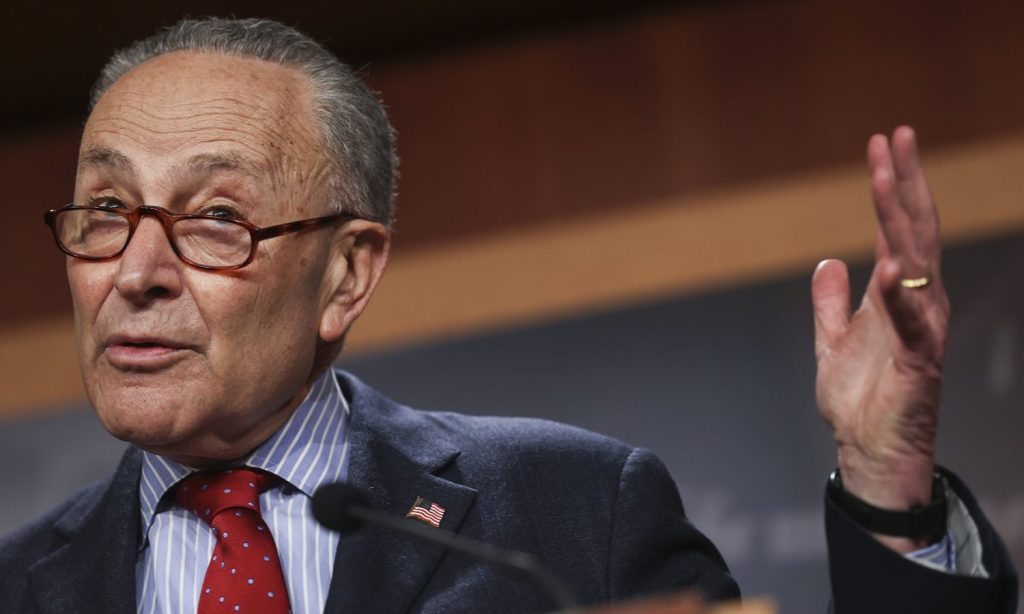
There has been some discussion over the past couple of months that Senate Majority Chuck Schumer might employ some clever finagling to bypass the 60-vote supermajority requirement to push through a comprehensive marijuana reform bill. As it stands, an old rule known as the filibuster is in the way of Schumer securing the votes necessary to make legal weed a reality. But if he could wrap it up in a budget reconciliation proposal, there’s a chance it would pass with a simple majority.

If the term budget reconciliation sounds familiar, that’s because it’s the only way Democrats have been able to get anything accomplished in the past few months. The budget reconciliation process allows the Senate to pass bills with a simple majority (51 votes), basically moving a bill through the upper chamber without Republican support. This is how they passed President Biden’s $1.9 trillion COVID-relief bill, despite Republicans throwing a fit about how it would cripple America.


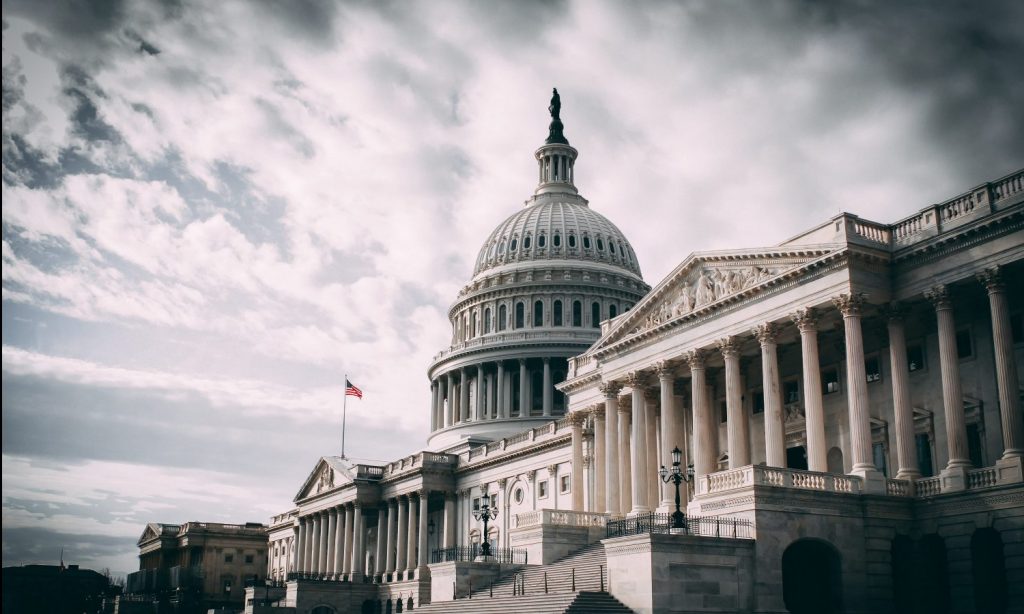
Photo by Harold Mendoza via Unsplash

The problem with this tactic, however, is the controlling party can typically only use it once per fiscal year.

white concrete building under cloudy sky during daytime
Continue reading

How California Sneakily Banned CBD Cosmetics

While California led the charge to legalize marijuana, more precisely defined as “cannabis” under state law — I know, it’s confusing — the state has also repeatedly failed to forge a legal path for hemp-derived products, including cannabidiol (CBD).

Following the passage of the Agriculture Improvement Act of 2018 (the 2018 Farm Bill), the California Department of Public Health (CDPH) released an FAQ entitled, “FAQ – Industrial Hemp and Cannabidiol (CBD) in Food Products” (emphasis added by the CDPH), which provided that hemp, including CBD, could not be added to any kind of ingestible product like foods, beverages, dietary supplements, or animal products. Interestingly enough, there wasn’t, and still isn’t, any state law that actually prohibits adding hemp or CBD to finished products intended for human consumption. Instead, the CDPH adopted the federal FDA position.

Although the FAQ did not expressly say so, it was clear from its reading that the CDPH treated hemp-derived ingestible products adulterated under the state’s Sherman Food, Drug, and Cosmetic Law (the Sherman Law), the state equivalent of the federal Food, Drug and Cosmetic Act  (FDCA). In fact, local agencies, like the Los Angeles County Department of Public Health, later issued their own statements, which expressly categorized these products as adulterated, ostensibly confirming the CDPH’s unexpressed position.


Therefore, without going through the proper rule-making process, the CDPH effectively banned hemp-derived consumables, a policy that local agencies proceeded to enforce.


Continue reading

California Moves Toward Psychedelic Drug Decriminalization with Sensational New Bill

Could California be on the brink of decriminalizing psychedelics? A proposal aiming to do just that passed a major legislative hurdle on Monday, as it was approved by the state Senate.

The legislation now moves to the California General Assembly. Senate Bill 519 “would make lawful the possession for personal use, as described, and the social sharing, as defined, of psilocybin, psilocyn, dimethyltryptamine (DMT), ibogaine, mescaline, lysergic acid diethylamide (LSD), ketamine, and 3,4-methylenedioxymethamphetamine (MDMA), by and with persons 21 years of age or older,” according to the text of the bill, which was authored by state Sen. Scott Wiener.

In a message posted to Twitter on Monday, Wiener trumpeted the bill’s passage in the state Senate as a “big step for this legislation and the movement,” as well as a step toward “a more health and science-based approach and to move away from criminalization of drugs.”

He also thanked supporters for helping promote the legislation.

In an interview with local television station FOX40 last month, Wiener said that, regardless of what one thinks about drugs, “the question is ‘Should we be arresting and jailing people for possessing and using drugs?’ And I think the answer is absolutely no.”

e-mail icon
Continue reading

Deal to dry millions of pounds of hemp turns rotten, lawsuits filed in the U.S.

Kentucky-based hemp company GenCanna has filed a lawsuit again hemp processor Vertical Wellness, alleging that the company reneged on a contract to dry up to 12 million pounds of hemp, reports Law360.

GenCanna allegedly asked Vertical Wellness to pause the drying operations in November, as the company had filed bankruptcy and was in the process of selling its assets to MGG Investment Group.

GenCanna alleges that Vertical Wellness initially complied but then resumed drying operations at its Cadiz, KY facility in December without the company’s permission.

GenCanna maintains that the contract gave them an option to halt processing, while Vertical Wellness says the agreement was based on GenCanna’s desire to have the hemp processed by the end of 2020.

In a statement to Law360, J. Smoke Wallin, CEO of Vertical Wellness, said GenCanna and MGG breached the contract and called the lawsuit “completely frivolous.”

e-mail icon
Continue reading

Will Joe Biden Legalize Marijuana If It’s Sponsored By Republicans?

If nine out of ten Americans believe that marijuana should be legal for adults—and according to a Pew Research poll conducted in April, they do—this begs an obvious question: Why hasn’t Congress passed federal marijuana legalization?

 CQ-ROLL CALL, INC VIA GETTY IMAGES


The country’s closest brush with national cannabis reform was last December, when the House of Representatives for the first time approved a legalization bill with a floor vote. As expected, the milestone was symbolic: The Marijuana Opportunity, Reinvestment, and Expungement Act (or MORE Act) did not receive a hearing in then-Majority Leader Mitch McConnell’s Senate. (The fact that its sponsor was then-Senator Kamala Harris (D-California), the vice-president elect, probably didn’t help.)

With Democrats in charge of both houses of Congress and the White House—and with Majority Leader Chuck Schumer an avowed legalization supporter, will things be any different, or better? On Friday, House Democrats on Friday reintroduced the MORE Act, which would remove cannabis from the federal Controlled Substances Act, wipe certain marijuana-related offenses from individuals’ criminal records, and steer money towards individuals and communities hurt by the War on Drugs.

DC Marijuana Justice
Continue reading

Fiji: Cannabis should be high on the government’s agenda

Fiji’s capital Suva has been in and out of Covid lockdowns over recent weeks, and my Netflix got a workout. I watched a TV show called “Cooked with Cannabis”. Admittedly there were a few baked hippies, but the cooking was good. Jokes aside, the show revealed the sophisticated and lucrative global cannabis industry, projected to grow to an extraordinary US$90.4 billion internationally by 2026.

Watching the show also got me thinking about Fiji’s economy as the country fights through a second wave of the pandemic via containment measures and a vaccination drive. Fiji has taken an almighty hit. GDP was slashed to approximately $4.3 billion in 2020, with growth falling by 19%, according to the International Monetary Fund. Foreign tourists have vanished, all non-essential businesses have been forced to close, and the much mooted Pacific travel bubble is likely to be off the cards for the immediate future. With national debt levels soaring, a nasty storm is brewing.

Fiji needs to diversify its economy away from a reliance on tourism. Despite the government’s best efforts to provide relief through food ration deliveries and a $90 emergency payment to families affected by Covid, these well-intentioned initiatives have arguably fallen short. Many people complained that calls to the food-ration hotline went unanswered, or the deliveries never arrived, while the need for Fijians to provide tax details in order to claim the relief payments meant those in the informal sector were all but left behind.

That’s where cannabis presents an opportunity.

A cannabis industry in Fiji would not be limited to growing the crop. A whole value-add supply chain could be created.


Continue reading

Cannabis Rumors On Capitol Hill

Sources have confirmed that Senate Majority Leader Chuck Schumer is committed to trying to push through a more global legalization bill before pivoting to a smaller bill like the SAFE Banking Act.

The saga of cannabis legalization at the federal level is ongoing, as the Democratic-controlled House of Representatives continues to pass sweeping legalization bills that (to date) have gotten little traction in the divided U.S. Senate. (Link). The result has heightened speculation throughout the cannabis community, as activists, entrepreneurs and those with cannabis convictions wait for the federal government to act.

And while it’s impossible to say precisely what a final cannabis-reform bill will look like, those in the know (like the publishers of an unidentified cannabis-newsletter, for example) have gleaned some interesting things from the smoke signals coming from Capitol Hill.

Photo by Jonathan Ernst/Pool/Getty Images

Chuck Will Have a Lot to Say

As Politico recently wrote, “Chuck Schumer really likes to talk about weed.” (Link). Indeed, cannabis reform has become the cause celebre of the senior Senator from New York, as he continues to advocate for a sweeping legalization bill that could include everything from criminal justice reforms to provisions allowing plant-touching companies to access the U.S. capital markets.

Will Chuck Schumer’s Latest Plan To Go Over GOP Heads Help Cannabis Reform?
Continue reading

Marijuana legalization makes black market weed cheaper, heroin more expensive

When states first began to “experiment” with the legalization of marijuana, lawmakers, state officials, and everyone else, for that matter, were eager to see how selling legal weed would pan out.

On the one hand, naysayers wanted to judge whether the socioeconomic cost of legalization was worth the tax dollars the market would surely drive into state and local coffers. At the same time, advocates stood waiting for a “told ya so” moment, when they could show the nation that a legitimate pot market would not lead to a drug-addled society. Years later, the results have been mixed.

However, a new study in the journal Addiction attempts to shine some light on the legalization of recreational marijuana. More specifically, it shows what can be expected to happen with illicit drug markets in states that pass recreational marijuana laws, and it is interesting, to say the least.

For starters, fully legal marijuana, subject to state regulations and taxes, appears to make black market pot products more affordable. Researchers found a 9.2% drop in the price of street weed in places with recreational marijuana laws on the books. In some cases, lower quality bud experienced a price decrease of 19.5%. The “prediction,” as the study calls it, is that marijuana legalization is creating less demand for black market weed and therefore driving down the prices.


Still, real life tells us that legalization is fueling the black market in a lot of ways. This is especially true in states like California, where illicit pot operations still outnumber the legal ones. The legitimate market has also increased black market dealings across state lines. Law enforcement in prohibition states continue to report more increases in marijuana seizures all the time.

e-mail icon
Continue reading

What’s The Correlation Between Legal Marijuana And Teen Use?

Studies that show no links between legal cannabis programs and marijuana use by young people should be encouraging news for advocates and those who are wary of cannabis.

A new batch of data shows that despite marijuana earning its legal status in several U.S. states, young people aren’t exactly getting their hands on the stuff any easier. This data adds to a growing body of evidence that indicates that legal marijuana doesn’t make it more likely for teens to consume it.

Marijuana use in teens and young adults is a serious concern, one that has been correlated with higher odds of developing a dependency on the drug and of developing mental health conditions like depression, anxiety, and psychosis.


Photo by Eliott Reyna via Unsplash

The data came from the Youth Risk Behavior Surveillance System (YRBSS) and was submitted by high schoolers between the years 2009 and 2019. The analysis demonstrated that there was not a significant change or increase in the percentage of students who consumed cannabis within the past 30 days.

Vaping THC Can Be Riskier For Teens Than Smoking It, Study Shows
Continue reading

The MORE Act of 2021 Introduced In Congress

Is marijuana legalization about to go federal? Congressional leaders took the massive and potentially historic first step on Friday, when they introduced the Marijuana Opportunity, Reinvestment, and Expungement Act of 2021, or “The MORE Act of 2021”.

The stated purpose of the MORE Act of 2021: “To decriminalize and deschedule cannabis, to provide for reinvestment in certain persons adversely impacted by the War on Drugs, to provide for expungement of certain cannabis offenses, and for other purposes.” 

The legislation was brought by House Judiciary Committee Chairman Jerry Nadler, the longtime Democrat from New York, along with members of the Congressional Cannabis Caucus.

The significance of the proposal can’t be overstated. If it passed, it would end the federal prohibition on marijuana—something a growing number of cities and states across the country have already done. 

“Since I introduced the MORE Act last Congress, numerous states across the nation, including my home state of New York, have moved to legalize marijuana. Our federal laws must keep up with this pace,” Nadler said in a statement. “I’m proud to reintroduce the MORE Act to decriminalize marijuana at the federal level, remove the needless burden of marijuana convictions on so many Americans, and invest in communities that have been disproportionately harmed by the War on Drugs.”

e-mail icon
Continue reading

R.I.P. Delta-8 THC: Why States and DEA Want It Banned

Delta-8 THC had a good run. People made money, customers were happy, and it all seemed legal to boot. Like all good things in life, states and the DEA are doing everything in their power to ensure that delta-8’s run comes to an end. Let’s talk about why.

For those of you who may not have been paying attention, delta-8 is one of many, many cannabinoids in cannabis (marijuana and hemp) plants. Unlike CBD, it gets you high. It’s not usually present in high volume in cannabis, so it’s usually derived by converting hemp CBD through chemical processes, and can’t be legally derived from marijuana under federal law.

In theory (or, more accurately, according to the literal text of the federal 2018 Farm Bill, if you care about little details like “what the actual law is”) hemp-derived delta-8 THC should be considered legal under present federal law. But the DEA apparently didn’t get that memo.

Late last year, the DEA issued an interim final rule (IFR) that says that all synthetic cannabinoids are Schedule I narcotics and illegal. Never mind that delta-8 is most commonly derived from a hemp plant and that the 2018 Farm Bill legalized hemp and its derivatives because, well, the DEA apparently thinks it’s as dangerous as heroin. We wrote quite a bit on why the DEA was just wrong around the time the IFR was published, and generally stand by that opinion.

Surprisingly, the DEA didn’t see eye to eye with the entire industry. It even put delta-8 on its “Orange Book” of controlled substances. I won’t get into too much more detail on the status of federal delta-8 law, as my colleague Nathalie Bougenies recently did just that a few months back.

e-mail icon
Continue reading

Spain Moves Toward Medical Cannabis Regulation

The fate of legalization will largely hinge on the ruling Socialists. The government, led by Prime Minister Pedro Sánchez, has demonstrated a lack of enthusiasm for even medical cannabis legalization.

On May 13, the health committee of Spain’s Congress of Deputies approved a proposal to create a subcommittee that will consider other countries’ experiences with medical cannabis. The subcommittee’s findings could pave the way for medical cannabis legalization in Spain. According to a recent poll, approximately 90% of Spaniards would favor such a move.

Spain currently lacks a medical cannabis program at the national level. Two cannabis medications, Sativex and Epidiolex, have been approved by the regulator, but only for specified ailments; use to treat other conditions must be approved by a medical tribunal, subject to variations among localities. Moreover, costs can be prohibitive.

Photo by Henrique Ferreira via Unsplash

Spain Moves Toward Medical Cannabis Regulation
Continue reading

Marijuana Industry Expected to Add $92 Billion to U.S. Economy in 2021

From jobs to tax revenue to commercial real estate, the marijuana industry has a large – and growing – impact on the broader economy in the United States. The total U.S. economic impact from marijuana sales in 2021 is expected to reach $92 billion – up more than 30 percent from last year – and upwards of $160 billion in 2025, according to analysis from the newly published MJBizFactbook.

To measure the industry’s economic impact, MJBizDaily analyzed similar industries and applied a standard multiplier of 3.5 on projected recreational and medical marijuana retail sales. The numbers are a best guess because the marijuana industry’s structure is somewhat unique because it encompasses agricultural, manufacturing and retail activity.

The economic impact of the marijuana industry is not the same as supply-chain revenues that are often used to estimate the “total size” of an industry. Rather, the economic multiplier paints a picture of the impact the industry has on the broader economy. In this case, for every $1 consumers and patients spend at retail locations, an additional $2.50 will be injected into the economy, much of it at the local level.

That impact comes directly from the day-to-day needs of workers in the cannabis industry, including spending on life’s necessities such as housing, transportation, entertainment and more. Marijuana businesses, consumers and patients also pay hundreds of millions of dollars in state and local taxes that are used to fund state and local government activities, including schools and roads.

In addition, real estate receives a boost from new retail, manufacturing and agricultural businesses moving into an area or established companies expanding, increasing broader demand for commercial properties. Cultivating and manufacturing marijuana can require large investments in equipment and technology that boost not only the local economy but also areas throughout the U.S.

e-mail icon
Continue reading

Luxembourg Moves One Step Closer to Legalization

Currently, there are no fully legal adult-use cannabis countries in Europe, but Luxembourg is moving forward. The only two countries that have legalized cannabis for adult use are Uruguay and Canada.

With that being said, there are already countries in Europe that are quasi-legal, such as in Switzerland where low-THC cannabis is bought and sold legally.

In Italy, the Supreme Court ruled previously that home cultivation is legal, and while lawmakers are still trying to sort things out, there are now some legal protections in place for consumers.

Several countries are exploring legalization, and in some cases even launching limited pilot programs such as in the Netherlands, however, one country may be on the fastest path to full legalization in Europe.

Luxembourg Takes Another Step Forward

Luxembourg may not be the first country that people think of when it comes to the debate of which country will be the first to fully legalize in Europe.

e-mail icon
Continue reading

Minnesota Governor Legalizes Medical Cannabis Flower

It’s official: Minnesota has legal medical cannabis flower! Governor Tim Walz just signed legislation into law that allows medical patients to access flower instead of just extracts or non-smokables. 

Previously, Minnesota was only one of a few medically legal states that still did not allow patients to access flower medicine. 

Now, patients who are 21 and over with a valid med card can also access flower. The bill was approved earlier this month as part of a broader omnibus bill through a bicameral legislative conference committee. The bill was related to healthcare in general and was approved by both the Minnesota House and Senate. 

Additionally, the bill allows for curbside pickup and increases the number of patients per caregiver from one to six. The commissioner is also now allowed to remove existing, qualifying conditions from the no-prescribe list if they receive a petition to do so, meaning those who currently don’t have their condition covered may soon have a way to access cannabis as medicine. 

In the House, the bill passed 77 to 57, a close margin. The Senate passed it much more clearly with a 66 to 1 vote on the last day of the 2021 legislative session. However, the stand-alone piece of legislation that would have legalized adult-use cannabis and set up a retail system passed the House, but did not receive consideration in the Senate. 

e-mail icon
Continue reading

Texas Ready to Pass Marijuana Decriminalization Bill

One by one, US states have been adopting marijuana legalization programs, with the latest two: New York and New Mexico, happening within 24 hours of each other, and bringing the total number of states with legalization policies to 17. The south has been a bit slower to adopt, with states like Maryland, Virginia, and now Texas, leading the way. Within the last month, the Texas senate approved several bills for marijuana decriminalization, as well as to expand the medical cannabis industry, lower the penalty on THC concentrates, and to force the study of psychedelics.

The recent Texas marijuana decriminalization bill shows just how accepted cannabis has become. Every state seems to be updating its policies these days, creating room for more and more products, in a bigger and bigger market. And this is excellent for you! New products are on the rise, like delta-8 THC. This alternate form of THC provides users with a clear-headed, slightly less psychoactive high, and none of the anxiety created by delta-9. Sound interesting? If it does, we’ve got a host of Delta-8 THC products to try out. So go ahead and pick your products, and we’ll get them to you ASAP.


The US and cannabis

On the nights of March 31st 2021 and April 1st, 2021, New York and New Mexico respectively, passed legislation to open the two states for recreational cannabis markets. These two added on to become the 16th and 17th states to adopt legalization policies, with 20 locations total in the US, including Washington, DC, and the territories Guam and the Mariana Islands. All locations together include: Alaska, Arizona, California, Colorado, Guam, Illinois, Maine, Mariana Islands, Massachusetts, Michigan, Montana, New Jersey, New Mexico, New York, Nevada, Oregon, South Dakota, Vermont, Washington, and Washington DC.

As you’ll notice, though New Mexico, Arizona, and California are in the south, or have southern parts that touch the Mexican border, no state on the list is associated with ‘the South’, and certainly not of ‘the deep South’. However, two over from Arizona to the right, is Texas. And Texas is considered ‘the South’, along with Alabama, Arkansas, Florida, Georgia, Kentucky, Louisiana, Maryland, Mississippi, North Carolina, South Carolina, Tennessee, Virginia, and West Virginia.

Of the states listed as ‘southern’, there are no current legalizations for recreational cannabis, however, the following states do have some form of medical cannabis legalization: Arkansas, Florida, Georgia, Louisiana, Maryland, Mississippi, Texas, Virginia, and West Virginia. Not bad for an area that was completely against such changes when the first medical legalizations happened a few decades ago.

Texas marijuana laws
Continue reading

A New Filing Of A Revised Federal Cannabis Reform Bill Is On The Way To The House

Will The House Approve This Revised Cannabis Reform Bill?

A crucial and important chairman has set a goal to reintroduce a bill to federally legalize marijuana. Along with this bill will be measures that promote social equity. This reintroduced legislation may come as soon as next week in the House. As well its language will have at least two important modifications in comparison to the previous version of the bill. The news arrives as advocates anxiously await the filing of a separate cannabis reform bill. Currently, this bill is being planned by Senate leaders.

House Judiciary Committee Chairman Jerrold Nadler has stood in favor of supporting the MORE Act. The Marijuana Opportunity, Reinvestment, and Expungement Act were passed in the chamber. This approval was a historic time in the House even though it was shut down in the Senate. According to an email thread from advocacy groups, it’s set to be refiled as soon next week with some new terms.

Different references that are familiar with the strategy shed some insight on the matter. They also said their understanding is that Nadler plans to introduce the revised legislation ahead of Congress’s Memorial Day recess. However, a spokesperson in the chairman’s office was not able to verify details by press time.

This new reform bill will not include language that was added just before last year’s House floor vote. Which would have stopped people with previous cannabis charges from obtaining federal cannabis permits. Which you would need to run a legal marijuana business

That was a controversial stipulation that surfaced at the last moment which advocates strongly stood against.


Continue reading

Proposed law would push U.S. FDA to set regulations for CBD

A bill that would make hemp-derived CBD products legal as an ingredient in dietary supplements, foods and beverages has been proposed by three U.S. Senators.

Longtime hemp supporters Oregon Sens. Ron Wyden and Jeff Merkley, both Democrats, and Sen. Rand Paul, a Kentucky Republican, authored the measure, the Hemp Access and Consumer Safety Act, which directs the U.S. Food & Drug Administration (FDA) to update its rules to clear a regulatory gray zone.

In the absence of federal regulations from the FDA, CBD makers and consumers have been faced with inconsistent rules – or no rules at all – in individual states, creating problems for legitimate CBD vendors and endangering public health. The proposed act in essence would force the FDA to clear a path for legal over-the-counter CBD.

Feet dragging at FDA

“Every day that the FDA drags its feet to update its CBD regulations, hemp farmers are left guessing about how their products will be regulated, and real economic gains for workers and business owners in Oregon and across the country are left on the table,” said Merkley. “Hemp-derived CBD products are already widely available, and all we need is for FDA to issue clear regulations for them just like they do for other foods, drinks and dietary supplements.”

Critics have said while the FDA makes efforts at enforcement – primarily by issuing occasional warning letters to unscrupulous CBD vendors – that has come in the absence of significant research and meaningful progress on CBD rules. CBD stakeholders criticized an update from the FDA released in January, saying the report shows little has been done to advance the process of establishing a regulatory framework for the hemp compound.

e-mail icon
Continue reading

Legal New York Pot Means New Police Strategy

New York police may soon have cannabis removed from their oversight.

Axel Bernabe, assistant counsel to Governor Andrew Cuomo, said at last week’s Prohibition Partners conference that he’d recommend alternatives such as using social workers when coordinating with the state’s nascent Cannabis Control Board, which will soon lay out a framework for legalized recreational marijuana. New York State recently decided to allow recreational use and the board will soon decide on the details.

“The interaction of law enforcement with individuals around drugs is a big, big part of the bill,” Bernabe said of the state’s new legislation, under which recreational sales are expected in about a year. Bernabe said he thought that other states’ use of social case workers to enforce rules for legal, licensed cannabis businesses is a good idea. He also questioned who would deal with cannabis-related street crimes, such as the selling of unlicensed, black-market marijuana.

“Who’s going to interact with folks on the street, or folks that are selling illicitly?” Bernabe said. “Do we want law enforcement to do it? Is it a new form of law enforcement?”

New York’s dilemma on how to reform is playing out across the U.S. as local governments start to re-think criminal justice systems that disproportionately incarcerate Black men for marijuana possession. These policy decisions could determine how much interaction minorities like Black people have with police.

e-mail icon
Continue reading

WeedLife.com