WeedLife News Network

Hot off the press cannabis, marijuana, cbd and hemp news from around the world on the WeedLife Social Network.

How Are Cannabis Companies Shipping Delta-9 THC?

Consumers with no access to recreational marijuana have flocked to hemp-derived Delta-8 products. Delta-8 Sprayed Flower, gummies, drinks, and other products have become common in CBD shops, smoke shops, and vape stores across the country, and consumer demand is just getting started. 

The rapid growth of the Delta-8 market, however, has been met with equally swift bans in several states, and more states are joining that list daily. As Delta-8 sits in a legal gray area, retailers are taking risks by selling these products to consumers, but with the enormous demand, the risk has been worth the reward… so far. 

Store Owners Are Getting Nervous

Some states have taken enforcement actions against retailers already, and more store owners are growing concerned over possible raids. Jay Barrios of No Cap Hemp Co said, “This is nerve-racking. We have lawyers working around the clock. Even then, I still lose sleep at night.” 

A New Solution Enters the Market

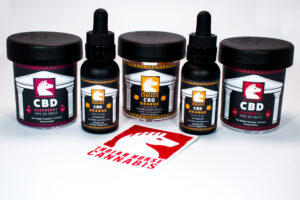
With Delta-8 appearing to have a shorter future than the industry had hoped, one company decided to create a product that meets the same consumer demand, and the solution may come as a shock.

The amount of Delta-9 THC in many Trojan Horse products compares directly to those found in products in a recreational dispensary.
ipsum lorem est
Continue reading

New York Updates Off-Duty Conduct Law To Protect Employees Who Use Cannabis Off The Clock

New York’s off-duty conduct law prohibiting employers from taking action against employees for lawful activity done while off the clock now includes cannabis, a byproduct of the state’s legalization of pot last month.

Here’s the gist, which comes via a helpful primer published by The National Law Review.

New York has a law barring employers from any discrimination against employees for various lawful activities performed outside the job, which include political activities (like running for office or campaigning on behalf of a candidate), recreational activities, and the consumption of certain legal products.

That last part is most relevant here. The off-duty conduct law now covers an individual’s legal use of consumable products, “including cannabis in accordance with state law, prior to the beginning or after the conclusion of the employee’s work hours, and off of the employer’s premises and without use of the employer’s equipment or other property;” and “including cannabis in accordance with state law, outside work hours, off of the employer’s premises and without use of the employer’s equipment or other property.”

But the amended off-duty conduct law carves out circumstances under which an employer would not be in violation for crying foul on an employee’s pot use. Those exceptions include situations when “the employer’s actions were required by state or federal statute, regulation, ordinance, or other state or federal governmental mandate,” or if “the employee is impaired by the use of cannabis, meaning the employee manifests specific articulable symptoms while working that decrease or lessen the employee’s performance of the duties or tasks of the employee’s job position.” 

e-mail icon
Continue reading

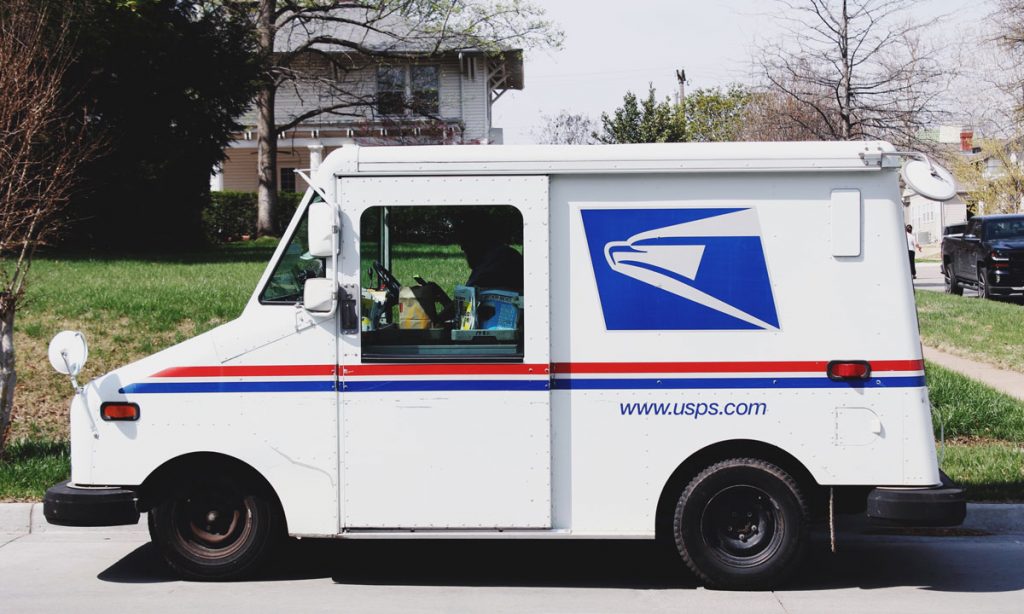
PACT Act Update: USPS Delays Ban On Mailing Vape Products

While the USPS could have banned vaping products altogether as part of the new rule, it now seems that they are taking time to revisit the implications.

In a move that should encourage the cannabis industry, the United States Postal Service (USPS) is delaying the implementation of its new rules for the enforcement of a ban on direct-to-consumer mailing of vaping products. As we reported earlier this year, recent amendments to the PACT Act (Preventing All Cigarette Trafficking) required the USPS to issue regulations putting into effect the new ban on USPS mailing vape products from retailers to consumers.

I remain optimistic about mailability, despite the grim outlook lately with this news. One reason is that the principles of statutory interpretation lend credibility to the argument that the ban does not apply to vaping products that are not used to deliver tobacco or nicotine. While the USPS could have banned vaping products altogether as part of the new rule, it now seems that they are taking time to revisit the implications of an all-encompassing prohibition on shipments of vaping products. The USPS must not exceed its own legal authority under the PACT Act by regulating vaping products that fall outside the definition of tobacco product, as such a rule could be subject to challenge by various industry groups.

Photo via pxhere

If you’ve been following our PACT Act updates, by now you might recall that he amended PACT Act now defines Electronic Nicotine Delivery Systems (ENDS) as “any electronic device that, through an aerosolized solution, delivers nicotine, flavor, or any other substance to the user inhaling from the device; includes—an e-cigarette; e-hookah; e-cigar; vape pen; advanced refillable personal vaporizer; electronic pipe; and any component, liquid, part, or accessory of a device described without regard to whether the component, liquid, part, or accessory is sold separately from the device.”


Continue reading

State clears way for more than 70K acres of cannabis, hemp production

The Massachusetts Department of Agricultural Resources released updated guidance on Wednesday making way for more than 70,000 acres belonging to its Agricultural Preservation Restriction and Farm Viability Enhancement programs to be used to grow cannabis and hemp.

The APR program was established in 1977 and offers to pay farmland owners the difference between fair market value and the agricultural value of their farms in exchange for permanent deed restrictions which preserve farmland for agricultural use in the future, according to the department website.

The Farm Viability Enhancement Program, in turn, provides business and technical assistance to established farmers through grant funding, in exchange for signing an agricultural covenant on the farm property to keep it in agricultural use for a five-, 10- or 15-year term, per the state website.

Under the new guidance released last week, both hemp and cannabis production will now be allowed on APR and Farm Viability Enhancement lands, so long as the land in question isn’t federally funded, because cannabis remains illegal at the federal level.


Although the DAR did not say how many APR lands are beholden to federal restrictions, the guidance noted nearly all recently acquired APRs were purchased with federal financing.

e-mail icon
Continue reading

Texas House Passes HB 1535 To Expand The State’s Medical Cannabis Program

Texas passed a bill through the House of Representatives today, titled HB 1535, that would expand the state’s medical cannabis program to cover more conditions, and therefore, service more people who rely on the plant.

Under HB 1535, the Texas medical cannabis expansion would cover chronic pain, all forms of cancer, and post-traumatic stress disorder. The bill was drafted by Representative Stephanie Klick, a Republican and the same person who wrote the initial 2015 medical cannabis bill in Texas. 

As of now, only patients with terminal cancer, intractable epilepsy, seizures, multiple sclerosis, spasticity, amyotrophic lateral sclerosis, autism, and other neurodivergent issues are covered. However, the only treatments available for medical patients are so low-THC that the legalization of hemp in 2019 has rendered the state’s medical cannabis law mostly meaningless, as even those without a prescription now have access to hemp-derived cannabinoids.

HB 1535 would change all of this. It would raise the THC cap from 0.5 percent to 5 percent, meaning that patients in Texas would now actually be able to access medicine with THC.

Still, however, the bill must now make it through a Senate committee, the whole Senate, and then get signed by the governor of Texas, Greg Abbott, to become law, so this is by no means a done deal. 

e-mail icon
Continue reading

Mexico has work to do if cannabis is legalized

When I lived and worked in Mexico City, illegal drugs were shunned by the “gente decente” (decent people) in virtually all classes.

Being known as a drug user carried a very bad stigma. At the time, I had the unfortunate luck of having my name be Pacheco, which in Mexico was used as slang equivalent to “stoner” in the U.S. Asking somebody, “Eres muy Pacheco?” meant, “Are you really stoned?” However, even joking about smoking marijuana or other drugs was generally frowned upon.

 Mexico is moving toward legalizing recreational cannabis. (Roberto E. Rosales/Albuquerque Journal) 

Therefore, I have been very interested in seeing Mexico inch closer and closer to legalizing marijuana as a recreational drug.

On March 10, Mexico’s lower house of Congress voted in favor of medical, industrial and recreational legalization of marijuana. The bill, which would allow adults over 18 to possess up to 28 grams of marijuana, now goes to Mexico’s Senate, which is not expected to begin debate on it until September. Political experts in Mexico are predicting that the Senate will pass this bill and send it to Mexican President Andrés Manuel López Obrador (AMLO), who is expected to sign the bill into law.

e-mail icon
Continue reading

The American Entrepreneur Is Alive And Well—In Cannabis

If you read a lot of mainstream media, you probably believe that the American entrepreneur is dead, undone by big-box retail and online behemoths like Amazon, that entrepreneurial energy and innovation have disappeared into a maze of international trade agreements and a haze of opioid addiction and despair. You might think a nation that once prided itself on small business is now nothing but a playground for hedge funds and billionaires to squeeze every last penny out of the working men and women of this country. And while much of that may be true, it’s not the whole story. Not by a long shot. 


I consult with small businesses and regional entrepreneurs every day, and I’m here to tell you they’re alive and well. Many are already successful in other businesses but want to get into the weed game. This is a diverse group of people representing all races and classes but have one thing in common: a deep belief that they can do it. Some are new to owning and operating a business but they have skills and motivation. They see themselves as good leaders, maybe better than the ones they report to now. And they’re willing and able to take the risks necessary to make it in the cannabis industry. They don’t want to be MSOs. Not one of them wants global domination. What they do want is to own and operate cannabis companies and contribute to their own community. They want longevity, not exits. 

Interested cannabis entrepreneurs are looking for guidance, but have their own vision and know the impact they wish to have in their town or city. This is the American dream in action and the global cannabis industry is lighting a fire underneath these emerging business leaders. 

I’m excited to discover that my fellow American entrepreneurs are as active and innovative as ever. I have clients all over the country, like a dynamic Black woman entrepreneur in Atlantic City who has been successful in the senior care industry and now wants to own a weed shop. Or, real estate developers in New Jersey who are building a regional, vertically integrated facility in Massachusetts. Another group in Mississippi started by two brothers have had success in other industries and want to bring this medicine to their state. They all want to make money, sure, but they’re just as motivated to be pillars in the community. These are not hedge funds, VCs, consulting firms, or holding companies. These are independent entrepreneurs and they want in. 

e-mail icon
Continue reading

How Long Before The Senate Approves The SAFE Banking Act?

The longer it takes for the Senate to approve the SAFE Banking Act, the longer it takes for traditional financial institutions to render their services to businesses in the cannabis industry.

Marijuana businesses have been operating on an all-cash basis for years now. No thanks to the federal government’s ancient policies that make accessing the services of banks and lenders impossible for hemp-based companies. This circumstance makes the cannabis industry a target of crime.

In 2017, a beacon of hope appeared in the form of a bill called the SAFE Banking Act, though the edict has not been authorized, despite passing the house several times. This begs the question, “How long before the Senate approves the SAFE Banking Act?”.


Photo by Hillary Kladke/Getty Images

The SAFE Banking Act and Its Origin

The Secure and Fair Engagement Banking (SAFE) Act was originally sponsored by Sen. Jeff Merkley of Oregon and Rep. Ed Perlmutter of Colorado in 2017. Since this initial introduction, it has been introduced eight more times to the House.

How The House Approved MORE Act Would Jack Up The Economy
Continue reading

Lawmakers Reintroduce Marijuana Data Collection Act To Congress

A bipartisan group of lawmakers from both houses of Congress reintroduced on Thursday the Marijuana Data Collection Act, a bill that would require the federal government to study the effects of legal cannabis. The measure, which was previously introduced by a bipartisan group of lawmakers in 2018 and again in 2019, is sponsored by Democratic Sen. Bob Menendez of New Jersey, Republican Sen. Rand Paul of Kentucky, Democratic Rep. Sylvia Garcia of Texas, and Rep. Don Young, a Republican from Alaska.

“As more and more states legalize and regulate marijuana, we must take a thorough examination at how different laws and policies in different states have been implemented, what works, what doesn’t, and what can be replicated elsewhere,” Menendez said in a statement on the legislation.  “It’s important to understand how communities and people are ultimately impacted by marijuana legalization and its effect on local economies, public health, criminal justice, employment, and our nation’s battle with opioid and other drug addiction.  Having this data at our fingertips and making it available to the public will help drive public policy decisions and dispel any misconceptions about marijuana legalization.”

The bill would require the Secretary of Health and Human Services, the Attorney General, the Secretary of Labor, and relevant state health agencies to enter a ten-year arrangement with the National Academy of Sciences to conduct a study on the effects of legalized state marijuana programs every two years. The research would evaluate the effects of legal recreational and medical cannabis programs on state economies, public health, criminal justice, and employment

“Congress and the American people need reliable facts on the impact of states’ legal marijuana programs.  We need independent data on how these programs impact state budgets, the public health, and employment,” said Garcia. “This is especially important amid the pandemic, that’s been filled for many with isolation, depression, and financial stress that has led to an alarming rise in opioid deaths—especially among communities of color.”

Marijuana Data Collection Act Puts Medical Marijuana Under The Microscope

e-mail icon
Continue reading

Swedish hemp imports signal potential for domestic production

With 135 tons of food seed and a growing amount of hemp fiber imported every year, Sweden has the basis for a strong national hemp industry, stakeholders suggest. But the market can thrive and benefit Swedish companies only if hemp gains wider recognition and rules become clear.

Swedish and international experts will gather online Wednesday, May 5, to talk hemp and soil health, carbon neutral hemp building materials, bio-based textiles and food as they explore the potential for hemp during a one-day event, “Industrial Hemp for a Bio-based and Fossil Free Future.” Organizers said the event will especially showcase the potential for hemp in Swedish agriculture. Registration for the event is free.

Status of hemp

It is legal to grow certified hemp varieties in Sweden under permitting by the Swedish Board of Agriculture. But businesses have suffered raids and other hassles with law enforcement authorities that reflect a lingering ignorance that is holding back the sector in Scandinavia’s biggest market of 10 million consumers.

Hemp barely registers in Swedish agriculture, and the sector has survived only because of court cases that went against the government. Most notable, hemp farmer Ulf Hammarsten received damages from the Swedish state after his hemp crop was repeatedly destroyed by authorities. EU officials found in Hammarsten’s favor in 2003, ruling that national legislation prohibiting the cultivation and possession of industrial hemp was incompatible with the “common organization of markets” under EU law.

150 hemp operators

Modern-era records that date to 2004 show 150 hectares were under hemp in Sweden that year. By 2007, hemp fields had grown to 829 hectares, but then started to decline. A total of 170 hectares were cultivated in 2020, according to government statistics, with estimates that there are about 150 hemp operators in Sweden, most of which are small family businesses

e-mail icon
Continue reading

The State of Cannabis in Colorado

It is fair to say the legal cannabis industry has exploded over the past two decades, ever since the state of California got the ball rolling in 1996 by legalizing medical cannabis, followed quickly by Colorado.

Since then, we’ve seen a total of 36 states, the District of Columbia, Guam, Puerto Rico, and the U.S. Virgin Islands all approve comprehensive, fully legal medical cannabis programs.

Colorado was one of the first states to decriminalize cannabis in 1975, then establish legal medical and recreational cannabis programs in 2000 and 2012.

As the nation’s first legal retail market, Colorado has made itself a hub for legal cannabis in both the U.S. and the world, with some of the most influential, creative, and innovative cannabis brands and entrepreneurs residing there.

The legalized cannabis industry has generated hundreds of millions of dollars a year for Colorado. That’s a massive industry for most small countries, let alone a state with a population of 5.8 million


Continue reading

Ohio hemp growers face heavy reg­u­la­tions, risky growing season

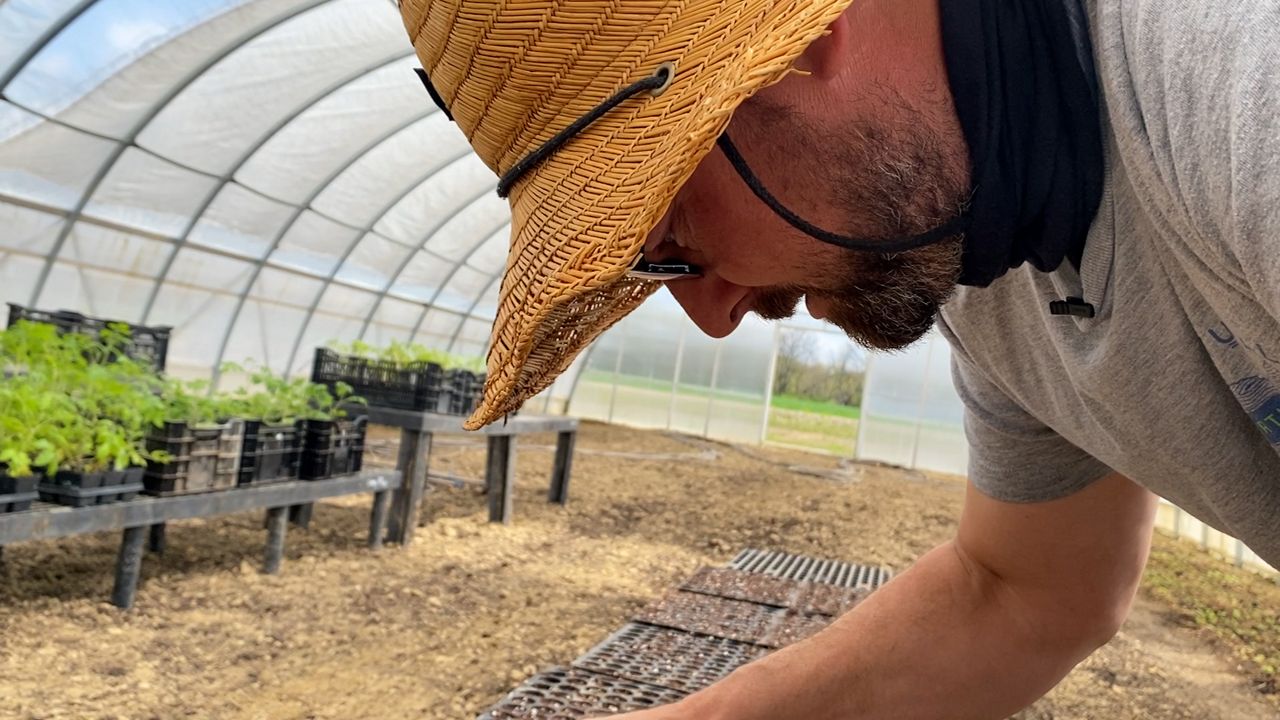
As the state sees its final few frosts, the buds sprouting in Nick Hice’s greenhouse are yearning to take root in his sprawling Warren County fields.

Every day, the hundreds of tiny tufts of green Hice is cultivating grow a little taller, a little stronger and by the fall, he hopes they’ll make a fruitful harvest. His second Ohio-grown hemp crop.

What You Need To Know

2020 was the first year Ohio farmers could plant hemp Hemp must have less than 0.3 percent THC to be legally harvestedIf hemp exceeds the threshold it must be destroyed 191 farmers were a part of the state’s first crop

While Hice only bought his farm, Natural Horticulture, a few years ago, he’s not new to planting or new to Warren County.

“I actually grew up about 10 miles down the road from here and my family had a garden center,” he said. 


Continue reading

Congressional Leaders Call For Prohibition Of Federal Interference Of State-Legal Cannabis


A bipartisan group of 44 members of the House of Representatives sent a letter to congressional leaders on Thursday calling for a prohibition of federal interference with cannabis activities that are legal under state or tribal law. The letter, which was addressed to the ranking members of the House Appropriations Committee’s Commerce, Justice and Science (CJS) Subcommittee, was signed by dozens of representatives and led by Congressional Cannabis Caucus co-chairs Earl Blumenauer and Barbara Lee, along with Tom McClintock and Eleanor Holmes Norton.

In the letter, the House members wrote that as 2022 appropriations bills are drafted, “we respectfully request that you include language barring the Department of Justice from prosecuting those who comply with their state or tribal marijuana laws. We also request that you maintain the current language barring the Department of Justice from prosecuting those who comply with their state’s medical marijuana laws.”

The drafters of the letter went on to note that nearly all of the states have passed some sort of cannabis policy reform, writing that “to date, 48 states have enacted laws that, to varying degrees, relax their prohibitions against the use of marijuana or its components, such as CBD oil. Of those, 36 states have medical marijuana programs, and 17 of those have adult-use programs.”

Respecting The Will Of The People With The Prohibition Of Federal Interference of Cannabis

The representatives added that in most states that have relaxed prohibitions, cannabis policy reforms had been approved by the voters. The letter called on the subcommittee to respect the will of the people by protecting state-legal cannabis from federal prosecution.

e-mail icon
Continue reading

Everything Standing In The Way Of Federal Legalization In 2021

The only way Senate Democrats have been able to bypass Republican opposition so far this year and move forward with its agenda is through budget reconciliation.

Cannabis advocates are still waiting to see the bill that the Democratic Senate has promised to throw down in an effort to legalize marijuana at the federal level. They are excited about the possibilities. After all, the Democrats have control of Congress this year, so getting marijuana matters pushed through should be a piece of cake. Only that’s not entirely true.

There are still immense challenges in getting any cannabis reform measure through the halls of Congress this year, and some of the roadblocks for legalization begin with the Democratic party itself.


Photo by Darren415/Getty Images

Although Democrats have majority rule in the U.S. Senate, it is only by a slim majority. This means they will need every bit of support from their own part, not to mention some backing from Republicans to get any pot-related measure beyond a discussion. A marijuana bill would need 60 Senators to sign off on it to beat the filibuster, an old Senate rule that demands a super majority on controversial issues.

States Most Likely To Legalize Cannabis In 2021
Continue reading

NFL’s Cannabis Policy: More Leagues Following Suit?

It is estimated that as many as 75% of the world’s population has played in sports leagues at some point during their lifetime.

Sports competitions, for better or worse, play a huge role in the everyday lives of the international community. 

Prior to the pandemic, sporting events were some of the largest gatherings in the world, and that’s virtually guaranteed to be the case after the pandemic is over.

With that in mind, it’s a really, really big deal when a major sports league updates its cannabis policy, which was recently the case with the National Football League (NFL).

No More Off-Season Cannabis Testing

Historically, the NFL has had one of the harshest cannabis policies out of the major international sports leagues.

e-mail icon
Continue reading

Schools trying to figure out how to address marijuana legalization

With recreational marijuana now legal in New York State, schools are figuring out how to address and change their curriculum on the subject.

“We’ve known this was coming and for lack of a better word starting to armor up, because we know this is going perhaps just from what we've seen in other states where there is legalization this might have an impact for our teens,” Greece Central School District Substance Abuse Prevention Coordinator Stephanie Rago said.

The recent legalization of recreational marijuana has school districts concerned that now it's legal, there may be more use in teens.

“Just the methods and the different actions that are available for marijuana use which could be appealing to teens,” Rago said.

Rago says that after vaping swept over schools across the country the district implemented a multi-step vaping intervention learning program that they are considering doing the same with marijuana. 

Schools trying to figure out how to address marijuana legalization
Continue reading

Coast Guard sets 2021 minimum random drug testing rate at 50%

The Coast Guard has set the 2021 minimum random drug testing rate at 50% of covered crewmembers because positive results crossed the 1% threshold for the third straight year. This contrasts with an earlier six-year stretch when the rate held at 25%.


“Intoxicated operations pose a serious threat to life, property and the environment in the maritime commons,” the Coast Guard said in a Federal Register notice published today. “As such, the minimum random drug testing rate is intended to deter and detect illegal drug misuse in the maritime industry.”

The agency did not give the amount over 1%.

Employers must submit test data for each calendar year by mid-March of the following year. Since 2018, mariners in safety-sensitive positions have been tested for semi-synthetic opioids in addition to marijuana, cocaine, amphetamines, phencyclidine (PCP), and opiates such as heroin.

e-mail icon
Continue reading

Louisiana House panel advances bill to legalize recreational marijuana

A bill to legalize recreational marijuana in Louisiana advanced from a House committee Tuesday for the first time ever after three Republicans on the panel agreed to move the measure forward for a wider debate.

Mandeville Republican Rep. Richard Nelson's House Bill 524 to legalize weed cleared the House Criminal Justice Committee on a 7-5 vote and advances to the full House.

A second bill by New Orleans Democratic Rep. Candace Newell to decriminalize marijuana (House Bill 243) also cleared the committee Tuesday.

Medical marijuana is already legal in Louisiana with efforts to expand that program also gaining momentum. Last week the full House approved a bill by Pro-tem Tanner Magee, R-Houma, to add smokable marijuana to the state's medical program.

Nelson said he would have been voted least likely to carry the banner for legalizing recreational pot in high school, where he was an Eagle Scout and valedictorian.

e-mail icon
Continue reading

Why 2021 Should Prove The Year Of Federal Cannabis Legalization

Canada has already legalized pot; Mexico is likely to legalize it soon. The U.S. must not fall behind.

President Biden is not there yet. Neither are Republicans in Washington. But the wave of momentum toward nationally legalized cannabis only continues to mount. It is time lawmakers in the Capital get on board with what a majority of the American citizens they represent want.

There are signs of progress. The U.S. House recently passed a bill to decriminalize cannabis at the federal level, the first of its kind. When Democrats won control of the Senate this year, the change paved a potential path for legislation in that chamber as well. Senate Majority Leader Chuck Schumer (D-NY) said this month he intends to soon introduce a federal cannabis legalization bill.


Photo by Fokusiert/Getty Images

At the state level, the pace of acceptance is escalating. November ballots in Arizona, Montana, New Jersey and South Dakota all approved the legalization of recreational use – though South Dakota’s law is currently held up in the courts. More states are following suit this year, including New York, where legalization was signed into law in March.

Congress May Be Forced To Consider Nationwide Marijuana Legalization Now That 68% Of Population Supports It
Continue reading

Mayor Of Birmingham, Alabama To Issue Blanket Pardons For 15,000 Pot Convictions

Birmingham, Alabama Mayor Randall Woodfin announced on Tuesday that blanket pardons would be issued for cannabis convictions going back more than 30 years, giving up to 15,000 people even more reason to celebrate on 4/20. And in another move by state leaders to mark the high holiday, the Alabama Democratic Party called on lawmakers to legalize cannabis for both medical and recreational use.

In a statement from Woodfin, the mayor noted that Birmingham kicked off a Pardons for Progress program in 2019 that was designed to make it easier to have past cannabis convictions pardoned and the records sealed. But those eligible for pardons were required to apply for the relief and only nine convictions have been cleared since the program’s inception.

Under the new plan announced by Woodfin on Tuesday, closed cases from 1990 through 2020 that resulted in a conviction for misdemeanor marijuana possession charges will be automatically pardoned. Cases still pending before the court would have to be closed before a pardon could be issued. The pardons, however, will not result in a reduction or refund of any fines or fees paid to the court.

Woodfin noted that the new campaign for justice was being initiated in an effort to address the disproportionate impact of convictions for minor marijuana offenses.

“Here’s why we’re doing this—no one should be held up by a single past mistake,” Woodfin wrote in a statement from the mayor’s office. “No one should be denied job opportunities or freedoms due to missteps from the past. No longer will these residents be bound to their past. They deserve a chance to be part of our workforce, to provide for their families, and to achieve success on their own. That new life starts rights here, today, with forgiveness and redemption.”

e-mail icon
Continue reading

WeedLife.com