WeedLife News Network

Hot off the press cannabis, marijuana, cbd and hemp news from around the world on the WeedLife Social Network.

Charlotte’s Web adds hemp-based dog treats for skin care support

DENVER — Charlotte’s Web on Oct. 27 introduced a new full-spectrum hemp extract treat targeting dogs with skin and allergy concerns. The company’s Skin Health & Allergy Support Chews are formulated to support sensitive skin and seasonal allergies.

"As we continue to learn more about the science of allergies in our dogs, we are finding it often requires a multimodal approach – combining traditional and alternative therapies for the best outcome," said Kwane Stewart, DVM, a veterinary media personality and web brand ambassador for Charlotte’s Web.

Copyright

© 420 Intel

Massachusetts pot shops are a billion-dollar market, but cannabis industry still faces hurdles

BOSTON — While recreational marijuana sales have soared in 2021 as Massachusetts emerges from the pandemic, business complications and governmental actions have slowed the pace of the industry's growth, cannabis advocates say.

Massachusetts legalized marijuana in 2016, becoming the seventh state to do so, but only licensed sales in 2018.

“Right out of the gate, the Legislature delayed everything by six months to rewrite the initiatives,” said Jim Borghesani, the communications director of “Yes on 4” in 2016. Massachusetts was the only state to rewrite the law passed by voters on marijuana legalization.

Copyright

© 420 Intel

Oregon Authorities Link Illicit Pot Farms to Mexican Cartels

Oregon authorities are trying to shut down any illicit cannabis grows with ties to Mexican cartels.

Law enforcement officers and other authorities in southern Oregon say that a rash of illegal marijuana cultivation operations in the area are linked to Mexican drug cartels intent on overwhelming local resources as a strategy to maximize profits. 

In Jackson County, officials declared a state of emergency last month and said that the proliferation of illicit pot farms had strained local law enforcement and other resources. In a letter to Oregon Governor Kate Brown and state lawmakers, the Jackson County Board Commissioners called for more funding and personnel to support law enforcement and code compliance efforts in the area. 

Jackson County Commissioner Rick Dyer told reporters that other illegal activities including human trafficking, forced labor and unsafe living conditions for workers are tied to the unregulated marijuana cultivation in Oregon, where cannabis commerce is legal for licensed businesses. He added that illegal operators intimidate and abuse their workers, who are often minors or the parents of young children.

“This is cartel activity,” Dyer said. “A human rights crisis is what we are seeing going on at these grows.”
 

Oregon Officials Seek Regional Solution

Officials in Jackson County hope that their counterparts in neighboring Klamath and Josephine Counties will declare a similar state of emergency so that the region sends a unified message to state leaders.

“It’s harder to ignore when it’s a regional declaration of an emergency,” Dyer said. “And the more of a united front we present it will make it harder to ignore. It is a regional problem, and it could be a regional solution.”

e-mail icon

Copyright

© 420 Intel

New Mexico Considers Changes to Limit Recreational Cannabis Tourism

New Mexico might implement new laws that would limit recreational cannabis tourism. Officials claim these limits would ensure public safety.

Regulators in New Mexico held a public hearing this week to discuss rules for the state’s forthcoming recreational cannabis market. 

The state’s Regulation and Licensing Department, as well as its Cannabis Control Division, fielded questions and comments from the public during last Thursday’s hearing over the rules that will govern cannabis retailers and manufacturers.

According to the local website NM Political Report, the comments at the hearing “varied from proposed regulations for packaging requirements, general business practices to cannabis deliveries to both businesses and residences.”

The meeting was highlighted by the appearance of Katy Duhigg, a Democratic state Senator who also serves as a cannabis attorney in Albuquerque. Duhigg “brought up a series of issues she said she would like to see changed and offered specific suggestions,” according to the website. It was reported that she “took issue with a proposed requirement that cannabis manufactures prove they have access to water rights because manufacturing doesn’t necessarily use water the same way cultivation does.”

“Requiring all manufacturers to prove water rights for their application, I think, is unreasonably burdensome, because it’s just not going to be a factor for a number of them,” Duhigg said, as quoted by NM Political Report. 

Lawmakers in New Mexico passed a bill legalizing recreational pot use for adults during a special legislative session in the spring. The legislation was signed into law in April by Democratic Governor Michelle Lujan Grisham. This means big things for New Mexico, as for the first time ever, they will finally have a legal cannabis industry. 

e-mail icon

Copyright

© 420 Intel

With an eye on gambling, marijuana and short-term rentals, Norfolk plans for enforcing business regulations

The city of Norfolk is developing a unit tasked with ensuring businesses follow city regulations and keep their customers and neighbors safe.

City staff presented plans for a business compliance unit at Tuesday’s City Council work session. After the meeting, Deputy City Manager Michael Goldsmith said regulating businesses has long been a challenge, but the new compliance unit isn’t coming in response to a specific incident or type of business. He said it’s focused on the future and new or growing industries, such as gambling, marijuana and short-term rentals.

City Manager Chip Filer said during the work session that the city has had recent instances of residents taking issue with neighboring businesses or businesses not following city rules, especially as they have welcomed back customers as pandemic restrictions have been loosened. Multiple times at the meeting, council and staff members mentioned night clubs as a focus of the compliance unit.

Lelia Vann, president of the Downtown Norfolk Civic League, said in an email that members have complained of late-night noise by vehicles revving engines and playing loud music and by rowdy people on the streets and in the parking spaces. Vann said they’ve also complained about scooter traffic on sidewalks and scooters littering public areas.

“We feel the sooner the city can set up (the compliance unit), the better this will be for downtown residents, business owners in compliance, neighbors and visitors,” Vann said.

Goldsmith said the compliance unit is an evolution of regulation processes. He said there are public safety and planning employees that work to educate businesses and enforce regulation, but with short staffing and other responsibilities, they have limited time to focus on business regulations. He said there’s also little connectivity between the employees in different departments.

To unite those employees, the city plans to center operations under the City Attorney’s Office. Many businesses that host events or large crowds and serve or sell alcohol are required to get a conditional use permit from the City Council. The City Attorney advises the council during those hearings and when the council considers revoking them.

e-mail icon

Copyright

© 420 Intel

‘It’s mind-boggling’: the complex, and growing, use of medicinal cannabis in Australia

Tens of thousands of people are turning to the drug to treat a range of conditions – but the evidence is patchy and costs can be high


When Helen was diagnosed with fibromyalgia in her early 40s, her doctor prescribed her a range of opioids. She tried morphine, meperidine and a few others, but none helped ease the constant pain her chronic condition caused.

Long before medicinal cannabis was legal in Australia, while Helen was travelling across North America, a doctor at a dispensary suggested she try cannabidiol oil. “He gave me this bottle of tincture and taught me to use one or two drops under my tongue,” Helen says. “My pain decreased dramatically. I was stunned.”

But once she returned from her trip, her only option was the black market.

Helen is one of hundreds of thousands of Australians who have turned to medicinal cannabis to treat numerous conditions, which they feel have not been helped by traditional therapies. But as the industry grows after its legalisation in 2017, the evidence remains inconclusive and the costs, for many, prohibitive.

Today in Australia, medicinal cannabis products are only available on prescription. Data from the Therapeutic Goods Administration reveals that more than 172,000 people have been approved access to medicinal cannabis through its special access scheme.

Only two products have received approval from the TGA and are registered on the Australian Register of Therapeutic Goods. One is Epidyolex, prescribed for rare but severe, drug-resistant forms of epilepsy in children. The other one is Sativex, approved in 2012 to treat muscle spasticity associated with multiple sclerosis.

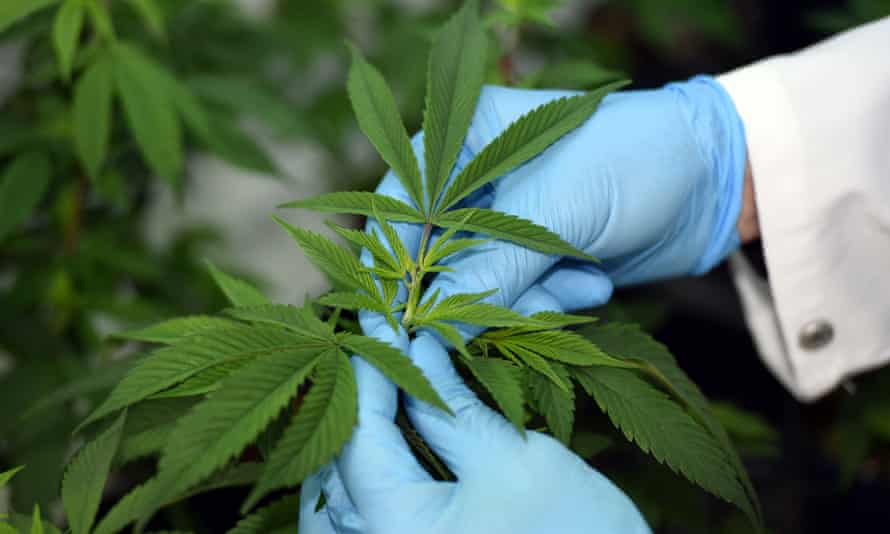
A cannabis cutting

Copyright

© 420 Intel

Massachusetts cannabis delivery companies are seeing demand, but say one issue is getting in the way of profitability

For Christopher Fevry, the CEO and co-founder of cannabis delivery company Your Green Package, October has brought a milestone of crossing 2,500 deliveries.

After starting delivery with NETA over the summer, Your Green Package is also working with Garden Remedies now, and is doing 30-plus deliveries per day, Fevry said.
 
While Fevry and other cannabis delivery companies are glad to be out on the road, they say one thing is standing in the way of true success and equity: the two driver rule.
 
Regulations from the state Cannabis Control Commission require there to be two drivers in cannabis delivery vehicles. The drivers must also wear body cameras and the vehicle must be outfitted with GPS.
 
That rule is the biggest challenge to reaching profitability, Fevry said.
 
“My hope is that there are some changes that are made that make the industry a bit more balanced, a bit more equitable,” Fevry said. “There needs to be a balance between regulations and actual business operations and things that are happening on the ground.”
 
Gabe Salazar, the founder of We Can Deliver, also feels that he’s been hit hard by the rule.
 
“It’s not equitable for us as a delivery company but it’s also not equitable for the drivers,” Salazar said. “If one driver calls out that means another can’t work.”
 
The costs of having two drivers in one car add up on top of federal 280E taxes the 3% host community fee, Salazar said.
 
Salazar, who also does alcohol delivery in Greater Boston, agrees with Fevry that reducing the number of drivers for cannabis delivery would help the companies on the path to becoming profitable.
 
Home delivery of recreational cannabis started this year in Massachusetts with two different license types, which are each exclusively available to equity applicants for three years.
 
Commissioner Ava Callender Concepcion, who holds the public safety seat on the CCC, praised Massachusetts for being one of the first states in the U.S. to develop and effectuate regulations for home delivery.
 
“I’m proud of the regulations that we’ve established thus far because they aim to both increase access and equity in the industry while also upholding the Commission’s commitment to public safety. I want to ensure that this part of the industry thrives, especially considering the three-year exclusivity period given to equity applicants for this license type,” Concepcion said in a written statement. “That said, my goal as a Commissioner is to continue to let these regulations breathe and gather important, necessary feedback from our constituents about what they feel is working or where challenges may exist. The Commission has shown in the past that it is open to hearing feedback and revisiting its regulations if needed. I look forward to hearing from our constituents as we continue to watch this part of the industry grow.”
 
Salazar said his company is barely breaking even because the operating costs are so high.
 
“Drivers know if I call out, that means I’m taking bread from somebody else, somebody else’s family. That hurts. My team, we’re so bonded, they don’t want to do that to someone else,” Salazar said. “Were a culture. We’re a community. One hand washes the other.”
 
Salazar said he tried talking with commissioners about the issue and has applied for a waiver. Fevry also has talked with commissioners, he said, and they’ve all been receptive to hearing about the issue.
 
Safety is a factor that played into having two drivers in each vehicle.
 
“If they rob us, there’s insurance,” Salazer said, noting that the car also has GPS and drivers wear body cameras. Salazar added that he’s been delivering medical cannabis since March and has had no problems pop up.
 
Fevry said there have been no issues with Your Green Package’s deliveries.
 
“When anything’s being done that’s new, there’s a fear of the unknown, but I think through our operations, through what we’ve done, we’ve proven that this can be done safely,” he said. “There’s also a multitude of other security provisions like the body cameras, the GPS tracking of the cars, the cameras watching the drivers, watching the vehicles.”
 
While there are other challenges, like some towns that have opted to ban cannabis delivery, Fevry said he feels the driver issue is the biggest hurdle.
 
Both Fevry and Salazar said addressing the two driver regulation would also allow them to pay drivers more. Fevry said his drivers make $15 an hour, while Salazar pays $15 to $18 an hour based on experience.
 
“People depend on me. These are my drivers’ full-time jobs,” Salazar said.
Rate this article: 
Select ratingGive Massachusetts cannabis delivery companies are seeing demand, but say one issue is getting in the way of profitability 1/5Give Massachusetts cannabis delivery companies are seeing demand, but say one issue is getting in the way of profitability 2/5Give Massachusetts cannabis delivery companies are seeing demand, but say one issue is getting in the way of profitability 3/5Give Massachusetts cannabis delivery companies are seeing demand, but say one issue is getting in the way of profitability 4/5Give Massachusetts cannabis delivery companies are seeing demand, but say one issue is getting in the way of profitability 5/5
Authored By: 
Article category: 
Regional Marijuana News: 

e-mail icon

Copyright

© 420 Intel

Push begins for marijuana legalization in Arkansas

A group that failed to get a recreational marijuana amendment on the ballot four years ago and sued the attorney general over procedural issues hopes to give Arkansas voters a chance to legalize recreational marijuana next year.

Arkansas True Grass, a group of marijuana advocates and volunteers, is gathering signatures for a constitutional amendment that would allow Arkansans aged 21 and over to purchase up to four ounces of marijuana a day and grow up to 12 plants of their own. The group needs 89,151 verified signatures to make the November 2022 ballot. The deadline to submit petitions is July 8, 2022.

Known as The Arkansas Recreational Marijuana Amendment of 2022, the measure would permit marijuana for recreational use and would not require users to register with the state or obtain a card to make purchases. The amendment would not make any changes to the state medical marijuana program, which voters passed in 2016.

The new measure would also expand the number of businesses allowed to sell marijuana. The amendment allows for an unlimited number of business licenses, which spokeswoman Briana Boling said would be “affordable” and would be administered by the state Department of Agriculture. Under the state’s medical marijuana program, the Medical Marijuana Commission licenses dispensaries and cultivators, while the Alcoholic Beverage Control division regulates those businesses. The state Department of Health issues cards to qualified patients.

The new program would also be taxed differently than medical marijuana. Under the amendment, recreational marijuana would be subject to the existing sales tax, an additional 8% excise tax and a local sales tax of 5%. Medical marijuana purchases would not face any new taxes under the amendment.

While the amendment would not change the framework of the state medical marijuana program,  it would increase competition and drive down prices, Boling said.

“What we have right now in Arkansas isn’t good for patients,” Boling said. “It’s just not. And the people that really need it can’t afford it, can’t get it. Can’t even afford to see the doctor to get it. That’s what needs to change.”

The Arkansas True Grass proposal would also expunge convictions for some marijuana offenses. Under the amendment, anyone incarcerated or serving parole or probation for a violation of the Arkansas Uniformed Controlled Substances Act and whose current and only conviction is for a marijuana-related offense would be released. All criminal records of such convictions before the passage of the amendment would be expunged.

e-mail icon

Copyright

© 420 Intel

Smokable hemp, CBD foods, and cannabis use in California hospitals

Marijuana activists in California managed to achieve a couple of legislative victories last week. Two bills were put before the governor, the first being the removal of the ban on smokable hemp flower. The second was a measure requiring hospitals to allow qualifying patients access to medical marijuana.

Medical marijuana in California hospitals?

Sen. Ben Hueso (D) has been lobbying for terminally ill patient’s right to use medical marijuana in hospitals and medical facilities. The senator recently sent a letter to the U.S. Dept. of Health and Human Services seeking clarification on whether the policy change could potentially affect funding for those facilities.

The progressive bill codifies that hospitals will have the power to allow certain patients to use medical marijuana while in their care. On Thursday, the bill was cleared by the Assembly in a 57-1 vote. On Friday, the Senate signed off on the chamber’s other amendments in a 36-1 vote.

“For many Californians, particularly terminally-ill patients, medicinal cannabis is a preferred alternative to other drugs, providing therapeutic relief without the caveats that may come with other medicines. The bill marks an opportunity for California to continue to lead the way in cannabis regulation and reform,”  Eddie Franco, legislative and regulatory affairs manager at CCIA, told Marijuana Moment.


Copyright

© 420 Intel

MMA with a twist of cannabis: Combat sport meets marijuana at RUF, Puff & Rumble event

PHOENIX – An MMA event at Celebrity Theatre is not unusual. Pairing that competition with a cannabis expo is.

That was the case Saturday when promoter RUF 44 hosted “RUF, Puff & Rumble, the first time the two industries have collided in the Valley.

Marijuana and sports have often had a precarious relationship. Within combat fighting, various state commissions have looked down on the plant in years past, handing out suspensions of up to five years for repeated positive tests of THC, the psychoactive property within marijuana. Times have changed however, as the Arizona State Boxing & MMA commission adopted the UFC model of testing, allowing fighters to consume marijuana freely until fight day, making more events like RUF 44 possible.

Dr. Joel Lopez, the CEO and Founder of RUF Nation, first thought of teaming MMA and marijuana two years ago but his vision finally came into fruition once Trap Culture Promotions, a local organization promoting cannabis-related events, reached out to Lopez. From there, the two sides met and turned what was once an idea into a reality.

“So I went to their office. First we passed around a good smoke. Alright, what’s up? And they’re like, `We got an idea,’” Lopez said. “This is what we do. We go to social events, mainstream events, and we provide an event itself. They go to like arcades and just provide full consumption areas. I’m like, what? Holy crap. I got it: RUF, Puff & Rumble.”

e-mail icon

Copyright

© 420 Intel

Thumbs down for drive thru cannabis sales in Manteca

Drive-thru windows to purchase cannabis likely won’t be allowed in Manteca once marijuana dispensaries are legal.

A representative of marijuana retailers pitched the possibility of drive-thru windows saying it would be an effective marketing tool for a Manteca dispensary located near Highway 99. He noted curbside service for orders placed online had been effective and without problem at a number of dispensaries when pandemic lockdown rules were stringent.

The suggestion was made during Wednesday’s City Council workshop on ordinance that would allow marijuana dispensaries and possibly other cannabis related businesses to open in Manteca as early as 2022.

The suggestion was based on the premise it would be a marketing tool to draw in customers from possibly a larger area so buyers wouldn’t have to get out of their vehicles.

Several council members quickly batted the idea down.

“We don’t want to create another (Chick-fil-A),” said Manteca Mayor Ben Cantu in reference to the fast food restaurant that often has its drive-thru lane traffic back up onto Yosemite Avenue and even the nearby southbound Highway 99 off-ramp.

The council was open to a suggestion that dispensaries be allowed in commercial mixed use zones that allow apartments and similar residences after it was pointed out the designation covered most of the Yosemite Avenue and Main Street corridors. As such, it would exclude almost all likely locations for dispensaries to open in existing buildings in Manteca.

e-mail icon

Copyright

© 420 Intel

Police allegedly helped illegal multimillion-dollar marijuana operation

PORTLAND, Maine - Two sheriff's deputies accepted new cars and an ownership stake in an operation that illegally sold more than $13 million in pot grown for Maine’s medical marijuana program, federal prosecutors said.

Two other law enforcement officers and a prosecutor aided the operation by providing intelligence and tipping off participants, prosecutors said.

Federal documents unsealed Wednesday when one of the defendants pleaded guilty revealed an elaborate program in which marijuana that was grown in western Maine for registered caregivers was sold outside the program, with profits being laundered through a corporate structure.

Twelve people were charged in the 14-count complaint, including a Rangeley select board member, an assistant district attorney, two Franklin County sheriff's deputies, an Oxford County sheriff's deputy and a Wilton police officer.


FILE - Marijuana buds spill out of a broken bag.

Weed nuggets

Copyright

© 420 Intel

These Are The Cannabis Industry's Biggest Tricks and Treats So Far

Halloween is almost here. As costumed revelers prepare for a weekend of celebrations, the cannabis industry readies for the beginning of the holiday shopping season just around the corner.


Article originally appeared on Benzinga. Green Wednesday, Black Friday and December holiday shopping sales dominate the collective minds of business operators. However, Halloween is a time to possibly see sales spike around edibles, but also as a moment to look back at the industry's tricks and treats so far.

Copyright

© 420 Intel

What The Latest Data Says About Cannabis, Drug, And Alcohol Use Among Young People

The latest data on national drug use and health shows that an encouraging trend took place among America’s younger demographic in 2020: pre-teens and teens showed far less interest in using inebriating substances like cannabis, alcohol, and other drugs.


According to data provided by the Substance Abuse Mental Health Services Administration (SAMHSA) published earlier this week in the latest National Survey on Drug Use and Health, the use of cannabis among young people fell significantly between 2019 and 2020.

There is plenty of data to show that the rate of cannabis use among youth has fallen consistently as more states legalize cannabis, so the continued drop in use doesn’t come as a surprise. Rates of underage drinking also fell in 2020, as did rates of illicit drug use, including the use of illicit drugs like hallucinogens and cocaine, and the misuse of prescription drugs.

While it seems plausible that the Covid-19 pandemic could be behind lower rates of drug and alcohol use among youth, one shouldn’t discount the growing influence of the sober-curious movement.

Breaking Down The Numbers: Cannabis

When it comes to cannabis, lifetime use among youth aged 12 to 17 dropped from 15.8 percent in 2019 to 12.4 percent in 2020, while past year use fell 25 percent, from 13.2 percent to 10.1 percent. The same age group also saw a 20-percent reduction in past month use compared to 2019.

Close Up Of Teenager Boy Offering Girl Cigarette

Copyright

© 420 Intel

Switzerland Proceeds with Regulation of Cannabis Industry

Switzerland has given the green light to develop a comprehensive national framework for cannabis in the country.

According to Switzerland’s government agency in charge of public health and welfare, cannabis should no longer be banned but rather comprehensively regulated. As a result, the National Council now has the task of creating said framework and for an integrated medical and recreational infrastructure. The first city to kick off this enchilada of cannabis will be the country’s largest and its capital of Zurich.

There are several issues at play here beyond regulating the industry at a national leve—a task in truth that has only been achieved by two countries to date (Uruguay and Canada). Switzerland is backing into all of this with a country-wide trial. 

This is deliberately limited to 5,000 study participants per canton, but it will begin to create a “state-by-state” organization for the industry to grow. Such participants will have to show that they are already cannabis users. This should not be hard to do. About a third of the Swiss population has admitted that they have smoked cannabis at some point. About 200,000 admit to smoking regularly.

Cities will be able to conduct scientific studies—both on the economic impacts of a new industry as well as the impact of recreational cannabis sales (and accessibility) on a local level.

Local manufacturers must obtain a production permit from the Federal Office of Public Health to ensure quality standards.

Participants will be able to purchase cannabis from both pharmacies and social clubs.

e-mail icon

Copyright

© 420 Intel

3 Hard Truths About Cash Flow in the Cannabis Industry

It’s easy to get excited about the cannabis industry when you hear that legal cannabis sales in the U.S. grew 30 percent in 2020 to a whopping $22 billion, outpacing the $17.5 billion spent on wine. If you’re a savvy, experienced businessperson, you might mistake that kind of booming market with an opportunity to turn a quick profit.

But there are a few aspects of operating a business in the cannabis industry that are dramatically different from running a typical business. Here are three hard truths about cash flow that people need to understand before even considering launching a cannabis business.

Hard Truth 1: You Need Considerable Liquid Funds to Start and Operate a Cannabis Business

Copyright

© 420 Intel

Former Arkansas Lawmaker Launches Cannabis Legalization Campaign

Arkansas sees another campaign to potentially legalize cannabis in the state. Advocates hope this spells the end of state-wide prohibition.

A group headed by a former Arkansas lawmaker has joined the charge to reform cannabis policy in the state by organizing a group to campaign for a constitutional amendment to legalize recreational marijuana. Eddie Armstrong, a former Democratic state representative from North Little Rock, is listed as the chair of the organization Responsible Growth Arkansas in a filing with the Arkansas Ethics Commission submitted on October 15.

The text of the proposed constitutional amendment had not yet been filed with the office of the Arkansas Secretary of State as of the beginning of the week. The group’s statement of organization, however, notes that the organization will “advocate for the passage of an amendment to the Arkansas Constitution to allow the regulated sale of adult-use cannabis in the state,” according to media reports. 

In an email to reporters, Armstrong wrote that more details of the proposed constitutional amendment to legalize recreational cannabis will be released in the upcoming weeks.

Armstrong is a former minority leader of the Arkansas State House of Representatives, where he served as a legislator from 2013 to 2019. He is also a founder of Cannabis Capital Corp., a Chicago-based consulting firm serving the medical marijuana industry, according to a 2019 article in the Arkansas Democrat-Gazette.

Medical Marijuana Legalized in 2016

Arkansas voters legalized medical marijuana in 2016 with the passage of Issue 6, a constitutional amendment ballot measure that received 53 percent of the vote. Under the Arkansas Medical Marijuana Amendment, patients can receive a doctor’s recommendation to possess up to 2.5 ounces of cannabis for the treatment of one or more qualifying medical conditions.

Medical marijuana dispensaries began serving patients in 2019. However, statutory limits on the number of cannabis cultivators and retailers could soon leave patients with an inadequate supply of medicine, says medical marijuana advocate Melissa Fults.

e-mail icon

Copyright

© 420 Intel

Breast cancer patients using marijuana, not telling doctors, report shows

In an effort to ease the discomfort associated with breast cancer treatment, many patients are using marijuana — and most aren’t telling their doctors. That’s according to a study published earlier this month in the peer-reviewed journal of the American Cancer Society.

The report saw individuals who were members of online health communities on breastcancer.org and Healthline take part in an anonymous survey. It analyzed cannabis use among adults who were diagnosed with breast cancer, which is common in women 65 and older.
Findings showed that 42% of 612 adult breast cancer patients said they used a form of cannabis for symptom relief. Those symptoms included nausea and vomiting, pain, insomnia, anxiety and stress. The majority, 75%, reported that it was extremely or very helpful with providing relief. Of those using cannabis, 79% used it during treatment including systemic therapies, radiation and surgery.
 

Half the participants sought information on medical cannabis. Websites and other patients were reported to be the most helpful sources, while physicians ranked low. Most of those who looked for information on medical marijuana were dissatisfied with the information they obtained. Most people also considered the products safe, unaware that many products’ safety is untested.

“Our study highlights an important opportunity for providers to initiate informed conversations about medical cannabis with their patients, as the evidence shows that many are using medical cannabis without our knowledge or guidance,” lead author Dr. Marisa Weiss, of breastcancer.org and Pennsylvania’s Lankenau Medical Center, said in a press release.

“Not knowing whether or not our cancer patients are using cannabis is a major blind spot in our ability to provide optimal care, and as healthcare providers, we need to do a better job of initiating informed conversations about medical cannabis with our patients to make sure their symptoms and side effects are being adequately managed while minimizing the risk of potential adverse effects, treatment interactions, or non-adherence to standard treatments due to misinformation about the use of medical cannabis to treat cancer,” she added.
Rate this article: 
Select ratingGive Breast cancer patients using marijuana, not telling doctors, report shows 1/5Give Breast cancer patients using marijuana, not telling doctors, report shows 2/5Give Breast cancer patients using marijuana, not telling doctors, report shows 3/5Give Breast cancer patients using marijuana, not telling doctors, report shows 4/5Give Breast cancer patients using marijuana, not telling doctors, report shows 5/5
Authored By: 
Article category: 
Regional Marijuana News: 

e-mail icon

Copyright

© 420 Intel

Queerness, cannabis and mental health: everything you need to know

A new set of studies aims to explore how weed affects people from diverse communities, including queer and trans folks

Between the legalization of cannabis in late 2018 and the onset of the COVID-19 pandemic in early 2020, the amount of cannabis Canadians are using is increasing. At the same time, a greater emphasis has been put on mental health as people cope with the loss, isolation and hardship of the pandemic. Yet there are still many gaps in our knowledge of how cannabis use affects our mental health, and debate abounds over whether it is an effective coping tool or a harmful crutch. 

Within the research that does exist, people from diverse communities are under-studied and under-represented, especially LGBTQ2S+ people. To better understand the unique relationship these communities have with cannabis use and mental health, the Mental Health Commission of Canada (MHCC)—in partnership with the Canadian Institute of Health Research, the Canadian Consortium for Early Intervention in Psychosis, the Schizophrenia Society of Canada Foundation and Veterans Affairs Canada—has funded a series of year-long research projects.

Xtra spoke to Mary Bartram, MHCC’s director of policy, who says 18 studies currently in the works are the final set in about 40 research projects MHCC and their partners have funded. The final set—most of which were underway as of September—are qualitative studies highlighting diverse communities, including LGBTQ2S+ populations, racialized and Indigenous people, veterans and people with existing mental health needs. 

“I’m hoping we can really expand the conversation about the relationship between cannabis and mental health, so it’s not just all negative,” Bartram says. “It’s important not to close the door on the possibility of benefits, while at the same time not being naive about risks.” 

While we wait for the studies’ results, here’s what you need to know about the relationship between cannabis and mental health, and the unique needs of diverse populations. 

e-mail icon

Copyright

© 420 Intel

A year ahead of legal sales, Vt. cannabis regulators want industry to be small-scale, equitable

In about one year — by October 2022 — Vermont's retail cannabis market is scheduled to go into place, and the state's Cannabis Control Board has already made some key decisions that will shape Vermont’s legal marijuana marketplace.

VPR’s Mitch Wertlieb spoke with senior political correspondent, Bob Kinzel. Their conversation has been edited and condensed for clarity.

Mitch Wertlieb: In one of their earliest and most important decisions, the board has decided to prioritize small marijuana growers, and why are they doing this in particular?

Bob Kinzel: Mitch, they're really doing this at the direction of the Legislature, and I think it might be one of the most important decisions that they've made, because it has a rippling effect on many aspects of this issue.

Copyright

© 420 Intel


WeedLife.com