
WeedLife News Network

Hot off the press cannabis, marijuana, cbd and hemp news from around the world on the WeedLife Social Network.

Medical cannabis advocates head for MS state capital to demand special session

 Mississippians prepare to protest in front of the governor’s mansion in Jackson, demanding Governor Tate Reeves to call a special session for the Mississippi Medical Cannabis Act.

Reeves told lawmakers that if both sides, Republican and Democrat, were able to come to a consensus and draft a bill for a medical cannabis program, he would call a special session.

It’s been three weeks since a consensus was reached and a bill submitted, and Reeves has yet to call a special session, prompting this upcoming protest.

“I hope he’s ready for karaoke because we’ve got loudspeakers; we’ve got tents. We’re going to be there until we get our session,” said Zack Wilson, Vice President of We are the 74.

After working with his local legislators and protesting in town squares, Zack Wilson is done waiting.

Wilson’s group We are the 74, representing the 74% of Mississippians who voted for a medical cannabis initiative in the November 2020 elections that was later overturned in State Supreme Court, is heading for Jackson on Monday afternoon.

e-mail icon
Continue reading

How Mitch McConnell Accidentally Created An Unregulated THC Market

Sen. Mitch McConnell didn’t know what he was doing when he passed the 2018 Farm Bill. The bill included his provision that legalized industrial hemp, a form of cannabis that can be made into a wide variety of products including cannabidiol, a non-intoxicating cannabis compound commonly called CBD. That part was intentional — the law quickly launched a multi-billion dollar industry that put the once-obscure CBD compound into lattes, seltzers and hundreds of CVS stores across the country.

But after three years it appears one of the law’s biggest impacts was entirely unintentional: It accidentally created a booming market for synthetic THC, marijuana’s primary intoxicant. 

The same type of CBD that’s for sale at CVS is now being synthetically converted into THC and packaged into vape cartridges and gummy bears. Thanks to a loophole in the 2018 Farm Bill, these drugs are marketed as a “legal high” and sold online and in states where marijuana remains illegal.

But chemists warn that these drugs can contain hazardous solvents, acids and unknown compounds. When FiveThirtyEight legally purchased hemp-derived THC products for testing, we found illegal levels of THC and a variety of mystery compounds that could not be identified. There are no federal safety testing requirements for these products, and while hemp companies occasionally publish test results, some brands have been caught using fake test documents.

The 2018 Farm Bill opened the market for online retailers to sell hemp derivatives that can get you high. 

Sales data for the unregulated hemp market is difficult to track but Delta-8-THC, the most popular of these hemp-derived intoxicants, is considered by some industry insiders to be the fastest growing product in the hemp industry. Google search data indicates that interest in these hemp-derived drugs is heavily concentrated in the American South, where conventional pot remains illegal, although hemp-derived THC is also showing up in state-regulated marijuana markets. In Washington state, regulators clarified in April that it was illegal to convert CBD into Delta-9-THC after a company admitted it was converting CBD into Delta-9-THC and selling it in the recreational marijuana market. Sales at licensed dispensaries of products containing Delta-8-THC in their titles increased over 240 percent between the second quarters of 2020 and 2021, according to the data firm Headset.

There’s still deep disagreement over whether any of these hemp-derived THC products are actually legal, but McConnell’s loophole has allowed these drugs to proliferate widely across the country. The hemp industry has quickly moved past selling just Delta-8-THC and is now offering an increasingly long list of synthetic cannabinoids that they can ship directly to your door. Meanwhile, cannabis insiders are warning that the country could be on the verge of a bigger public health emergency than 2019’s vape crisis, which ultimately hospitalized thousands and killed at least 68 people.

e-mail icon
Continue reading

Stamford officials want to limit marijuana use, but state law may have it covered

 Some Stamford representatives want to prevent people from smoking marijuana in certain parts of the city, including on school property, but it’s unclear if they have to do anything to make such activity illegal.

That’s because a recent bill signed into law by Gov. Ned Lamont already establishes restrictions for marijuana use. The law allows people 21 and older to have up to 1.5 ounces of cannabis.

On page 134 of the 300-page bill, a section explicitly states that smoking cannabis, tobacco or hemp is prohibited in a school building or on school grounds. The bill went into effect Oct. 1.Furthermore, another section states that any person with more than the allowable 1.5 ounces who is within 1,500 feet of a school shall be imprisoned for a year.

Nonetheless, two members of the Board of Representatives — Republican J.R. McMullen and Democrat Jeff Stella — recently introduced an ordinance that would officially make restrictions on marijuana usage mirror the ones in place for tobacco consumption.
During a steering committee meeting this week, McMullen argued that there are fewer restrictions against marijuana in Stamford than there are for cigarettes.

“All you have to do is go downtown and you can smell it all over the place,” he said, about marijuana. “Right now, we don’t have regulations that would prevent somebody from walking onto school property and smoking a joint, but we do have regulations that would stop somebody from smoking tobacco.”

Nonetheless, the state law would supersede any local ordinance, and the marijuana bill signed by Lamont does seemingly set restrictions on marijuana consumption in and around schools.

The discussion on the proposed marijuana ordinance at the steering committee meeting was less about the content of the proposal, and more about the timing.

e-mail icon
Continue reading

Don't Bogart That Joint...Uncle Sam Starts Counting Cannabis

The U.S. Department of Agriculture’s (USDA) National Agricultural Statistics Service (NASS) will mail its first Hemp Acreage and Production Survey to 20,500 farmers across the nation beginning Oct. 18.

Growing and harvesting hemp became legal under the 2018 Farm Bill created and sponsored by then U.S. Congressman Mike Conaway of Midland who represented San Angelo.  While marijuana is legal in 23 states, hemp is legal in every state.  The USDA is beginning to track hemp and logic would dictate that if marijuana ever became legal, the same process for tracking the hemp industry would be applied to weed.  

The hemp survey will collect information on the total planted and harvested area, yield, production and value of hemp in the United States.

“This inaugural hemp survey will establish a necessary benchmark and provide critically-needed data for the hemp industry,” NASS Acting Administrator Kevin Barnes said. “The information collected can help inform producers’ decisions about growing, harvesting and selling hemp, as well as the type of hemp they decide to produce. The resulting data will also foster greater understanding of the hemp production landscape across regulatory agencies, producers, state and Tribal governments, processors and other key industry entities.”

Survey recipients are asked to respond securely online at agcounts.usda.gov, using the 12-digit survey code mailed with the survey, or to mail completed questionnaires back in the prepaid envelope provided, by Oct. 25.

As defined in the 2018 Farm Bill, the term “hemp” means the plant species Cannabis sativa L. and any part of that plant such as the seeds, all derivatives and extracts, whether growing or not, with a delta-9 tetrahydrocannabinol concentration of not more than 0.3% on a dry weight basis. The Domestic Hemp Production Program established in the 2018 Farm Bill allows for the cultivation of hemp under certain conditions.

All information reported by individuals will be kept confidential, as required by federal law. NASS will publish the survey results Feb. 17, 2022, on the NASS website and in the NASS Quick Stats searchable database.

Rate this article: 
Select ratingGive Don't Bogart That Joint...Uncle Sam Starts Counting Cannabis 1/5Give Don't Bogart That Joint...Uncle Sam Starts Counting Cannabis 2/5Give Don't Bogart That Joint...Uncle Sam Starts Counting Cannabis 3/5Give Don't Bogart That Joint...Uncle Sam Starts Counting Cannabis 4/5Give Don't Bogart That Joint...Uncle Sam Starts Counting Cannabis 5/5
Authored By: 
Article category: 
Regional Marijuana News: 

e-mail icon

Two men indicted for fraud linked to public hemp CBD company

A hemp CBD company listed on both the Canadian and Frankfurt stock exchanges was a vehicle for securities and wire fraud, according to an indictment recently returned by a federal grand jury in New York.

Vitaly Fargesen and Igor Palatnik, both of New Jersey, are accused of soliciting funds based upon false and misleading representations of their company, CanaFarma. The two also are charged with failing to invest solicited funds as promised and manipulating the public stock price of the company, according to a now-unsealed indictment handed down by a grand jury in the Southern District of New York.

According to the indictment, the men raised more than $14 million, including investments in private shares of CanaFarma, and used at least $4 million of that company money for their own personal benefit and to further the alleged scheme.

CanaFarma initially sold a hemp-infused chewing gum under the brand name Yooforic, and later added hemp-based tinctures and skin creams. While the company marketed itself as a “fully integrated cannabis company addressing the entire cannabis spectrum from seed to delivery of consumer product,” in reality, all of the products came from third-party vendors, the indictment alleges.

Through a New York hemp grower, the company harvested 128,000 pounds of hemp in 2019, but didn’t process or sell any of it, or use it in any product, prosecutors alleged. The company never built a hemp processing plant, despite claims to investors that the business plan included having a “Fully Certified Clean Processing Facility.”

The execution of complex financial transactions and improper reporting to cover their tracks allegedly was carried out by Fargesen and Palatnik, as well as two co-conspirators not named as defendants. The cooperation of the co-conspirators is key to many of the charges laid out in the indictment; both defendants face charges of conspiracy to commit securities and wire fraud, which carry long potential prison sentences.

An attorney for Fargesen, Jeffrey Lichtman, wrote in an email: “We were greatly disappointed to see charges brought here despite cooperating with the government’s many information requests over the past year or so.”

He continued, “As will be revealed at trial, the government’s indictment relies almost exclusively on two rogue employees who managed to loot the company before running into the arms of the government and admitting their own fraud.”

e-mail icon
Continue reading

Government to explore potential for development of hemp industry

The Government has started a consultation process to explore the possibilities for the development of an industrial fibre sector using hemp.

Advocates for the sector including Hemp Cooperative Ireland, whose members include farmers, engineers and scientists, argue that Irish-grown hemp has significant potential as a renewable agricultural cash crop suitable for industrial applications including building insulation, cloth making and even low-carbon cement production. 

While hemp can be produced here and was once widely grown for rope making, its closeness to cannabis means even industrial use is effectively banned under drugs legislation. 

However, the Programme for Government, published last year, committed to exploring the potential for growing fibre crops such as hemp and to consider whether the crops have a viable market.

Hemp growing by farmers is subject to the granting of a licence by the Health Products Regulatory Authority, which operates under the auspices of the Department of Health.

e-mail icon
Continue reading

Illegal marijuana farms prompt Oregon county to declare state of emergency

 A county in southern Oregon says it's so overwhelmed by an increase in the number and size of illegal marijuana farms that it declared a state of emergency Wednesday, appealing to the governor and the Legislature's leaders for help.

The Jackson County Board of Commissioners said law enforcement officers and county and state regulators and code enforcers are overwhelmed and warned of an "imminent threat to the public health and safety of our citizens from the illegal production of cannabis in our county."

Illegal marijuana grows have been a persistent problem throughout the West, even in states like California that have legalized pot. A megadrought across the West has created urgency, though, as illegal growers steal water, depriving legal users including farmers and homeowners of the increasingly precious resource.

"Jackson County strongly requests your assistance to address this emergency," the commissioners said in a letter to Gov. Kate Brown, Senate President Peter Courtney and House Speaker Tina Kotek.

Only four Oregon Water Resources Department full-time employees handle complaints and perform all of their other duties in Jackson County and neighboring Josephine County, the commissioners said.

Josephine County has also been hurt by illegal grows that have drained creeks and siphoned off groundwater. Josephine County Sheriff Dave Daniel believes there are hundreds of illegal operations in his county alone. One with 72,000 marijuana plants that was drawing water from the Illinois River was raided after a dying person who worked there was dropped off in a nearby village.

Oregon voters made producing, processing, selling and using recreational marijuana legal in a ballot measure in 2014. Pot businesses must be registered with the state, which enforces compliance with rules. But some growers and processers remain outside the law, joined by a recent influx of outsiders in Jackson and Josephine counties who seek large profits by selling on the black market outside of Oregon while avoiding state taxes and regulations.

e-mail icon
Continue reading

Doraville temporarily nips medical marijuana dispensaries in the bud

In anticipation of medical marijuana dispensaries coming to town, Doraville issued a temporary ban on the newly legal industry to give city leaders time to decide how they’d like to regulate it.

The City Council unanimously voted Monday to issue a 90-day moratorium on businesses that sell medical cannabis, including THC oil and products. While there’s no current businesses focused on selling these products in Doraville, City Attorney Cecil McLendon said he’s heard there is interest in the metro Atlanta market.

“The (number of) dispensaries are limited,” McLendon said. “But I know they are looking at the metro area (to find) locations for dispensaries.”
State law dictates that only 30 medical marijuana oil dispensaries can open in Georgia. Recreational marijuana, which is illegal in Georgia, typically has a much higher proportion of THC than medicinal cannabis.

The city’s current zoning code doesn’t include medical cannabis as a use, so McLendon said the industry would default to being regulated like pharmacies, which are allowed in any commercial areas. He’s not sure if the city will decide to add further regulations, but the 90-day period gives city staff time to figure it out.

“It’s going to be a new use in a sort of transitory type of area,” McLendon said. “It might need a little more analysis before determining how we want to handle that.”
 
In 2015, Gov. Nathan Deal legalized medicinal marijuana, and Gov. Brian Kemp expanded on the legalization in 2019 when he signed the Georgia’s Hope Act. It allows for the manufacturing and dispensing of oils with a THC content up to 5%. While there’s a statewide commission over licensing, it’s up to local governments to dictate zoning restrictions.
Doraville isn’t the first city to take this preemptive step. Alpharetta issued a similar moratorium in early September, and its city leaders decided to issue more stringent regulations on where medical marijuana dispensaries can operate.
Rate this article: 
Select ratingGive Doraville temporarily nips medical marijuana dispensaries in the bud 1/5Give Doraville temporarily nips medical marijuana dispensaries in the bud 2/5Give Doraville temporarily nips medical marijuana dispensaries in the bud 3/5Give Doraville temporarily nips medical marijuana dispensaries in the bud 4/5Give Doraville temporarily nips medical marijuana dispensaries in the bud 5/5
Article category: 
Regional Marijuana News: 

e-mail icon

Legalize Cannabis For Adults In Ohio, State Politician Says

 An Ohio legislator is again trying to legalize recreational cannabis use for adults.

State Rep. Jamie Callendar, from Concord, plans to introduce a bill that would make buying and using cannabis legal for Ohioans 21 and older, according to the Cincinnati Enquirer. Ohio's existing cannabis producers, who sell their product medically, would be allowed to transition into selling recreational cannabis too.

The legislation also creates a pathway for Ohioans to expunge previous cannabis convictions from their record.

Ohio currently allows cannabis to be used only for treating approved medical conditions. Previous attempts to legalize recreational cannabis use have failed in the Buckeye State, though neighboring Michigan has approved the adult use of the drug.

There is also a ballot initiative that would make cannabis use legal for all adult Ohioans, treating cannabis like alcohol, WKYC reports.

Rate this article: 
Select ratingGive Legalize Cannabis For Adults In Ohio, State Politician Says 1/5Give Legalize Cannabis For Adults In Ohio, State Politician Says 2/5Give Legalize Cannabis For Adults In Ohio, State Politician Says 3/5Give Legalize Cannabis For Adults In Ohio, State Politician Says 4/5Give Legalize Cannabis For Adults In Ohio, State Politician Says 5/5
Authored By: 
Article category: 
Regional Marijuana News: 

e-mail icon

Not everyone in Arizona is getting pardoned for past marijuana offenses following Prop 207

 The legalization of recreational marijuana through Proposition 207 in 2020 opened a lot of doors for people with past low-level marijuana convictions.

Nowadays, thousands of people have already applied for expungement under the voter-passed initiative, but not everyone can get their charges tossed out, including a Phoenix entrepreneur who says the same cannabis industry that is bringing in big money today almost cost him everything a decade ago.

Making and packaging CBD oils and candy are all in a day's work with CBD at Hempful Farms for Chris Martin and his wife Andi. Perhaps not many would have gone back to a business that almost cost them everything.

"On my record right now, I have 15 total felony convictions from 1996 to now. It's all pot-related," said Martin.

Martin -- the tough-looking chef, tatted up, biker with the soft side -- was a medical marijuana trailblazer about a decade ago. Using THC to treat his own Crohn's Disease, he started making Zonka Bars, a big name in the marijuana edible game, and was selling the infused candy to compassion clubs, which consist of people looking for medical relief with THC, but didn't want to smoke.

The problem was: Martin was not partnered with a licensed dispensary and the police came knocking.

"It was all police," Martin recounted. "Four jurisdictions, and guns held in my kids' faces for a plant that's supposed to save my life."

e-mail icon
Continue reading

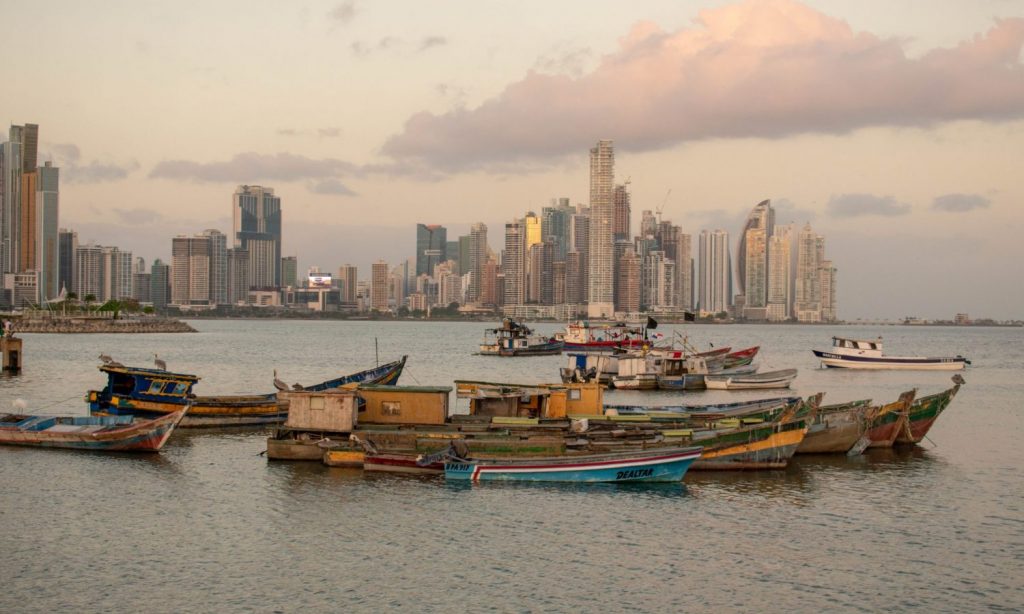
Panama Set to Have Legal Medical Cannabis, But Hemp Bill Stalls

Once the bill is signed into law, Panama will be in a somewhat odd situation: It will gave a legal regime for medical cannabis, but not one for hemp.

Back in October 2019, Deputy Kayra Harding introduced a bill (Proyecto de Ley No. 323) to promote the development of the hemp industry in Panama. The bill would establish a licensing regime for hemp cultivation and processing. Hemp is defined as cannabis whose THC content does not exceed 1.5% on a dry weight basis. However, legislative consideration of the bill has been slow.

Last October, government and legislative representatives agreed to establish a subcommission to “enrich” the bill. According to commentator Rafael Carles, it is ignorance when it comes to hemp and how it differs from marijuana that is behind the delays. At the same time, there are concerns within the Panamanian citizenry that the development of the hemp industry will only advance powerful business interests. These two explanations are not mutually exclusive, as demonstrated by this reader comment on a recent Carles column:

“Beware Panama! Now entrepreneurs want to make a profit from your vices, it is not just alcohol and beer. Now it is with drugs, but with a different name, calling the marijuana plant hemp.”

It does not help that Panama’s medical cannabis legalization has been tainted by accusations of corruption. According to one report, Canadian company Canna Med Panama, SA “was not only attentive to the debates in the National Assembly to approve Bill 153, which seeks to regulate the use of medicinal cannabis, but also sponsored a trip to Louisiana by five officials, some key in making decisions about the future business of the use of cannabis for medicinal purposes.”

Photo by Francisco Rioseco via Unsplash

panama
Continue reading

Kansans create special chamber of commerce to advance business of medical cannabis

Oklahoma, Colorado and Missouri allow sale of pot for health purposes.

Advocates of legalizing marijuana sales formed the Kansas Cannabis Chamber of Commerce to move the political, business and health debate forward in a state bordered by dispensaries in Colorado, Oklahoma and Missouri and a renewed push to open markets in Nebraska.

The Kansas House overwhelmingly approved a bill during the 2021 session that would have created a highly regulated medical cannabis structure, but it wasn’t taken up by the Kansas Senate. Gov. Laura Kelly said she would sign medical marijuana legislation, if the Legislature sent a package to her desk. Polling last year indicated two-thirds of Kansas adults supported legalization of marijuana sales.

Heather Steppe, president of the new chamber of commerce, said the idea was to model the business organization on the array of groups that formed industry coalitions to press for government policy reform. She said Kansas should avoid being left out in the cold as dozens of states moved on with development of industries to grow, manufacture, transport and market cannabis for medicinal benefit.

“We’re not inventing the wheel,” Steppe said. “We’re just trying to, you know, grease it up and get it working for Kansas.”

Steppe, who co-owns the CBD business KC Hemp Co. in Overland Park, said on the Kansas Reflector podcast legalization was increasingly a bipartisan issue. Evolution of political attitudes about marijuana is occurring in Kansas, she said, but the process isn’t swift given decades of history behind prohibition.

Rep. Ron Highland, a conservative Republican from xxx, said he was opposed to legalization of medical cannabis in Kansas because the federal government considered marijuana a dangerous substance. (Sherman Smith/Kansas Reflector)
Continue reading

What Are The Next States To Legalize Recreational Marijuana In 2022?

Which States Will Legalize Recreational Weed Next?

Gone are the days when predictions on state legislations could be given based on the ruling party. The stereotypical belief of States being red or blue has been tossed out over time, especially in talks regarding cannabis legalization.

Everyone wants a piece of the cake.

There is a long list of states that may be the next to legalize the use, possession, and cultivation of recreational cannabis in the United States of America. While some are going to have to do through the ballot boxes, others may do so through their legislature. The point is these states are after the same thing, which is the establishment of a functioning recreational cannabis industry.

The reluctance of the presidency and the national legislature to decriminalize cannabis has not deterred these states from wanting to join the cannabis organization trend.

Cannabis legalization remains a controversial topic, which is why most politicians are willing to let voters take the lead on the issue, while they follow.

The Wind Of Cannabis Legalization

The United States is at a point where even the masses want cannabis legalized for recreational use. Just this year alone, about four states made marijuana legal. These states include New York, Virginia, Connecticut, New Mexico. This makes the total number of states with recreational laws 19 states.

e-mail icon
Continue reading

Bill would allow school nurses to give medical marijuana

Recently introduced legislation in the state House of Representatives would allow school nurses to administer medical marijuana to students.

Rep. Malcolm Kenyatta, D-Philadelphia, has introduced House Bill 1948 with co-sponsorship support from fellow Democrats Stephen Kinsey, Joseph Hohenstein, Carol Hill-Evans, Maureen Madden, Benjamin Sanchez, Brian Sims and Republican David Rowe.

Current state law allows a parent, guardian or caregiver to come onto school grounds to administer medical marijuana to students during the school day. Parents have to provide the school principal with a Safe Harbor Letter, notify the school principal in advance of each instance when the parent or caregiver will administer medical marijuana to their child, with the principal in turn notifying the school nurse.

State guidance stipulates parents have to follow all school protocols that apply to school visitors, administer the medical marijuana without creating a distraction and promptly remove any medical marijuana and materials from the school grounds. Schools are also required to provide a secure and private location for the parent to administer medical marijuana to their child. Students are not allowed to possess any form of medical marijuana on school grounds or during school activities on school property.

Kenyatta’s bill would authorize school nurses to administer medical marijuana and waive a caregiver fee if a nurse is administering the marijuana instead of a parent.

“While this guidance is aimed at preserving student and staff safety, it unfortunately places an additional burden on parents, guardians or other caregivers,” Kenyatta wrote in his legislative memorandum. “These individuals must already balance jobs and other obligations with caring for their ailing child, and may not be able to get out of work to drive to their child’s school and give them the medicine upon which they rely.”

The bill has been referred to the House Health Committee, which is chaired by Rep. Kathy Rapp, R-Warren.

Rate this article: 
Select ratingGive Bill would allow school nurses to give medical marijuana 1/5Give Bill would allow school nurses to give medical marijuana 2/5Give Bill would allow school nurses to give medical marijuana 3/5Give Bill would allow school nurses to give medical marijuana 4/5Give Bill would allow school nurses to give medical marijuana 5/5
Authored By: 
Article category: 
Regional Marijuana News: 

e-mail icon

EPPD to ask City Council to spend $360,000 in tax money on marijuana testing

The El Paso Police Department is looking to ask City Council to raise its budget by $72,000 next year to allow the department to test marijuana cases at a lab."Marijuana and hemp are very much so identical one of the only characteristics that differs hemp from marijuana is the amount of THC," said Sgt. Robert Gomez, an EPPD spokesman. The difference between marijuana and hemp products is the level of THC in them. In Texas, the legal quantity for THC is 0.3% anything more and it gets qualified as illegal. The major problem not only for EPPD - but also for other police departments across the state - is distinguishing illegal marijuana from legal hemp, and only a lab can make that determination.

Ever since the law in Texas changed legalizing CBD and hemp, police officers have had to change the way they approach an arrest.

"Any amount of THC was illegal in the past, so really the testing was more simple: it was more present or not present. So now that we have to have a specific amount of THC to classify as an illegal substance more quantitative testing needs to be done," Gomez said.

The proposal to City Council is to increase the police budget by $360,000 over the next five years as part of a contract with a lab.

"It has to do with arresting practices, it has to do with the law change - what the law requires for us to seek prosecution. So that is really what this increase in the budget is - it doesn't mean that we are arresting more or not, it just means that the evidence we have to present has to be within the law, which in turn costs more," Gomez explained.

At the moment, the El Paso District Attorney's Office has put a pause on small marijuana cases - saying it cannot prosecute any of them without the lab results.

"DPS is still not testing small amounts of marijuana, therefore, these cases cannot be prosecuted without
the lab results as they are the key evidence to obtaining a conviction," Paul Ferris, a spokesperson for the District Attorney's Office said. "The few labs that exist for testing drug cases have indicated that the priority for testing will be the big marijuana cases, and if there is funding available after testing these bigger drug cases, then they will begin testing the smaller cases."

e-mail icon
Continue reading

Accused marijuana grower won’t serve time in joint

A Needville man arrested in January 2019 and charged with growing marijuana next door to a church and across the street from the high school has had his case dismissed.

Michael Ferguson successfully completed a pretrial intervention program and charges were dismissed in September, the Fort Bend County District Attorney’s Office reported.

By completing pre-trial diversion, Ferguson essentially will never have been tried, and thus have no criminal record in connection to the case.

Ferguson came to the attention of the law in January 2019 after the Fort Bend County Narcotics Task Force, a Houston HIDTA Initiative, concluded an investigation targeting his residence where the manufacturing and cultivating of hydroponic marijuana was suspected of taking place, Fort Bend County sheriff’s officials reported.

On Wednesday, Jan. 30, 2019, a search warrant was executed at a residence in the 16400 block of SH 36.

Task Force officers said they discovered the garage had been converted into a hydroponic marijuana growing operation capable of growing and harvesting several hundred plants at a time, deputies reported.

e-mail icon
Continue reading

More Marijuana Regulation Is Always a Bad Idea

Prior to 1913, marijuana was legal nationwide. Motivated by anti-immigrant sentiment resulting from an influx of Mexican immigration after the Mexican War in 1910, states started to outlaw marijuana. By 1931, 29 states effectively outlawed it. The Controlled Substance Act of 1970 officially banned marijuana federally, as part of the government’s War on Drugs effort.

These policies have caused incredible suffering through the loss of lives and livelihood—police violence against black and minority communities, poverty, asset forfeiture, mass imprisonment, and health hazard through adulterated black-market products, to name a few.

However, 2020 was a big year for drug legalization, especially marijuana legalization, and 2021 seems likely to continue that trend. However, layers of regulatory inconsistency have imposed a de facto barrier in the production, distribution, and consumption of marijuana or marijuana-based products in the legal context. There is a lot more work to be done.

For example, the 2018 Farm Bill legalized hemp, a marijuana derivative containing only 0.3 percent THC. Yet hemp farmers struggle to find banks to keep their legal business afloat. Erik Bogard, president of the hemp processing company Columbus Naturals, said: “I called probably 20 different companies and got denied 19 different times before I found someone, and it’s probably 10 times the cost of what it would be if we weren’t dealing with hemp.”

The strict 0.3 percent threshold is difficult to maintain since the concentration level varies depending on the growth period and harvesting environment. Testing requirements are not clearly laid out either. The Farm Bill puts the USDA in charge of setting testing regimes while the FDA and DEA are involved in other parts of regulating the derivates of marijuana.

e-mail icon
Continue reading

Legalizing marijuana in Pa.: Why this GOP state senator and ex-U.S. marshal says it's time

A former federal law enforcement officer turned Pennsylvania lawmaker became the second Republican state senator to publicly endorse legalizing recreational marijuana in the Keystone State.

York County state Sen. Mike Regan, the chairman of the Senate Law and Justice Committee, circulated a co-sponsorship memo late Monday to colleagues soliciting support for a bill to legalize marijuana for those 21 and older.

He said the revenue could be used to fund police, fight violent crime in cities and pay for afterschool programs in disadvantaged neighborhoods. 

“Our law enforcement agencies and justice system do not have the manpower or time to handle these minor marijuana offenses that clog our courts and produce little return,” he wrote.

“Instead, police and prosecutors need to focus on protecting our residents from the violent criminals and large-scale drug importers that are also dealing in heroin and fentanyl, which kill thousands of Pennsylvanians each year.”

e-mail icon
Continue reading

Prosecutions for Marijuana Possession Have Plummeted Since Hemp Legalization

More than six months after Texas legalized hemp, marijuana prosecution cases fell dramatically, with prosecutors filing fewer criminal charges while unleashing a struggle for police departments who now need to test substances in private labs, in order to prove illegal marijuana possession.

Since Gov. Greg Abbott signed the legalization of hemp at the beginning of June, focusing on agricultural practices and regulations, the number of misdemeanor marijuana possession cases dropped nearly two-thirds across Texas.

In 2018, Texas prosecutors filed about 5,900 new misdemeanor marijuana possession cases a month, as reported by the Texas Tribune, the first five months of 2019 saw an average of more than 5,600 new cases filed a month.

However, since June -when the hemp law was enacted- the number of cases has been slashed by more than half. In November, less than 2,000 new cases were filed, according to court data.

“In 2019, #txlege legalized hemp and threw into chaos the prosecution of marijuana crimes. From 2018 to 2019, pot possession arrests plummeted from 62.9k to 45.1k. In 2020, that number kept falling. @TxDPS reported 23.7k arrests statewide”. Reporter Jolie McCullough tweeted.

e-mail icon
Continue reading

Marijuana seizures at the Michigan-Canada border are booming. Here’s why.

They hit the throttle and sped through pitch-black water. Customs and Border Patrol (CBP) officers spotted a vessel of some sort in the distance, near the uninhabited Celeron Island in the Detroit River at 2:35 a.m., June 5, 2020.

They cut through the international waterway that separates Michigan and Ontario, Canada and noticed something else near the watercraft: two floating bundles attached to an unconscious man by a tow strap.
 
According to federal court filings, they later learned the man is Glen R. Mousseau of Canada. He was wearing a wetsuit, and his “vessel” was no ordinary boat. It was a Seabob, a personal submarine, similar to the underwater jet fictional special agent James Bond used in the 1965 movie “Thunderball.”
 
Except, Mousseau wasn’t attempting espionage. He was trying to smuggle 265 pounds of Canadian marijuana into the U.S., Homeland Security Investigations Special Agent Christopher A. Leonard wrote in charging documents filed later the same day. Mousseau is now serving a nearly six-year federal prison sentence.
Mousseau’s arrest is one of several illustrating the increasingly sophisticated lengths Canadian smugglers are going to in order to get marijuana into the U.S., where there is a state-to-state patchwork of marijuana laws ranging from full legalization to total prohibition, creating unique economics and profit motives.
“It’s about profit,” Detroit-based Homeland Security Investigations Assistant Special Agent in Charge Matthew Stentz said.
The factors that influence those profits are supply and demand, directly impacted by legalization and prohibition.
“I think in Canada right now there is just so much of it and there’s profit to be had in the United States ... especially with the high-grade, potent stuff that’s being grown within the greenhouses,” Stentz said. “That is still very desirable in states where it’s not necessarily legal.
“It’s fascinating that you can sit there and you look into parts of rural Ontario from Michigan, you can look across the water, whether it’s Lake St. Clair or the Detroit River, you can see in the middle of the night the glow of these greenhouses that are basically just mass producing this stuff on a daily basis.”
 

Market dynamics steer smugglers to Michigan, and ‘submersible watercraft’

Customs and Border Protection officials this year have seized nearly 15,000 pounds of marijuana at the Michigan border, predominantly in Detroit. That’s seven times as much as the 2,189 pounds seized in 2018. Homeland Security Operations, the federal law enforcement arm that investigates smuggling, has seen its seizures boom at other northern borders, including Buffalo. There were 1,071 pounds seized there in 2016, versus 41,000 in fiscal year 2021.
Conversely, marijuana seizures at the southern border, marijuana’s traditional route into the U.S., has experienced a steep decline. Customs officials seized nearly 723,000 pounds of marijuana at its southern checkpoints in 2016, compared to about 200,000 this year, a 72% decrease.
In Detroit, the size of the marijuana shipments are growing, while the frequency of seizures are on the decline. According to CBP statistics, there were 1,337 “seizure events” in 2019, versus about 700 in the last year.
Most of the Canadian-smuggled marijuana intercepted in Detroit or at the Blue Water Bridge in Port Huron isn’t destined for Michigan, Stentz said. It’s usually headed for states where demand -- and prices -- are higher. With Michigan’s large legal market, a caregiver system and the ability for people to legally grow recreational-use marijuana at home, Canadian smugglers can make more money in states where marijuana remains illegal, places like Tennessee, the Carolinas and Georgia.
 
“With Michigan being a recreationally legal state, anyone bringing drugs from Canada will probably be best served to sell those drugs in a state where they can maximize their profit,” said DEA Detroit Field Division spokesperson Brian McNeal. “Logic would suggest that not all, if any of those drugs are destined for the state of Michigan.”
Mousseau, the man found unconscious with marijuana in the Detroit River, was previously arrested in May 2020 following a traffic stop in St. Clair County’s China Township, about 30 miles south of the international Blue Water Bridge. He was driving a U-Haul with a package containing $97,000 in cash, according to the federal complaint.
Police arrested Mousseau and he admitted to operating an organization that smuggles drugs and money back and forth across the border. At the time, he was trying to get cash back to Canada.
“Mousseau stated that he provides GPS coordinates to an individual in Canada, who traverses the river using a submersible watercraft,” the federal complaint said. “Mousseau would then send the contraband or currency and his associate back across the river.
“Mousseau also admitted that he was the owner of submersible watercraft seized by Border Patrol agents” in April 2020 from the Zug Island shoreline, also located in the Detroit River.
Police released Mousseau to a Comfort Inn for the night, where he was supposed to stay before turning himself in the following day, but he fled and wouldn’t be seen again by police until he turned up unconscious in the Detroit River.
In addition to mini-submarines, smugglers are also using more complex schemes to sneak marijuana over the border by way of bridges and tunnels.


The trucker

Long-haul trucker Tasbir Singh, 32, was tricked into smuggling nearly 2,270 pounds of marijuana worth $3.6 million from a nondescript warehouse in North York, Ontario, Canada, located about an hour north of Toronto, into the U.S. by way of Detroit, where Singh was arrested by U.S. Customs and Border Protection officers July 7.
Singh owns his truck, which he contracted to a trucking company that booked the load with a freight broker, who in turn booked the load from a shipper. Singh is at least three degrees separated from whoever snuck marijuana into the freight.
Singh picked up a sealed trailer with paperwork that said he was hauling compression springs to Ohio. When Border Patrol X-rayed his trailer in Detroit, they noticed an “anomaly,” pulled Singh to the side, searched the freight he never laid eyes on and found marijuana hidden within.
“What I can say is the people who committed this fraud were experts,” said attorney Ellen Michaels, who defended Singh and eventually convinced prosecutors to dismiss the felony charges they filed against him.
Michaels, as well as Singh’s employer, maintain he was duped into becoming an unwitting accomplice in the smuggling operation.
The view of the Ambassador Bridge from Riverside Park on Thursday Sept. 16, 2021 in Detroit. Nicole Hester/ MLIVE.com


The nurse

Another smuggling attempt that ended with a seizure at the Detroit border was more blatant, but equally sneaky, according to federal authorities.
Investigators say 50-year-old Terri L. Maxwell, a registered Canadian nurse, was caught smuggling 154 pounds while trying to enter the state via the Ambassador Bridge at the Detroit border about 9 a.m., April 22, 2020.
At the time, coronavirus pandemic restrictions limited border crossing to first-responders and health care workers. Maxwell, dressed in scrubs and a lab coat with a Henry Ford Medical Center employee badge, used her employment as a cover for her smuggling activity, CBP officers said in the federal complaint.
While randomly checking Maxwell’s trunk, officers smelled marijuana and discovered 143 bags of vacuum-sealed cannabis.
“She was basically using her position as a nurse and telling everyone, ‘Oh, I’m on my way to work,’ when she was actually smuggling marijuana,” Stentz said.
According to Stentz, Maxwell was working as a “mule,” solely as a transporter paid by the carload she delivered across the border.
Maxwell pleaded not guilty and her case is pending. Her attorney, Marshall E. Goldberg, declined comment. According to federal court records, Maxwell has filed a motion requesting a competency evaluation before the case proceeds. A hearing on that motion is set for Nov. 17 in Detroit’s federal courthouse.
 

Bi-directional smuggling

Law enforcement authorities look at smuggling sort of like Newton’s Third Law: every action has an equal and opposite reaction. When a smuggled shipment reaches its destination, it’s likely to prompt another illegal smuggling shipment, whether it be money, drugs or guns.
Stentz said federal agents work with Canadian officials to “really attack the bi-directional smuggling, criminal organizations that are not just moving the marijuana, but the cocaine, the methamphetamine and the bulk cash, because it’s all related.”
“Your marijuana that’s coming in, basically, that driver might have to pick up some cash to take it back to the organization, or they might pick up cocaine and take it back,” he said.
When border agents stop someone like Singh or Maxwell, those defendants aren’t the real target.
“The goal is basically to link them to the larger criminal networks,” Stentz said.
 

The good stuff

Canada legalized marijuana nationally in 2018. Market saturation, both legal and black market, followed.
“When marijuana became legal in Canada ... it took about 18 months before we started seeing large commercial loads come through the border,” Stentz said. “What’s interesting: 15 to 20 years ago, a large marijuana load from the border would have been 45 to 50 keys (kilograms). Now you’ve seen from the press releases you’re seeing 1,500 keys (kilograms).”
That’s an increase from about 100 pounds to thousands.
Stentz said the same sort of illicit domestic sales occurred when states like Colorado legalized marijuana.
“It just kind of saturated the market in Colorado, so you had people trying to unload it and make profit from it,” Stents said. “I guess that’s what we’re seeing internationally with the Canadian-sourced marijuana, except at a macro level.”
Another factor driving Canadian-smuggled marijuana to the U.S. is the sophistication of smokers, Stentz said. They’re looking for better quality, more potent product, qualities marijuana from Mexico and South America aren’t traditionally known for.
But that could change as the Mexican government moves toward legalization.
 
What happens following potential legalization in Mexico “is going to be interesting,” Stentz said. “Now all of the sudden you’ve got good quality production in Canada and equal quality grows going on south of the Rio Grande, then it’s going basically back to price points. Can Canadians sell their illicit marijuana cheaper than their Mexican counterparts?”
George Smitherman, President and CEO Cannabis Council of Canada, said there is so much production capacity among Canada’s legal marijuana market that producers have had to drop prices in order to compete with black-market sellers.
The only way governments will ever compete with the black market is through legalization, he said.
“One of the stronger rationales for legalization, especially if you’re coming from a conservative starting point, is that on day one, you begin restricting the business opportunities of the criminal element,” he said. “Legalization is regulation. That means bringing lawfulness to an area that was otherwise not experiencing that.”
Rate this article: 
Select ratingGive Marijuana seizures at the Michigan-Canada border are booming. Here’s why. 1/5Give Marijuana seizures at the Michigan-Canada border are booming. Here’s why. 2/5Give Marijuana seizures at the Michigan-Canada border are booming. Here’s why. 3/5Give Marijuana seizures at the Michigan-Canada border are booming. Here’s why. 4/5Give Marijuana seizures at the Michigan-Canada border are booming. Here’s why. 5/5
Authored By: 
Article category: 
Regional Marijuana News: 

e-mail icon

WeedLife.com