WeedLife News Network

Hot off the press cannabis, marijuana, cbd and hemp news from around the world on the WeedLife Social Network.

South Carolina Pre-Files Cannabis Reform Bills

Many states have stepped up to legalize medical or recreational cannabis, and federal legalization or decriminalization could finally be on the horizon for the U.S. But South Carolina continues to hold out as one of the states without even a medical industry, falling behind the rest of the country. All that could change, however, with the pre-filing of a new bill in the South Carolina Senate. 

The bill, so far known as Senate Bill 150 or the South Carolina Compassionate Care Act, was filed by Senator Tom Davis (R-Beaufort). He really thinks the bill has a chance in 2021, despite the state’s history. 

“I have a majority of state Senators who will vote for this, and I have a majority of House members who will vote for this bill,” Davis said.

While this is an exciting bill for cannabis advocates, Davis himself admits that it’s extremely conservative as cannabis bills go, which is why he is hopeful that it will pass. 


“We limit the qualifying conditions to medical conditions for which there is empirical evidence that medical cannabis can be a medicinal benefit.”

e-mail icon

Copyright

© 420 Intel

Arkansas Officials Report Medical Cannabis Sales Top $200 Million

Medical marijuana sales in Arkansas have hit a significant milestone a little more than a year after the first dispensaries in the state began serving customers.

Local news outlets in the Natural State reported that medical cannabis sales in Arkansas have officially eclipsed $200 million, with patients purchasing more than 15 tons of product. 

The exact figures, according to local television stations KATV and 5NEWS: $200.7 million and 30,648 pounds of medical marijuana.

MMJ in AR

Voters in Arkansas approved a measure legalizing medical marijuana in 2016, but the first dispensary didn’t open until May of 2019. The law’s rollout faced impediments from state lawmakers and jurists in the nearly three years before the voters approved it at the ballot box and patients were able to be served, and has continued to face resistance. 


Lawmakers passed a measure last year, a month before sales began, significantly restricting the advertising of medical marijuana products. And in February, a county judge in Arkansas issued a freeze on the state’s ability to issue more licenses for dispensaries.

e-mail icon

Copyright

© 420 Intel

Arkansas Officials Report Medical Cannabis Sales Top $200 Million

Medical marijuana sales in Arkansas have hit a significant milestone a little more than a year after the first dispensaries in the state began serving customers.

Local news outlets in the Natural State reported that medical cannabis sales in Arkansas have officially eclipsed $200 million, with patients purchasing more than 15 tons of product. 

Copyright

© 420 Intel

Another Push To Raise Hemp THC Limit In The USA

U.S. Senator Rand Paul has introduced the Hemp Economic Mobilization Plan (H.E.M.P) Act of 2020 that seeks to significantly boost the maximum THC limit of hemp.

A major challenge for hemp farmers in the USA is the THC limit currently in place – 0.3%. Crops over this level are considered “hot” and must be destroyed. It’s a double-whammy as not only do affected farmers have the crops they’ve toiled over destroyed, they often have to also pay for their destruction. Additionally, they may be prosecuted.

The current THC limit restricts the choice of hemp varieties US farmers can cultivate, putting them at a disadvantage on the international scene as a number of other countries allow for higher THC content crops.

Senator Paul’s H.E.M.P Act of 2020 would  change the legal definition of hemp to raise the THC limit from 0.3% to 1% . Even at that level, hemp would have no recreational value. The legislation would also see testing of the final hemp-derived product instead of the hemp flower or plant.

Farmers have stated the current 15-day timeframe for harvesting and testing a hemp crop’s THC content is too short and does not take into aspects beyond their control; whereas hemp processors and manufacturers have greater control over THC content in their products.

e-mail icon

Copyright

© 420 Intel

Yuletide High: Cannabis Tops Christmas Gifts, Reveals Survey

Even during a pandemic, 'tis the season of giving and gifting loved ones with cannabis seems to be the latest holiday trend. That finding is from a new poll conducted by Glass House Group, a California-based cannabis and hemp company, which runs several dispensaries and a couple of grow sites.

So what are the top choices for holiday gifts? Flower, edibles and pre-rolls. Also, most of the 630 respondents who were surveyed said they plan on replacing alcohol consumption with cannabis during the holidays.

Highlights of the poll’s findings include:


71.2 % plan on giving cannabis gifts to friends; 65.2 % are giving them to family members; and 40.8 % to significant others;Nearly two out of three respondents (64.2%) said they plan to replace alcohol consumption with cannabis during the holidays, with an additional 16.5% answering "undecided." Also, 67.4 % of consumers said their replacement of alcohol consumption with cannabis will be greater than in 2019;65.8 % plan on giving flower, 61.3 % said they’re giving edibles; 54.7 % are gifting pre-rolls; while 32.4 % plan on giving CBD products. Top choices for cannabis products the poll’s participants said they would like to receive this year include flower (69.3%), edibles (56.4%); pre-rolls (51.3%); vapes (33.2%); and CBD products (25.4%);The majority of respondents (53.4 %) cited managing holiday stress for their cannabis consumption while 45.6 % said they were turning to cannabis to celebrate the holiday. Other reasons cited for cannabis consumption included pain relief (50.3%) with enhancing creativity (43.3%) following closely behind.


e-mail icon

Copyright

© 420 Intel

Why medical marijuana in Pennsylvania is some of the most costly in the U.S.

Bill Cobb uses medical marijuana to treat PTSD and chronic back pain.

“I’m a 50-year-old Black man who’s been a civil rights worker,” said Cobb, now a criminal-justice activist in Philadelphia. “I smoke to have my brain slow down. But to be honest, I also smoke because I enjoy it.”

Alleviating his physical and mental pain is difficult when he feels another sting: His doctor-recommended medicine is not covered by insurance. He pays out of pocket — as much as $120 a week.

“It’s way too expensive,” Cobb said. “It’s ridiculous.”


e-mail icon

Copyright

© 420 Intel

The Best Marijuana Stocks To Watch For Next Week

U.S. Marijuana Stocks And Current Market Trends

Copyright

© 420 Intel

Top 5 CBD Gifts For The Holidays!

The holidays are around the corner; 2020 isn’t over.

It’s time to get all the presents ordered and wrapped under the tree. Cannabis & Tech Today did the leg work and found gifts to satisfy all your CBD needs.

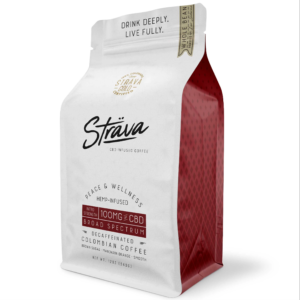
Sträva Craft CBD Coffee

Sträva is available in K-Cups, whole or ground beans, and comes in a wide range of dosages and flavors.

The company’s mission is “to enrich the lives of its customers by delivering extraordinary products, meaningful experiences, and to make a positive impact on the health and well being of customers around the world.”

Photo courtesy of Strava Craft Coffee.

cbd coffee

Copyright

© 420 Intel

Can CBD Oil Be Used As A Food Preservative?

Cannabidiol (CBD) is arguably the most popular cannabinoid on the planet right now. Whereas THC is associated with intoxication, CBD is not.

That is a significant distinction because while many consumers are fans of THC’s effects, not everyone is.

Someone that has no interest in experiencing the euphoric effects of THC, and thus has avoided consuming cannabis, may still want to experience the wellness benefits of CBD.

The market for CBD is larger than the market for THC. That is not a knock on THC – the market size for THC is massive, and increasing as reform victories pile up across the globe.

With that being said, it is no secret why CBD is growing in popularity at an exponential rate because it is appealing to a wider audience.

e-mail icon

Copyright

© 420 Intel

What effect would marijuana legalization in Virginia have on youth use?

Some local opponents of marijuana decriminalization and legalization say it increases underage use, but new studies indicate otherwise.

Since 2012, 33 states and the District of Columbia have legalized medical marijuana, and 11 states and the district have legalized recreational use. Other states, including Virginia this year, have decriminalized possession of small amounts of pot and are considering legalization.

At the federal level, the Democrat-controlled House of Representatives voted earlier this month to decriminalize marijuana possession, manufacturing and distribution. The Republican-controlled Senate is expected to block the bill from becoming law, though.


The years that have passed since marijuana reform began have allowed for studies about the effect on youth marijuana use. In August, the Centers for Disease Control and Prevention published an analysis of the Youth Risk Behavior Study. The nationwide study, which also asked questions about alcohol, cocaine, heroin, methamphetamine and prescription pill use, was conducted from 2009 through 2019 and involved thousands of ninth-12th graders.

The CDC noted that youth alcohol and drug use, including marijuana, do increase the likelihood of academic underachievement, delinquency, mental health disorders and teen pregnancy.

e-mail icon

Copyright

© 420 Intel

Marijuana legalization looms in New York as deficit balloons

The debate over legalizing marijuana for adult, recreational use in New York has been brewing for the last two years after Democrats took control of the state Legislature, but disagreements on the issue coupled with a global pandemic have kept it out of reach for lawmakers.

That could change next year as the Legislature returns to Albany, but Democrats still remain divided on certain aspects of the issue that are likely to complicate negotiations.

Chief among them is what the state will do with the tax revenue from the marijuana industry, which is expected to generate around $300 million annually when the program is stabilized, according to projections from the state.

Copyright

© 420 Intel

Medical cannabis eases seizures in childhood epilepsy

Medicinal cannabis could offer patients significant relief from intractable epilepsy, but cost and access barriers remain, a review has found.

Cannabis-based medicinal products (CBMPs) can offer patients significant relief from intractable epilepsy, according to evidence from a small number of patients.

In a review of 10 cases of severe childhood-onset epilepsy, Imperial’s Prof. David Nutt and Rayyan Zafar looked at the impact of combined CBD and THC-based products on the frequency of epileptic seizures.

They found carers reported a 97% reduction in monthly frequency of seizures when patients received whole plant extract cannabis treatments – not currently licenced in the UK – showing a clear benefit among this group. However, despite the clinical benefit, they cite the significant cost for their use and difficulty in accessing the treatments in the UK.

Zafar, a PhD candidate in the Department of Brain Sciences, said: “Patients and their families deserve better, so we implore policy makers, regulators and public health bodies to prioritise the health of these individuals and help them to access in the NHS medicines which are making a dramatic improvement to their lives.”

e-mail icon

Copyright

© 420 Intel

DEA Hit With Another Lawsuit From Scientists Seeking to Research Cannabis

The time is nigh for the DEA to cooperate in ensuring that medical marijuana research can move forward. Finally.

On December 3, 2020, MAPS (the Multidisciplinary Association for Psychedelic Studies) issued a press release regarding a lawsuit filed against the DEA and the Attorney General to “compel issuance of licenses to manufacture marijuana for clinical trials and potential FDA approval.” We have written about MAPS and its 35 years of advocacy and engagement with DEA before, and we are big fans of the nonprofit.

The announcement of this lawsuit comes on the heels of the United Nations Commission for Narcotic Drugs (CND) voting to accept the World Health Organization’s (WHO) recommendation to remove cannabis and cannabis resin for medicinal purposes from Schedule IV of the 1961 Single Convention on Narcotic Drugs. The U.S. had already confirmed it would support the WHO recommendation and published a statement about its rationale for the vote:

“The vote of the United States to remove cannabis and cannabis resin from Schedule IV of the Single Convention while retaining them in Schedule I is consistent with the science demonstrating that while a safe and effective cannabis-derived therapeutic has been developed, cannabis itself continues to pose significant risks to public health and should continue to be controlled under the international drug control conventions. Further, this action has the potential to stimulate global research into the therapeutic potential and public health effects of cannabis, and to attract additional investigators to the field, including those who may have been deterred by the Schedule IV status of cannabis.”  

In MAPS’ announcement of the lawsuit, it points out that “[e]fforts to conduct meaningful research into cannabis medicines have been blocked for decades; the continued obstruction is causing suffering for people with serious conditions,” which indicates the timeliness of this lawsuit in relation to the CND’s recent vote. According to MAPS and the lawsuit, the DEA has failed to process more than thirty outstanding applications to develop cannabis for research purposes for more than four years despite administrative guidance. The press release outlines the nature of the lawsuit as follows:

House Approves Bill To Enhance Medical Marijuana Research

Copyright

© 420 Intel

Death Penalty for Cannabis: Which Countries Will Kill You

It’s almost hard to believe that as the UN voted on recommendations to globally open the legality of cannabis, that some countries are still so against it that they’ll kill you for crimes related to it. Yup, it might be 2020, but you can still receive the death penalty for cannabis crimes in many different places.

The first thing to understand about the death penalty for cannabis is that there are different kinds of cannabis crimes, and just because a country employs the death sentence, it doesn’t mean it’s applicable to all crimes involving cannabis. Some countries will only enforce such a law for traffickers, others are more hardcore, and will go after actual users with death. While it all seems like a massive overstep in any scenario, here are the places that still give out the death penalty for cannabis crimes.

Before we go to the list of countries where you shouldn’t use cannabis, we need to keep in mind that the situation in the United States is different and you can use cannabis related products almost anywhere. Recently, a new kind of cannabis product, hemp-derived Delta-8 THC (also known as cannabis-lite) has become very popular, as it legal to order it online, even in countries where recreational use of cannabis is still forbidden. People who use Delta-8 THC report that while it is very uplifting and relaxing, it is also “easier to the mind” and brings no anxiety or paranoia at all, so they prefer it over regular cannabis.

Ready to finish out your holiday shopping? Check out the best Delta-8 THC deals this year, and make everyone happy this holiday season.

China

China is at the top of pretty much any list when it comes to the use of capital punishment. Though the country didn’t begin handing out sentences for cannabis use until the 1980’s, it certainly went from 0 to 100 pretty fast. In China, being caught with just five kilograms can be enough to get the death penalty, though some publications put the amount at 10 kilograms of hash or 150 kilograms of marijuana. Lesser punishments involve prison sentences of five years to life, with a fine of up to 1,000 yuan. Sale and supply crimes will get you a death sentence that much faster, even with smaller amounts. The problem with China is that information is very rarely released with actual, usable numbers. While there is a strong expectation that China is killing its own people for all kinds of crimes, the specifics are merely speculation.

illegal cannabis

Copyright

© 420 Intel

The Federal Government Doesn't Necessarily Have to Legalize Marijuana. This is Why

One of the biggest arguments right now for ending marijuana prohibition in the United States is that it would generate beaucoup bucks in tax revenue and provide the nation with a trapdoor out of the economic sludge brought about by the coronavirus. After all, marijuana sales are a boon in states where it is legal.

In Colorado, one of the first states to legalize the leaf for recreational purposes, dispensaries have sold more weed in 10 months than they did all of last year. The state is poised to end the year with almost $2 billion in pot sales, providing millions of dollars in state tax revenue.

So why not take this concept nationwide? It would make sense since American economies are starved for financial relief. Some data shows that nationwide legalization would create around 1 million jobs and contribute hundreds of billions in federal tax revenue.

However, the federal government is doing just fine without putting a taxed and regulated cannabis market to work. In fact, marijuana legalization stands to cut the head off a mega-money beast that has been capitalizing on pot prohibition for years. For starters, Uncle Sam is already raking in loads of money in marijuana taxes every year.

Section 280E of the American Tax Code requires illegal marijuana businesses (even those considered legal in some states) to claim their earnings on their tax returns. But since none of these businesses can write off expenses like other sectors, they are subject to a 70% tax rate. Yep, Uncle Sam is taking the majority of the money from businesses it still considers illegal. If this policy sounds like robbery, that’s because it is. Data shows the federal government makes billions taxing weed operations in legal states. 

e-mail icon

Copyright

© 420 Intel

5 Lessons the U.S. Can Learn From Canadian Cannabis Legalization.

Following the results of the 2020 presidential election, cannabis advocates across the nation breathed a sigh of relief; for the first time in our history, cannabis decriminalization was being supported by the party in office. Since 2012, 15 states and Washington, DC, have legalized cannabis for adults over the age of 21. And 36 states have legalized medical cannabis — meaning that a majority of Americans now have some form of access to cannabis, whether medically or recreationally. On December 4th, the House passed the Marijuana Opportunity, Reinvestment, and Expungement (MORE) Act, a historic bill which will remove cannabis from the Controlled Substances Act and serves as the first step in ultimately deciding the fate of federal decriminalization in the United States. 

But, as proponents are keenly aware, major changes will need to be made at the regulatory level to ensure decriminalization rolls out effectively across the country, while setting the United States up for federal legalization in the not-so-distant future. So, where better to look for lessons learned on the path to legalization, than Canada?

Lessons from the North

The cannabis industry has made major strides across North America over the last few years, including Canada, which federally legalized cannabis two years ago. Having already forged the path, Canada can now serve as a case study for the United States as it takes its first step toward legalization, through decriminalization, offering guidance into best practices for launching a new legal industry, and warnings of the costly repercussions of unpreparedness, inexperience, and premature rapid growth.

While the legal Canadian market took off as investors took interest, growing the market to hit CAD $908 million in online and retail store sales within the first year, the numbers fell well short of analysts’ initial projections as a poorly executed retail distribution framework and high costs had many consumers turning to the legacy market. Within a year of legalization, the industry was experiencing mass layoffs and major executive changes at some of the country’s largest producers, alongside multi-billion-dollar stock-market losses. Initial product shortages were then followed by a massive surplus in inventory, with licenced producers reporting more than 400 metric tonnes of excess supply that forced price reductions as they dealt with overflowing warehouses. To ensure a successful transition from decriminalization to legalization, while avoiding the pitfalls that the Canadian industry faced, the US will need to focus on five major areas.

1. Prioritize distribution channels

The US’s ability to capitalize on rapid growth will start with having a proper retail distribution structure. Where Canada struggled in this regard, lacking the infrastructure to approve enough retail licenses to meet the distribution needs of producers, the US needs to use this opportunity to establish a sufficient retail distribution framework to ensure that producers can get their products into the hands of consumers in a timely manner. 

e-mail icon

Copyright

© 420 Intel

Study: Long-Term Cannabis Use Associated with Reduced Symptoms in Patients with Post-Traumatic Stress


Post-traumatic stress patients who consume state-authorized cannabis products exhibit reduced symptoms over time as compared to nonusers, according to longitudinal data published in the journal Cannabis and Cannabinoid Research.

Commenting on the findings, NORML’s Deputy Director Paul Armentano said: “Veterans are far more likely to self-report using cannabis than are those in the general population, and many veterans attest that cannabis is effective for the self-management of their PTS symptoms. These findings substantiate their claims.”

A team of investigators affiliated with the University of Pennsylvania’s Perelman School of Medicine, John Hopkins University, and the University of Colorado School of Medicine compared PTS symptoms in cannabis-using patients relative to non-users over a one-year period. Cannabis consuming participants primary accessed THC-dominant flowers from state-authorized retailers.

Researchers reported: “Participants who used primarily THC-dominant cannabis reported a greater reduction in PTSD symptom severity over time compared to controls. Cannabis users also showed a greater than two-fold rate of remission from their PTSD diagnosis (defined by no longer meeting criteria for a PTSD diagnosis on the CAPS-5) compared to controls by the 1-year follow-up assessment.”

e-mail icon

Copyright

© 420 Intel

Arkansas Officials Report Medical Cannabis Sales Top $200 Million

The medical marijuana industry in Arkansas is booming, according to reports.

Medical marijuana sales in Arkansas have hit a significant milestone a little more than a year after the first dispensaries in the state began serving customers.

Local news outlets in the Natural State reported that medical cannabis sales in Arkansas have officially eclipsed $200 million, with patients purchasing more than 15 tons of product. 

The exact figures, according to local television stations KATV and 5NEWS: $200.7 million and 30,648 pounds of medical marijuana.

MMJ in AR

Voters in Arkansas approved a measure legalizing medical marijuana in 2016, but the first dispensary didn’t open until May of 2019. The law’s rollout faced impediments from state lawmakers and jurists in the nearly three years before the voters approved it at the ballot box and patients were able to be served, and has continued to face resistance. 

e-mail icon

Copyright

© 420 Intel

Australia Could Be One Of The Leading International Cannabis Markets In 2021


Australia is a legal cannabis market that rarely receives the attention it deserves and is a market that we are bullish on in 2021.

In 2019, we noticed a slowdown in interest in the Australian cannabis market as companies started to focus on the opportunity in Latin America. Since then, the Latin American cannabis market has not grown as much as expected while the Australian market has shown signs of strength. Article originally published on technical420.com

Copyright

© 420 Intel

After Blockbuster Aphria-Tilray Merger, World’s Largest Cannabis Company Eyes U.S. Market

Tilray and Aphria, two of the biggest marijuana companies in Canada, announced plans to merge on Wednesday and create the world’s largest cannabis outfit.

With existing medical and recreational cannabis businesses in Canada and Europe, the new conglomerate is positioning itself to eventually enter the biggest weed market in the world: the U.S.

Copyright

© 420 Intel


WeedLife.com