WeedLife News Network

Hot off the press cannabis, marijuana, cbd and hemp news from around the world on the WeedLife Social Network.

This Coast-to-Coast Cannabis Grower Just Made a Big Move in Colorado

A story equally impressive may be in its overseas activities.

2021 is looking to be the year in which we find some normalcy and recovery. For Curaleaf Holdings (OTC:CURLF), a vertically integrated cannabis producer, 2021 has so far been nothing short of record-breaking. The company recently reached a milestone $1 billion in annual sales, hitting $260 million in the first quarter of this year. 

Copyright

© 420 Intel

Treating Dementia With Cannabis: What Patients And Caregivers Should Know

While more research is needed, there are some promising results indicating that patients affected by Alzheimer’s and dementia may benefit from using medical cannabis.

For anyone going through the aging process, the thought of forgetting their life or precious memories associated with loves ones can be debilitating. But new studies on dementia and Alzheimer’s disease (AD) are finding surprising new ways to raise quality-of-life in the later years and what medicines can help patients experiencing the debilitating disease — right now.

In a 2015 study, researchers in the Czech Republic found that while dementia and Alzheimer’s do have a link, there was another stage in the process that was a precursor to memory loss: mild cognitive impairment (MCI) found to be a “boundary area between normal aging and dementia,” the stage before memory loss could hold the key to the development of the disease.


Photo by GDJ via Pixabay

Even more interesting, while cannabis and CBD were both being studied for Alzheimer’s disease, a 2020 study on dementia and cannabis opened the door to more knowledge. Lakewood Medical Health Clinic, a holistic medical marijuana practice located in Ohio, shared that, “In recent years, researchers have begun to study how medical marijuana could be used to treat Alzheimer’s and dementia. While more research is needed, there are some promising results indicating that patients affected by these two conditions may benefit from using medical cannabis.”


Copyright

© 420 Intel

R.I.P. Delta-8 THC: Why States and DEA Want It Banned

Delta-8 THC had a good run. People made money, customers were happy, and it all seemed legal to boot. Like all good things in life, states and the DEA are doing everything in their power to ensure that delta-8’s run comes to an end. Let’s talk about why.

For those of you who may not have been paying attention, delta-8 is one of many, many cannabinoids in cannabis (marijuana and hemp) plants. Unlike CBD, it gets you high. It’s not usually present in high volume in cannabis, so it’s usually derived by converting hemp CBD through chemical processes, and can’t be legally derived from marijuana under federal law.

In theory (or, more accurately, according to the literal text of the federal 2018 Farm Bill, if you care about little details like “what the actual law is”) hemp-derived delta-8 THC should be considered legal under present federal law. But the DEA apparently didn’t get that memo.

Late last year, the DEA issued an interim final rule (IFR) that says that all synthetic cannabinoids are Schedule I narcotics and illegal. Never mind that delta-8 is most commonly derived from a hemp plant and that the 2018 Farm Bill legalized hemp and its derivatives because, well, the DEA apparently thinks it’s as dangerous as heroin. We wrote quite a bit on why the DEA was just wrong around the time the IFR was published, and generally stand by that opinion.

Surprisingly, the DEA didn’t see eye to eye with the entire industry. It even put delta-8 on its “Orange Book” of controlled substances. I won’t get into too much more detail on the status of federal delta-8 law, as my colleague Nathalie Bougenies recently did just that a few months back.

e-mail icon

Copyright

© 420 Intel

Uruguay Pharmacies to Sell Stronger Cannabis

Lawmakers in Uruguay made history by passing an adult-use legalization measure that was signed into law in late 2013.

Uruguay will forever be known as the first country on earth to legalize cannabis for adult use, as well as the first country to allow legal adult-use cannabis sales.

Only one other country, Canada (2018), has legalized cannabis for adult use.

Uruguay’s legalization model differs quite a bit from Canada, with one of the biggest differences being who can legally purchase cannabis.

Copyright

© 420 Intel

Rehydrating Marijuana: How To Bring Your Stale Weed Back To Life

Rehydrating your weed is probably not something you want to be doing often. This is why prevention is always key.

One of the saddest things to happen to anyone is to roll a joint only to find out that their stash has gone dry.

There are two main reasons why weed gets dry: either it’s over-dried after harvest, or it hasn’t been stored correctly. If you are cutting down your weed to get ready to dry it, the stems will soon lose its stiffness. The best way to tell if it’s dried properly is if you’re able to snap a stem in half but if the stem continues to bend, then it requires more drying time.

However, if you’re living in arid climates, you may need a humidifier.


Photo by Elsa Olofsson via Unsplash

What Are Heirloom Marijuana Strains, Exactly?

Copyright

© 420 Intel

Spain Moves Toward Medical Cannabis Regulation

The fate of legalization will largely hinge on the ruling Socialists. The government, led by Prime Minister Pedro Sánchez, has demonstrated a lack of enthusiasm for even medical cannabis legalization.

On May 13, the health committee of Spain’s Congress of Deputies approved a proposal to create a subcommittee that will consider other countries’ experiences with medical cannabis. The subcommittee’s findings could pave the way for medical cannabis legalization in Spain. According to a recent poll, approximately 90% of Spaniards would favor such a move.

Spain currently lacks a medical cannabis program at the national level. Two cannabis medications, Sativex and Epidiolex, have been approved by the regulator, but only for specified ailments; use to treat other conditions must be approved by a medical tribunal, subject to variations among localities. Moreover, costs can be prohibitive.

Photo by Henrique Ferreira via Unsplash

Spain Moves Toward Medical Cannabis Regulation

Copyright

© 420 Intel

5 Predictions for Craft Cannabis in 2021

As the Founder and CEO of Humboldt Seed Company, I have been breeding cannabis for more than 20 years. I've seen many trends in the craft cannabis space. Here's what I see on the harvest horizon. 

Copyright

© 420 Intel

Marijuana Industry Expected to Add $92 Billion to U.S. Economy in 2021

From jobs to tax revenue to commercial real estate, the marijuana industry has a large – and growing – impact on the broader economy in the United States. The total U.S. economic impact from marijuana sales in 2021 is expected to reach $92 billion – up more than 30 percent from last year – and upwards of $160 billion in 2025, according to analysis from the newly published MJBizFactbook.

To measure the industry’s economic impact, MJBizDaily analyzed similar industries and applied a standard multiplier of 3.5 on projected recreational and medical marijuana retail sales. The numbers are a best guess because the marijuana industry’s structure is somewhat unique because it encompasses agricultural, manufacturing and retail activity.

The economic impact of the marijuana industry is not the same as supply-chain revenues that are often used to estimate the “total size” of an industry. Rather, the economic multiplier paints a picture of the impact the industry has on the broader economy. In this case, for every $1 consumers and patients spend at retail locations, an additional $2.50 will be injected into the economy, much of it at the local level.

That impact comes directly from the day-to-day needs of workers in the cannabis industry, including spending on life’s necessities such as housing, transportation, entertainment and more. Marijuana businesses, consumers and patients also pay hundreds of millions of dollars in state and local taxes that are used to fund state and local government activities, including schools and roads.

In addition, real estate receives a boost from new retail, manufacturing and agricultural businesses moving into an area or established companies expanding, increasing broader demand for commercial properties. Cultivating and manufacturing marijuana can require large investments in equipment and technology that boost not only the local economy but also areas throughout the U.S.

e-mail icon

Copyright

© 420 Intel

COVID Dreams: More Americans Got Stoned In 2020, Study Shows

The year of the COVID-19 pandemic also appears to have been a year that more Americans got high. At least that’s where new research points.

Investors the ETFMG Alternative Harvest (ticker: MJ) exchange-traded fund, which holds a basket of marijuana-related stocks, will no doubt be smiling blissfully at the news. The fund was recently up 46% so far this year compared to gains of 12% for the S&P 500 index over the same period, according to Yahoo data. Neither figure includes dividends.


Billowing Use of Marijuana During in COVID-19 Pandemic

Drug testing of potential employees as well as testing of people who were recently involved in accidents showed there was a surge in cannabis use in 2020, according to drug testing firm Quest Diagnostics. The firm conducted 9 million such tests last year.

“[...] the rate of drug positivity remained stubbornly high despite seismic shifts to the workplace caused by the COVID-19 pandemic,” said Barry Sample, a senior director of science and technology at Quest Diagnostics DGX +0.1%, in a statement.

More than one-in-eight of people given an oral fluid test showed evidence of marijuana use last year, up from less than one-in-10 in 2019, the company data show. Testing using hair samples also showed a surge with one-in-11 of the population testing positive in 2020 versus one-in-fourteen the previous year. Urine tests saw an increase in positive results for pot although they were much lower than with the other tests.

e-mail icon

Copyright

© 420 Intel

New Analysis Shows Tax Revenue From Cannabis In The Billions

States that have legalized adult-use marijuana sales have seen billions of dollars in fresh tax revenue from cannabis, according to a new study.

The recently published research, which comes courtesy of the Marijuana Policy Project, found that, as of this month, “states reported a combined total of $7.9 billion in tax revenue from legal, adult-use marijuana sales,” while “cities and towns have also generated hundreds of thousands of dollars in new revenue from local adult-use cannabis taxes.”

That reported figure includes the states of Colorado and Washington, where voters passed legalization measures in 2012 and where sales began in 2014.

In Colorado, according to the study, there is a 15 percent tax on wholesale and a 15 percent tax rate on special retail (neither of which apply to sales of medical cannabis in the state). Since 2014, Colorado’s estimated tax revenue from cannabis sales is $1,557,878,973, with “$404.5 million of the total revenue generated from cannabis taxes has been dedicated to improving Colorado’s public school system.” The estimated tax revenue does not include “local sales tax revenues, which have been significant,” according to the study. In Denver, for example, $210.6 million in local tax revenue has been generated as of last month.

In Washington, where there is a 37% imposed on retail since July 2015 and a 6.5% sales tax, estimated state tax revenue from cannabis sales rounds out at $2,568,728,290, and that total does not include the estimated $167 million generated between July 2014 and March 2021.

e-mail icon

Copyright

© 420 Intel

New Hampshire Governor Signs New Bill, HB 89, to Expand Medical Cannabis Program

New Hampshire will now be expanding the pool of patients eligible to receive medical cannabis, thanks to a newly signed bill, HB 89.

This week, Republican Governor Chris Sununu signed HB 89, which will go into effect July 21. Under this new law, physicians will be allowed to authorize patients who have moderate or severe insomnia to use medical cannabis. In addition to this exciting news, it also allows adults and pediatric patients with autism spectrum disorder to receive medical cannabis in some cases.

This move to sign HB 89 is in line with recently published data that shows autism spectrum disorder can be treated with cannabis safely and with favorable results. A recent study out of Israel looked at the safety and efficacy of cannabis and how administering CBD-heavy cannabis oil can help those with autism. 

The ratio they used was 30 percent CBD and 1.5 percent THC, and the study was conducted with 188 patients who all have autism spectrum disorder. The patients underwent the treatment for six months and provided feedback about their experience. Of those who participated, 90 percent said they had some level of improvement in their symptoms, such as relief from restlessness, seizures, and rage attacks. About one-third of those polled said they were also able to take less of other medications because of the CBD.

Authors concluded: “Cannabis as a treatment for autism spectrum disorders patients appears to be well-tolerated, safe and seemingly effective option to relieve symptoms, mainly: seizures, tics, depression, restlessness and rage attacks. … [W]e believe that double blind placebo-controlled trials are crucial for a better understanding of the cannabis effect on ASD patients.”

e-mail icon

Copyright

© 420 Intel

Texas Ready to Pass Marijuana Decriminalization Bill

One by one, US states have been adopting marijuana legalization programs, with the latest two: New York and New Mexico, happening within 24 hours of each other, and bringing the total number of states with legalization policies to 17. The south has been a bit slower to adopt, with states like Maryland, Virginia, and now Texas, leading the way. Within the last month, the Texas senate approved several bills for marijuana decriminalization, as well as to expand the medical cannabis industry, lower the penalty on THC concentrates, and to force the study of psychedelics.

The recent Texas marijuana decriminalization bill shows just how accepted cannabis has become. Every state seems to be updating its policies these days, creating room for more and more products, in a bigger and bigger market. And this is excellent for you! New products are on the rise, like delta-8 THC. This alternate form of THC provides users with a clear-headed, slightly less psychoactive high, and none of the anxiety created by delta-9. Sound interesting? If it does, we’ve got a host of Delta-8 THC products to try out. So go ahead and pick your products, and we’ll get them to you ASAP.


The US and cannabis

On the nights of March 31st 2021 and April 1st, 2021, New York and New Mexico respectively, passed legislation to open the two states for recreational cannabis markets. These two added on to become the 16th and 17th states to adopt legalization policies, with 20 locations total in the US, including Washington, DC, and the territories Guam and the Mariana Islands. All locations together include: Alaska, Arizona, California, Colorado, Guam, Illinois, Maine, Mariana Islands, Massachusetts, Michigan, Montana, New Jersey, New Mexico, New York, Nevada, Oregon, South Dakota, Vermont, Washington, and Washington DC.

As you’ll notice, though New Mexico, Arizona, and California are in the south, or have southern parts that touch the Mexican border, no state on the list is associated with ‘the South’, and certainly not of ‘the deep South’. However, two over from Arizona to the right, is Texas. And Texas is considered ‘the South’, along with Alabama, Arkansas, Florida, Georgia, Kentucky, Louisiana, Maryland, Mississippi, North Carolina, South Carolina, Tennessee, Virginia, and West Virginia.

Of the states listed as ‘southern’, there are no current legalizations for recreational cannabis, however, the following states do have some form of medical cannabis legalization: Arkansas, Florida, Georgia, Louisiana, Maryland, Mississippi, Texas, Virginia, and West Virginia. Not bad for an area that was completely against such changes when the first medical legalizations happened a few decades ago.


Texas marijuana laws

Copyright

© 420 Intel

Massachusetts amendment pushes for CBD in food, sale of hemp flowers

A proposed amendment in Massachusetts would allow for the addition of hemp-derived CBD ingredients to food, dietary supplements and animal feed, and permit the sale of hemp flowers to consumers.

A vote on Amendment 130 in the state Senate is expected this week while the Massachusetts House of Representatives is to consider a parallel bill with similar language in a virtual public hearing on June 1. In the Senate, the amendment was filed by Sen. Diana DiZoglio, a Democrat from Methuen, as part of the 2021 budget.

CCC guidance is limiting

For now, CBD can only be used as an ingredient in non-food products, and may not be marketed in dietary supplements, under guidance recently issued by the Massachusetts Cannabis Control Commission (CCC).

Those rules permit the sale of some industrial hemp products to licensed cannabis retailers, but restrict sales of unprocessed hemp, including flowers, to wholesale transactions among licensed growers and producers.

Products such as hempseed, hempseed oil, building materials, textiles & fashions, and other products and materials derived from hemp fiber are eligible for wholesale to cannabis retailers under the new guidance, according to the Massachusetts Department of Agricultural Resources.

e-mail icon

Copyright

© 420 Intel

Edibles: How to Make Canna-Butter and Canna-Oil

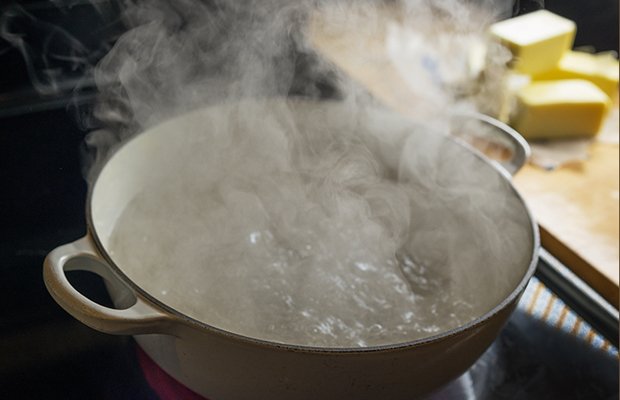
The process to make canna-butter and canna-oil are the same, but I prefer to make my extractions using whole buds, not leaves or stems because the better and stronger the cannabis you use, the better the final product will be. It is best to make a strong extraction and dilute it to personal tastes with plain butter or oil when you prepare a meal.

You can extract cannabis into any cooking oil, I personally choose coconut oil for its health benefits. Additionally, it has a high fat content which means it binds to a lot more of the cannabinoids you are trying to ingest.

Most of my recipes suggest a serving size that contains between 2-3 teaspoons of medicated butter or oil. If I am planning a progressive dinner I will use less in each of the courses so I don’t overwhelm my guests. On occasion I will offer a medicated garnish that is optional, some folks can use it if they wish.

Ingredients:

1 ounce dried cannabis flower
2 cups butter or two cups oil; coconut, canola, olive, peanut

Equipment:

Large saucepan
Wooden spoon
Large clear bowl or container
Cheesecloth
String, rubber band or tape

step-2

Copyright

© 420 Intel

Ancillary Cannabis Vendors Support Sustainability Initiatives of Operators

The cannabis industry and sustainability movement have met at a critical intersection, changing the upward trajectory of social responsibility in the industry for good.

Driven by evolving environmental regulations, consumer demand, and the best interests of the business, cannabis operators looking to promote sustainable business practices are no longer alone in their venture. Ancillary product and services vendors are supporting operators in new ways.

As the cannabis industry matures and competition intensifies, ancillary vendors are looking for ways to provide added value to their customers.

Generally, ancillary vendors seek to provide additional value through cost savings and efficiency gains that boost profitability. Now, they’re adding sustainability practices and expertise to the list.

When it comes to sustainability, having an ancillary vendor that is already experienced with sustainability initiatives allows the vendor to serve as a trusted advisor to the operator.

e-mail icon

Copyright

© 420 Intel

NY Cannabis Insider: Social equity is the key to New York’s new marijuana law

New York’s effort to legalize recreational marijuana for adult use took three years to accomplish and resulted in a 128-page, 7,000-line law that will require more than a year to fully take effect.


Let’s just say it’s complex. But the most fundamental thing to know is that it’s now legal for those 21 and over to possess up to three ounces of marijuana for personal use.

Copyright

© 420 Intel

The Ultimate Pot Shopping Guide From a Cannabis Industry Expert

I grew up on the East Coast and my earliest weed dealers used to offer only two choices: Take it or leave it.

I always chose “take it.”

Nowadays I live in California and the modern marijuana retail experience offers so many strains, concentrates, edibles, topicals and delivery devices that it requires a concerted effort (and consistent product sampling) to keep it all straight — never mind stoned. So I included a special section on pot shopping in my book, “How To Smoke Pot (Properly):  A Highbrow Guide to Getting High.”

Whether you’re buying recreational weed in Colorado, marijuana in Michigan, or ordering off a coffee-shop menu in Amsterdam, the retail cannabis experience remains both delightful and disorienting to the unaccustomed. So here’s a few tips for keeping your wits about you when faced with all those wonderful choices.

Make a Budget for Getting Bud

Unless you grow your own, or have some lovely hookup, cannabis is most definitely a luxury item. And while it’s certainly OK to splurge on the herb from time to time, that’s a decision best made in advance, not once you’re faced with a menu of enticing strains, concentrates, and edibles. So decide how much you can afford to spend and how long it’s got to last in advance, and you’ll have a lot of fun weighing your options when the time comes, without stressing out about next month’s rent.

e-mail icon

Copyright

© 420 Intel

Luxembourg Moves One Step Closer to Legalization

Currently, there are no fully legal adult-use cannabis countries in Europe, but Luxembourg is moving forward. The only two countries that have legalized cannabis for adult use are Uruguay and Canada.

With that being said, there are already countries in Europe that are quasi-legal, such as in Switzerland where low-THC cannabis is bought and sold legally.

In Italy, the Supreme Court ruled previously that home cultivation is legal, and while lawmakers are still trying to sort things out, there are now some legal protections in place for consumers.

Several countries are exploring legalization, and in some cases even launching limited pilot programs such as in the Netherlands, however, one country may be on the fastest path to full legalization in Europe.

Luxembourg Takes Another Step Forward

Luxembourg may not be the first country that people think of when it comes to the debate of which country will be the first to fully legalize in Europe.

e-mail icon

Copyright

© 420 Intel

Oregon Recalls Vape Products

Oregon regulators pulled marijuana vape products off retailers’ shelves because they allegedly contained cannabis-derived terpenes imported from California. The Oregon Liquor Control Commission (OLCC), which regulates the state’s licensed recreational marijuana market, issued a health and safety recall for marijuana vaping products sold under the “Naked Extracts” and “Native” labels.

Copyright

© 420 Intel

Analysis: Cannabinoids not linked to 'serious cardiovascular effects'

Promising news for cardio-conscious medical cannabis consumers has come to light.

The consumption of certain medical cannabis products is not associated with an increased risk of “serious cardiovascular effects,” according to a meta-analysis published in the Journal of the American Pharmacists Association.


“The objective of this study was to evaluate the cardiovascular toxicity associated with medical use of cannabinoids,” write the authors, who note that “several systematic reviews (SRs) have summarized the potential effectiveness of medical cannabinoids, but it is unclear to what extent safety-related outcomes were incorporated.”

A team of clinicians analyzed a total of 47 studies involving 2,800 patients. Forty-five per cent of the studies excluded patients with underlying cardiovascular diseases, they noted.

Although cannabis use was “significantly associated with increased risks” of non-serious issues such as orthostatic hypotension and hypotension (low blood pressure), as well as “a trend of increased risk” of tachycardia (a racing heartbeat), researchers noted that none of the studies reviewed noted any “serious cardiovascular effects.”

e-mail icon

Copyright

© 420 Intel


WeedLife.com