WeedLife News Network

Hot off the press cannabis, marijuana, cbd and hemp news from around the world on the WeedLife Social Network.

The Psychedelic Side of Weed: THC-O-Acetate, And Military Testing

Pretty much every other day, we’re finding about some new part, or some new invention, of the cannabis plant. One of the more interesting ones to make news recently? THC-O-Acetate. Here, we’ll go into what this psychedelic compound is, how THC-O-Acetate was discovered, and the military abuses that went along with it.

The psychedelic THC-O-Acetate sure sounds interesting, and goes to show just how many different products can be made from cannabis. Compounds like that one, THCV, Delta-8 THC and Delta 10 are the newer face of the cannabis industry. We support the expansion of cannabis use, and have some really great deals for delta-8 THC and many other compounds. Take a look at our selection, and join the cutting edge of marijuana use.​


What is THC-O-Acetate?

THC-O-Acetate is what’s called an acetate ester of delta-9 THC.  Let’s break that down. So, we’ve got our standard delta-9 THC to begin with. This is the main psychoactive part of the cannabis plant, which is produced naturally through the decarboxylation of its parent compound THCA. We also already know of slightly different versions of this compound. We know that if you move the double bond in delta-9, that it creates a stereoisomer like delta-8, or delta-10, or delta-7 THC. We know that if you eat it, it gets metabolized into something slightly different – 11-hydroxy-THC. We even know that CBD is a direct isomer of delta-9 sharing the exact same chemical formula, but with a different configuration of atoms.

So, what does it mean to have an acetate ester? Well, this is where it gets to slightly higher-level chemistry, which might be hard to understand, but which should be gone over briefly. Interested parties can investigate further for a better understanding. Basically, an acetate ester is a product of a form of decarboxylation called LTA decarboxylation. We know decarboxylation means losing a carboxyl group, but there are different ways for this to happen.

The one we are most familiar with when dealing with cannabis, is heat/time induced decarboxylation, but there are other processes by which decarboxylation happens using chemicals instead. One is LTA decarboxylation, which uses lead tetraacetate (very toxic), a compound that promotes oxidation, to create oxidative decarboxylation. One of the byproducts of this, is acetate ester. This acetate ester does not occur naturally in nature, and must be synthesized from the chemical processing of delta-9, or THCATHC-O-Acetate is a synthetic analogue of delta-9.

cannabis black market

Copyright

© 420 Intel

State-of-the-Art CBD Vending Machines Are Now a Thing in Suburban Miami

With the touch of a button, CBD buyers in the Miami suburb of Doral, Florida can now have their hemp-based products automatically dispensed into their hands.

The Wellness Pantry, developed by cannabis tech firm Cultiva, allows people who download a free app from the company on their mobile phones to buy CBD remotely and pick up the products from a machine similar to one that sells soda and chips.

How it works

The machine features remote monitoring and operation, touchless payments and the use of blockchain technology to verify customers’ age, according to the Cultiva’s CEO. Unlike marijuana vending machines, which state laws restrict to operating solely inside dispensaries, CBD machines like the Wellness Pantry can operate from just about anywhere – including inside non-cannabis businesses and even housing complexes.

“We’re giving whole communities access to quality products in a fun, interactive, safe and simple experience,” said Cultiva founder and CEO Daniel Torres.

The first Wellness Pantry was became operational this weekend inside a condominium complex owned by NFC Amenity Management, one of the largest amenity management companies in the country.

e-mail icon

Copyright

© 420 Intel

Cannabis Friendly Campgrounds Utilize Interesting Legal Loophole

Since the first legal cannabis market came to be, we’ve had a bit of a chicken or egg conundrum… you can buy weed legally, but might not have anywhere to consume it legally. Most states have laws against public cannabis consumption, so you can only smoke on private property. If you live in said state, that’s no problem. But say you’re visiting Vegas, for example, and you hit up Planet 13, the largest dispensary in the world that’s right off the strip and geared towards drawing in tourists… you do some shopping only to realize that the hotel or Airbnb you’re staying at has a ban against cannabis use.

You can’t smoke in public on the strip, and even though they have just been approved, no legal consumption lounges are open in the state yet. What’s a law-abiding stoner to do in that situation?

One way savvy cannabusiness owners have been skirting the regulatory insanity that goes along with opening a consumption lounge, is by launching cannabis-friendly campgrounds. It makes sense if you think about it. It falls under private property laws and weed typically makes for a nice addition to any outdoor adventure, but if cannabis-use is permitted can the land be legally registered as a public campground? That is where the law gets a bit confusing, so let’s take a closer look.

It’ summertime, post-shutdown, and people are going outside more than ever before. Cannabis products can really take your adventure to a whole new level, but figuring out what to bring can be a challenge.. 

Smoking in nature

Edibles are fine, and even vaping can be pretty discreet, but what about the old fashioned among us who still enjoy smoking flower and who definitely love to light up a nice joint or bowl when camping, hiking, or otherwise connecting with nature. It’s fun, it’s relaxing, and it feels like a rite of passage; but is it legal?

e-mail icon

Copyright

© 420 Intel

Tax relief for Missouri medical marijuana businesses vetoed by Gov. Parson

Missouri Gov. Mike Parson vetoed legislation Friday that would have lifted a prohibition on licensed medical marijuana companies deducting business expenses on their taxes.

In his letter vetoing the measure, Parson didn’t mention the medical marijuana provisions. He said his decision to reject the bill came down to a section lawmakers included that would have provided tax relief for businesses impacted by city-wide or county-wide public health restrictions.


Parson said those provisions would have created “significant unintended consequences that could greatly harm localities.”

In vetoing the bill, however, the medical marijuana provision was also struck down.

e-mail icon

Copyright

© 420 Intel

Australian Scientists Unlock Medical Cannabis Genetic Code

Australia’s Victorian government says Agriculture Victoria Research scientists have developed the world’s most complete medicinal cannabis genomic reference.

The organisation has been licensed by the Australian Government to undertake medicinal cannabis research. Agriculture Victoria scientists turned their expertise in genomic DNA testing to develop new tools enabling the extraction of genetic information from various medical cannabis strains from around the world, which has been entered into a database.

The tools, able to sequence the equivalent of 20,000 cannabis genomes per week, flag attributes such as growth rate, bud size, cannabinoid profile and disease resistance. This helps scientists zero in on strains that would likely be most effective in treating various conditions such as epilepsy, multiple sclerosis and cancer.  Furthermore, the systems developed allow for compliance and regulatory related testing to be performed quickly and cost-effectively.

In 2016, Victoria became the first Australian state to legalise the use of medicinal cannabis and its first government grown crop was also harvested that year. However, as in much of Australia, Victoria’s program is fairly limited compared to many jurisdictions outside our shores.

But Victoria’s Government certainly sees the potential. In 2018, the State Government launched a strategy setting an ambitious goal of the state supplying half of Australia’s medicinal cannabis by 2028 and creating 500 related jobs in the process.

“Victoria’s cultivation trial has not only made medicinal cannabis available to patients but has also provided our world-leading scientists with important genetic information to design more effective products,” said Victoria’s Minister for Agriculture Mary-Anne Thomas. “Research into medicinal cannabis is a great example of how Victoria’s science and health sectors are working hand-in-hand for the benefit of our community, particularly those people who are suffering from chronic health conditions.”

e-mail icon

Copyright

© 420 Intel

What Is Delta-8 THC — and Is It Even Legal?

Delta-8 THC, a trendy new cannabinoid being touted as "marijuana lite," has managed to squeeze through a legal loophole and onto the shelves of CBD shops, head shops and convenience stores across the country. "Many people are interested in Delta-8 THC because it sounds like it has a lot of health benefits, it's stronger than CBD, it's relatively cheap, you don't have to go to a dispensary to get it and it does give you a little bit of a high — though it's weaker and usually shorter-acting than a marijuana," explains Michele Ross, PhD, a neuroscientist who studies the medical uses of cannabis and other plants, and the author of CBD Oil for Health. "But as a scientist and an educator, I really urge people to do the research before they try it," she says.

The problem is, because this product is so new, there is little research on its effects so far, and few regulations to guide or protect consumers. Here's what you need to know so far before you chew, drink or inhale it:

What exactly is Delta-8 THC?

Delta-8 THC is basically the result of a clever chemist taking a substance found in hemp — which is legal under the 2018 Farm Bill and does not produce a high — and finding a way to tweak the chemical bonds to create a closer cousin of marijuana while staying within the bounds of what the bill considers legal.

Confused? Yeah, it's confusing. Here's a little primer on plant biology that may clear it up: Hemp and marijuana are closely related plants in the cannabis family. They each contain more than 100 cannabinoids, chemicals that have various effects on the brain and body. The two most well-known cannabinoids are Delta-9 THC, which has a psychoactive effect, making you feel high (it's what makes weed weed), and CBD, which does not make you high but is often used to relieve anxiety and pain. Under legal guidelines, cannabis plants that have more than 0.3% concentration of THC are known as marijuana; plants with less than that are known as hemp.

Now, Delta-8 THC is a minor cannabinoid that is very similar chemically to both CBD and Delta-9 THC, but only occurs naturally in teeny, tiny amounts in the hemp plant, so the real growth is done in a lab. “Products that are made with Delta-8 THC have to be chemically manufactured,” explains Ross. “They take the hemp that has CBD in it and they put a chemical like acetic acid — or something much stronger and possibly even toxic — on it to turn the CBD into Delta-8 THC.” In this process, some Delta-9 THC is also created, she says, so the manufacturer then has to chemically strip out the Delta-9, which is illegal to sell at concentrations above that magical mark of 0.3%. (In a small study by the United States Cannabis Council (USCC), 15 out of 16 Delta-8 THC samples purchased across the country contained Delta-9 THC at much higher concentrations, but that's another issue.)

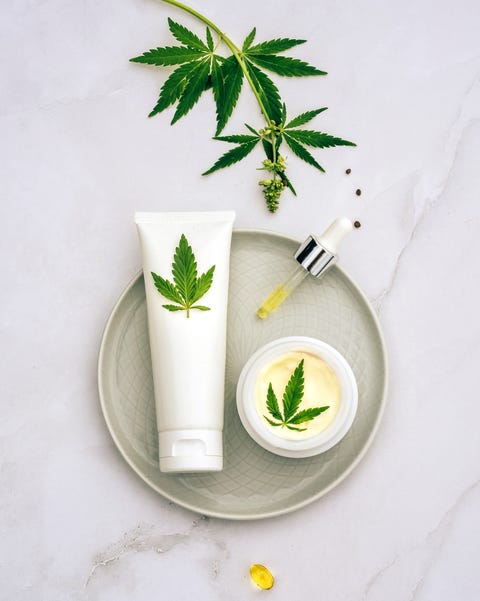
cosmetics cbd oil cosmetic products with cannabis oil tincture flat lay

Copyright

© 420 Intel

Despite Hurdles the Michigan Cannabis Market Is On Fire

Now well into its second full year of adult-use sales, Michigan’s legal cannabis market is emerging from the pandemic ripe with opportunity. With a run rate behind only California and Colorado, Michigan’s early 2021 sales have put the state on pace to not only break the billion-dollar sales threshold but also blow right past it.

Michigan regulators allowed the state’s dispensaries to continue operating during the COVID-19 pandemic in 2020 – the first full calendar year of adult-use sales— resulting in sales over $984 million. Despite the essential business provision and solid initial sales, legal cannabis purchases declined during the autumn months.

Copyright

© 420 Intel

Colorado’s New Hemp Rules Suggest Wave Of Comprehensive State Regulations

State regulators are helping legitimize the industry, build consumer confidence and expand this promising market.

While the Food and Drug Administration (the FDA) continues to drag its feet in forging a legal path for the manufacture, sale, and distribution of hemp-derived products, state regulators are keeping up with the demands of this evolving market and adopting increasingly more nuanced and more sophisticated regulations for these products.

Copyright

© 420 Intel

New York Cannabis: Why It’s A Big Deal That The Town Of Riverhead Voted Not To Opt Out

The big uncertainty was whether New York’s local jurisdictions would embrace the cannabis industry. Riverhead voting against opting out is a very positive development.

As we continue to wait for Governor Andrew Cuomo to nominate a Chairperson for the Cannabis Control Board (CCB), effectively kickstarting the rule making process, a surprising and welcome piece of news came down. On July 7, 2021, the Town of Riverhead voted not to opt out of allowing retail dispensaries and on-site consumption locations in Riverhead.

As a brief refresher, the Marijuana Regulation and Taxation Act (MRTA) includes a provision that allows any town, city, or village to adopt local law to prohibit the retail dispensaries or on-site consumption locations in their jurisdiction, provided the law is adopted by December 31, 2021.


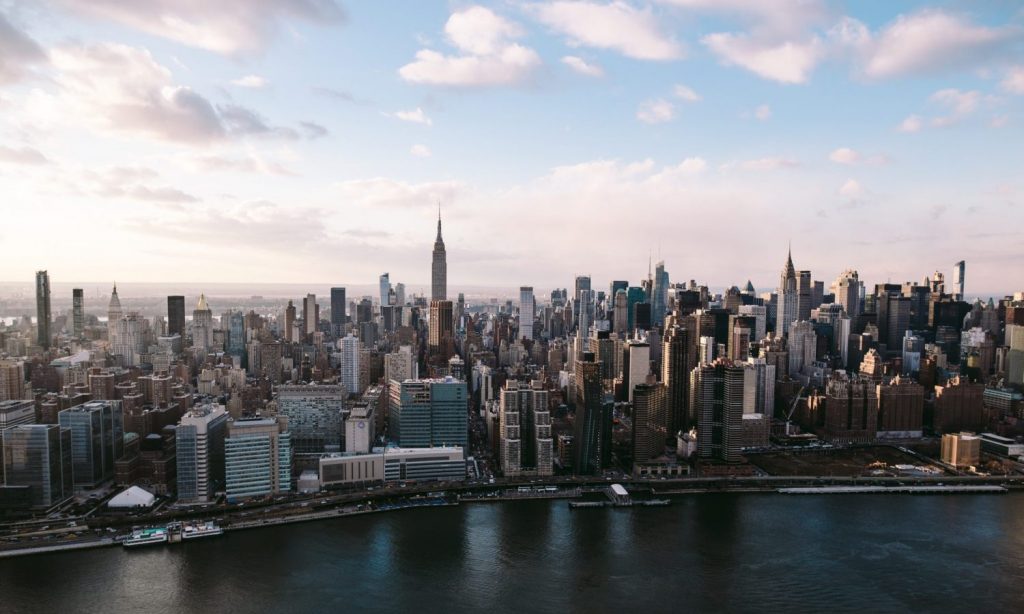
Photo by Thomas Habr via Unsplash

Riverhead choosing to embrace retail and on-site consumption cannabis establishments is an important indicator for Long Island’s openness to recreational cannabis. Riverhead is the effective “capital” of Long Island’s Suffolk County, a conservative stronghold. For context, Suffolk County’s courts and administrative agencies are all located in Riverhead.

With that said, it was close. The vote to not opt out was 3-2. The three board members who voted against opting out publicly stated that by allowing recreational and on-site consumption establishments in Riverhead, the town would be in a better position to regulate where, when, and how the businesses operate. Council Member Tim Hubbard also highlighted the impact of the black market in stating “if we don’t allow it, the black market is going to thrive in the Town of Riverhead. And that’s not where we want people to buy it, that’s where you have issues.”

What Is The Timeline For Adult-Use Cannabis Sales In New York?

Copyright

© 420 Intel

The MORE Act Aims to Legalize Cannabis

The drive to legalize cannabis at the federal level continues with the reintroduction of a bill to remove marijuana from the nation’s list of controlled substances and invest in communities disproportionately impacted by the War on Drugs. The measure, the Marijuana Opportunity, Reinvestment and Expungement Act of 2021 (MORE Act), was introduced on May 28 by Rep. Jerry Nadler of New York and five of his Democratic colleagues.

Nadler, who serves as the chair of the House Judiciary Committee, originally introduced the bill last year. The measure was passed with overwhelming support in the House in December but failed to receive action in the Senate under the leadership of then-Majority Leader Mitch McConnell of Kentucky.

“Since I introduced the MORE Act last Congress, numerous states across the nation, including my home state of New York, have moved to legalize marijuana. Our federal laws must keep up with this pace,” Nadler said in a statement. “I’m proud to reintroduce the MORE Act to decriminalize marijuana at the federal level, remove the needless burden of marijuana convictions on so many Americans, and invest in communities that have been disproportionately harmed by the War on Drugs.”

Social Equity Key to Bill

Under the MORE Act, cannabis would be removed from the list of drugs regulated by the Controlled Substances Act, criminal penalties for federal cannabis offenses would be eliminated, and past federal cannabis convictions would be expunged. The bill also establishes a 5% percent tax on retail cannabis sales, which would climb to 8% over three years. Revenue raised by the tax would be invested in communities that were harmed under federal marijuana prohibition policies that lasted decades.

“This bill will not only put an end to harmful federal cannabis policies that have ruined countless lives, it will seek to reverse the damage by providing true equity and opportunity for those looking to access this booming industry. We are on our way toward true justice,” said Rep. Barbara Lee of California, a co-sponsor of the legislation and co-chair of the Congressional Cannabis Caucus.

e-mail icon

Copyright

© 420 Intel

N.J. has dismissed 88K weed cases under new marijuana law

New Jersey has vacated or dismissed tens of thousands of marijuana convictions as the state continues to work out the details of its new legal cannabis market.

The state Judiciary has dealt with 88,000 cases so far, it announced Monday evening. These are the first wave of an estimated 360,000 identified that qualify for expungement.

Cases that have been vacated or dismissed still need to be expunged. That’s the step that ultimately clears a person’s record. That phase will come in the next few months, according to the judiciary.

A state Supreme Court order issued earlier this month laid out a process for vacating, expunging and dismissing certain marijuana offenses from people’s records. These include selling less than one ounce of marijuana and possession, as well as related crimes like possession of drug paraphernalia, being under the influence, failing to turn over marijuana or being or possessing marijuana while in vehicle.

The order fulfills the promise of the marijuana decriminalization law. In February, Gov. Phil Murphy legalized weed by signing a package of bills. One set up the framework for legal, 21 and older marijuana sales and the other ended all arrests and fines for possessing marijuana.

e-mail icon

Copyright

© 420 Intel

2 Undervalued Marijuana Stocks To Watch In July

2 Marijuana Stocks To Watch This Friday With Hidden Value

When looking for marijuana stocks to buy often times people look for the top companies only. This is typically done due to the value and popularity of the given cannabis stock. Most times investors try to invest in what is currently popping or bubbling in the market. With cannabis stocks trading in a volatile sector at times can be more beneficial to stick with top cannabis companies.

Copyright

© 420 Intel

4 Reasons Why States Shouldn't Ban Delta-8 THC

Delta-8 THC, a naturally occurring cannabinoid found in the hemp plant, is both the hottest new product in the cannabis space and the industry’s latest bogeyman.

Every day, there’s a new article expressing alarm about Delta-8’s legality, accusing those who produce and sell it of risking consumer safety. More than 15 states have actually banned Delta-8 outright—but what's most shocking about these bans is that they are supported by so many hemp and cannabis business leaders.

I am a 13-year veteran of the hemp and cannabis space, and I also manufacture Delta-8 products. I can assure you that I and many other ethical operators care deeply about consumer safety, and want these products to be studied, tested, and regulated. So I’m asking my industry colleagues to stop fueling the Delta-8 panic. I believe Delta-8 serves a genuine need, and the demand for it has been a much-needed boost to the struggling hemp industry.

Banning Delta-8 won’t protect public safety. Our industry should know better than any other that prohibition never works. It creates illegal markets, strengthens unethical operators, and endangers consumers. We can do better.

Delta-8 has people up in arms

Delta-8’s controversy stems from its strong similarity to its federally illegal cousin, Delta-9-tetrahydrocannabinol, commonly known as Delta 9-THC or just THC. Though THC’s psychoactive properties often steal focus from its many important medical applications, it’s best-known as the compound in cannabis that gets consumers high. While Delta 8 occurs naturally in hemp and cannabis, it can be sourced far more easily from hemp CBD isolate. Delta-8-THC’s molecular structure differs just slightly from Delta-9-THC—but it is a crucial difference, both legally and in terms of its effects on consumers. 

e-mail icon

Copyright

© 420 Intel

Cannabis Sales Are Booming In Illinois

In May, cannabis sales in the state hit $116 million, which is $1.5 million higher than in April.

One might wonder if lawmakers in Illinois had any idea just how much recreational cannabis sales would bring into the state’s coffers when, less than two years ago, they decided to legalize it. They probably had some idea, seeing that the state ended the previous fiscal year with more than $317 million in cannabis taxes, according to 23 WIFR.

Copyright

© 420 Intel

The Need for Accountants in the Cannabis Industry

How fast the cannabis industry is growing is astounding.

It’s managed to thrive through the COVID-19 pandemic, one of the most challenging times in our country’s history.

As a result, business owners are readying themselves for a prosperous future. 

But a flourishing cannabis business is highly dependent on having the right people overseeing different aspects of the company.

Specifically, it’s integral you enlist the support of a financial professional to ensure your company finances are on the right track.

Copyright

© 420 Intel

Illinois weed sales remain strong at near-record $116 million in June

Recreational marijuana sales remain strong in Illinois, with a near-record $115.6 million in sales for June.

The totals, reported Thursday by the Illinois Department of Financial and Professional Regulation, are down slightly from the record $116.4 million worth of recreational cannabis products sold at dispensaries statewide in May. But Illinois remains on a prodigious pace in its second year of legal recreational weed sales.

The state has generated $626 million in recreational cannabis sales over six months — nearly equaling its total for all of 2020.

In June, Illinois’ 110 dispensaries sold more than 2.5 million recreational weed products, with in-state residents spending about $79 million and out-of-state customers accounting for more than $36 million, according to the state.

Illinois has yet to release medical marijuana sales for June.

Ami Schneider rings up purchases for a customer at Enlightened Schaumburg dispensary, May 3, 2021.

Copyright

© 420 Intel

New Cannabis Studies Provide Good News For Multiple Sclerosis Patients

Multiple sclerosis is both a neurological disease (affecting the nerves) and an autoimmune disease (affecting the immune system).

Common symptoms of multiple sclerosis include, but are not limited to: fatigue, pain, vision loss, and degrading coordination.

Symptoms of the condition and the severity and duration involved vary from patient to patient. Some multiple sclerosis patients experience mild symptoms and many, sadly, experience extreme symptoms and are completely debilitated.

It is estimated that nearly 3 million people suffer from multiple sclerosis worldwide. Fortunately for those patients, a set of studies have found that cannabis may help.

Improved Bladder Symptoms

One symptom of multiple sclerosis that is particularly problematic is bladder disorder. As many as 80% of multiple sclerosis patients experience bladder disorder.

e-mail icon

Copyright

© 420 Intel

NIHC Publishes U.S Hemp Industry Update

North America’s National Industrial Hemp Council (NIHC) estimates U.S. exports of hemp and hemp-derived products topped $1.8 billion in 2020, up from $310 million in 2019.

It was a pretty solid result given pandemic related challenges, reduced acreage and some ongoing regulatory uncertainty.  The organisation estimates global trade in industrial hemp and derived products was worth over $8.1 billion in 2020 – so the USA had a significant chunk of the pie.

NIHC Chief Economist Beau Whitney says licensed acreage in the USA totalled 495,787 acres in 2020; down from 511,442 acres in 2019 – but this was still nearly four times the acres licensed in 2018.  While licensed acreage was down, the number of licensed growers exceeded 21,000; up more than 27% from 16,877 licensed growers in 2019.

Industrial hemp for seed (grain) production looks set to see major growth. Currently accounting for approximately 15 percent of acreage, the organisation says industry forecasts are that seed demand will continue to strengthen and will represent 65 percent of production acreage by 2030.

As for hemp for cannabidiol and other cannabinoids, that is put at 82% of acreage as at last year and forecast to plummet to just 2.8% in 2030. In terms of hemp fiber, 2020’s acreage allocation was estimated at 5% and will grow to 31.4% in 2030.

So, it appears cannabidiol/cannabinoids will go from being the star attraction to bit player in a reasonably short space of time.

e-mail icon

Copyright

© 420 Intel

Why Does Marijuana Have Different Colors?

Once you start to get involved with marijuana, you start to learn that there’s much more to the plant than smoking it and getting high. Experienced users know what they like and know how to get different results with the plant, depending on different factors like chosen strain, terpenes and knowing what works with their bodies.

All the colors of the rainbow (almost)

While marijuana is primarily green, there are many different shades ranging from lime colored buds to bright purple ones. Where do these come from and why is there so much variability? Plants have thousands of compounds that affect their shape and color. Temperature, time of harvest and other factors are big influences on the plant’s color.

Most plants are green due to chlorophyll, the main compound responsible for absorbing sunlight and completing the photosynthesis process. The cannabis plant falls under this spectrum. Strains that have dark shades, such as purple, red, blues and pinks are generally high in anthocyanins, a compound that appears once the plant matures. These types of plants are more likely to have stronger smells and are also very eye catching, which is why they’re so popular, particularly the purple ones.

Colors like orange and yellow are produced by carotenoids, which are present in vegetables like squash, sweet potatoes and pumpkins. These chemicals tend to appear in plants that grew in alkaline soils.

Do different colors have different effects?

While the colors in marijuana make for more attractive plants on a visual level, perhaps influencing the way in which they smell or feel, the drug’s effects aren’t generally altered.

e-mail icon

Copyright

© 420 Intel

Illinois is about to get its first marijuana lounge — and it's not in Chicago or the suburbs

For the first time in Illinois, cannabis smokers will be able to legally light up in public Saturday in a lounge specifically built for that purpose.

There have been discussions in Chicago and elsewhere in the state about opening consumption spaces, but the first will be in the tiny downstate city of Sesser, in a remodeled former bank.

Copyright

© 420 Intel


WeedLife.com